Iceland: Week 47

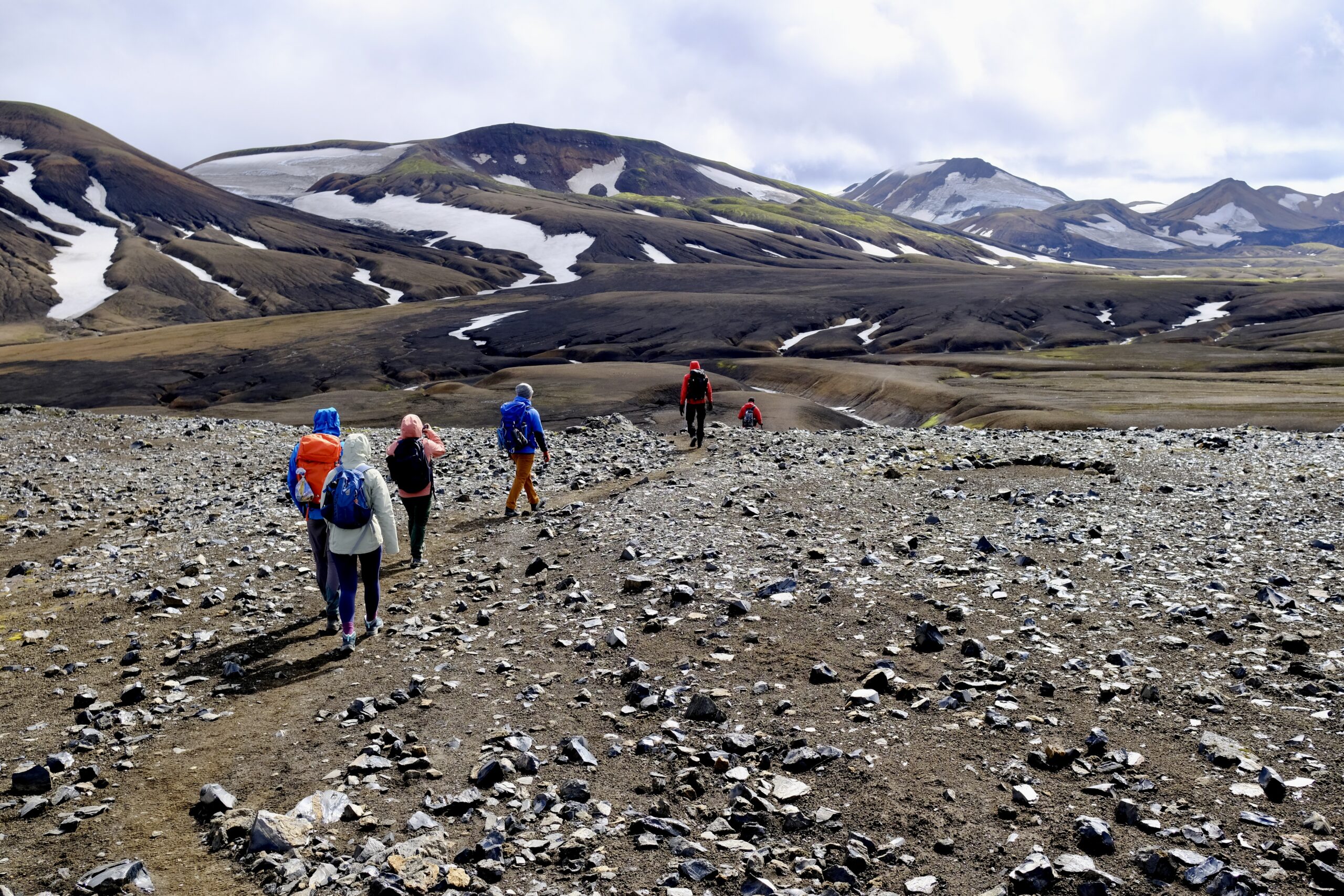
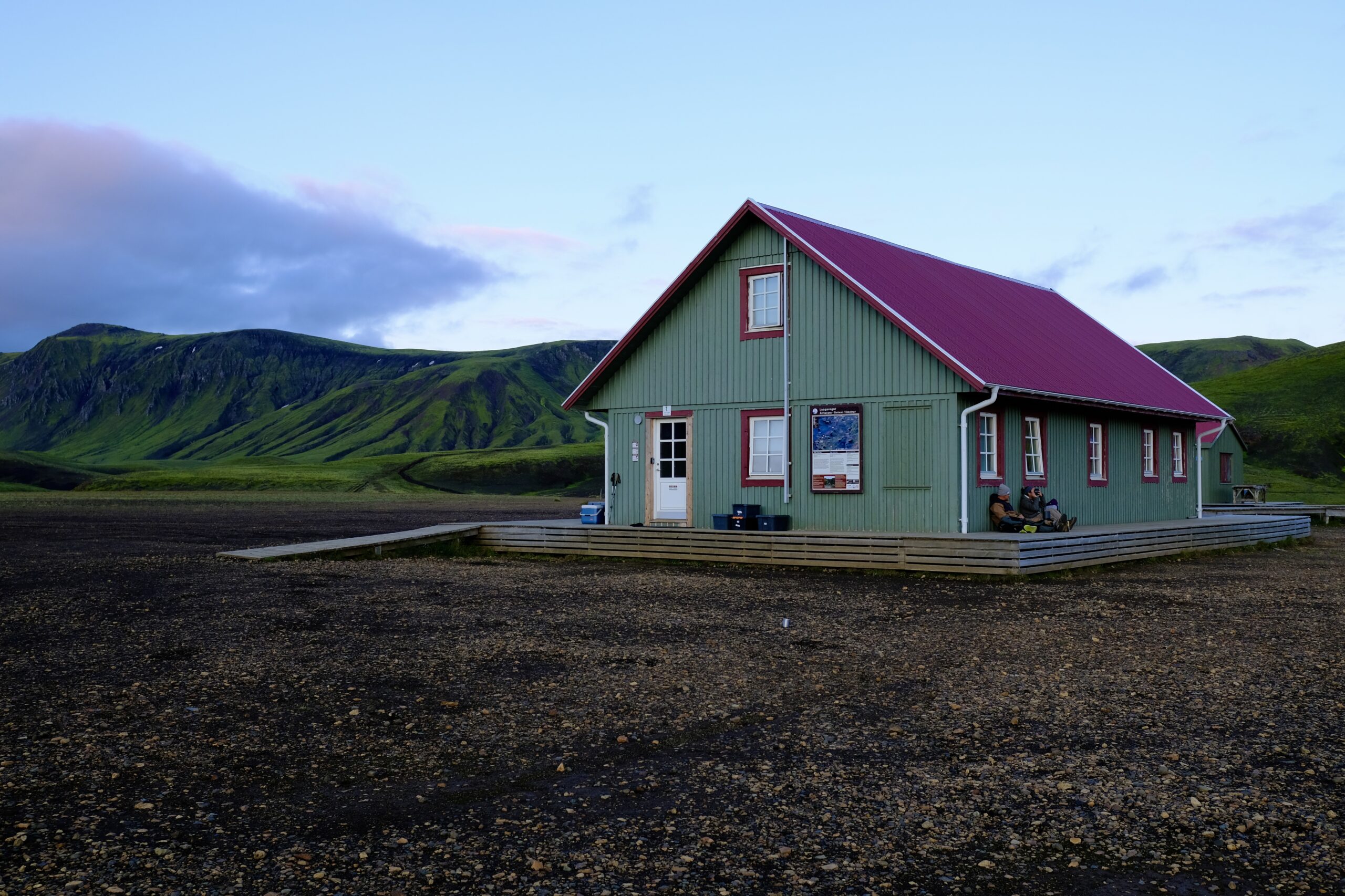
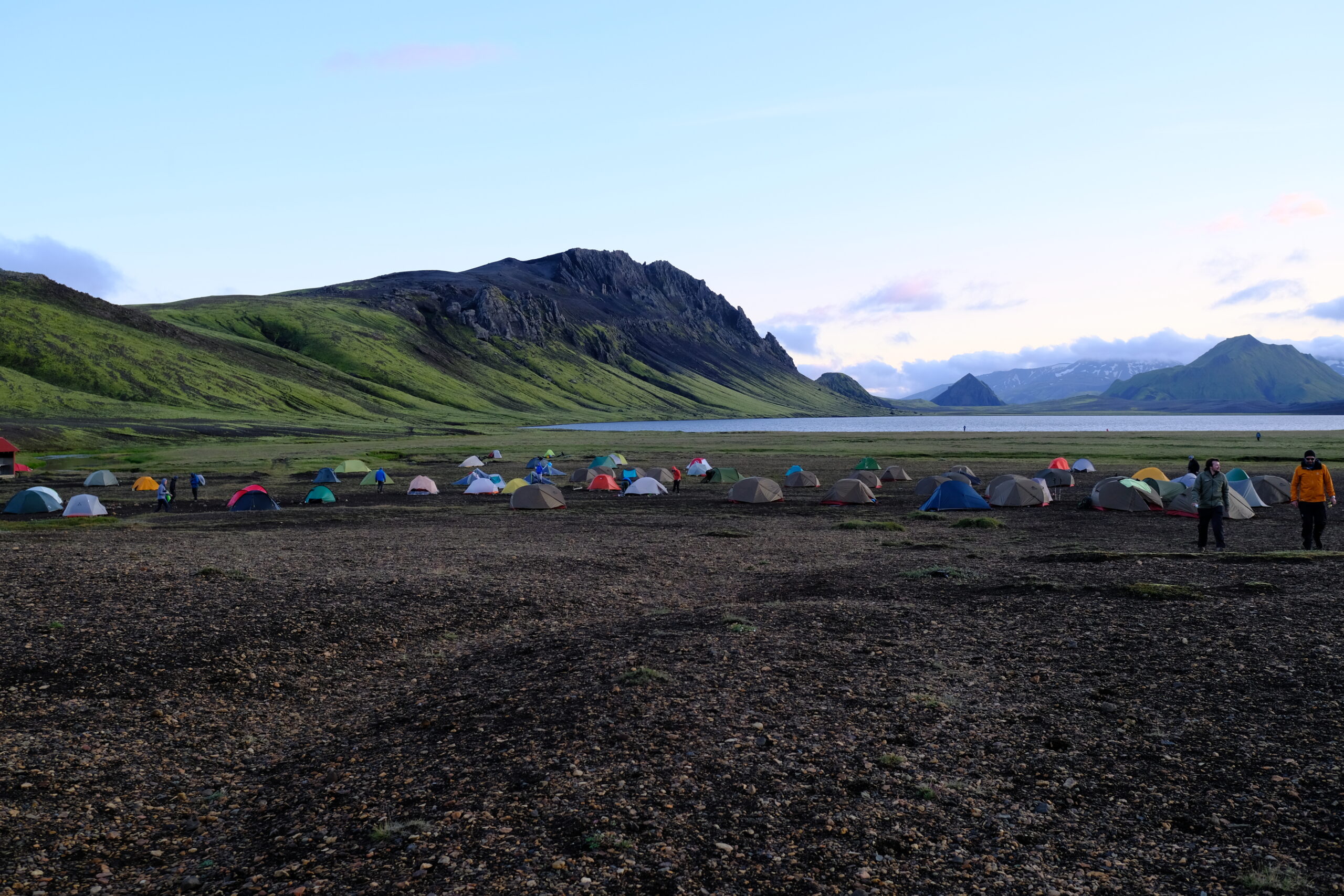
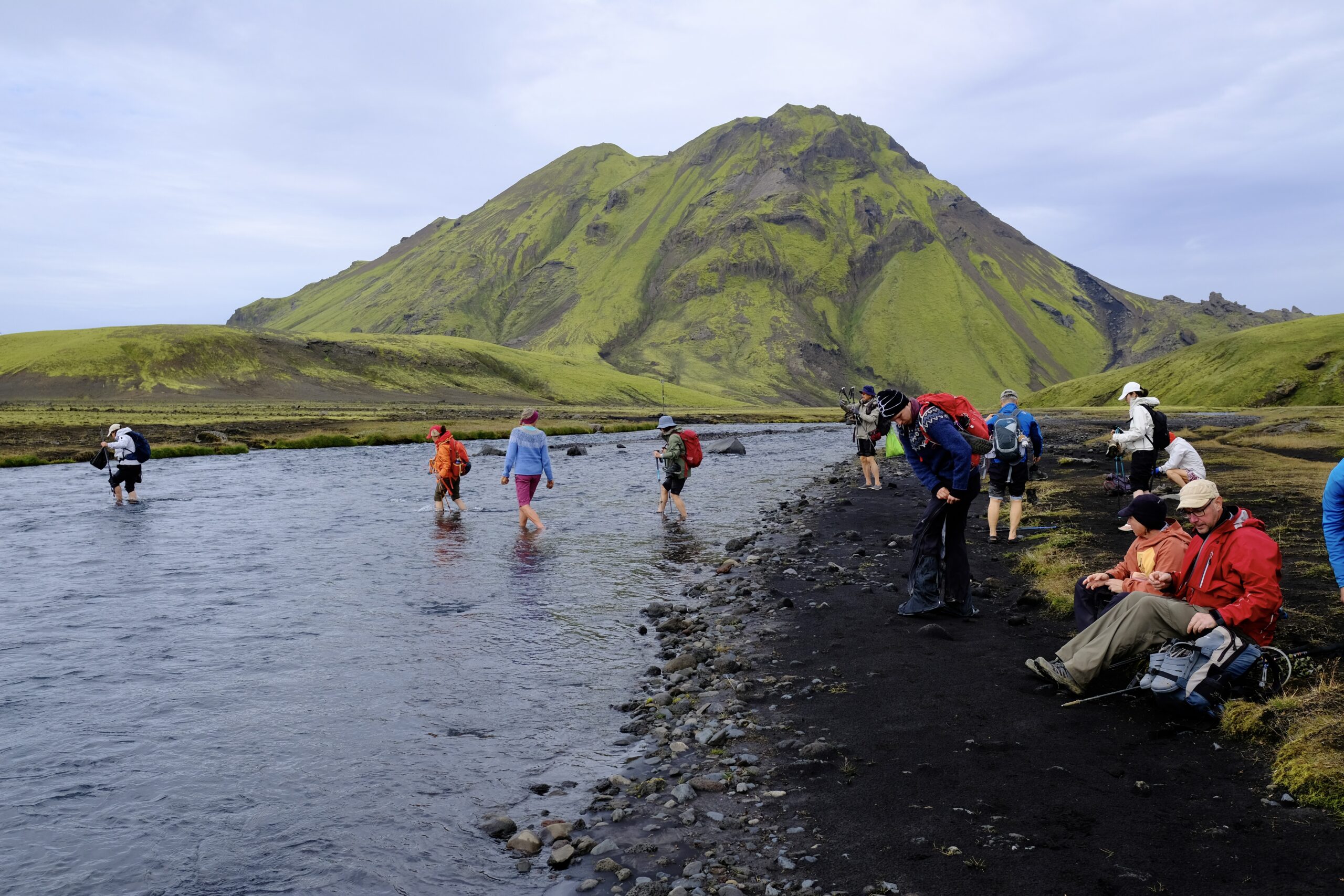
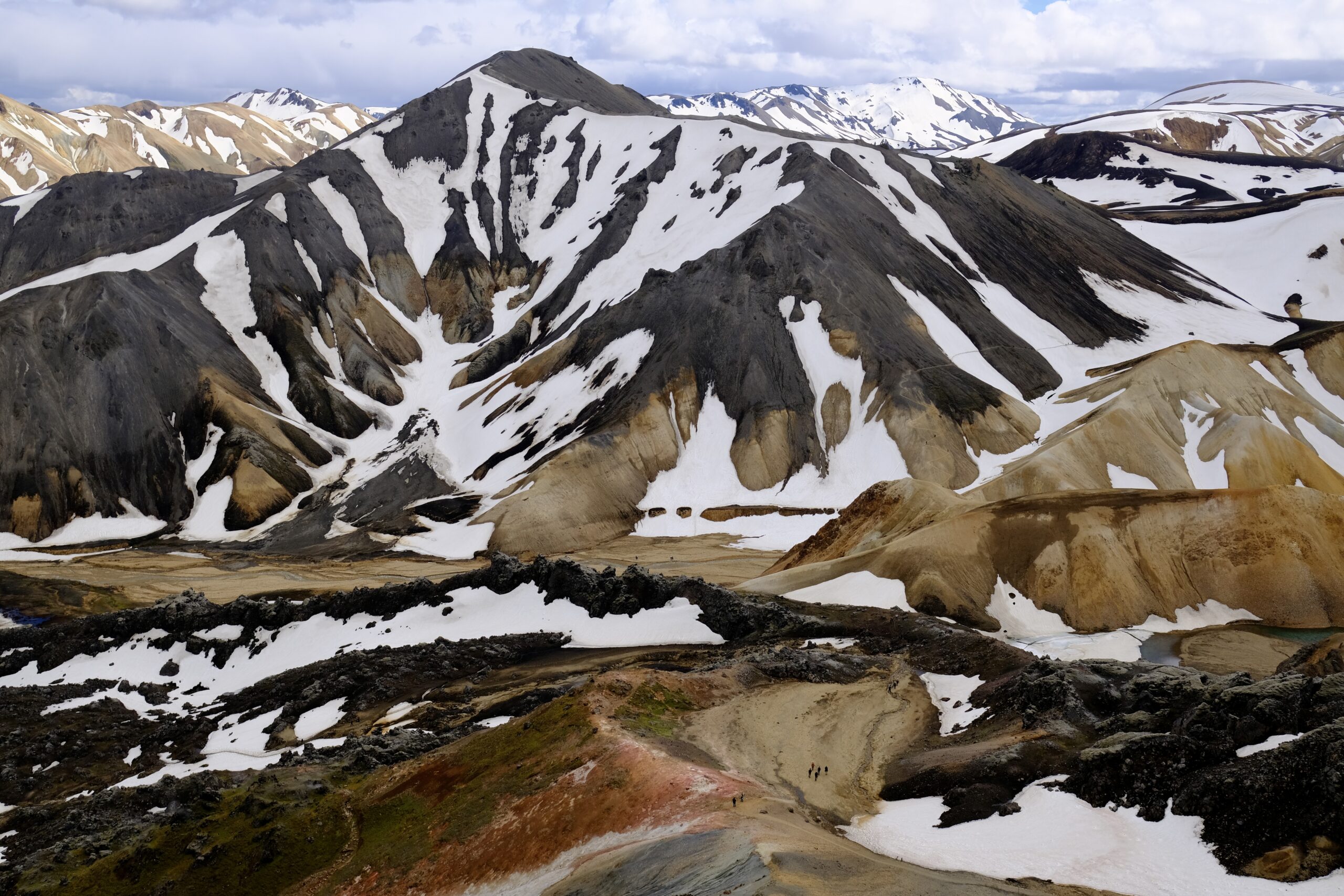
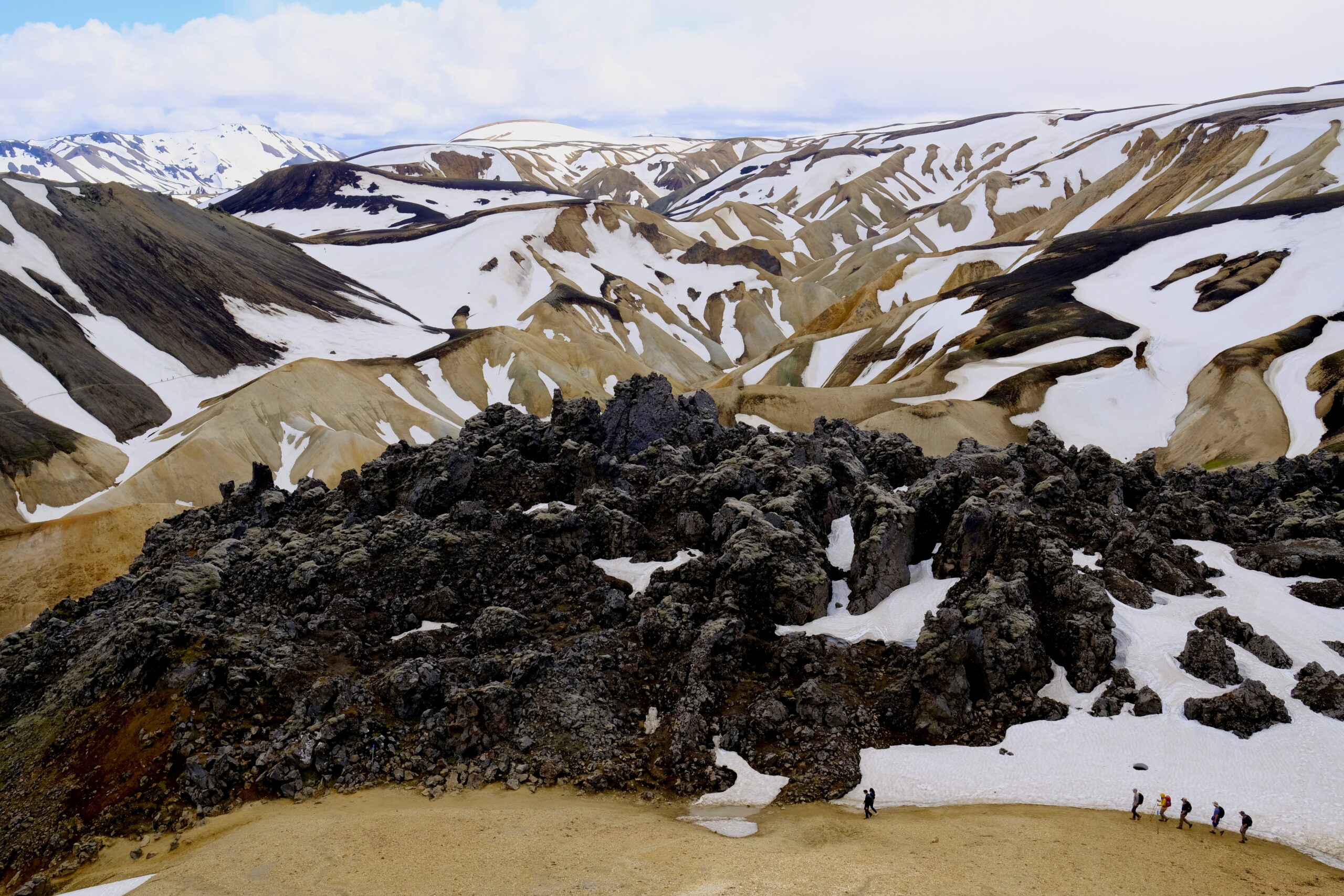
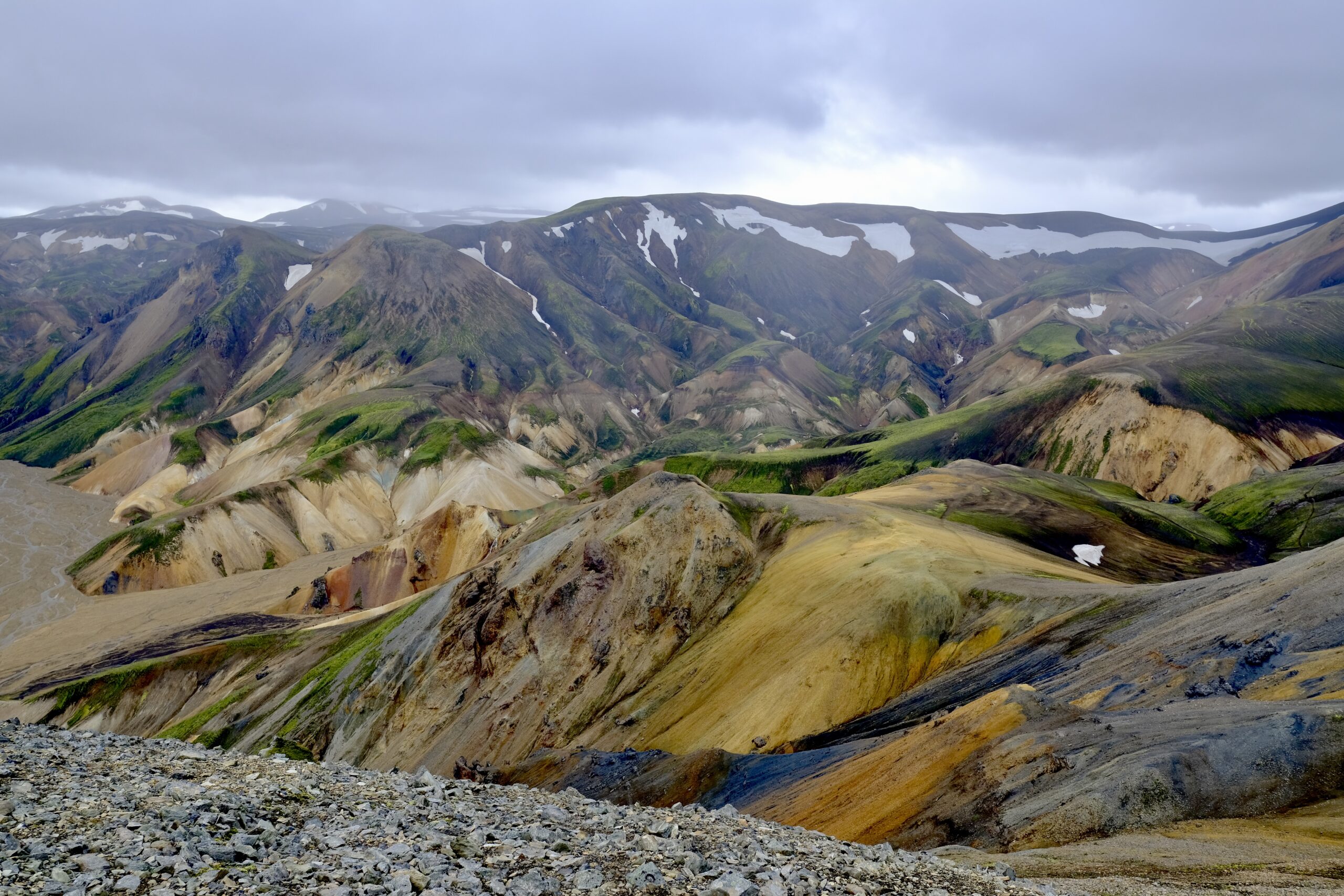
Back in Week 4, I hiked the Laugavegur trail, a 55 km path from Landmannalaugar to Þórsmörk in the Icelandic highlands. The starting point, a series of rhyolite mountains surrounding a massive lava field, was a magical spot that I knew I wanted to go back to before I left Iceland. This week, just three days after the F208 access road opened for the season, I took a long day trip to Landmannalaugar and hiked a different part of the mountains than I did last August.

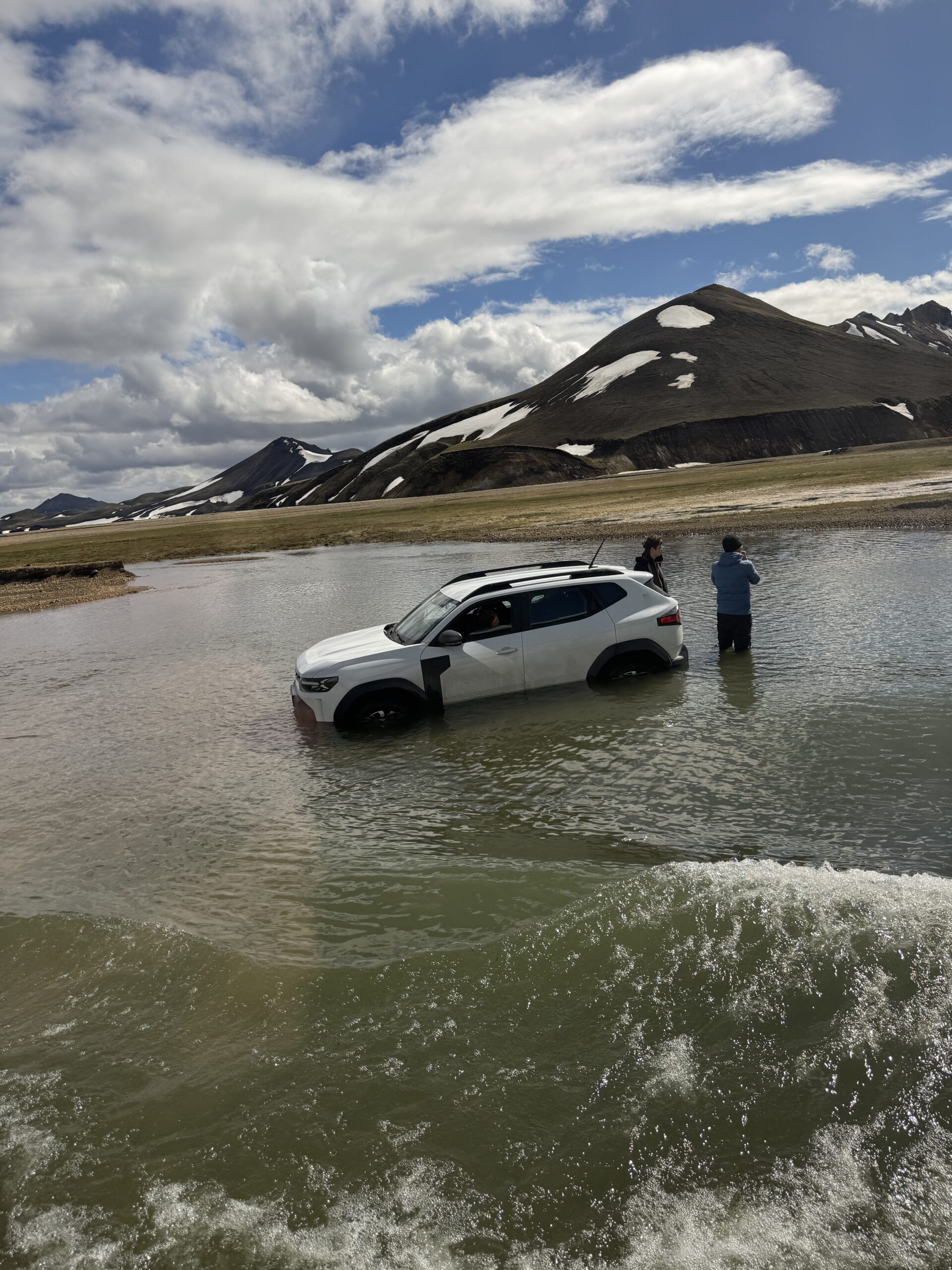
As it was early in the season, the snow was still present, both on the mountains and covering parts of the trail. But the weather was nearly perfect, warm enough at times to take my coat off and not a drop of rain until I was out of the hot spring and packing up to leave. My general rule-of-thumb for day trips is that hiking time should be at least as long as driving time, but I was willing to accept 9 hours of driving for 5 hours of hiking because I wasn’t the one behind the wheel. I took the bus with Arctic Adventures, which saved me from renting a 4×4 for the F-road and let me doze on the ride from Reykjavík and back. Driving would have been stressful — I saw multiple rental cars that weren’t up to the task abandoned in the middle of a river.
Car at Landmannalaugar that failed to cross the river.

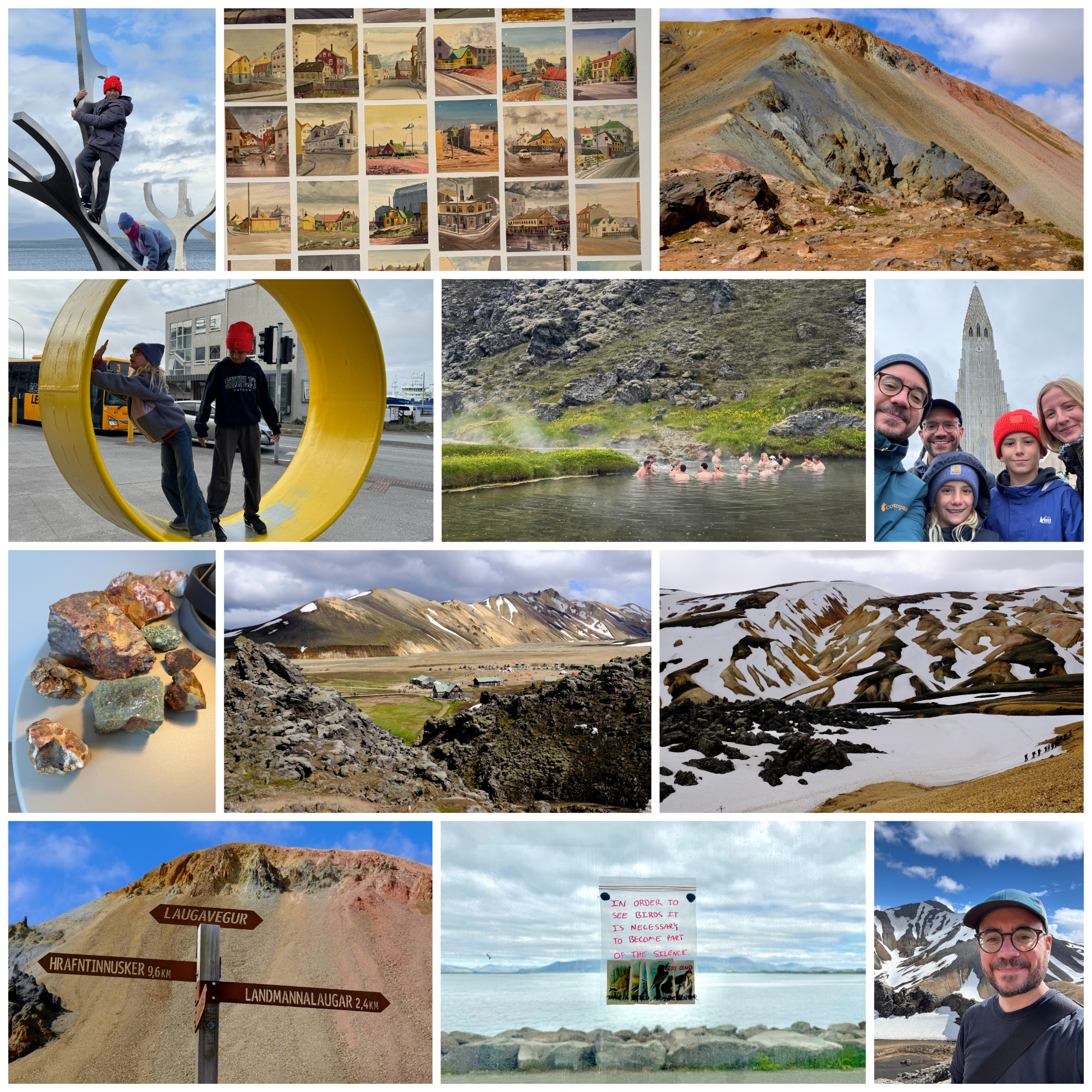
While I was in Landmannalaugar, my brother and his family were in the Westman Islands, midway through their Iceland trip, which concluded with three days in Reykjavík. It was great to spend time with them here, wandering around the city together. One spot we visited was Whales of Iceland, which houses 23 different life-sized models of whales in a single room. That layout provides a pretty unique way to compare different species of whales directly. It was not only informative, but also topical, as the controversy about the recently restarted Icelandic fin whale hunt is ramping up.

Last week, I posted about the anti-whaling protests, but this week the tensions seem to be rising. This is primarily due to Paul Watson, the radical anti-whaling activist who uses direct action to stop whaling campaigns around the world. He’s launched what he calls Operation 86 to stop the fin whale hunt in Iceland, named in reference to actions he took in 1986 that resulted in the sinking of two whaling ships from the same fleet. His ship, the Bandero, was spotted by the Icelandic Coast Guard entering Iceland’s Exclusive Economic Zone without its automatic identification systems (AIS) turned on. The whaling boats have also turned off their AIS, so there is no public tracking of their location either.

Paul Watson is an extremist, and having watched a few seasons of his TV show Whale Wars, I don’t view him in a positive light. He justifies his use of harassment and even violence through the virtue of his cause, but in other countries (like the Faroe Islands) his brash approach has ended up crystallizing the local population against him, even if they are on the fence about whaling. If there’s anything universal about Icelanders, it’s that they don’t like outsiders telling them what to do. Watson’s campaign has the potential to make this less about the whales, and more about a clash between two men, given his focus on Kristján Loftsson, the Icelandic businessman who owns the whaling company. Don’t get me wrong, Kristján deserves to have a light shone on him, given that his political influence is likely what allows whaling to remain legal in Iceland. But I would guess that Watson will end up creating an us-versus-them narrative that leaves Icelanders siding with their countryman instead of looking at the real concerns of political influence and power. That could end up hurting the anti-whaling cause more than it helps.

In a discussion about the whaling controversy, in a private Facebook group for foreigners, someone posted this 2013 documentary on Vimeo that gives a good overview even if it’s a bit dated.


The other big Icelandic controversy this week is that parliament passed a law requiring universities to charge tuition fees for non-EEA students, taking effect for the 2027-28 academic year. Iceland was the only remaining Nordic country that didn’t charge tuition to students outside of the EEA, after Norway changed its law in 2023. The University of Iceland hasn’t set the cost yet, saying that they’re still calculating and it may vary depending on the program. Up until now, non-EEA students have only had to pay a registration fee, and prove they have sufficient funds to cover the cost of living.

This change had long been rumored, even before I applied to my graduate program. The case against it is that Iceland will lose talented students who will opt to study elsewhere, and that the high cost of living in Iceland will contribute to an unmanageable total cost for foreign students. Already, the university saw a decline in non-EEA applications last year as the possibility of the tuition law loomed. Some people believe that this is part of a growing anti-immigrant attitude, or has racist overtones, similar to the restrictions on student residence permits that were instituted for non-EEA students last year after an increase in students from Nigeria, Pakistan, and Ghana.

I guess the meta-theme in this week’s post is that Iceland is a complicated place like any other. As much as we might imagine that perspectives and values get bundled together into a few “packages” that we can put political labels on, reality is messier. Iceland can lead in trans rights, but enact laws that seem to be driven by racism; it can be a leader in renewable energy but allow commercial whaling.

Noted & Done

  • I really enjoyed the exhibition Big Little City – Reykjavík in View at the Kjarvalsstaðir location of the Reykjavík Art Museum. Having gotten to know the city so well, it’s fun for me to see depictions of it over time.
  • I highly recommend the free weekly newsletter Perfect Sentences by Ingrid Burrington. As it says on the tin, it’s just some very good sentences.
  • This week, on the bus to the highlands, I used the Vehicle Motion Cues feature on iPhone. It’s supposed to help reduce motion sickness when using your phone in a vehicle by resolving the sensory conflict between what your eyes see and what your inner ear feels. This is a reminder that iOS is packed with interesting features hiding in the settings, most of which you can bring to the Control Center so they are just a tap away.
  • I launched another big update to the Manuals feature on Moped Army. Manuals now have their own pages, full OCR text in the HTML page, and a widget for the wiki.
Iceland: Week 4

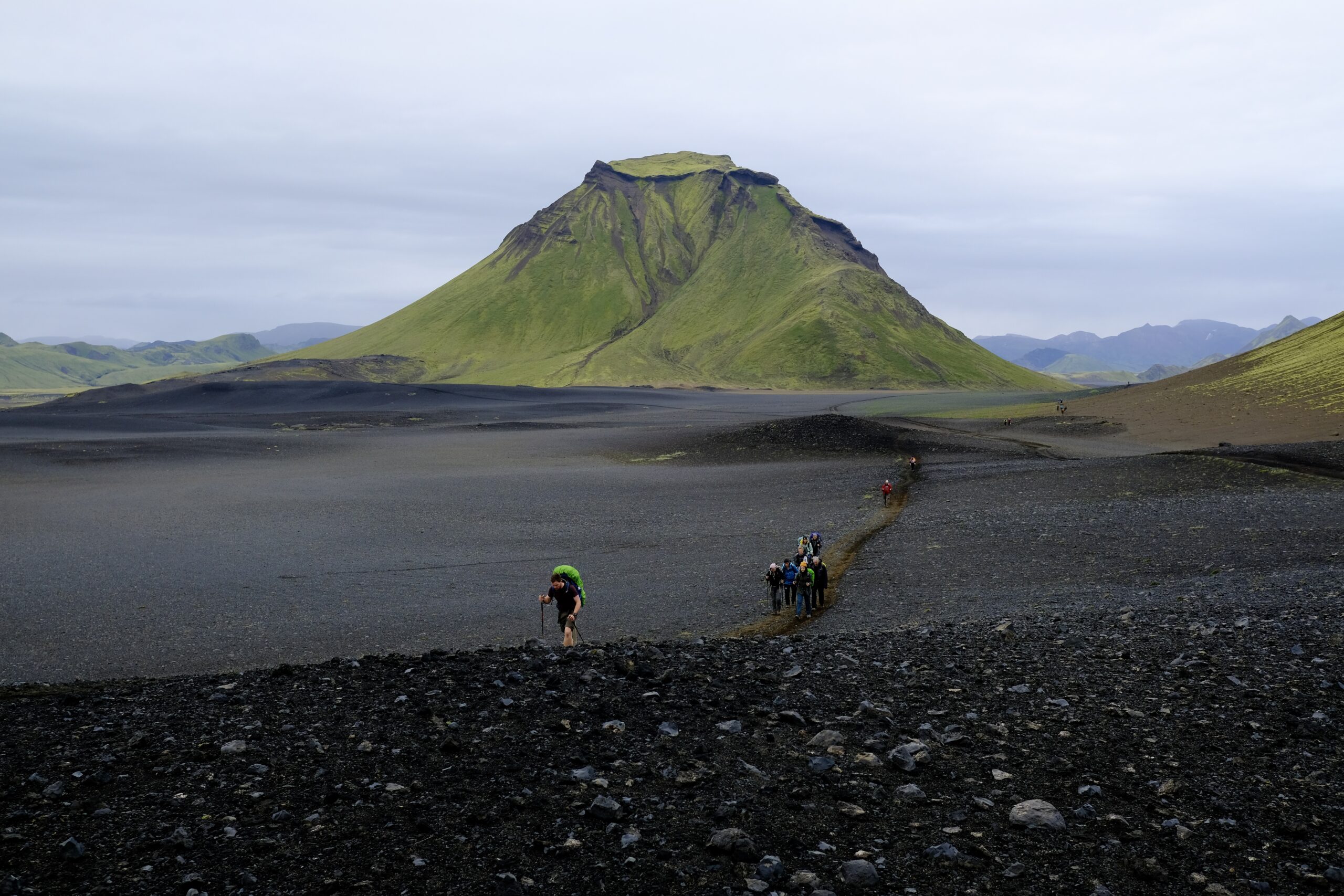
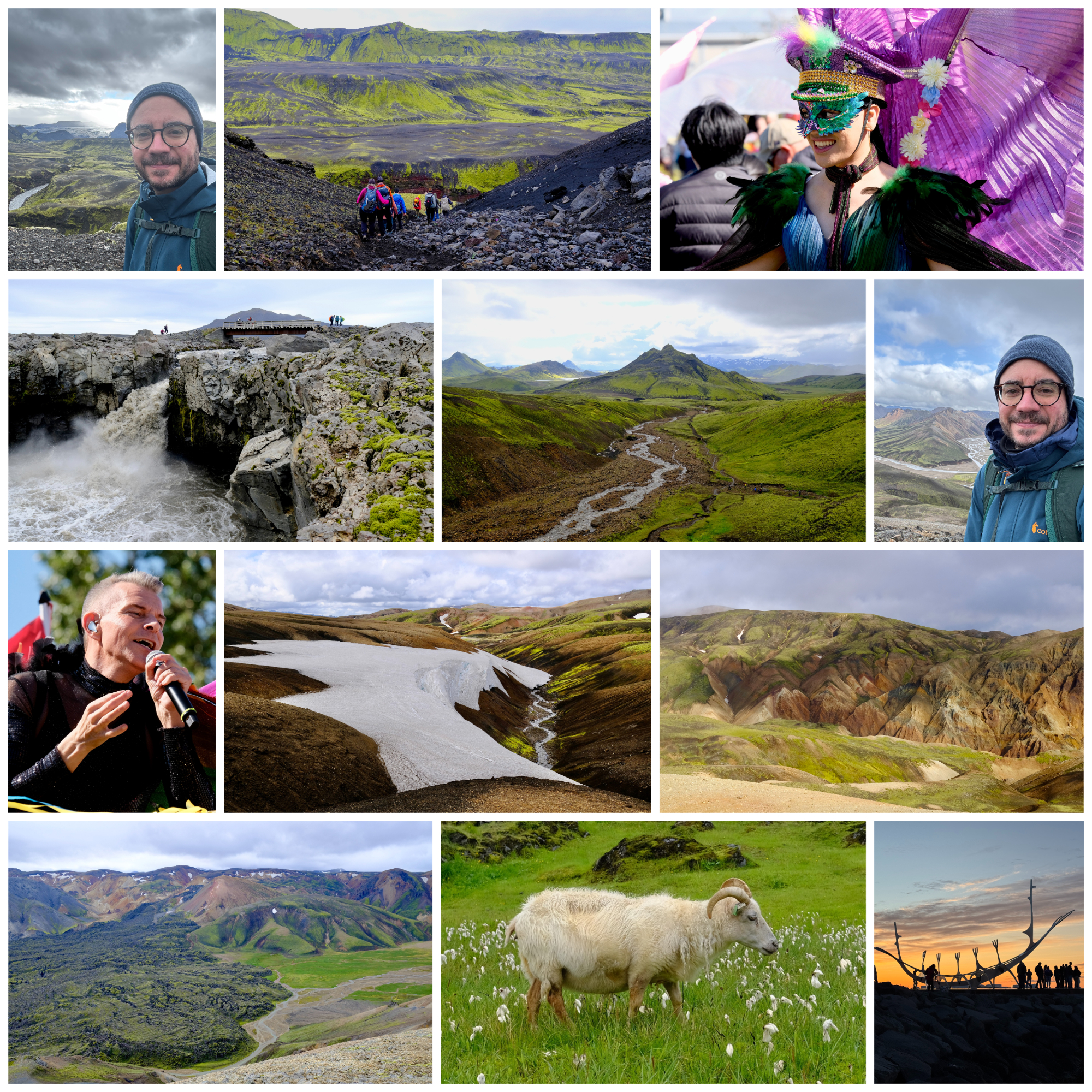
More than half of last week was spent outside, hiking in the Highlands between Landmannalaugar and Thórsmörk on the Laugavegur trail. I’ve had my eye on this trek for a long time, and it lived up to all my expectations. I went with a guided group, 16 of us in total, and hiked 40 miles over 4 days, traversing 6,000 feet of elevation gain across wildly different landscapes. It was often cold, windy, and rainy, but with fabulous views, otherworldly scenes, and a chance to have my morning coffee at the foot of a glacier — an excellent mix of Type 1 and Type 2 fun.

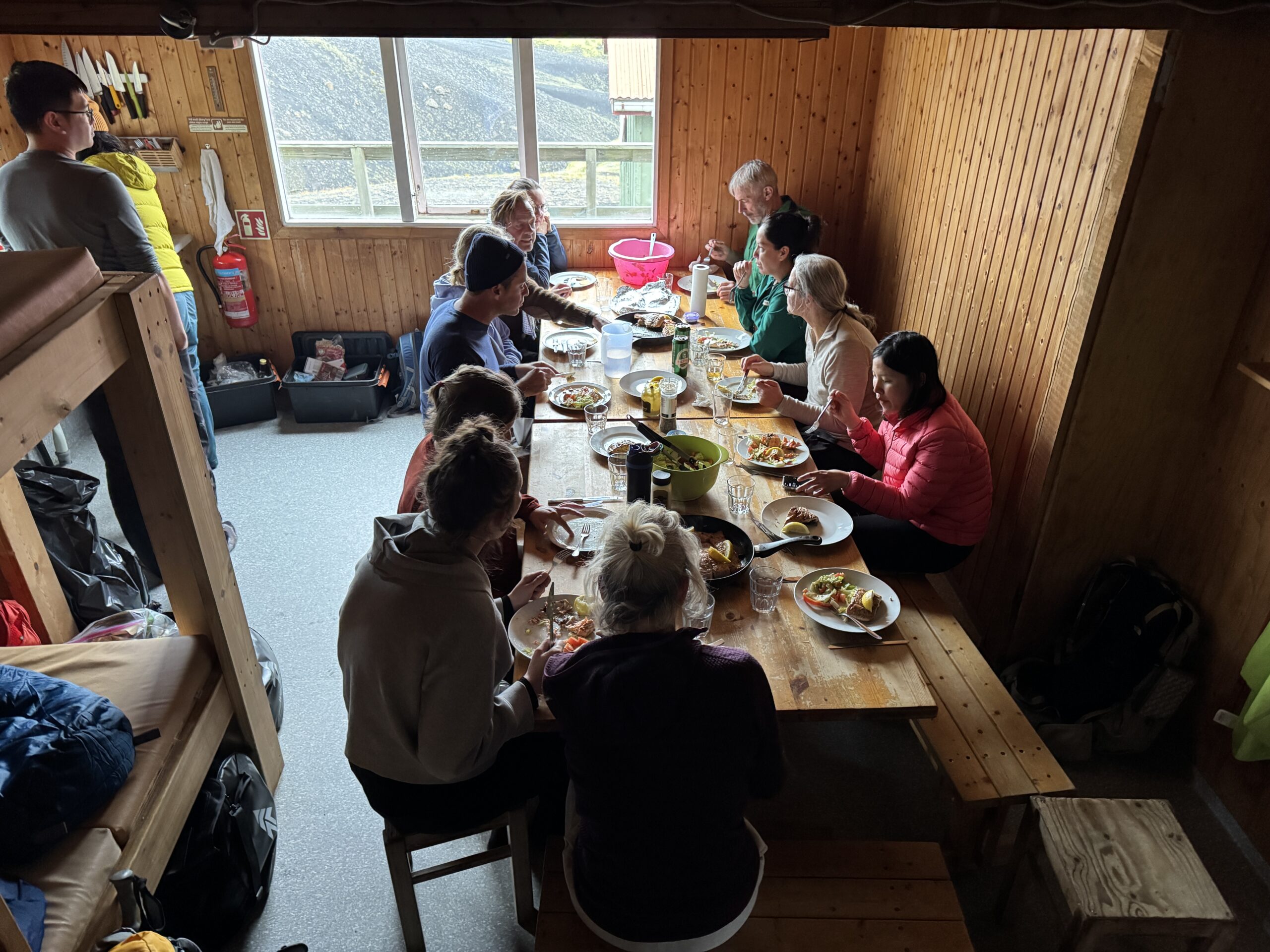
Going with a group has distinct benefits, particularly as a solo traveler. For one, I had someone to talk to, and our guide turned out to be wonderfully low-key and happy to answer all my questions. It also meant that I only had to carry a daypack, as the company transported our other bags as well as food. We stayed in mountain huts, originally constructed in the 1970s by a hiking club, which are simple structures filled to the brim with sleeping mats and a kitchen. Lots of people stay in tents as well, and there are shared bathroom facilities for everyone. For 1,000 ISK you can buy 5 minutes of hot shower time. Overall, accommodations are basic, but having tubs of food for our group transported by vehicle meant meals could be a couple notches above backpacker food.

I have photosets on Instagram for each day (Day 1, Day 2, Day 3, Day 4), so I won’t overdo it on the photos here, but below is a brief daily overview.

Day One: Landmannalaugar

Landscapes at Landmannalaugar
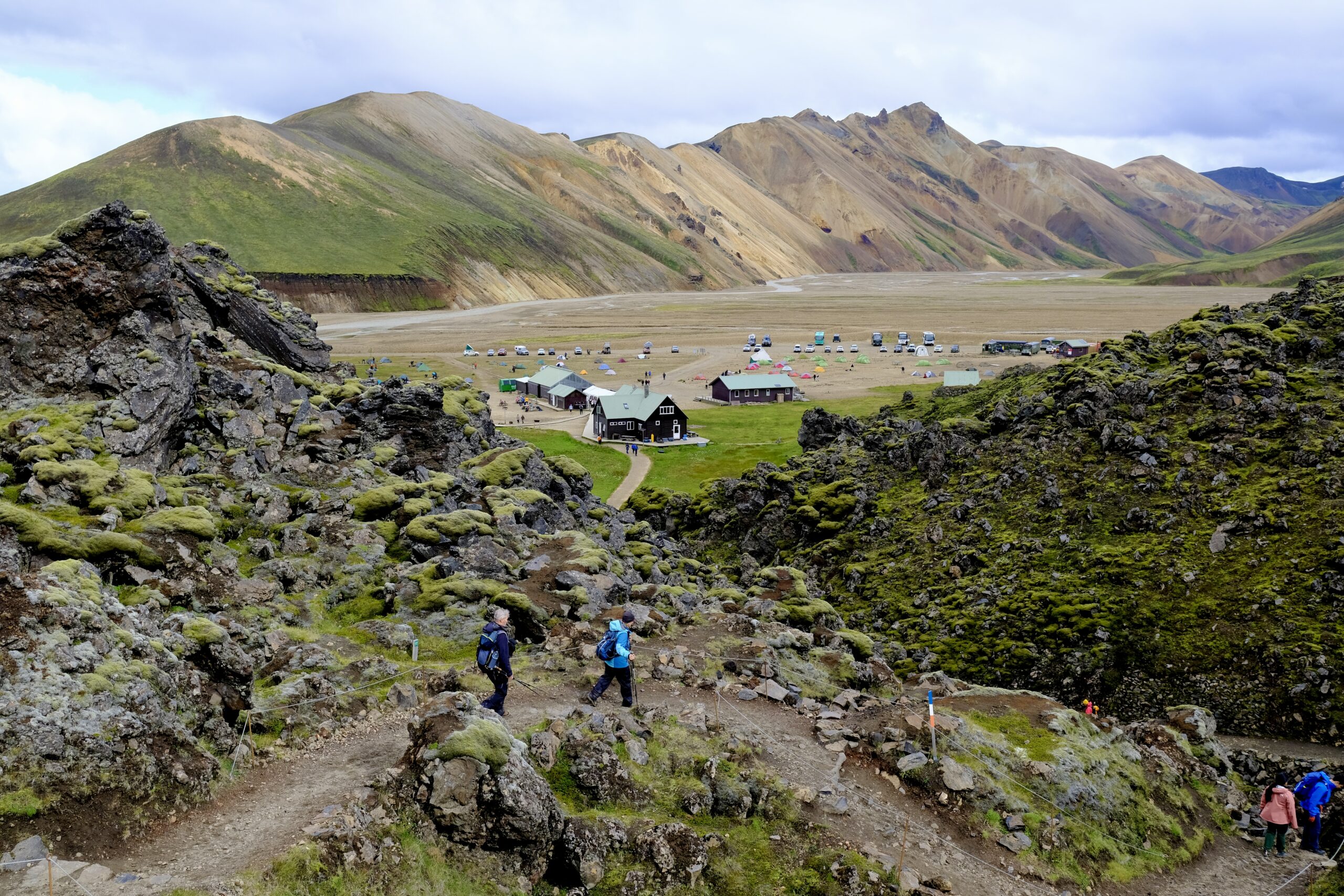
Leaving the lava field at Landmannalaugar, approaching the hut and campground

The trip to Landmannalaugar from Reykjavík took about 3.5 hours, which would make it possible to do as a very long day-trip. We didn’t actually start on the Laugavegur Trail this first day, but did a four-hour hike through the colorful landscapes and lava fields of the area. It was the windiest of all the days, and threatened to downpour as it had the the day before. But the rain remained scattered, with patches of blue sky, and it was a great introduction to the trip.

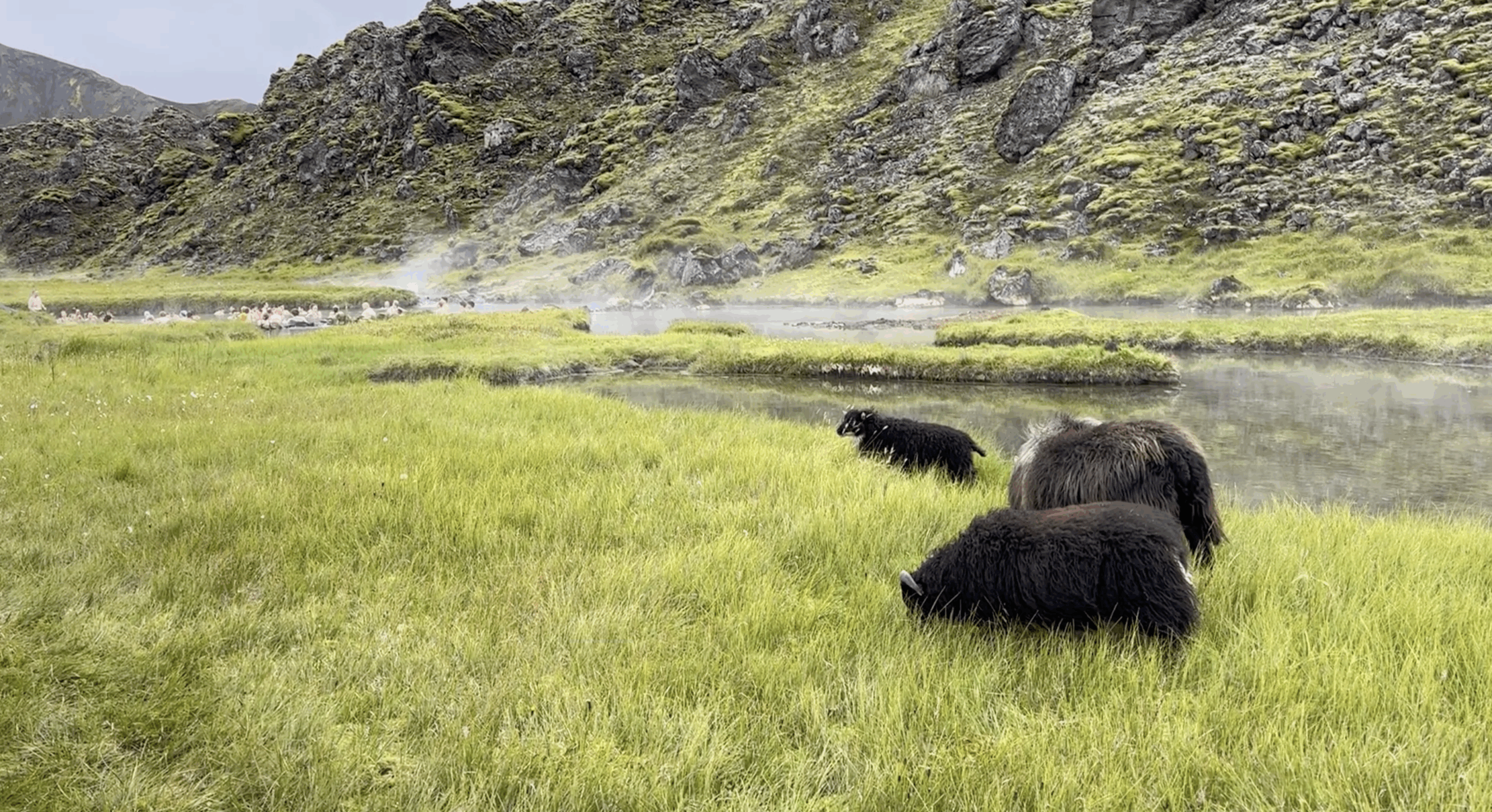
We stayed in the hut in the center of the above photo, the only one on the trip with hot water on tap since this was a geothermal area. A hot spring runs in front of the hut, feeding a pool a short distance away, which felt amazing to soak in after the hike. It was my first natural hot spring in Iceland and it was fun to see how you could moderate the temperature by positioning yourself within the pool. As you moved closer to the river it got uncomfortably hot, but you could also get extra heat by digging your feet or hands into the pebble-covered ground.

A very Icelandic scene: sheep grazing with people bathing in a hot spring in the distance.

Day Two: Landmannalaugar to Álftavatn

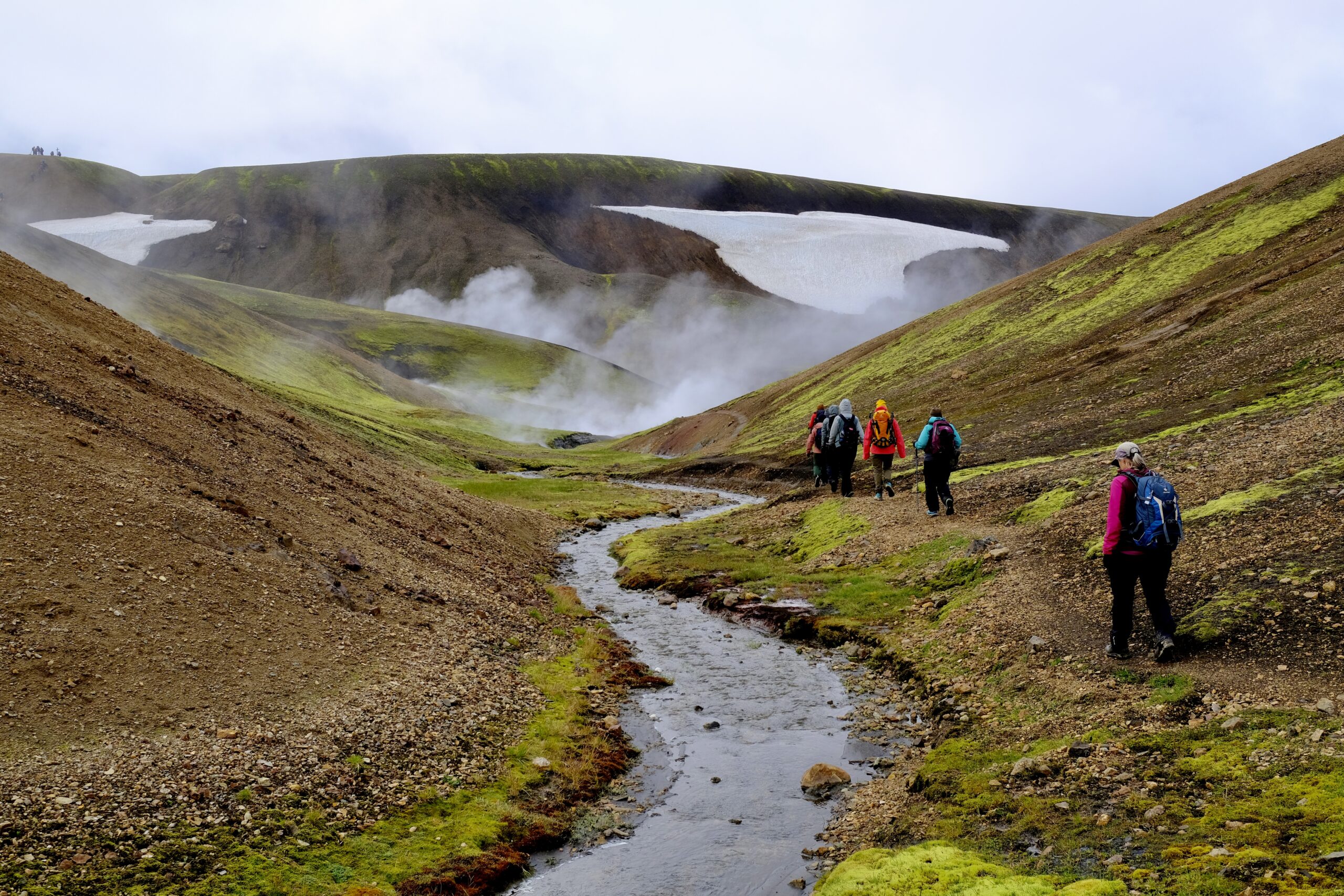
The second day was the longest, at 15 miles, and was technically two segments of the trail as we passed by the Hrafntinnusker hut halfway through. It also had the most elevation. The day started with steamy geothermal landscapes, including steam vents and mud pots, giving way to rockier and snow-covered terrain as we passed over a mountain pass. The trail only opens in mid-June, because the snow pack is too deep before then. We were continuously going up and down, as the trail runs through numerous valleys, although some were still filled with snow that bridged across them. You have to be careful as you cross those because the snow melts from both the top (sun) and bottom (hot springs), potentially obscuring the true depth of the snow you’re walking across.

Steamy hot springs provided an otherworldly feel throughout the day.
The landscape became rockier and snowier mid-day.

The hut at Álftavatn was the best of the trip with more spacious quarters and a generously sized kitchen, beautifully situated on the edge of a lake. The multi-hour steep downhill trek to the campground wrecked havoc on our feet, but just before arrival we had our first river crossing and the freezing cold water helped to sooth the swelling. There were four river crossings in total on this hike, and I carried an extra pair of water shoes for them. They were bone chillingly cold, but a fun part of the experience as I’d never done it before.

The hut at Álftavatn.
Camping area at Álftavatn, next to the lake.

Day Three: Álftavatn to Emstrur (Botnar)

The third day saw a dramatic shift in scenery, away from the colorful geothermal hills to a stark black and green landscape. It was rockier, and much flatter than previous days. There was another river crossing less than an hour into the hike, and I think there is where I made the mistake of not fully cleaning all the tiny rocks out from between my toes after the crossing. By the end of the day I’d discovered that the smallest toe on my right foot was lacerated where it joined my foot; I think a small stone had abraded it all day as a walked. It wasn’t terrible, and better than getting a blister, but made the final day of hiking a bit uncomfortable.

River crossing
Much of the day was starkly black and green. There’s no life up there, no birds or sheep.

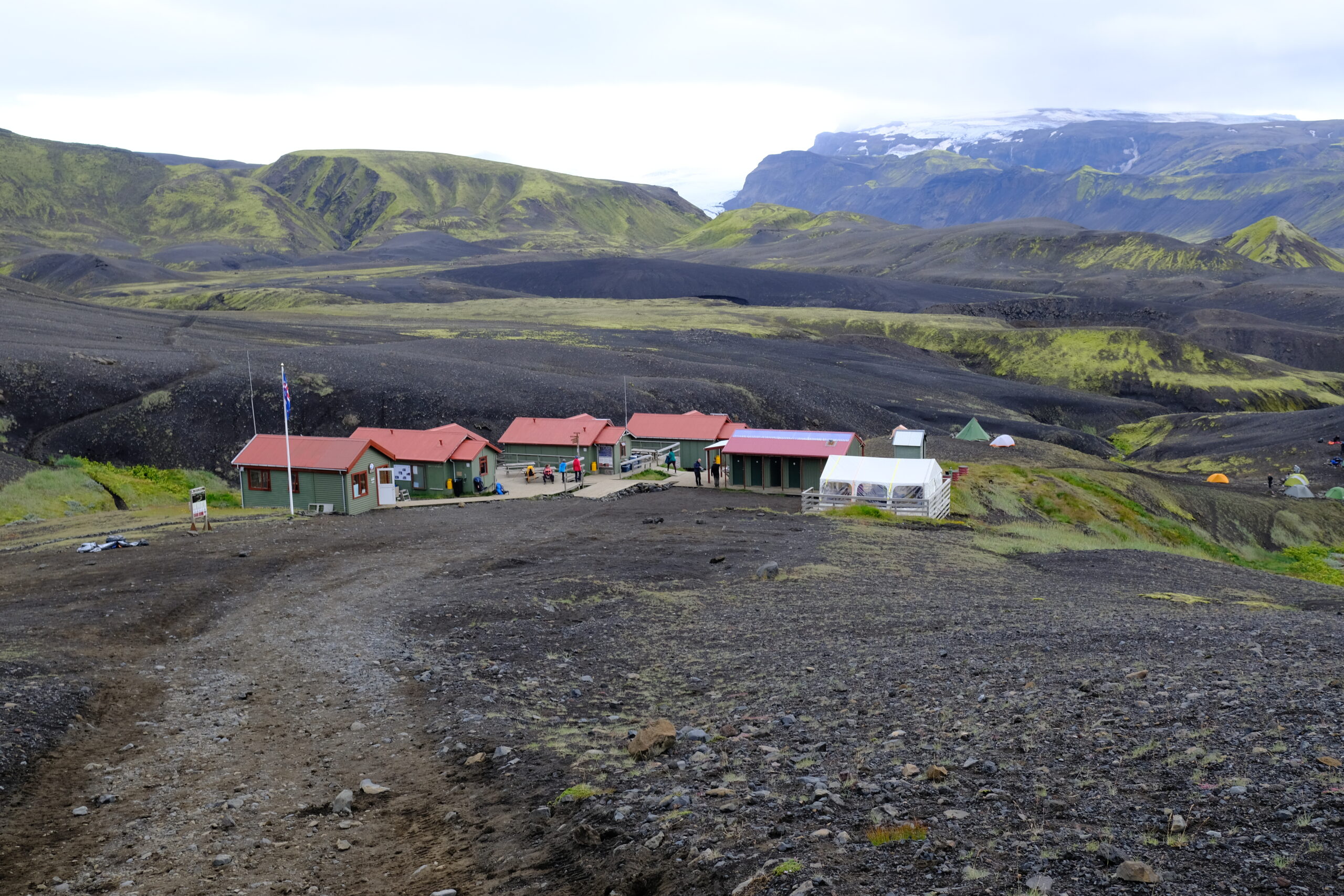
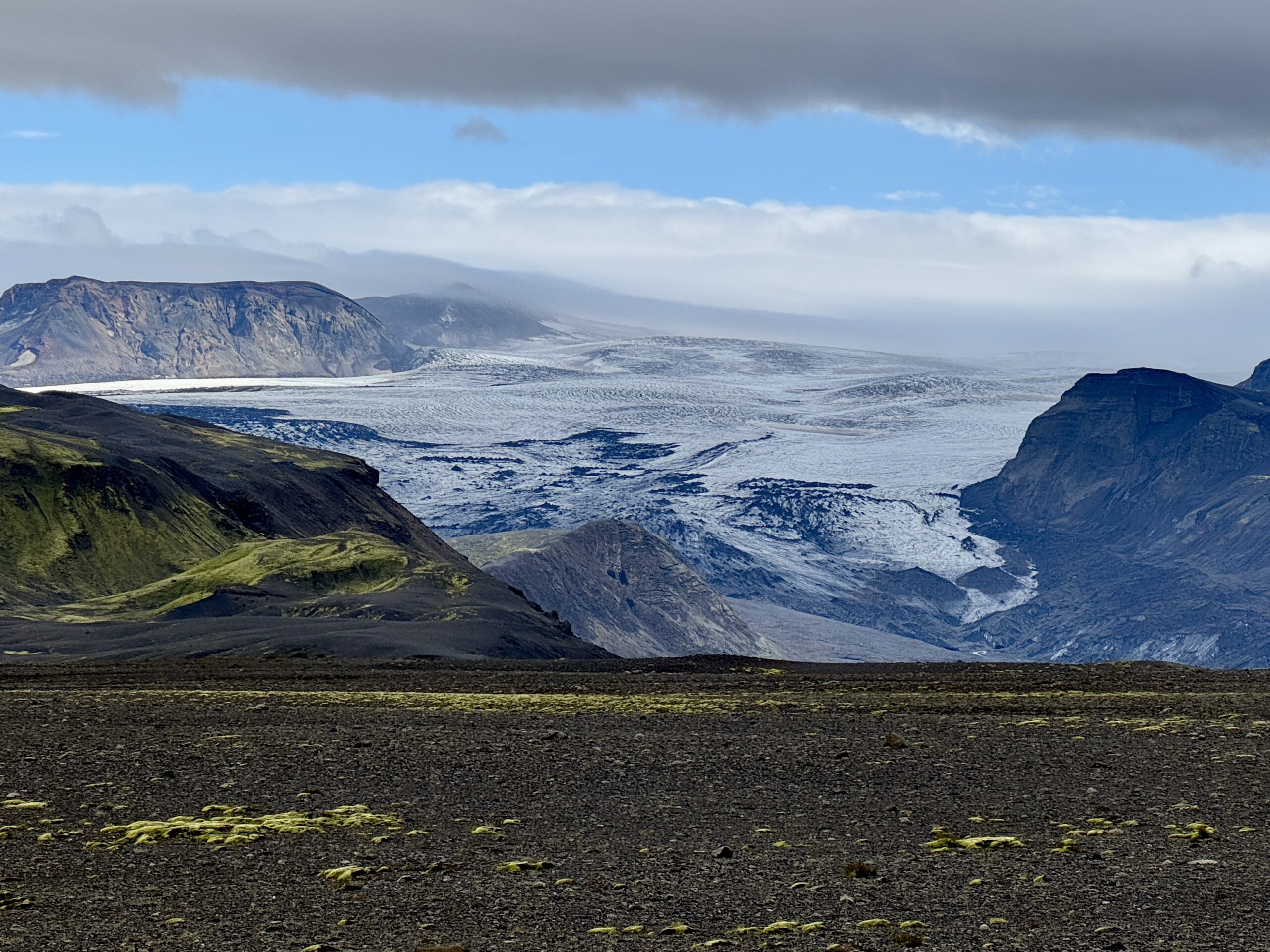
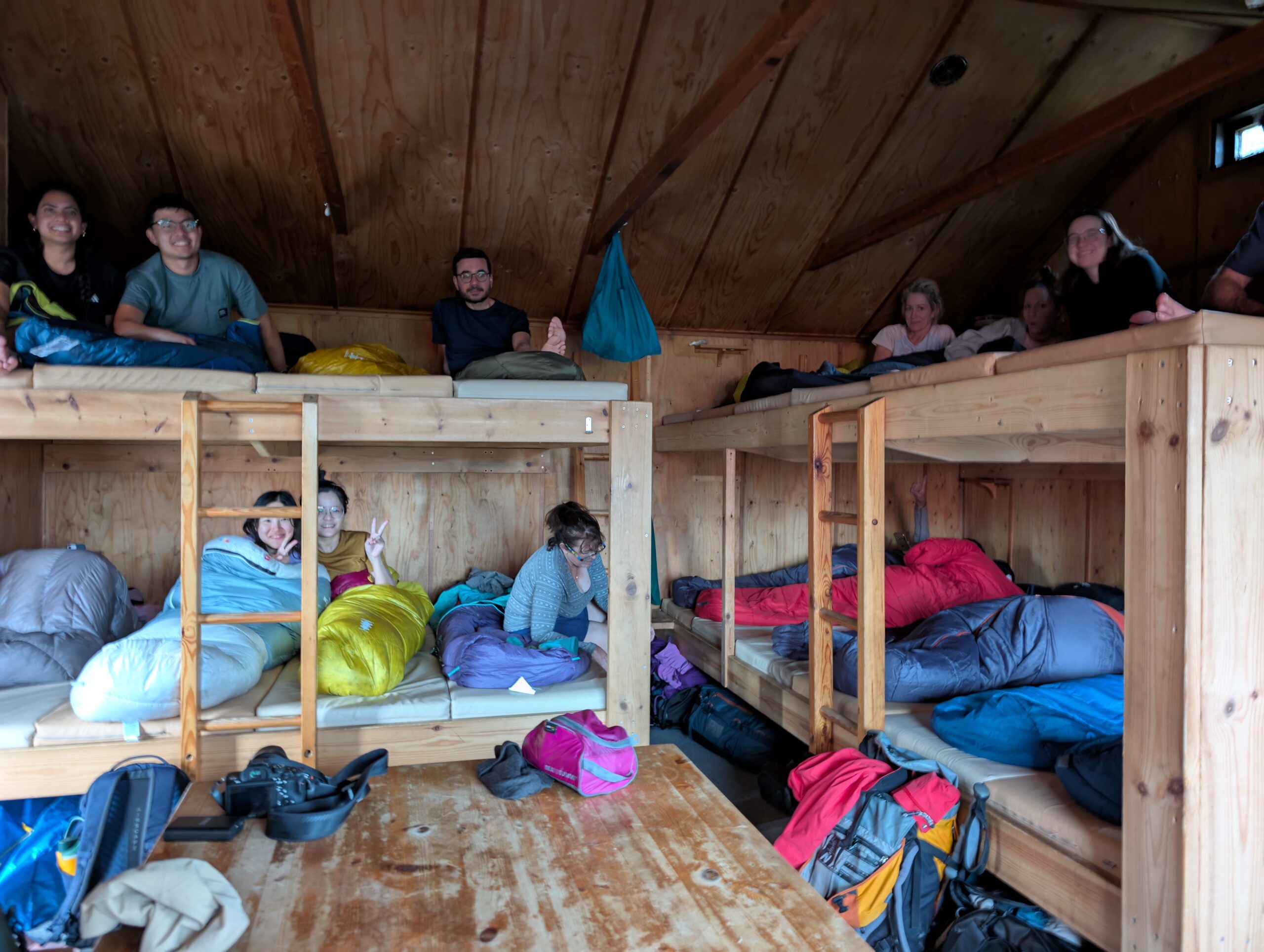
The siting of our final huts at Emstrur/Botnar was beautiful, situated in a valley next to a glacier, but they were also the most cramped. It was raining steadily when we arrived, which means the 21 people staying in tiny hut #2 were all huddled inside trying to dry off.

The Emstrur/Botnar huts.
Glacial view from the hut.
Packed sleeping quarters.
We had to eat in shifts in this tiny hut because there wasn’t quite enough room around the tables.

Day Four: Emstrur (Botnar) to Þórsmörk

On the final day, the trail ended at Thórsmörk, one of the only native forests in Iceland. You could observe life returning as the day progressed, with a few birds flying over canyons and ewes leading their lambs around the hills. During this segment we travelled between the Mýrdalsjökull and Eyjafjallajökull glaciers, ending in a flood plain with clear views of both. Between the biggest river crossing, feeling a bit weary, and my slightly wounded foot, I ended up relying on my hiking poles more during this segment. I used them periodically throughout the trail when I felt the need for additional stability, like going down a steep and muddy decent, but there was always a tradeoff between holding my poles or my camera.

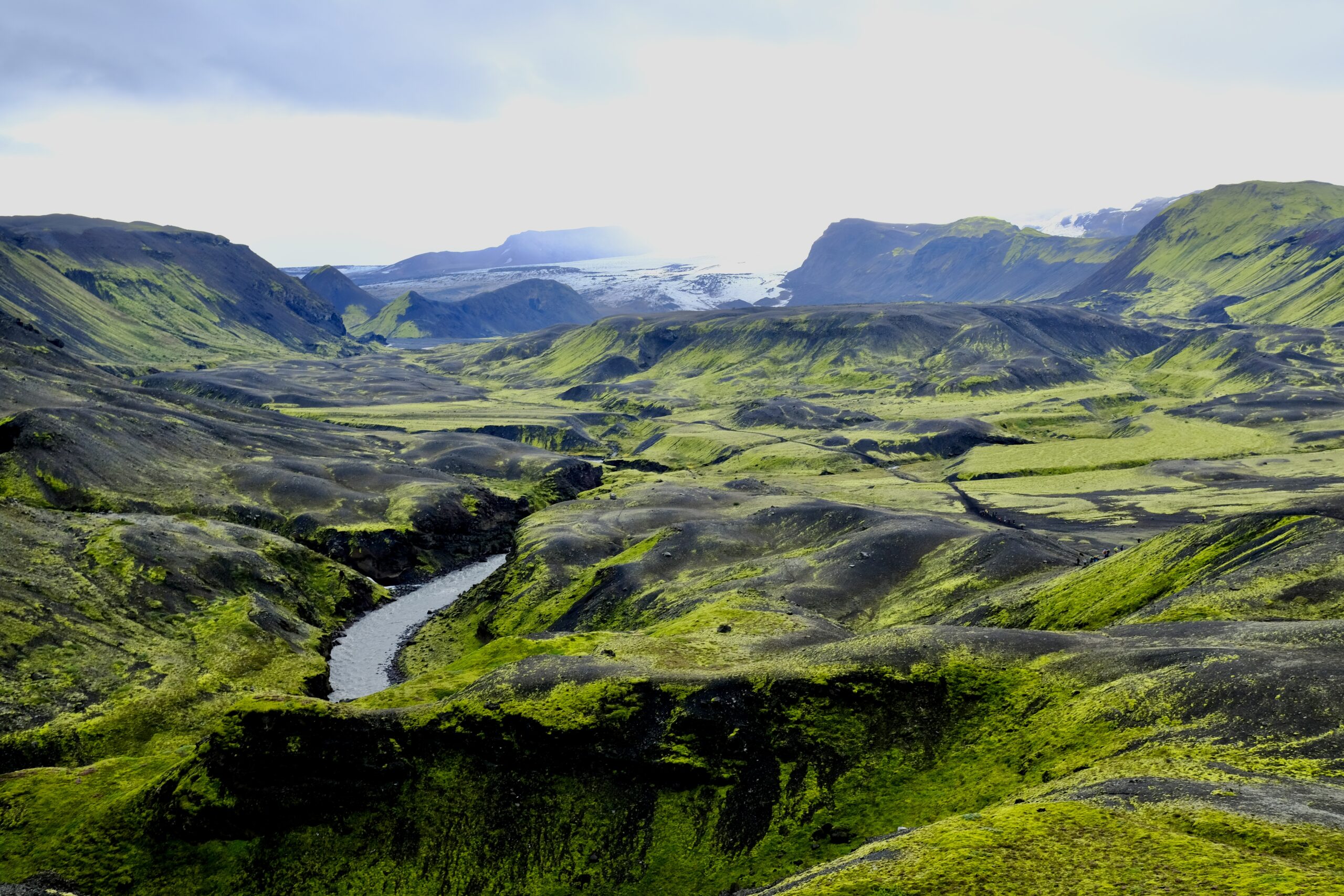
Valley with Mýrdalsjökull galcier in the background.
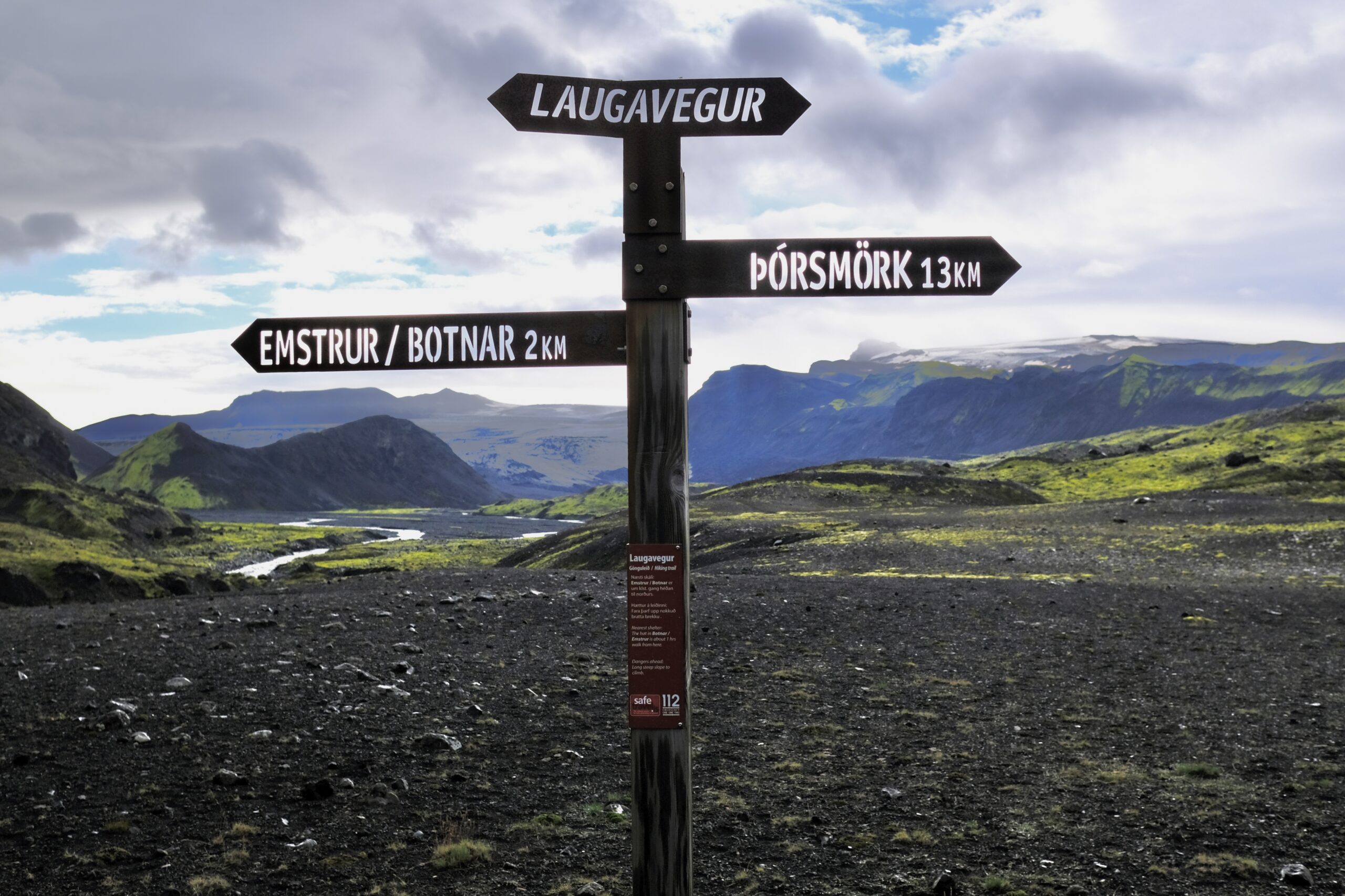
These signs were found throughout the trail. Punching the letters out of metal is smart, as I doubt that a painted sign would last very long in this environment.
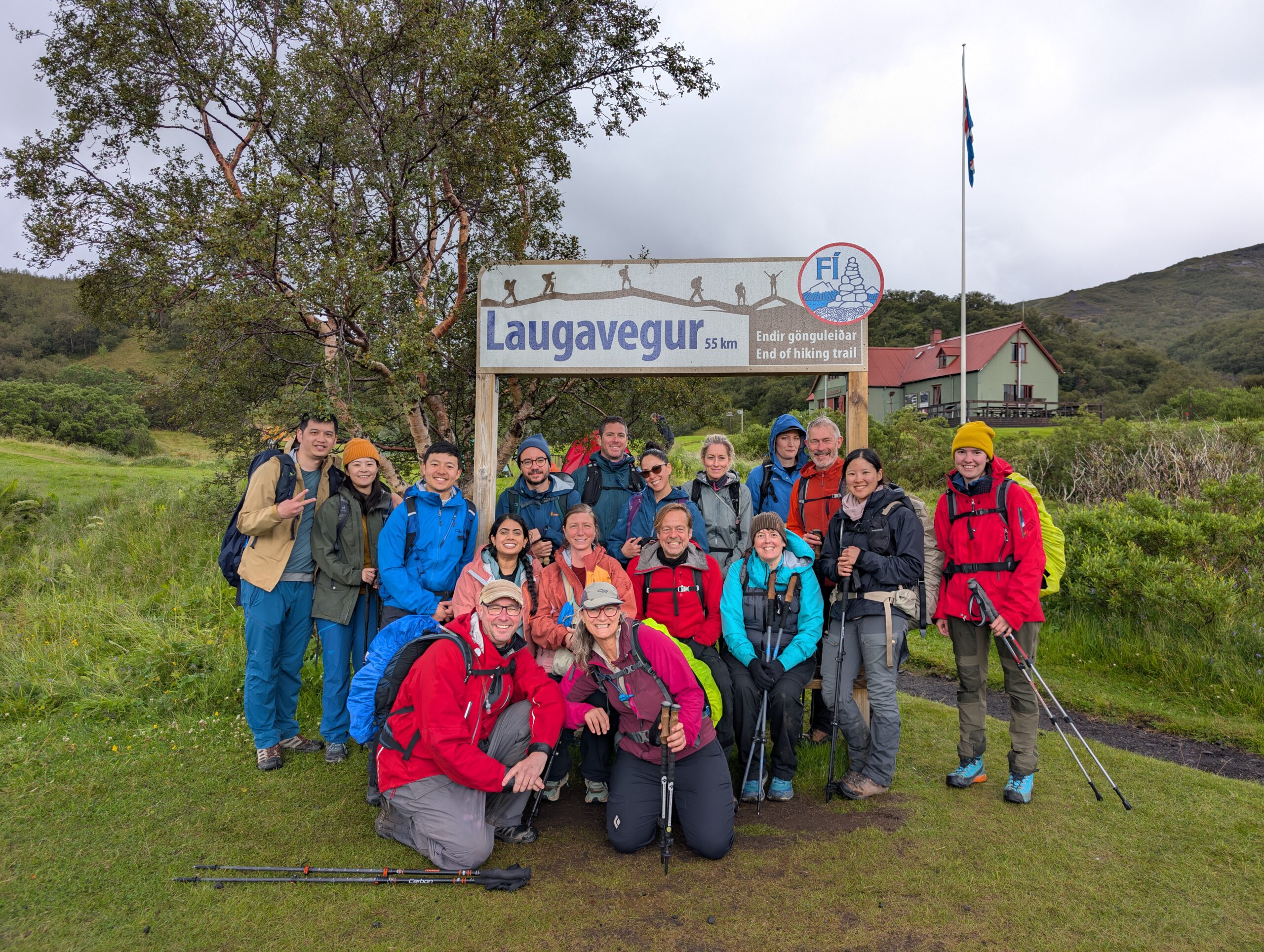
My group at the end of the Laugavegur trail. We were a mix of people from the USA, Canada, Switzerland, Taiwan, and Norway.

We didn’t stay in the hut at Thórsmörk, although they did let us relax there while waiting for the bus to arrive. There are additional trails in that area that looks great, and three huts in total. Most of the people doing the full hike were foreigners, but I was told that Thórsmörk is a place that native Icelanders regularly come to recreate. I might try to make my way back here, for a day trip or a night in a hut. But the season for the Highlands is very short: basically mid-June to mid-September.


Getting back from the hike I laid low for a couple of days, catching up on sleep, laundry, and email. But I was able to register for my classes, and getting the syllabus’ and schedule provides me with a sense of the structure that I’ll have starting August 18th. I’ll share more as things get going.


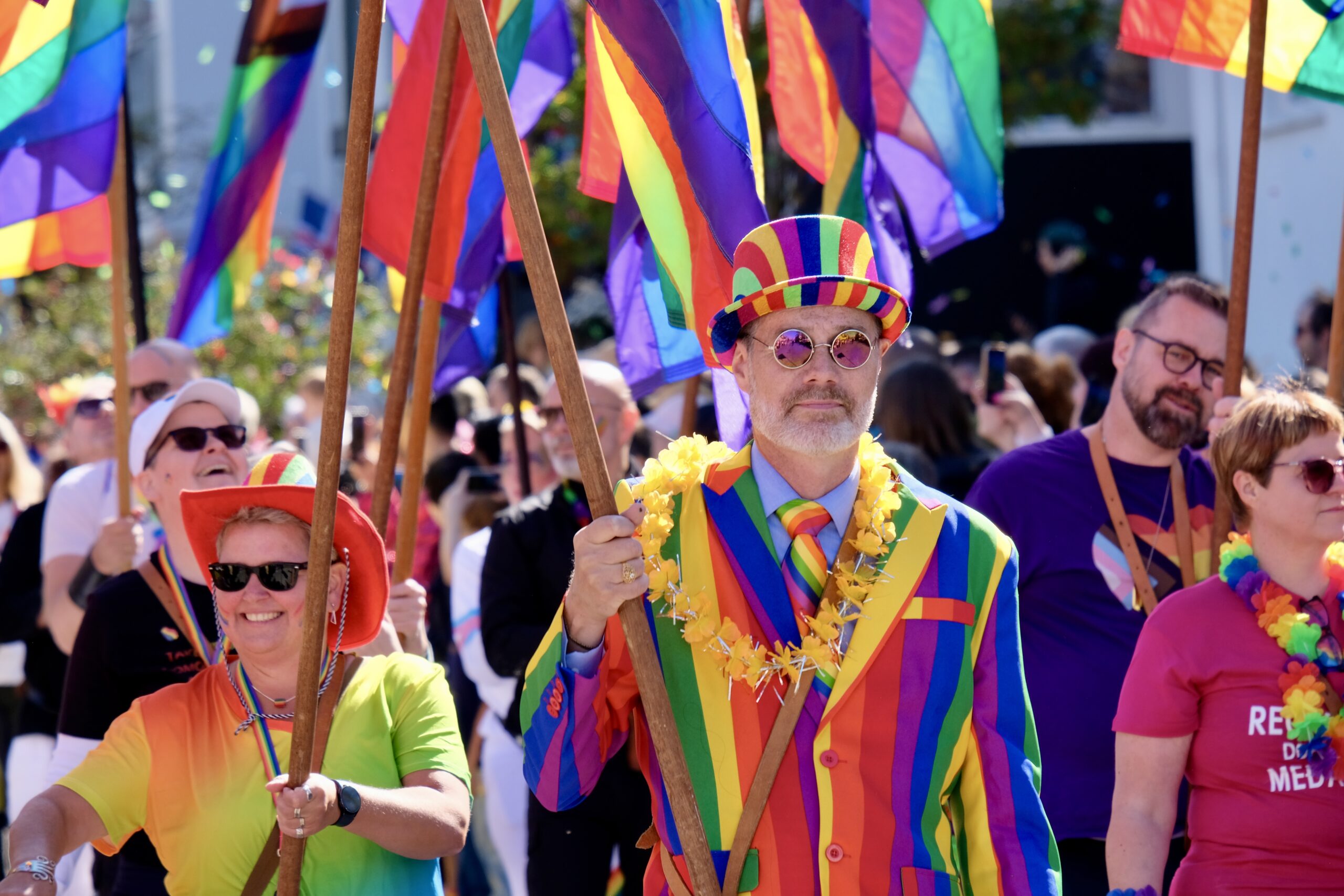
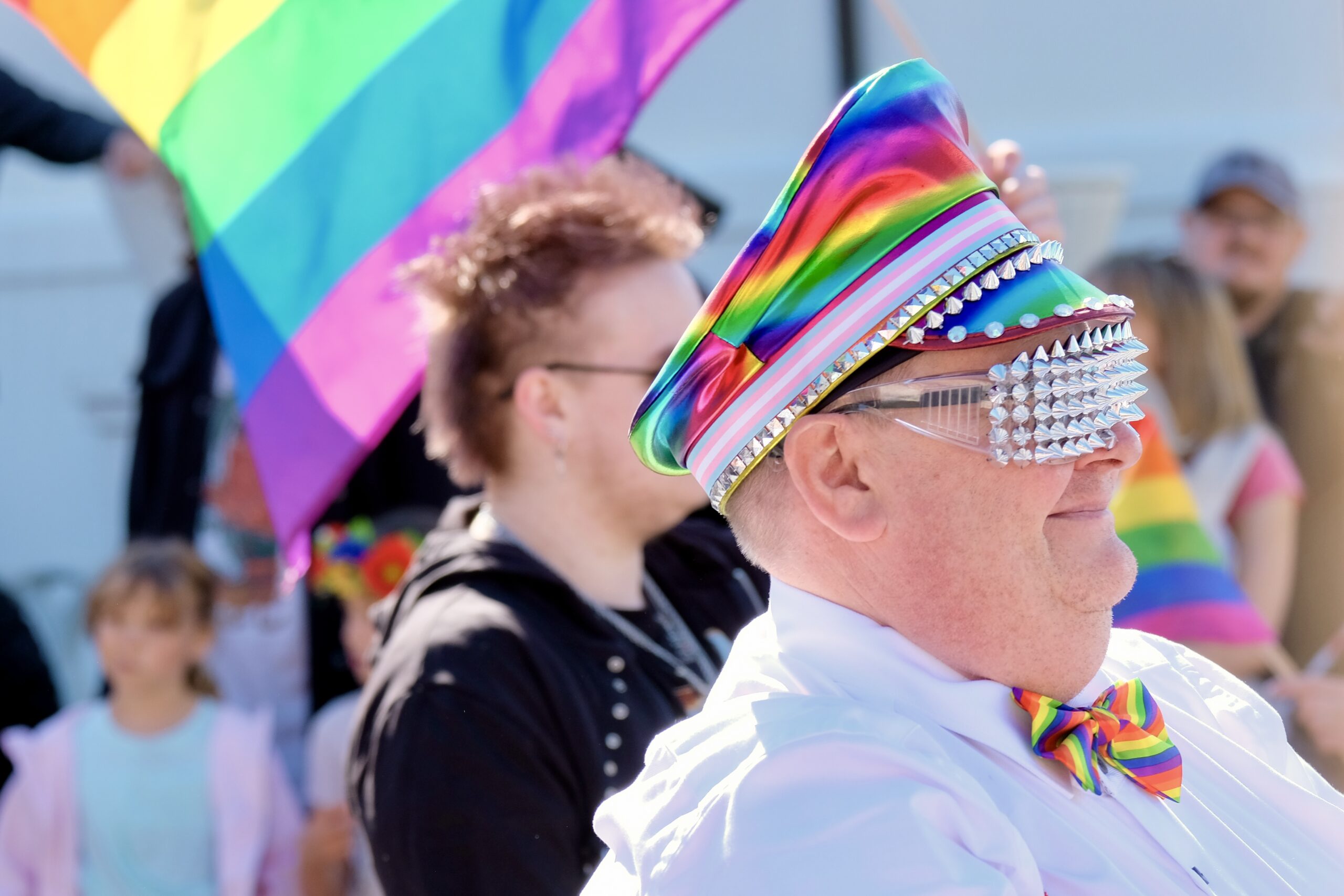
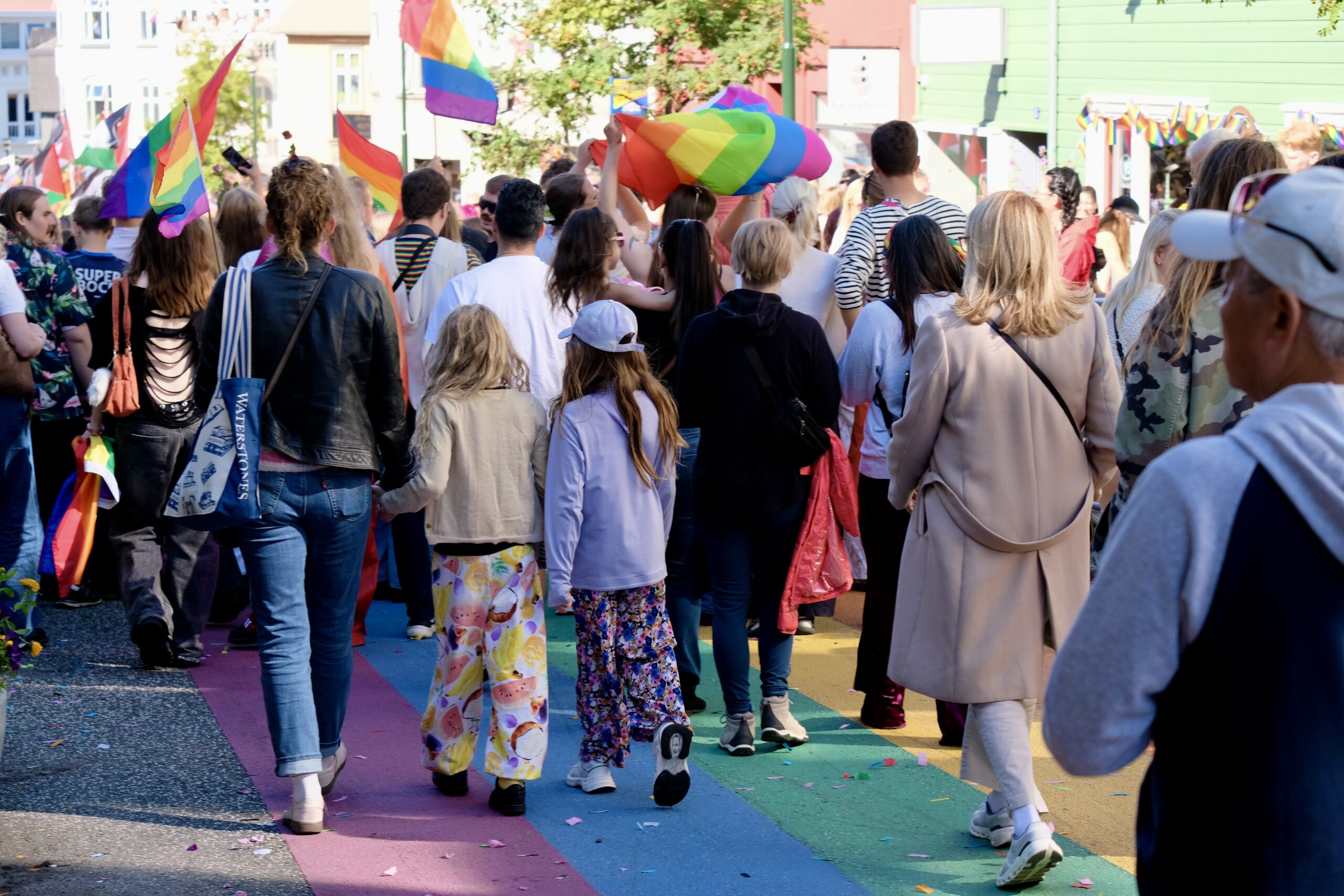
The weather in Reykjavík had been dreary all week, but yesterday in it was nearly perfect for the Pride Parade. Clear blue skies, upper 50s, and a massive celebration of diversity and equality. Perhaps the biggest difference about Pride in Iceland versus the US right now is the fact that the Prime Minister attended and spoke at the celebration.

Noted & Done

  • I’m noticing that the light is starting to change. When I moved here last month it felt like daylight when I went to bed, now it feels like dusk and I’m awake to see an actual sunset.
  • A Highland bus from TREX is bookable for a self-planned trip to Þórsmörk or Landmannalaugar. They aren’t cheap at ~$228 round-trip, but the alternative is to rent a car that can drive through deep rivers. Apparently these buses can handle up to 2 meters of water.
  • Registered for my classes at the University of Iceland.
  • Checked out Góði hirðirinn, a second-hand shop, and got some fun and random things for my apartment.
  • Went to an event billed as a SuperCollider Session at Mengi, which showcased students from the Iceland University of the Arts playing pieces they developed through a music programming course.
  • Finished reading the book The Second Mountain: The Quest for a Moral Life by David Brooks.