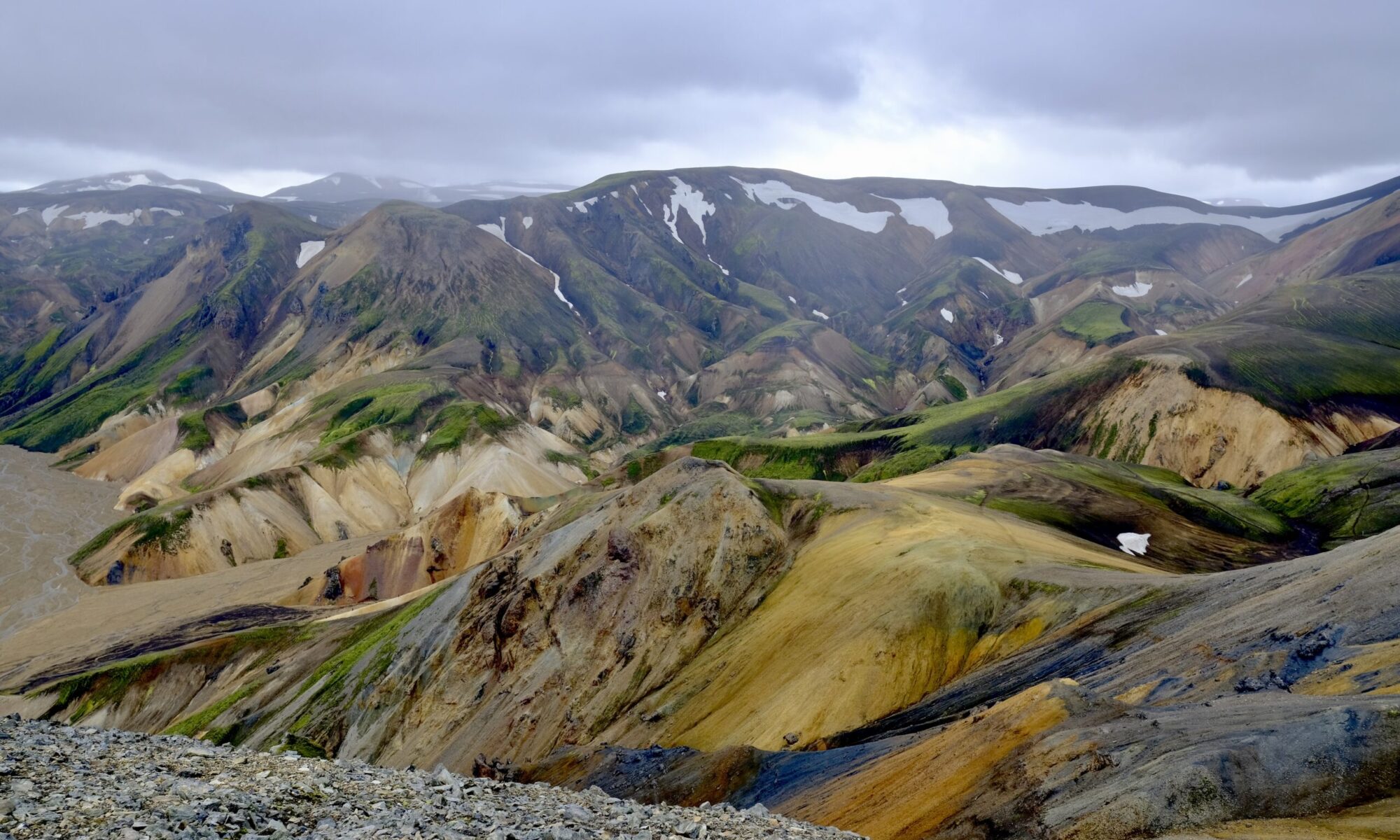
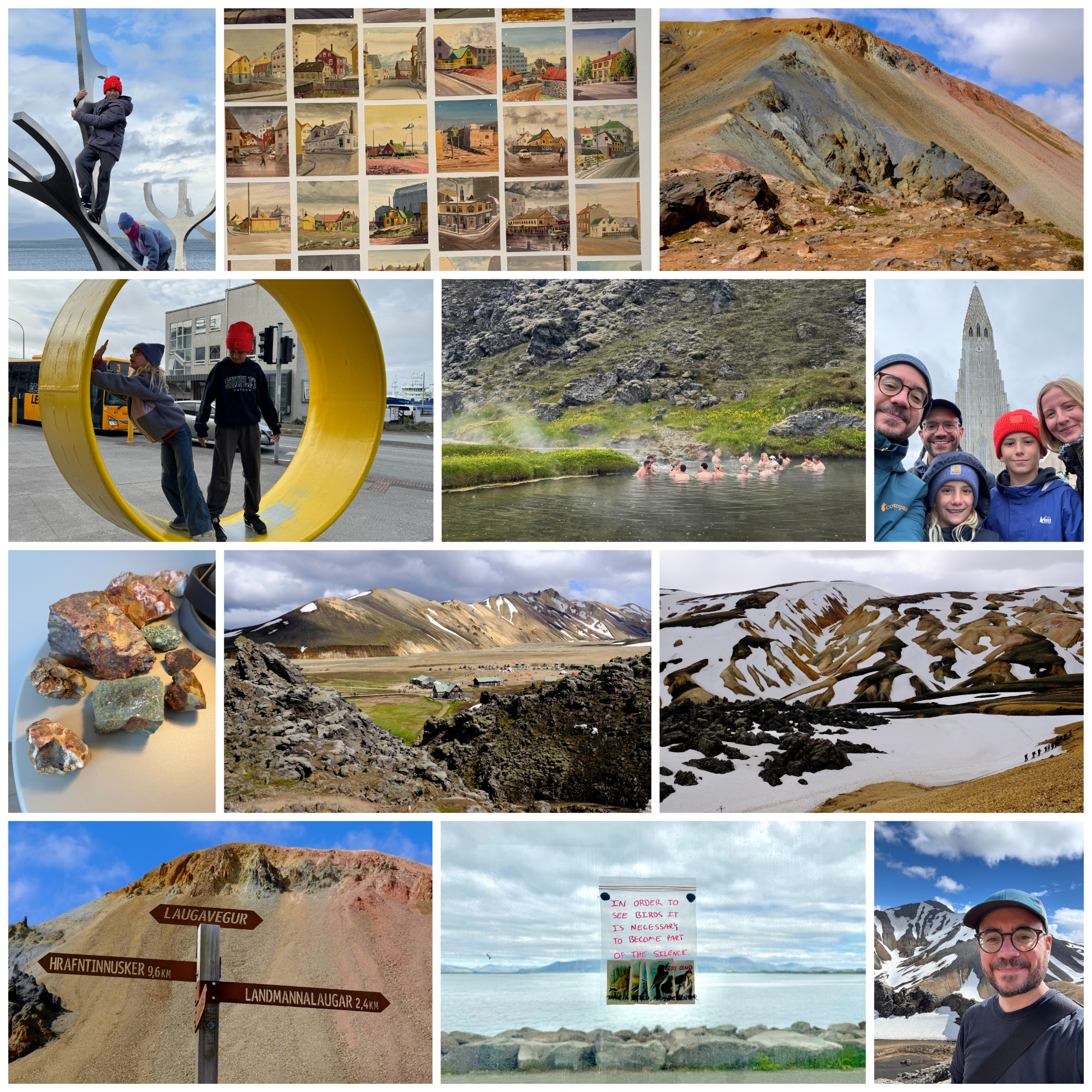
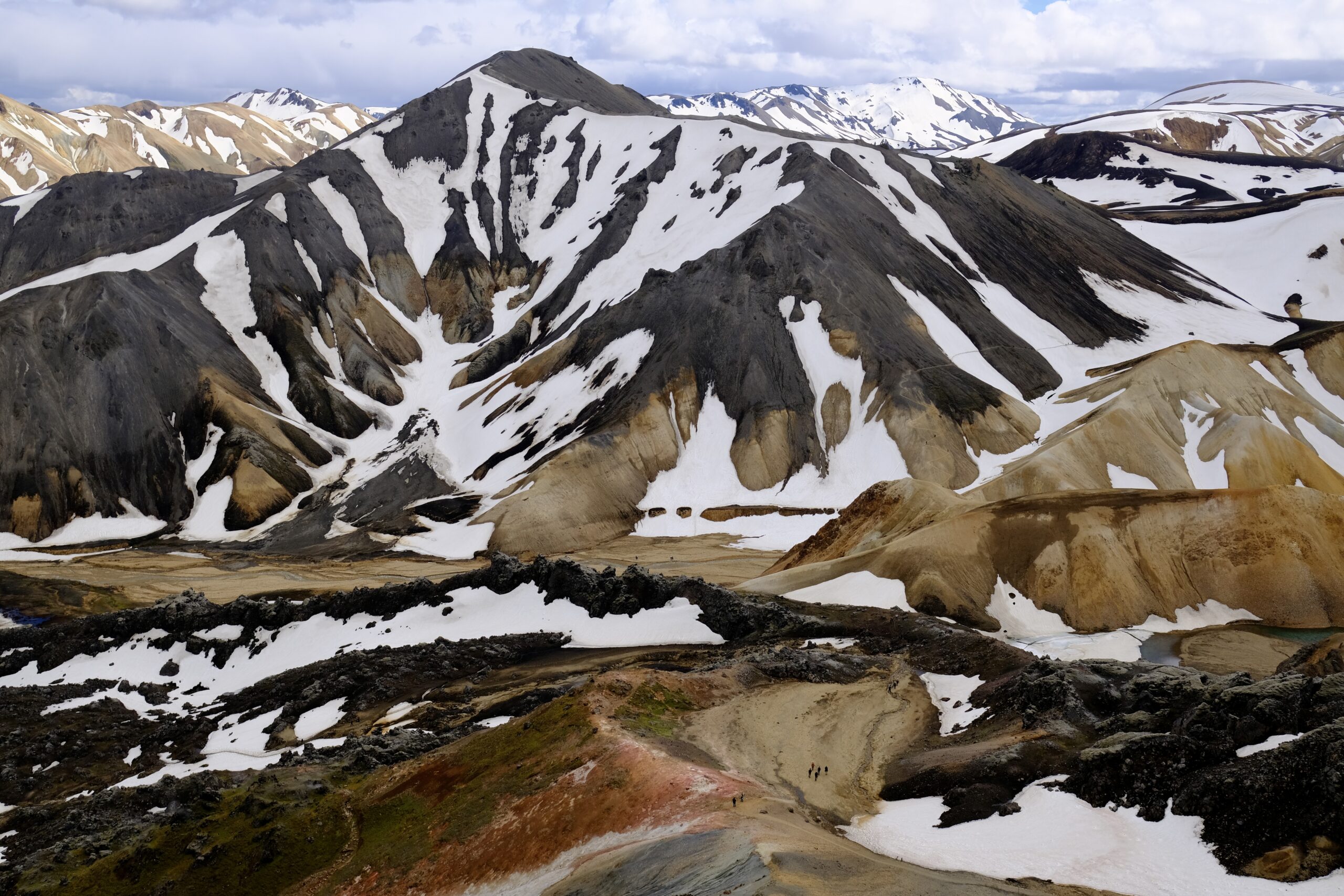
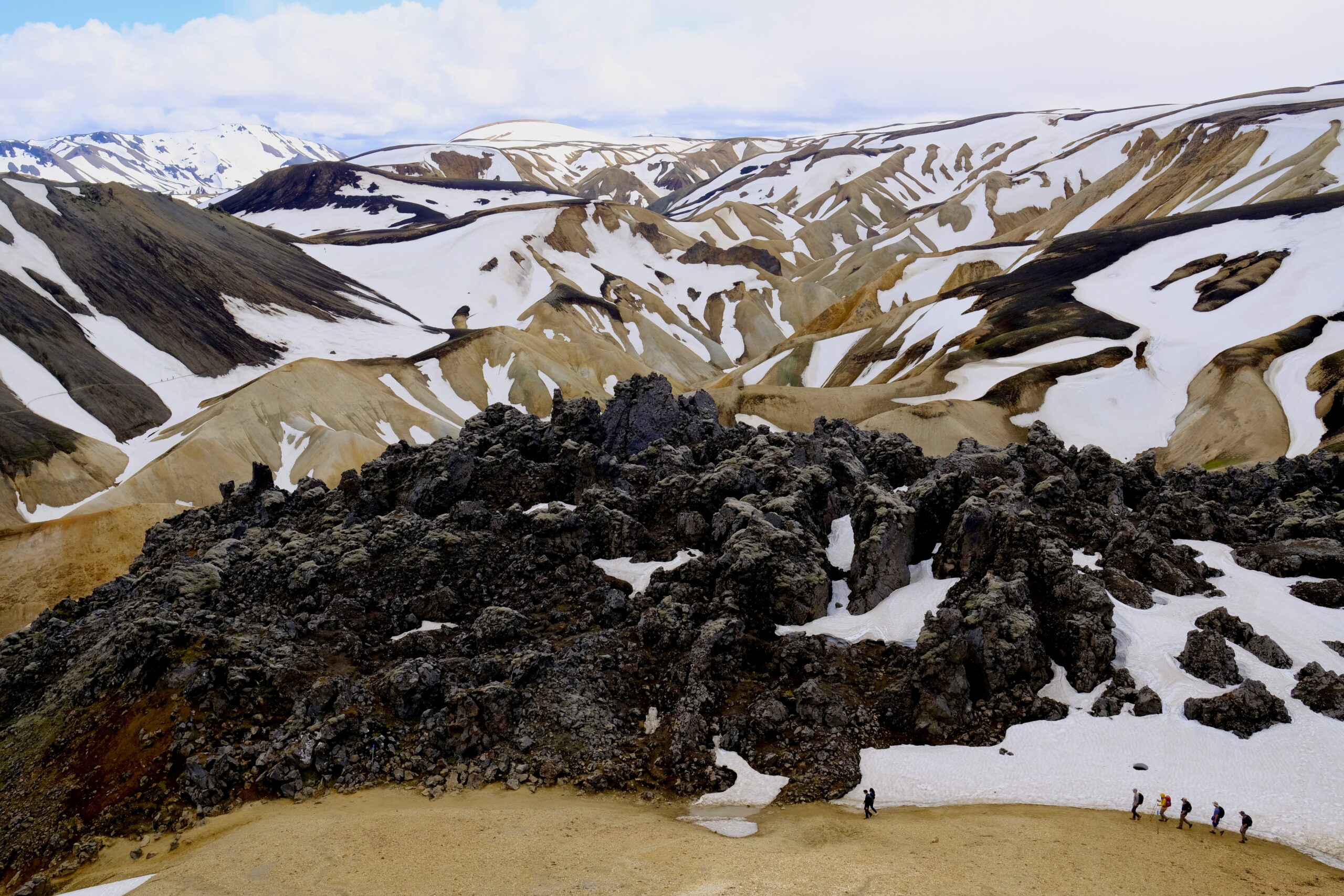
Back in Week 4, I hiked the Laugavegur trail, a 55 km path from Landmannalaugar to Þórsmörk in the Icelandic highlands. The starting point, a series of rhyolite mountains surrounding a massive lava field, was a magical spot that I knew I wanted to go back to before I left Iceland. This week, just three days after the F208 access road opened for the season, I took a long day trip to Landmannalaugar and hiked a different part of the mountains than I did last August.
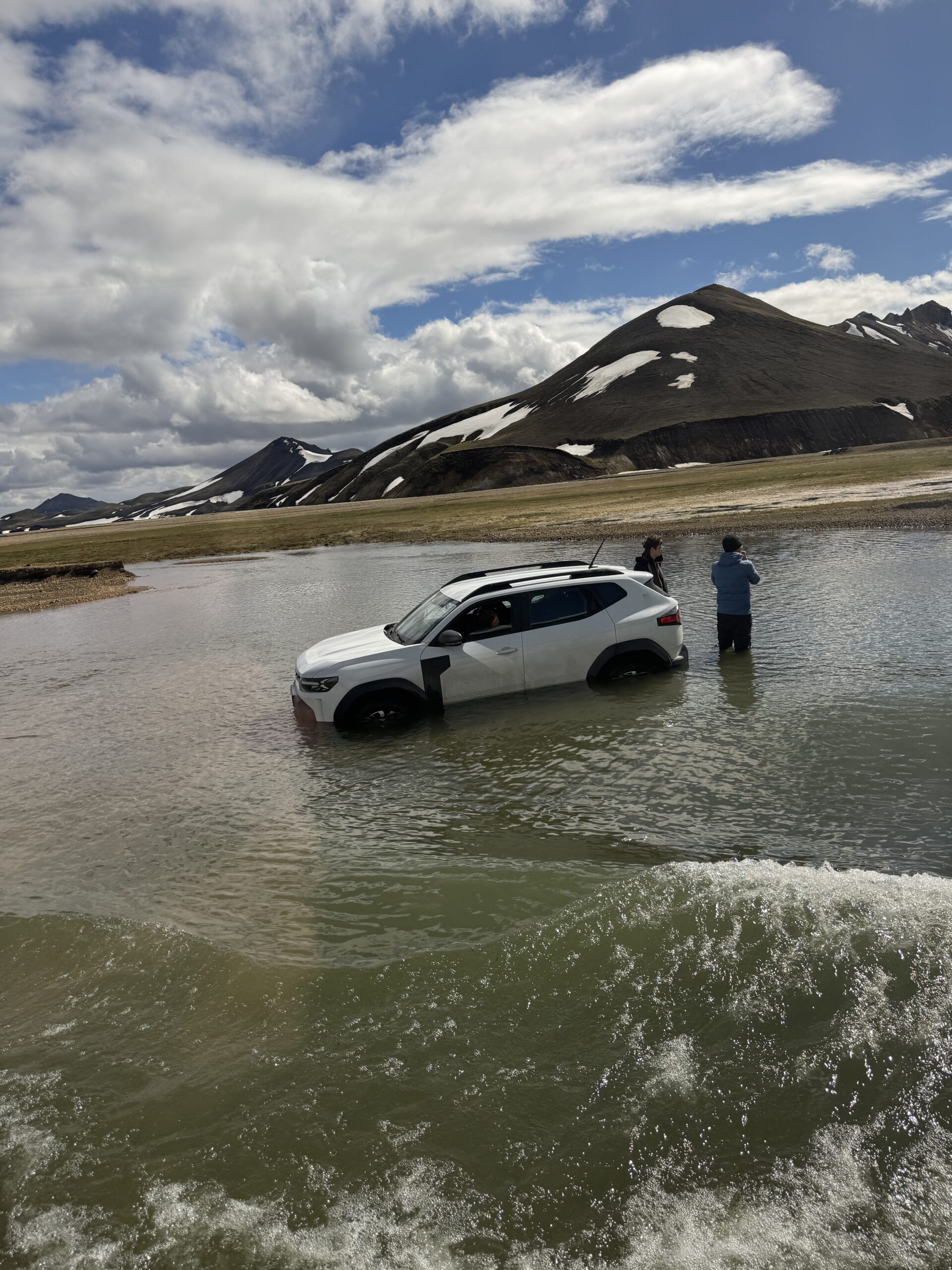
As it was early in the season, the snow was still present, both on the mountains and covering parts of the trail. But the weather was nearly perfect, warm enough at times to take my coat off and not a drop of rain until I was out of the hot spring and packing up to leave. My general rule-of-thumb for day trips is that hiking time should be at least as long as driving time, but I was willing to accept 9 hours of driving for 5 hours of hiking because I wasn’t the one behind the wheel. I took the bus with Arctic Adventures, which saved me from renting a 4×4 for the F-road and let me doze on the ride from Reykjavík and back. Driving would have been stressful — I saw multiple rental cars that weren’t up to the task abandoned in the middle of a river.

While I was in Landmannalaugar, my brother and his family were in the Westman Islands, midway through their Iceland trip, which concluded with three days in Reykjavík. It was great to spend time with them here, wandering around the city together. One spot we visited was Whales of Iceland, which houses 23 different life-sized models of whales in a single room. That layout provides a pretty unique way to compare different species of whales directly. It was not only informative, but also topical, as the controversy about the recently restarted Icelandic fin whale hunt is ramping up.
Last week, I posted about the anti-whaling protests, but this week the tensions seem to be rising. This is primarily due to Paul Watson, the radical anti-whaling activist who uses direct action to stop whaling campaigns around the world. He’s launched what he calls Operation 86 to stop the fin whale hunt in Iceland, named in reference to actions he took in 1986 that resulted in the sinking of two whaling ships from the same fleet. His ship, the Bandero, was spotted by the Icelandic Coast Guard entering Iceland’s Exclusive Economic Zone without its automatic identification systems (AIS) turned on. The whaling boats have also turned off their AIS, so there is no public tracking of their location either.
Paul Watson is an extremist, and having watched a few seasons of his TV show Whale Wars, I don’t view him in a positive light. He justifies his use of harassment and even violence through the virtue of his cause, but in other countries (like the Faroe Islands) his brash approach has ended up crystallizing the local population against him, even if they are on the fence about whaling. If there’s anything universal about Icelanders, it’s that they don’t like outsiders telling them what to do. Watson’s campaign has the potential to make this less about the whales, and more about a clash between two men, given his focus on Kristján Loftsson, the Icelandic businessman who owns the whaling company. Don’t get me wrong, Kristján deserves to have a light shone on him, given that his political influence is likely what allows whaling to remain legal in Iceland. But I would guess that Watson will end up creating an us-versus-them narrative that leaves Icelanders siding with their countryman instead of looking at the real concerns of political influence and power. That could end up hurting the anti-whaling cause more than it helps.
In a discussion about the whaling controversy, in a private Facebook group for foreigners, someone posted this 2013 documentary on Vimeo that gives a good overview even if it’s a bit dated.
The other big Icelandic controversy this week is that parliament passed a law requiring universities to charge tuition fees for non-EEA students, taking effect for the 2027-28 academic year. Iceland was the only remaining Nordic country that didn’t charge tuition to students outside of the EEA, after Norway changed its law in 2023. The University of Iceland hasn’t set the cost yet, saying that they’re still calculating and it may vary depending on the program. Up until now, non-EEA students have only had to pay a registration fee, and prove they have sufficient funds to cover the cost of living.
This change had long been rumored, even before I applied to my graduate program. The case against it is that Iceland will lose talented students who will opt to study elsewhere, and that the high cost of living in Iceland will contribute to an unmanageable total cost for foreign students. Already, the university saw a decline in non-EEA applications last year as the possibility of the tuition law loomed. Some people believe that this is part of a growing anti-immigrant attitude, or has racist overtones, similar to the restrictions on student residence permits that were instituted for non-EEA students last year after an increase in students from Nigeria, Pakistan, and Ghana.
I guess the meta-theme in this week’s post is that Iceland is a complicated place like any other. As much as we might imagine that perspectives and values get bundled together into a few “packages” that we can put political labels on, reality is messier. Iceland can lead in trans rights, but enact laws that seem to be driven by racism; it can be a leader in renewable energy but allow commercial whaling.
Noted & Done
- I really enjoyed the exhibition Big Little City – Reykjavík in View at the Kjarvalsstaðir location of the Reykjavík Art Museum. Having gotten to know the city so well, it’s fun for me to see depictions of it over time.
- I highly recommend the free weekly newsletter Perfect Sentences by Ingrid Burrington. As it says on the tin, it’s just some very good sentences.
- This week, on the bus to the highlands, I used the Vehicle Motion Cues feature on iPhone. It’s supposed to help reduce motion sickness when using your phone in a vehicle by resolving the sensory conflict between what your eyes see and what your inner ear feels. This is a reminder that iOS is packed with interesting features hiding in the settings, most of which you can bring to the Control Center so they are just a tap away.
- I launched another big update to the Manuals feature on Moped Army. Manuals now have their own pages, full OCR text in the HTML page, and a widget for the wiki.