Iceland: Weeks 42 + 43

For most of the last two weeks my parents have been in Iceland. After a couple of days in Reykjavík, we traveled around the country together, driving 1500 miles counter-clockwise on the Ring Road with excursions into Vestmannaeyjar, the Eastfjords, and around various peninsulas. They were on a tour of Iceland in 2021, so there was a little bit of overlap with that, but we did the kind of exploring that a tour would never support: driving down gravel roads deep into mountain passes, roaming the back streets of harbors in tiny fishing villages, tracking down sculptures in the mountains. A couple of years ago there would have been no way they’d be up for some of the hikes we did — up a volcano, on a glacier — but knee replacements do wonders and they have three new knees between them.

There were far too many great sites and moments to chronicle in one post, but I’ll touch on some of the highlights and things that were new to me. I have lots of photosets on Instagram if you want to see more.

On top of the Eldfell volcano in Vestmannaeyjar (Westman Islands).
Map of my road trip around Iceland with my parents in May 2026.

Our first stop was Vestmannaeyjar, which was the trickiest to plan around because the ferry is operating on a single engine and can’t make it across the strait in bad weather. Luckily the weather was good enough to sail there on schedule, but on advice from an agent at the ferry terminal I swapped our return trip the next day to be the first ferry out at 7am, in order to guarantee that we wouldn’t be trapped.

I love those islands, and was happy for another chance to hike up the Eldfell volcano to get a view of the whole archipelago. It was a lot greener when I was there last August, but this trip offered the chance to see a new site-specific artwork by Ólafur Elíasson that was installed earlier this month. It’s called “The Wanderer’s Perspective” and consists of two parts: a viewing sphere that frames the volcano, and a new walking path up to its summit (still in development). The walking path will follow the route of a giant piece of lava from the 1973 eruption that was nicknamed Flakkarinn (The Wanderer) because of how far it traversed across the landscape.

The viewing sphere is easily accessible, and frames the volcano in a way that the sun aligns with the volcano’s peak at 1:30pm on January 23, the exact date and time of the eruption. Circular holes in the roof trace the sun’s trajectory on July 3, the day the eruption was declared over.

“The Wanderer’s Perspective” by Ólafur Elíasson

Leaving the Westman Islands we visited lots of spots along the south coast, and it turned out that the earlier ferry was a great idea because there’s so much to see along this stretch. We stopped by the Seljalandsfoss and Skógafoss waterfalls of course, but also the Sólheimajökull glacier, Reynisdrangar beach, and Hjörleifshöfði cave. The next day we hiked the Fjaðrárgljúfur canyon and walked on the Svínafellsjökull glacier before it started raining heavily. That may have contributed to lack of ice on Diamond Beach, but it was still fun to check out the massive icebergs in Jökulsárlón glacial lagoon.

My parents at Fjaðrárgljúfur canyon.
Svínafellsjökull glacier tongue
Jökulsárlón glacial lagoon

After staying in the night in Höfn, we drove into the Eastfjords the next day, venturing further east than I’d been in Iceland before. It immediately felt different for me, taking in new sites versus driving through ones I’d seen two to four times before. More firsts came fast, as this region is where the wild reindeer live and we added them to our animal sightings along with the pervasive sheep and horses. It was earlier enough in the year that their antlers were still velvety and we even spotted a couple of calves.

Reindeer in the Eastfjords
Two reindeer in the Eastfjords
A female reindeer and her calf, in the Eastfjords.

Also in the Eastfjords was Petra’s Stone Collection, an absolutely amazing place showcasing a single woman’s collection of rocks and minerals found all around Iceland over her lifetime. It is impossible to convey the size and scope of her collection but it’s like nothing I have ever seen. See my Instagram photoset for more.

Petra’s Stone Collection
I can’t believe how many colors and textures were in this one rock.

We stayed in Seyðisfjörður, which is reached by driving over a mountain pass that was still covered in deep snow. The town is where the Smyril Line ship arrives in Iceland after sailing from Denmark via the Faroe Islands. It’s also one of the two locations that were used in the Icelandic TV series Trapped, the other being Siglufjörður where we also stayed a few days later. I’m looking forward to rewatching the show now that I’ve spent time in both places.

Sheep with her lamb in Seyðisfjörður.

While there, we also hiked up the mountain to see Tvísöngur, a sound sculpture by the German artist Lukas Kühne that consists of a series of interconnected concrete domes. The plaque notes that it can be viewed as a visualization of the Icelandic five-tone harmony tradition, and dubs it “singing concrete.” The experience is that if you stand directly underneath each dome your voice resonates strongly back to you, in an effect that feels as if you have headphones on, piping your amplified words back into your ears. It’s a strikingly simple design but a really fun and powerful effect.

Tvísöngur sound sculpture

Nearby was another sculpture, squarely aligned with my interest in subsea cables, called “Hvernig gengur?” — How is it going? — and was commissioned by Iceland Telecom to commemorate the 100th anniversary of the first telegraph cable laid between Scotland and Iceland in 1906, which came ashore in Seyðisfjörður.

Hvernig gengur? sculpture.

Our next stop in the Eastfjords was Borgarfjörður Eystri, the puffin capital of Iceland, where an islet named Hafnarhólmi is home to thousands of burrows. Stairs and platforms allow visitors to walk around part of the islet, providing an extremely close up view of the puffins from every possible angle. When we arrived, this closeness already made it the best puffin site I’d been to, even surpassing Mykines on the Faroe Islands. But soon after 8pm a majority of the birds that had been out to sea returned, in a seemingly coordinated ritual. At that point the hills were absolutely swarmed, with puffins taking off and landing, going in and out of their burrows, billing their mate, and strutting around.

The crowd gathered to view them all seemed to understand what a special moment this was, adopting library-hushed speaking levels and careful footsteps; it was a quiet and reverent place. These funny little birds have the ability to make everyone smile as they awkwardly fly and waddle around on their bright orange feet.

Puffin at Borgarfjörður Eystri.
Puffin at Borgarfjörður Eystri about to take flight.
Puffin at Borgarfjörður Eystri with its mouth open.

As we started heading northwest, our first stop was the hike to Stuðlagil canyon. The water at this time of year isn’t the turquoise color you often see in photos, but the basalt columns along the river’s edge are stunning. If you’re thinking of going, I recommend hiking in on the east side of the canyon. The west side has more infrastructure, and you can drive up to the lookout spot, but there are still hundreds of steps down to the river and you can’t walk down into the canyon. You’ll see some of it, but most of the views will be just out of sight. The eastern side has a new parking lot further along the canyon, so it’s now only a ~3 miles hike instead of what used to be ~6 miles.

Stuðlagil canyon from the eastern bank
Stuðlagil canyon

As we headed west we started to get back into areas of North Iceland I’d visited in early April. We went to the Hverir geothermal area, visited the cows at Vogafjós Farm Resort, stayed on a farm near Lake Mývatn, and visited Goðafoss. There was a massive cruise ship docked in Akureyri, deploying 20+ full-size buses to the sites in the area. I’m not a fan of that kind of travel, or being around those kinds of crowds, so it was nice to head up the peninsula to Siglufjörður where we spent the last two nights of the trip.

It was rainy, and even snowed, the final two days — but that was okay. We stayed at the excellent Sigló hotel, which has a geothermal hot tub overlooking the harbor and mountains that is great in any weather. We also visited The Herring Era Museum, which has excellent artifacts from the town’s history when it was Iceland’s fish export epicenter.

Hot tub at the Sigló hotel in Siglufjörður.
Rainbow over Eyjafjörður.
Sauðanesviti lighthouse

As we headed back to Reykjavík we detoured to see the sea stack Hvitserkur. We also passed by one of the most interesting sheep roundup pens I’ve seen in Iceland, situated unusually right by the beach.

Hvitserkur sea stack
Sheep roundup pen by the ocean, just north of Hvammstangi on route 711.

The final trip was to the Reykjanes Peninsula, to drop my parents off at the airport but also to explore the area around Grindavík. We saw the fresh lava flows that covered the old road, as well as the magma barrier walls that surround the power plant and town.


Overall, it was a great trip around the country and I’m happy that I was able to do it with my parents. One of the interesting things about traveling with other people is that they notice different things than you do. When my brother visited Iceland he pointed out many aspects of the architecture that I hadn’t seen. My Mom notices artifacts, furniture, and how people construct their homes in ways that I might overlook. She also has an incredible eye for interesting rocks and was always finding good ones as we hiked. My Dad, not surprisingly, sees the farming activity in rural Iceland with a level of depth that most of us would overlook. I see the tractors, sheep, and hay bales but he’s looking at soil type, fertilizer composition, and water management practices. We all have our travel eccentricities — I did track down a monument to a telegraph cable after all — but it was interesting to see Iceland through their eyes.

Iceland: Week 10

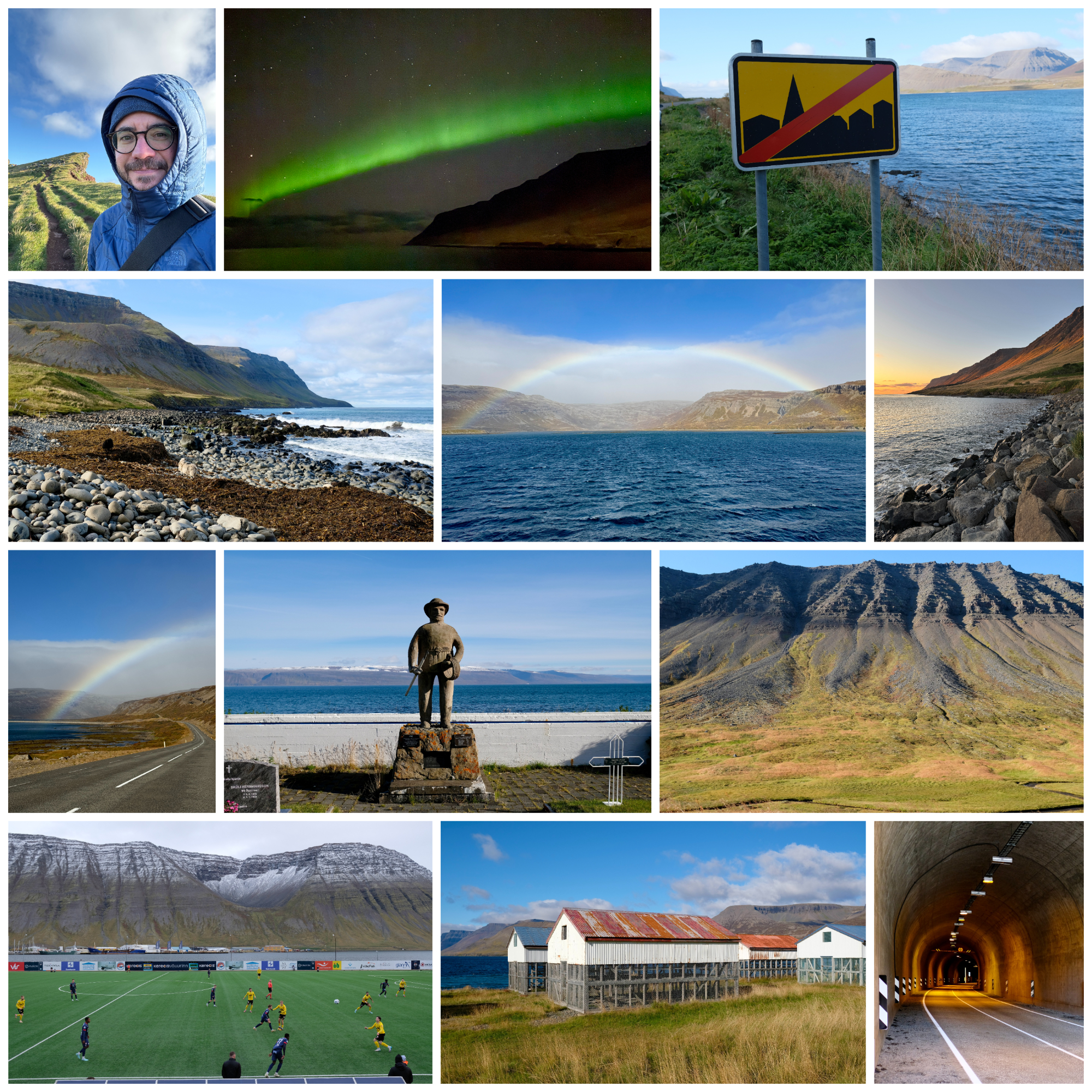
I just got back from my first trip to the Westfjords, a region that has fascinated me for a long time. It’s like Iceland turned up to 11: least populous, most remote, deepest fjords, oldest landscapes. As a multi-day excursion off the ring road it’s sometimes overlooked by tourists, even when they’ve circled the whole country. It felt to me like a bigger version of the Faroe Islands, reminding me of the area around Klaksvík, as well as the southern island of Suðuroy. There’s something calming for me about these landscapes. The sharply steep mountains hold their rocks at an impossible angle of repose, sparing only a tiny strip of flat land along the water to site a village. It’s as if the hills are gently squeezing the fjord, and like a geologic version of the Temple Grandin hug machine, it induces a sense of stillness and quietude.

I had the opportunity to take a long weekend trip because my Thursday classes were cancelled this week, due to my professor traveling. The timing was perfect, as this is about as late into the year as I’d want to go. Winter comes early in the Westfjords, but right now the autumn foliage in the mountains is all rusty reds and yellows, with only occasional pockets of snow and ice at higher elevations.

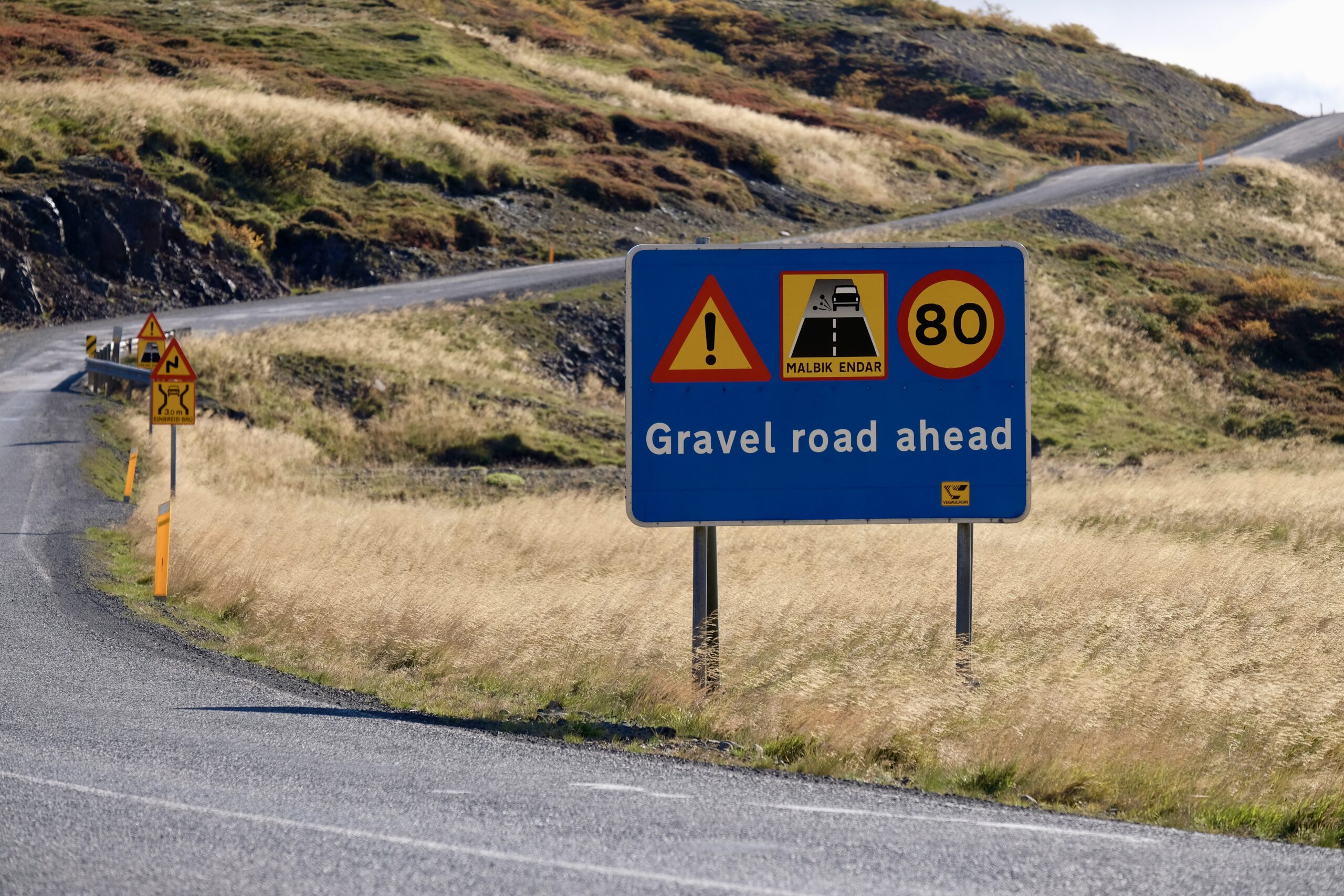
The primary “two digit” roads (e.g. 60, 61) through the region are mostly, but not completely paved. The “three digit” roads (e.g. 612, 624) are paved in proportion to the size of the village they lead to, and the spur roads that snake into valleys to reach a single farm are always gravel. The weather was nearly perfect — sunny and blue skies — although windy and cold of course. I rented a basic 2-wheel drive car, which worked fine, but it would have been tricky in mud or ice. Only once did judge that I should turn around, when I found myself climbing a steep grade over a mountain to an abandoned farm and the path turned to snow. It’s good to know that my tiny inner voice of self-preservation is still alive and well.

But in general, the good weather made it easy for me to just roam around — to the cliffs and water falls on the sightseeing maps, as well as the back streets of tiny villages, the harbor corridors of fish processing plants, and even a local football match. I have photo sets on Instagram for each day (day 1, day 2, day 3), but I’ll highlight some favorite moments below.

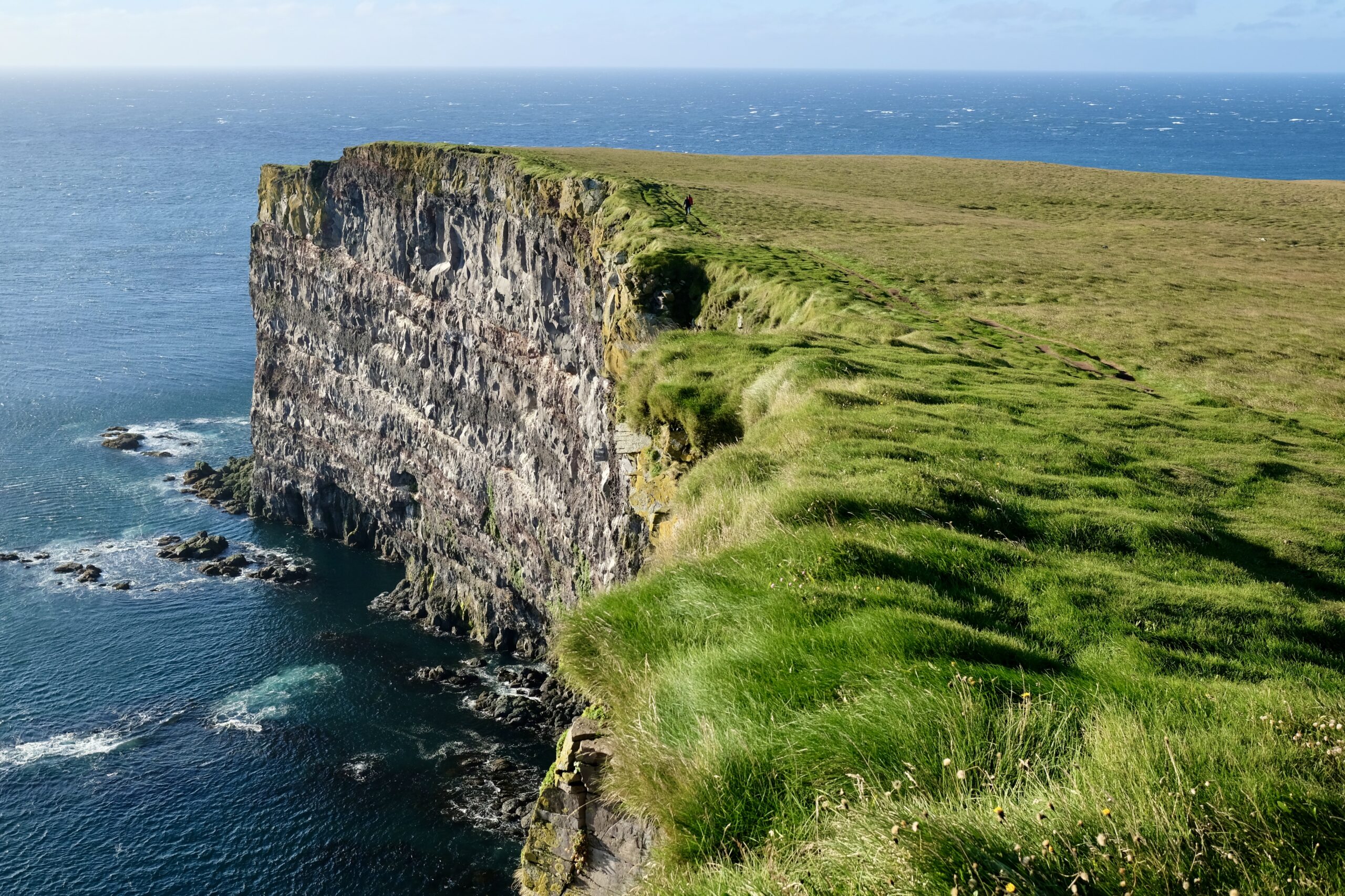
The Látrabjarg sea cliffs are on the southwest tip of the Westfjords. A reason for me to go back is that earlier in the year these cliffs are full of sea birds (including puffins). It’s the westernmost point in Iceland, as well as Europe (although apparently the Azores make that claim too).

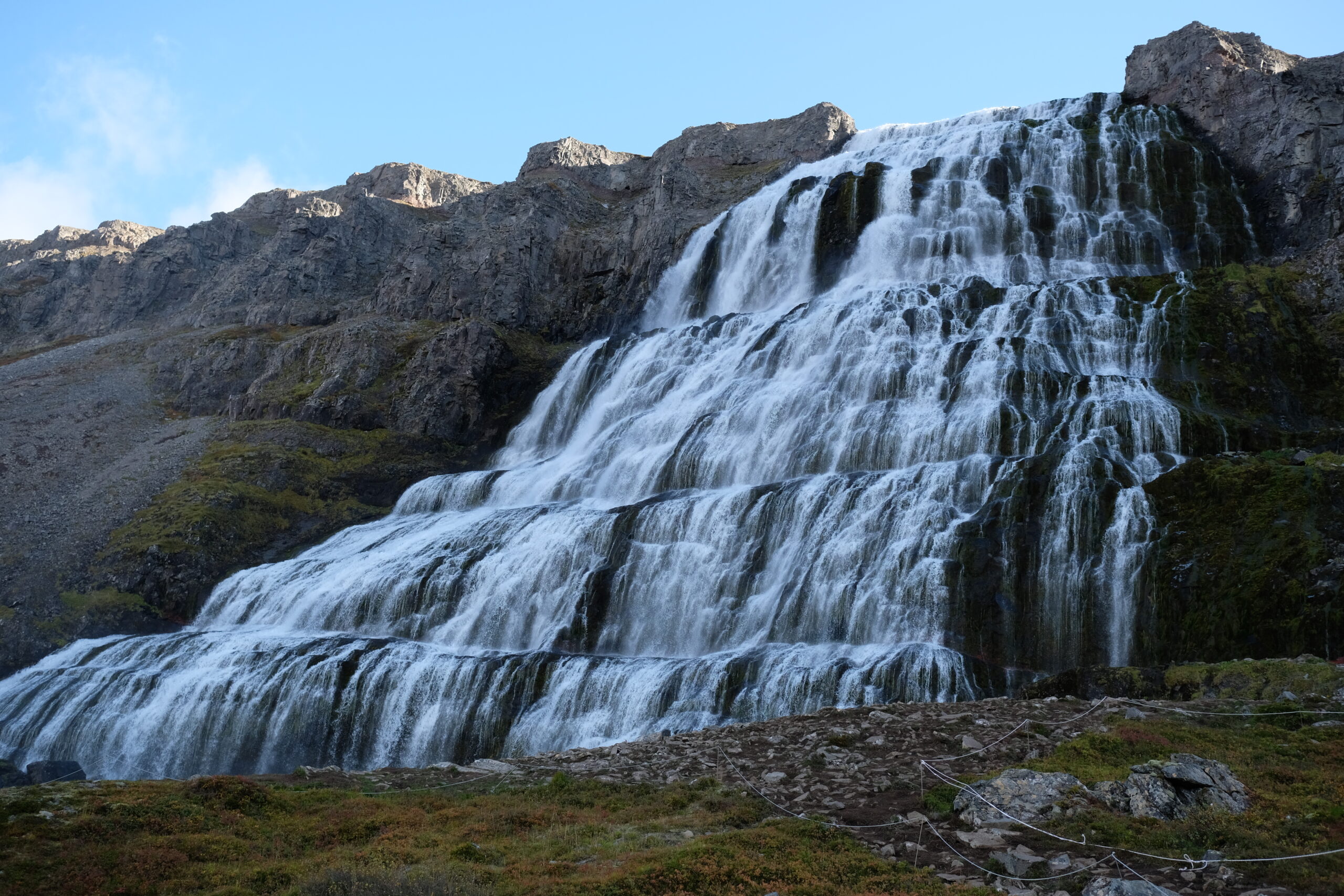
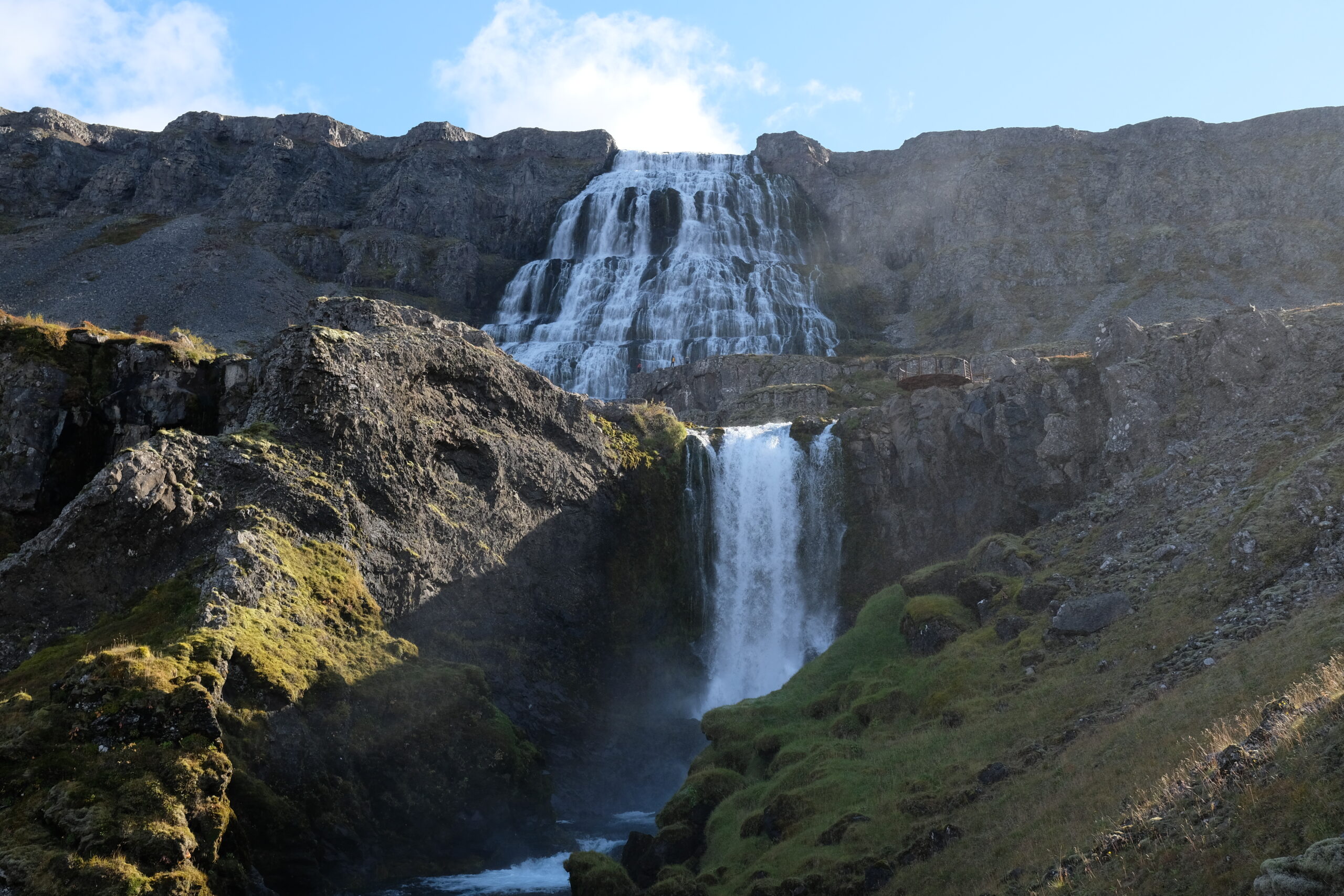
The Dynjandi waterfalls is a massive cascade that feeds numerous other waterfalls below it. I really wonder what this one is like in the winter, as it was already starting to ice up and the dispersed nature of the cascade makes me think it could freeze in interesting ways.

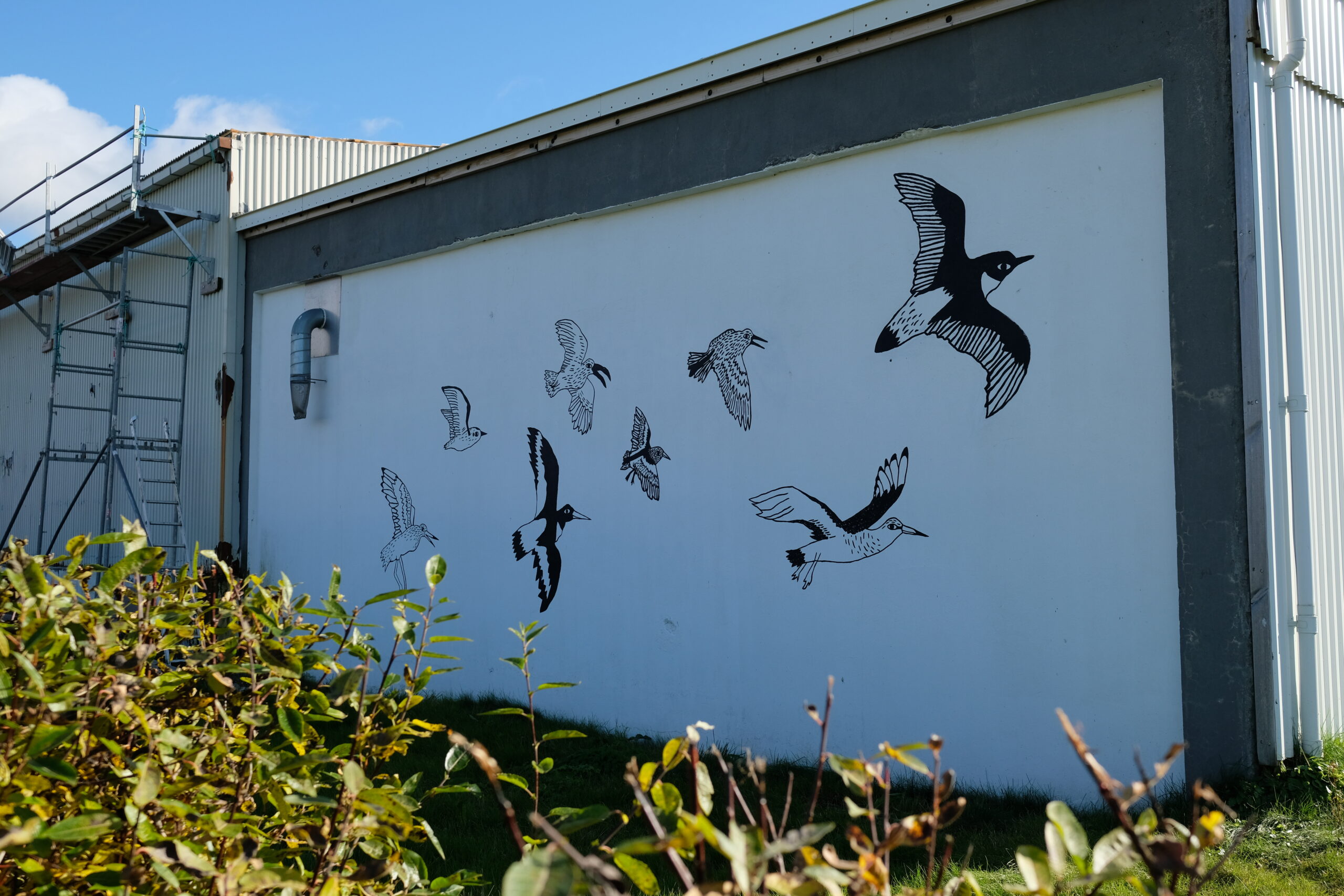
I spotted these birds while driving around the back roads of Þingeyri, and they looked strangely familiar. I realized that it was because they were painted as part of a scene in a movie I recently watched, Summer Light, and Then Comes the Night, which must have been filmed in that village.

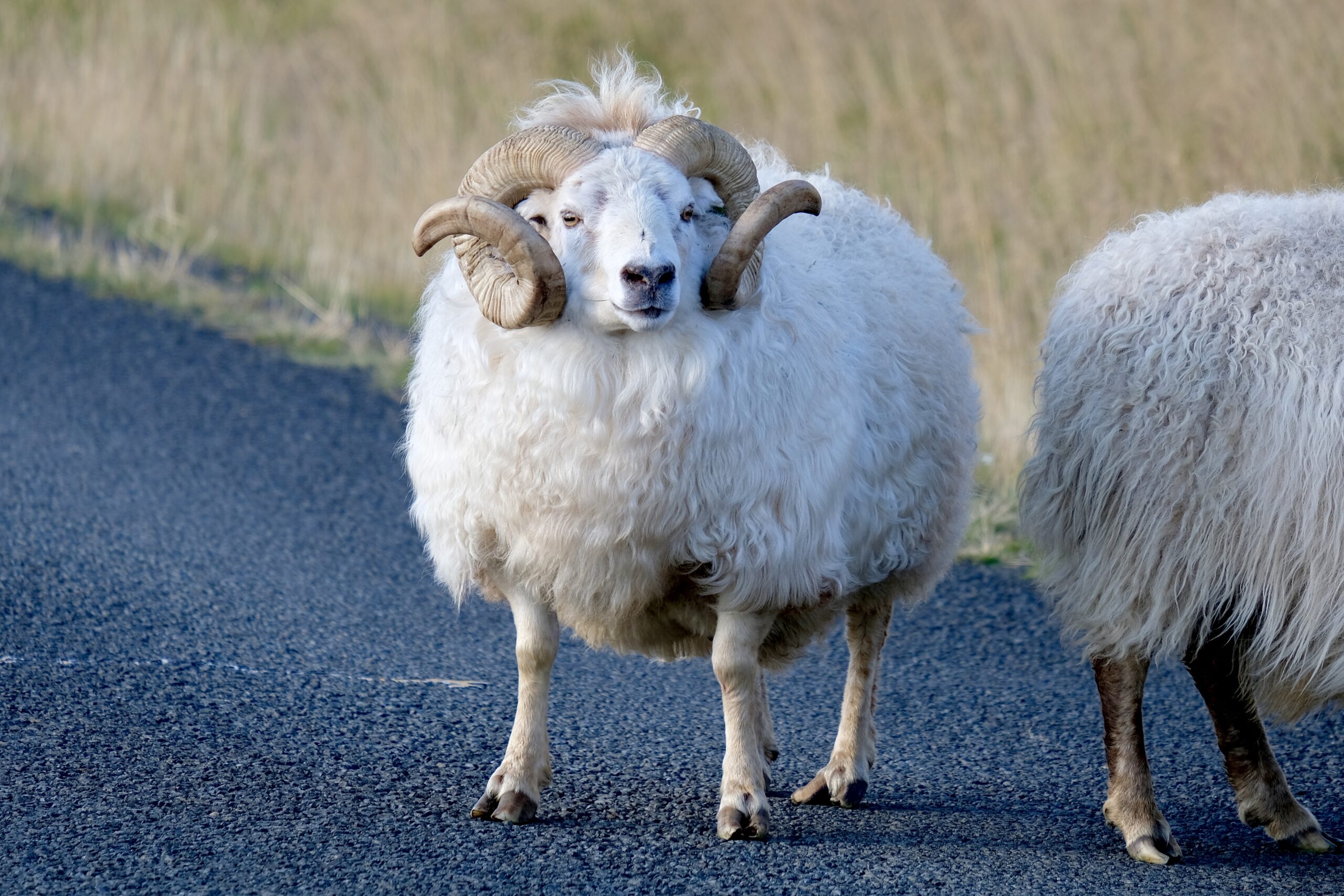
I met a lot of sheep, but these were the finest set of horns.

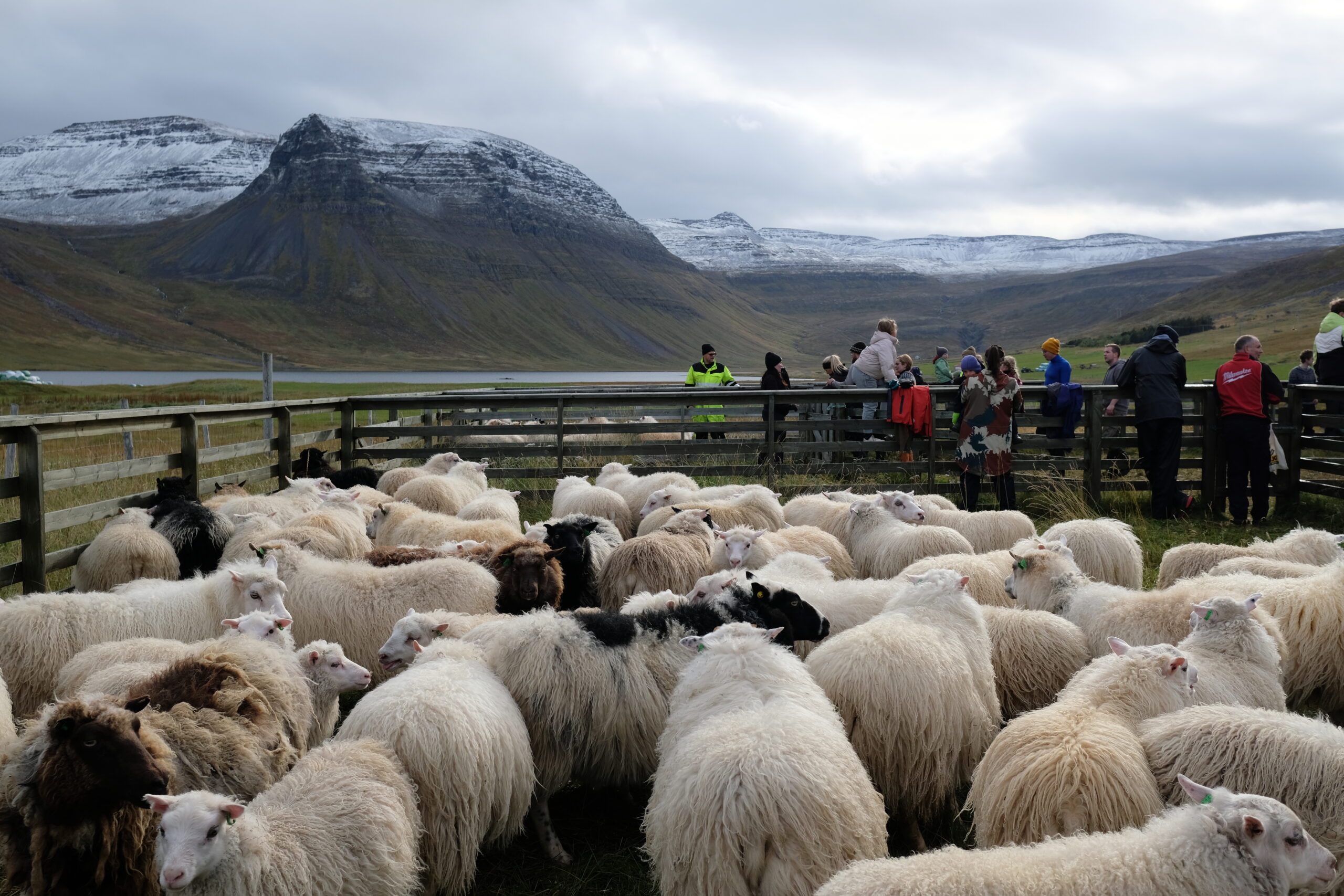
One payoff for rambling down a gravel road was encountering a sheep roundup in progress! I’ve been wondering how to attend one of these, so it was a real treat to stumble into it. I felt like the outsider that I was, so I snuck in quietly and tried not to get in the way. Everyone there knew each other and were having a lovely time. They sorted the sheep they had rounded up that morning from the nearby area and corralled them into different pens. Then they loaded all the ones that belonged to a particular farmer into a truck.

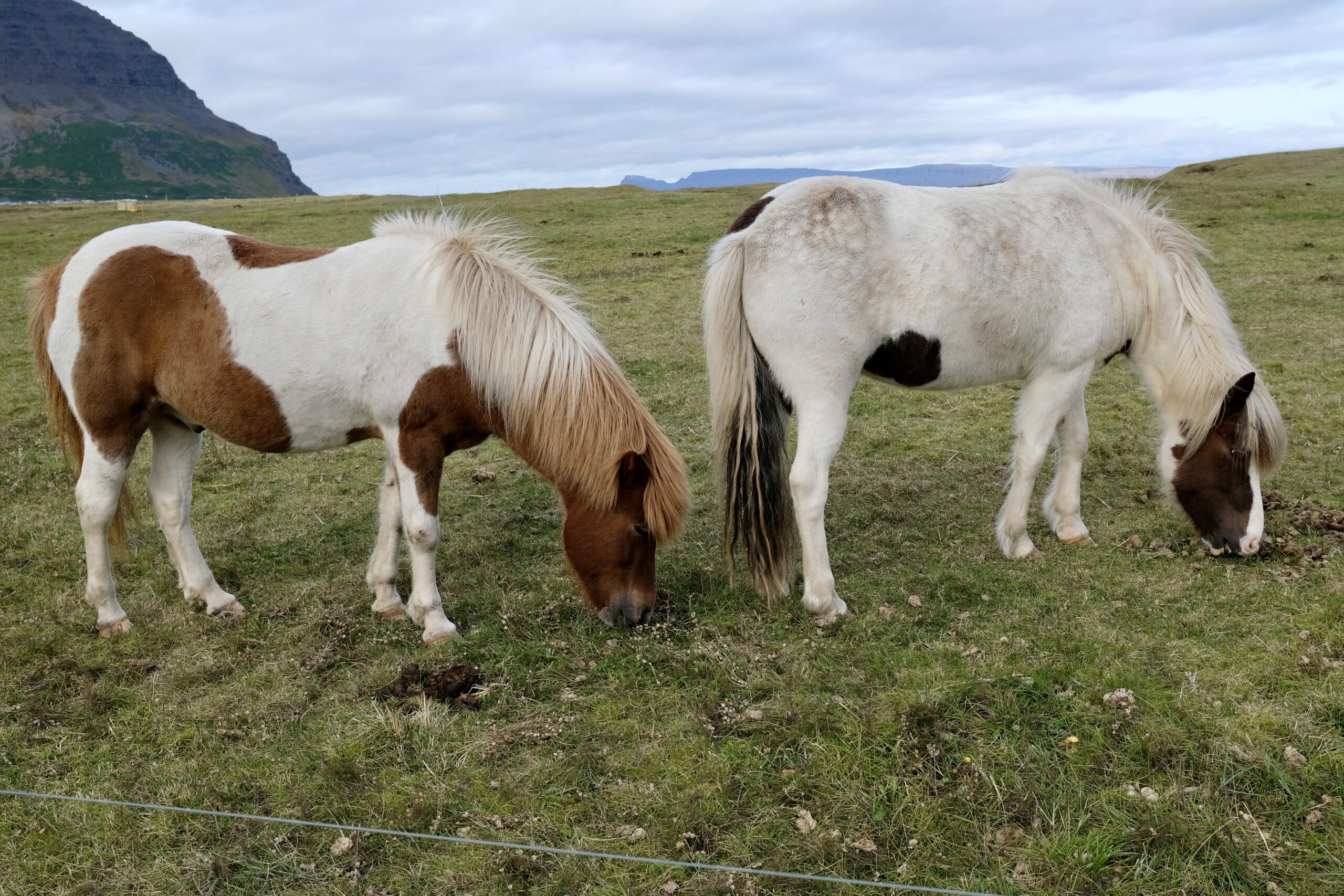
I also met some horses, but there were fewer in the Westfjords than on the southern coast.

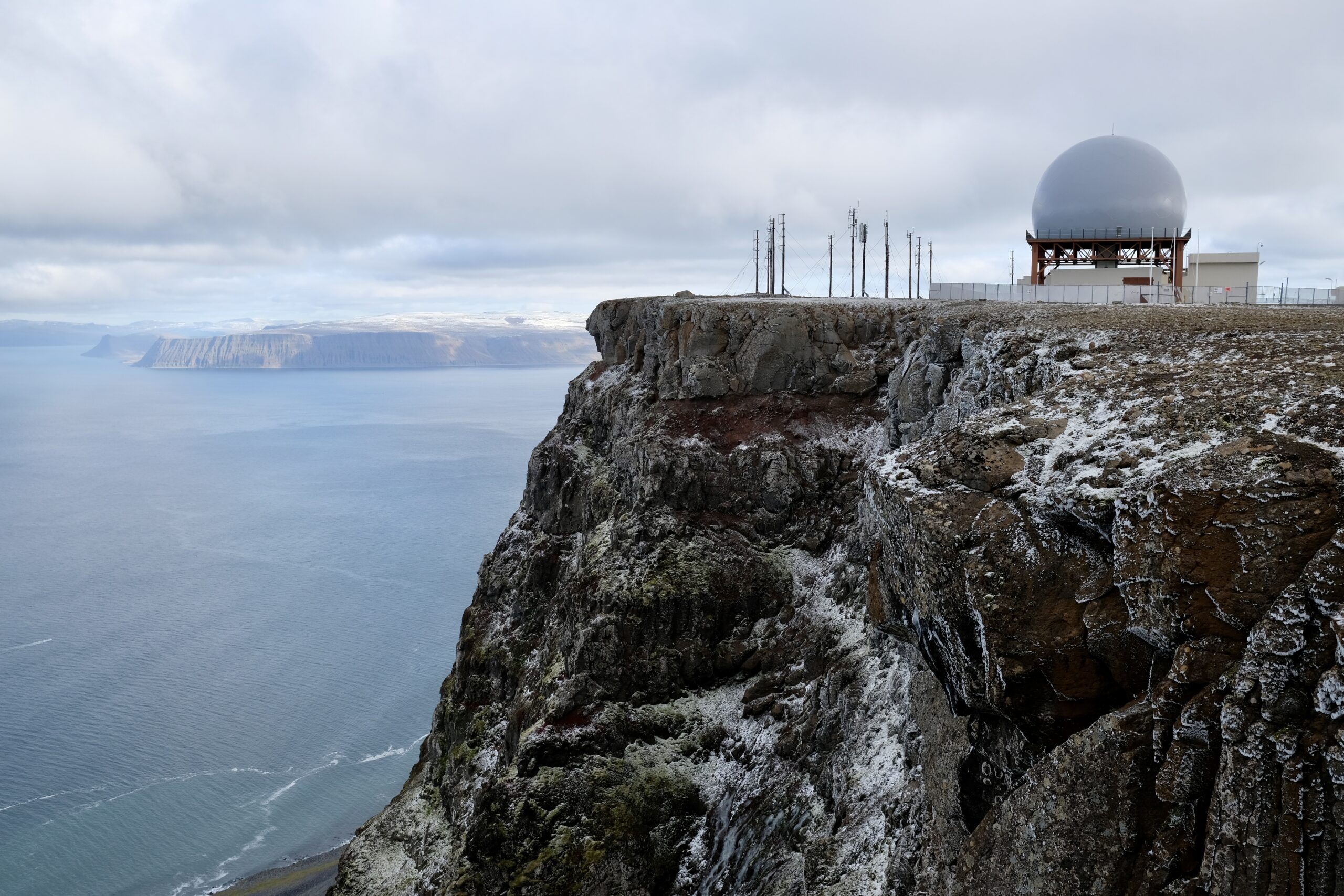
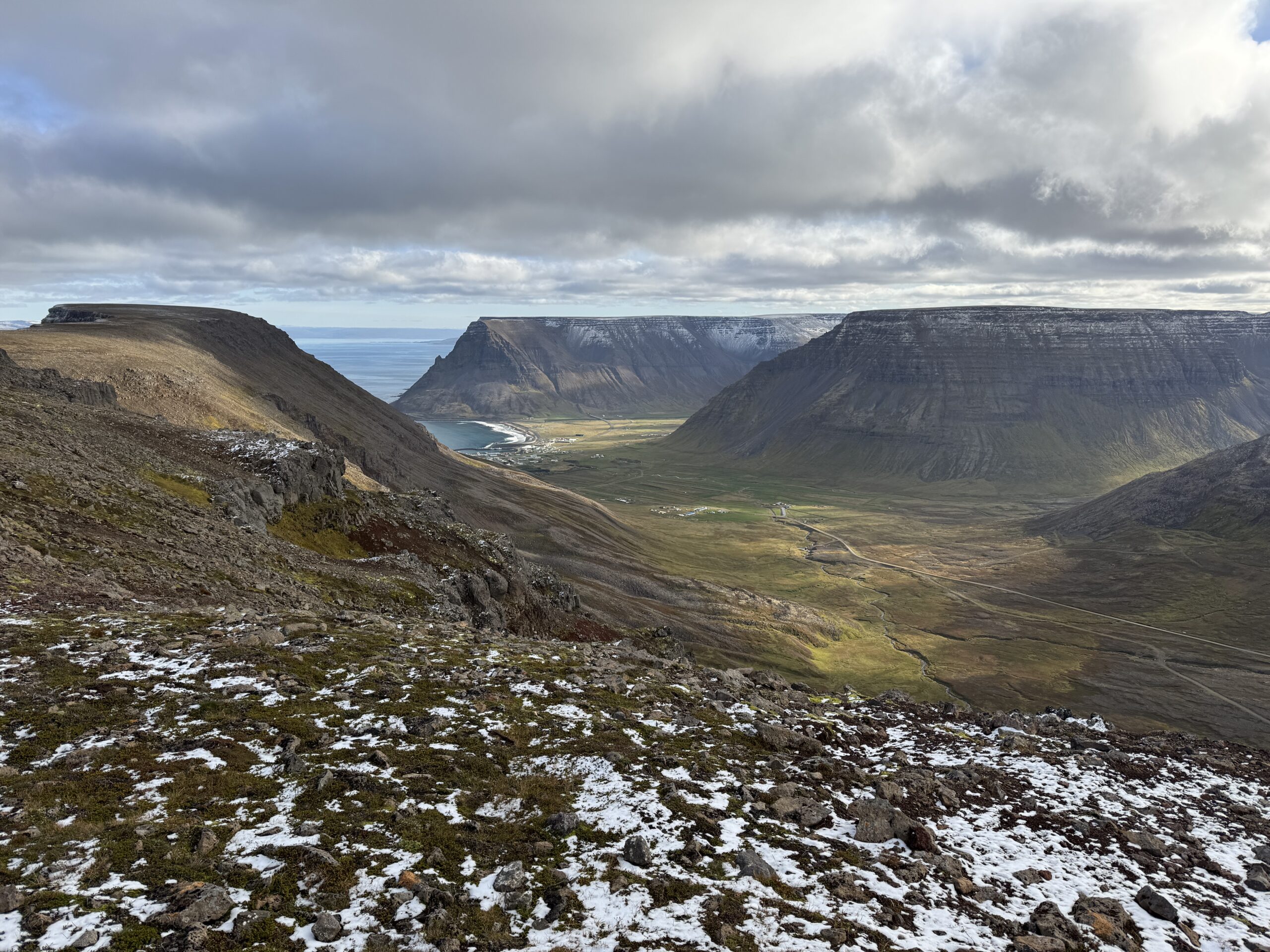
These views are from the top of the mountain Bolafjall. The radar station up there was built as a NATO project and is now operated by the Icelandic Coast Guard.

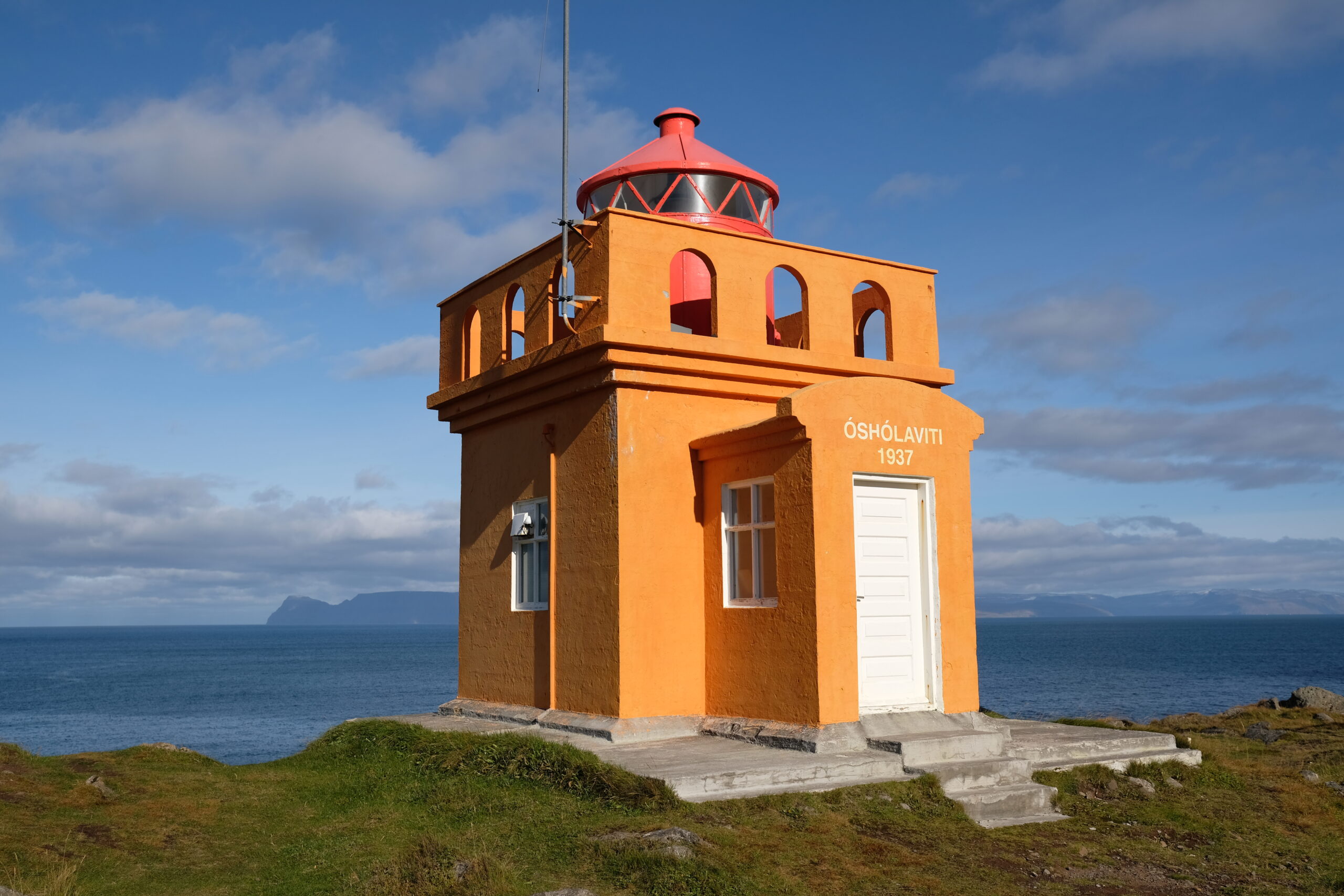
I am, of course, a fan of lighthouses and this is a fine specimen. Not all the lighthouses in Iceland are orange, but it’s a fairly common color.

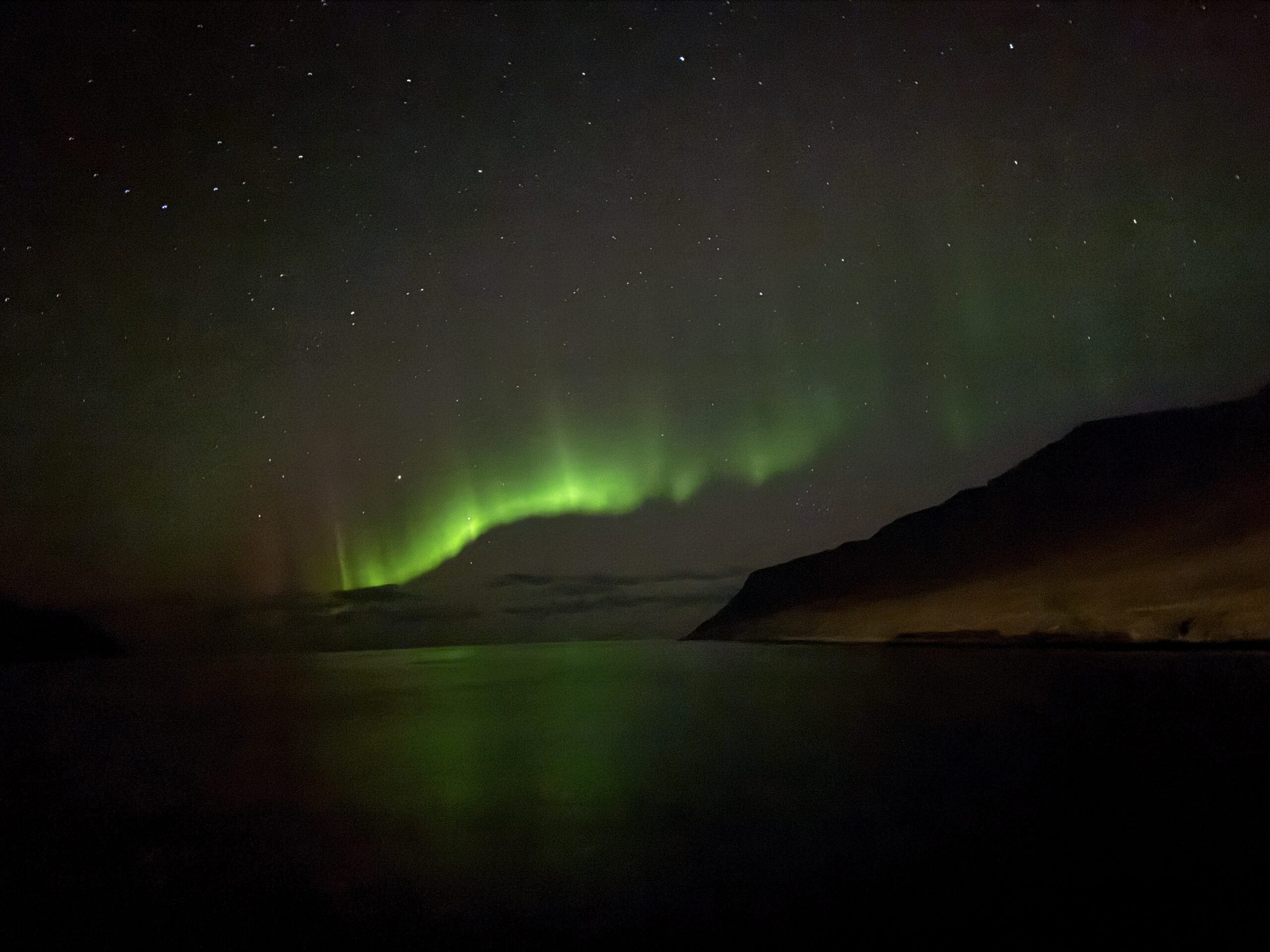
I saw the Northern Lights! I’ve seen them in Reykjavík, but this was on another level. They were much more visible to the naked eye, and I watched them dance around for about 45 minutes until it got too cold to stay out anymore. This was in Flateryi, and they were bright enough to reflect on the water near the village seawall. The aurora forecast wasn’t very strong, but on a very clear night there’s always a chance. An added bonus was the backdrop of so many stars, the kind of immersive astronomical view you can only get in such a remote place.

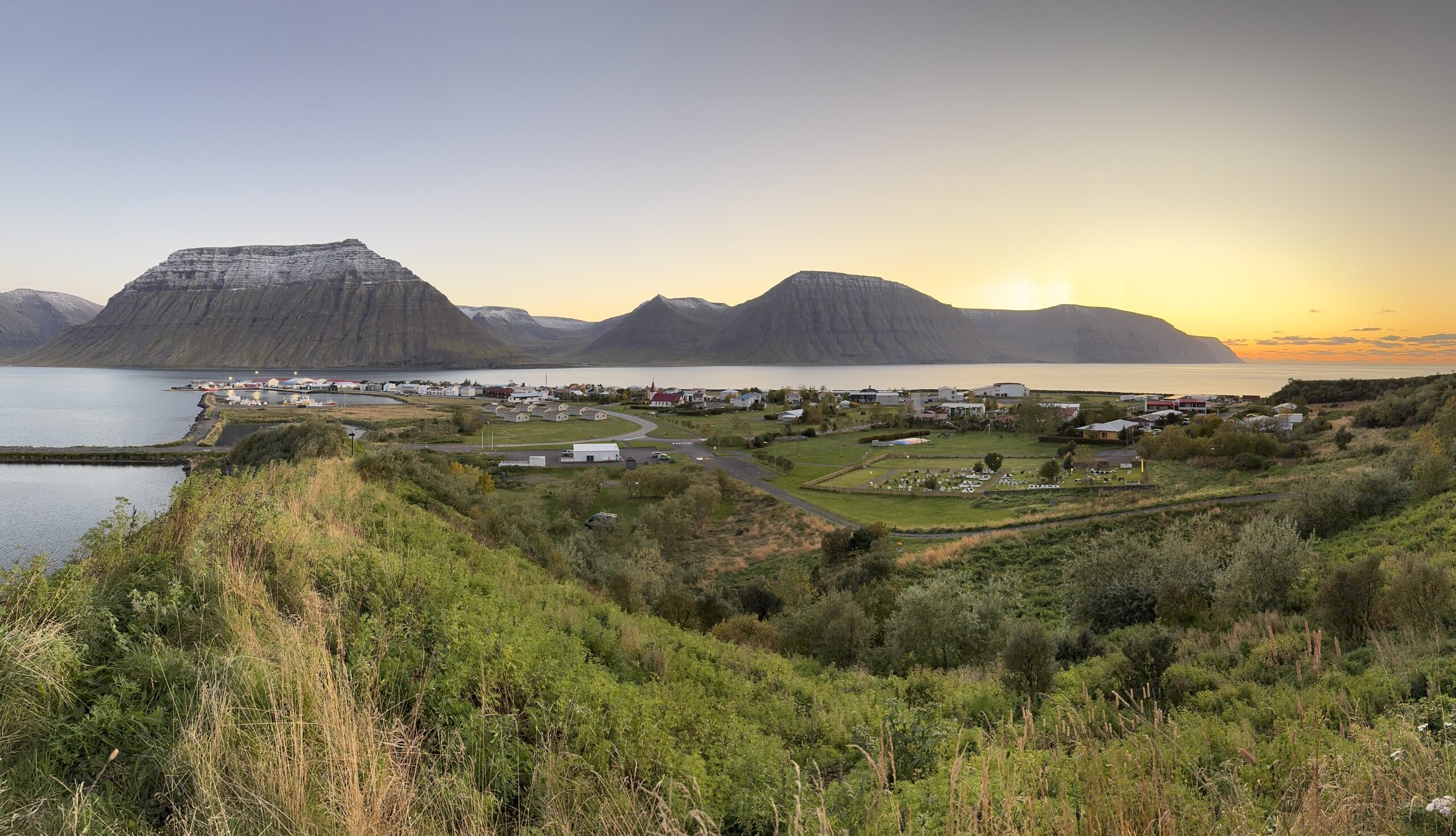
Flateryi is a interesting little village where I spent two nights. This photo is taken from atop the avalanche barriers above the town. These barriers were initially built after an avalanche in 1995 killed 20 people (approximately 10% of the town). There was another avalanche in 2020, and these barriers successfully diverted the debris away from the village, but it landed in the harbor and caused a tsunami that destroyed numerous boats. I’m not sure how the current work is meant to improve upon this infrastructure, but it’s a multi-year construction project managed by Lithuanian workers living in temporary housing set up on the edge of town. My understanding is that it’s slow going since they can only make progress during the summer months.

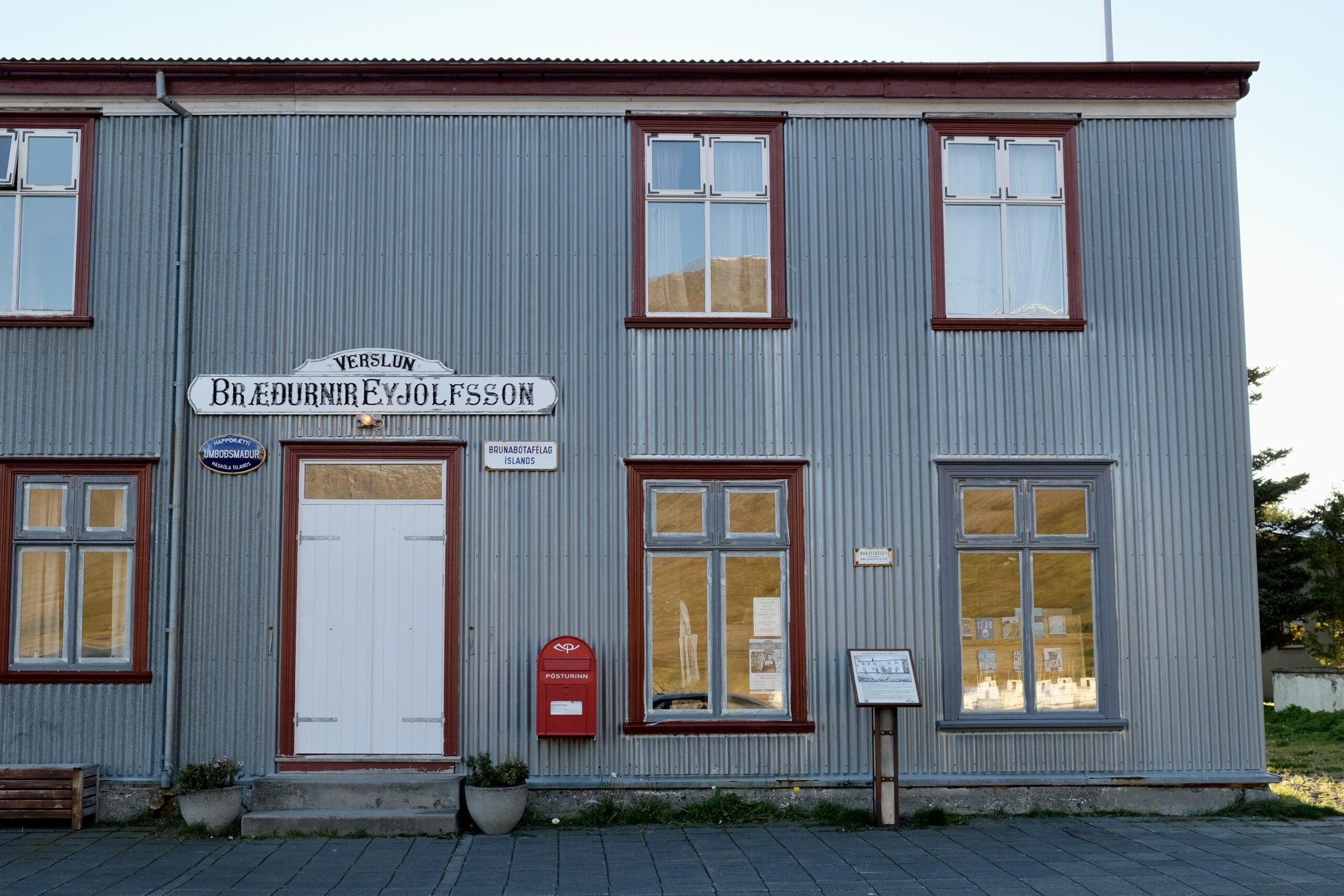
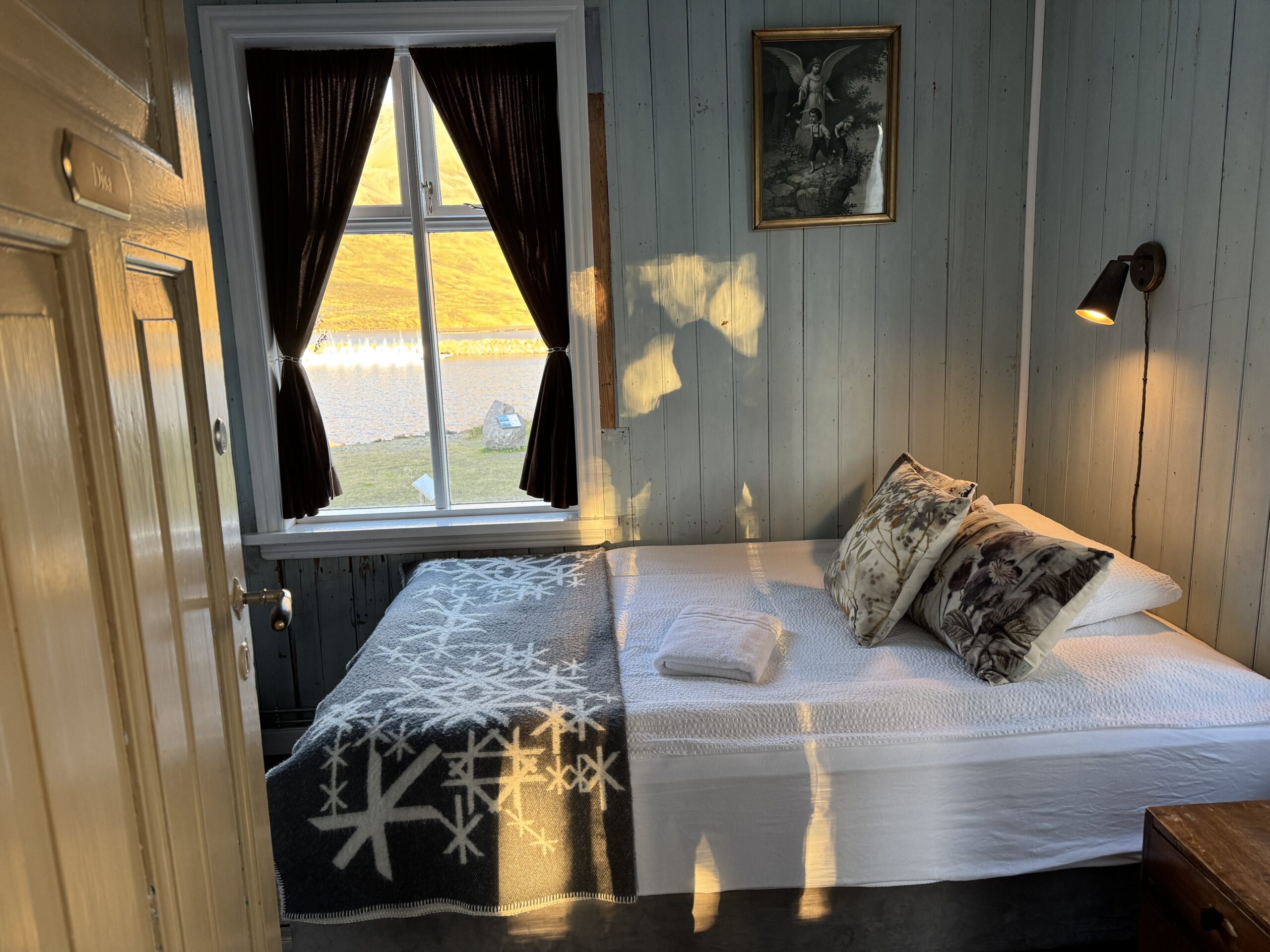
Flateryi is also home to the oldest bookstore in Iceland, and I stayed in one of the three guest rooms above the store. It’s has been run by members of the same family since 1914, and the first floor includes a museum that preserves the house exactly as it was when the current proprietor’s grandparents lived there. The upstairs is also a bit frozen in time (in a good way). Each guest room is named for the child who originally occupied it; I stayed in Dísa’s bedroom.

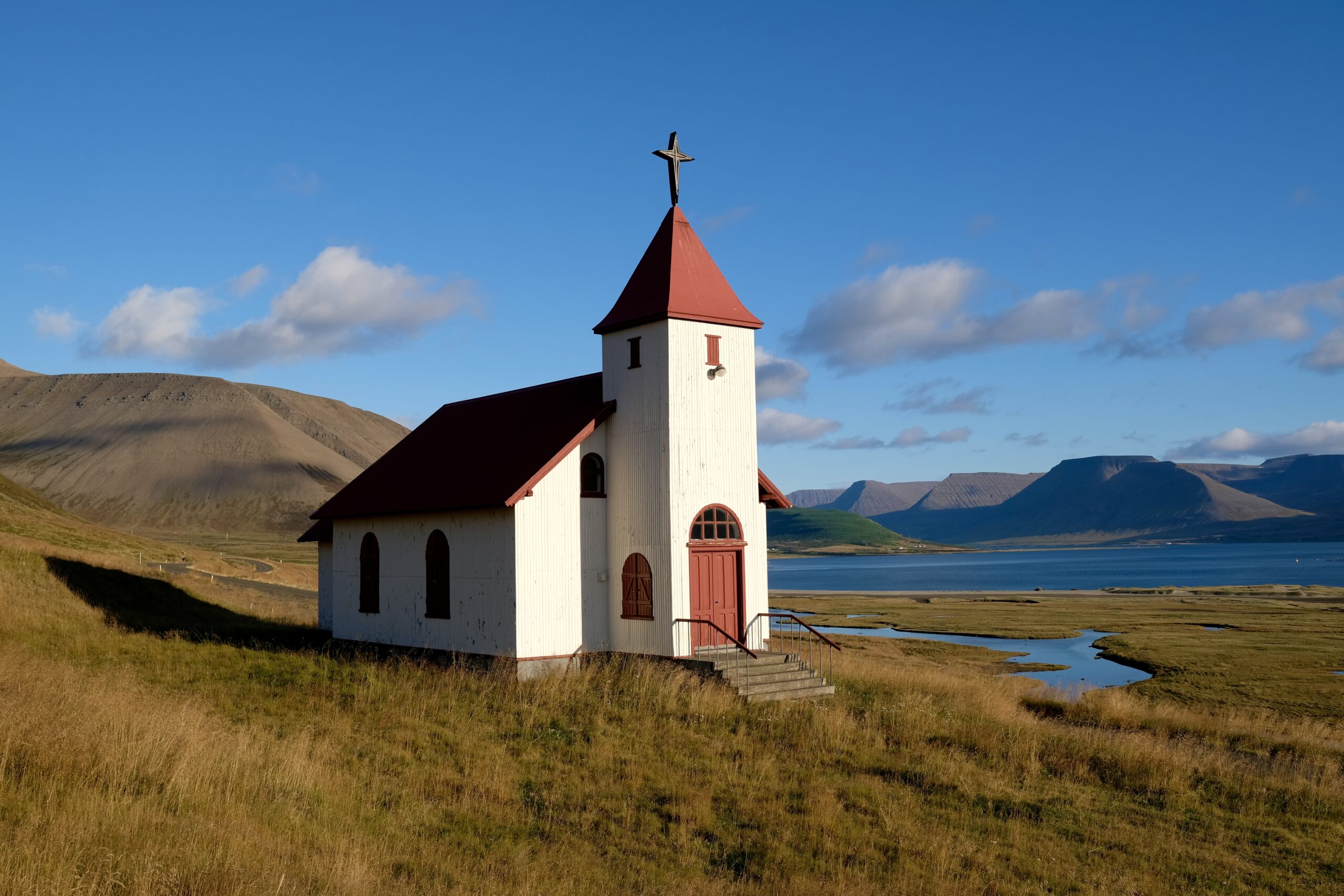
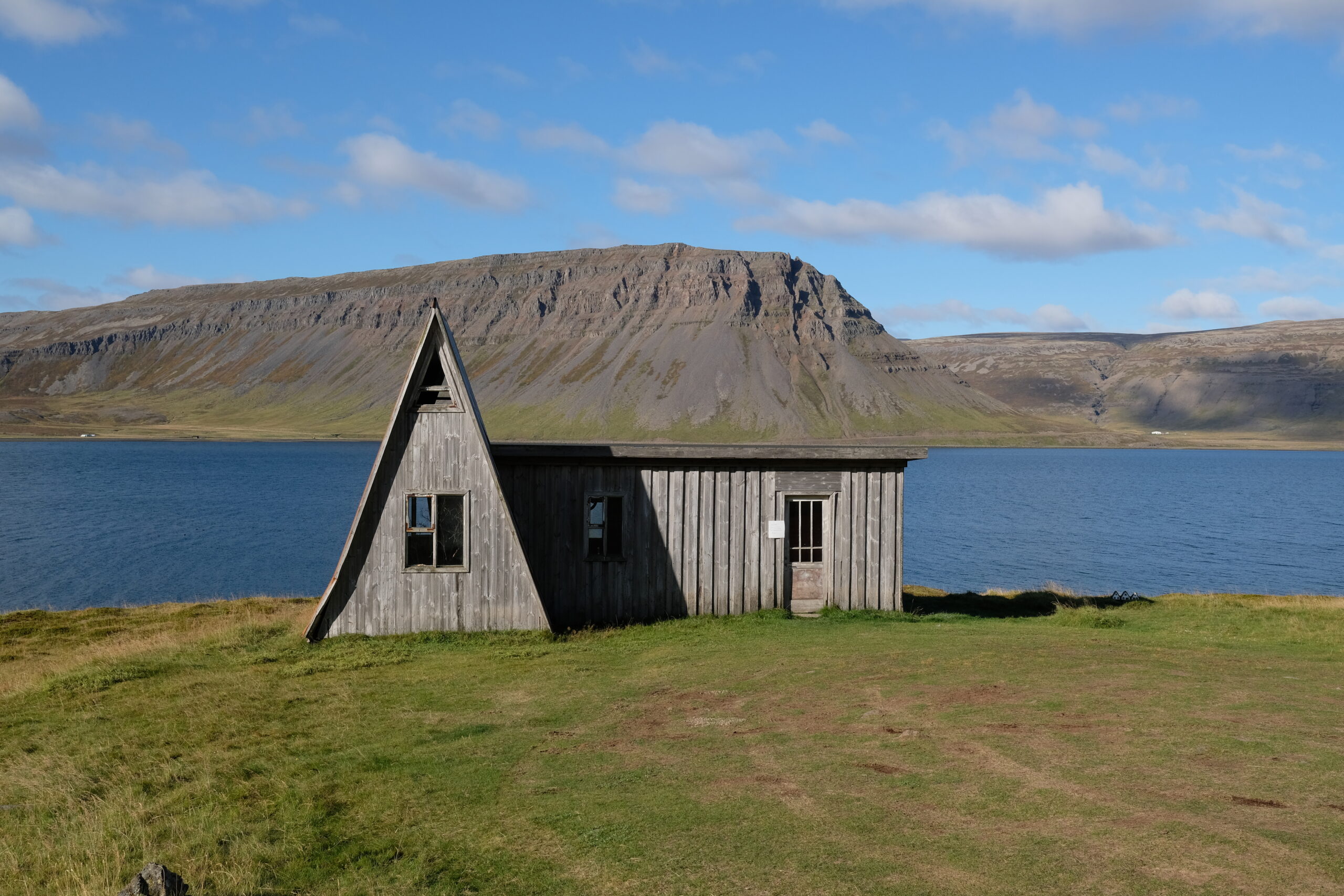
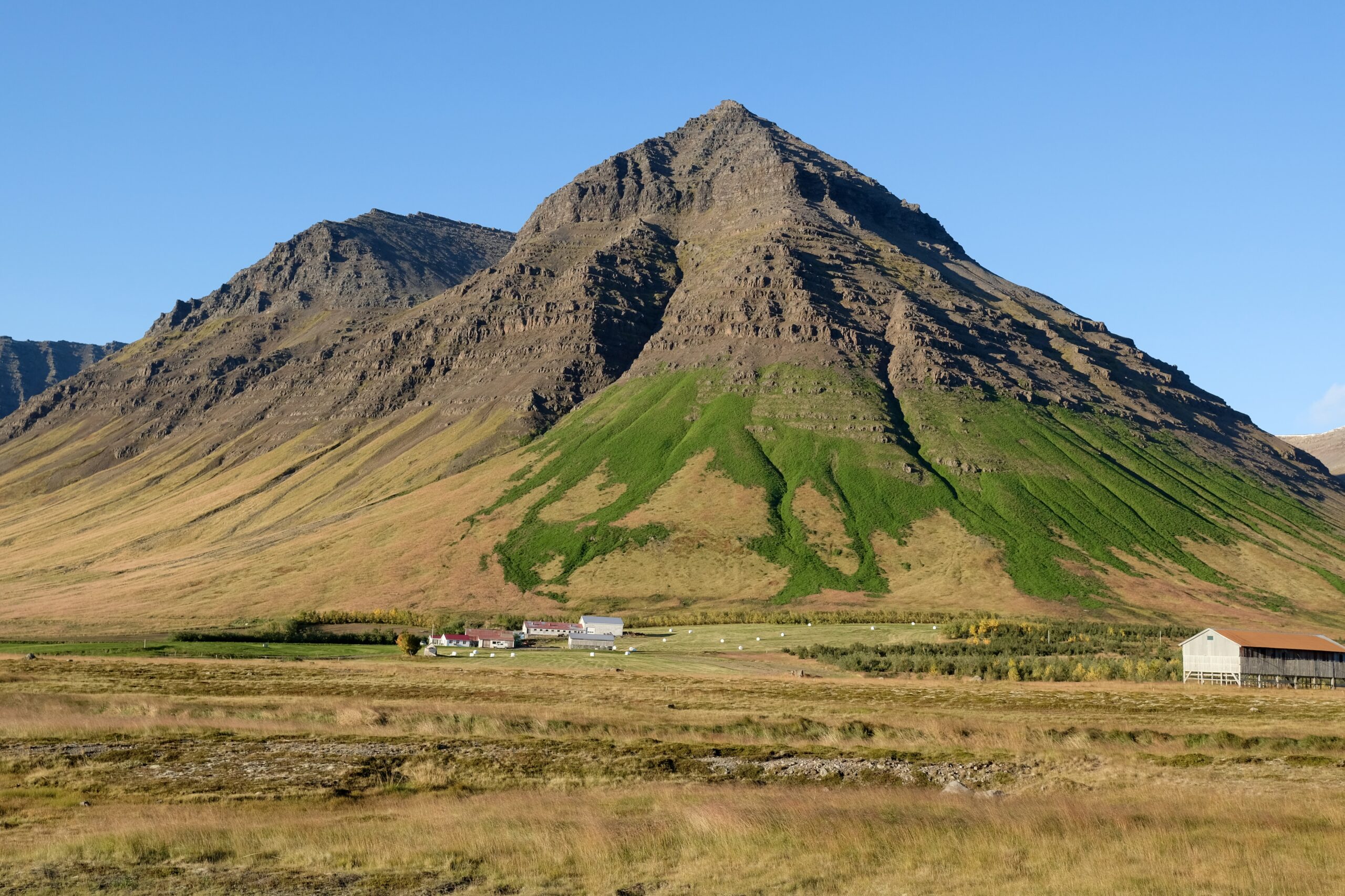
And then of course there were the endless landscapes, and the buildings in them, that in their starkness and simplicity let you appreciate the landscape even more.

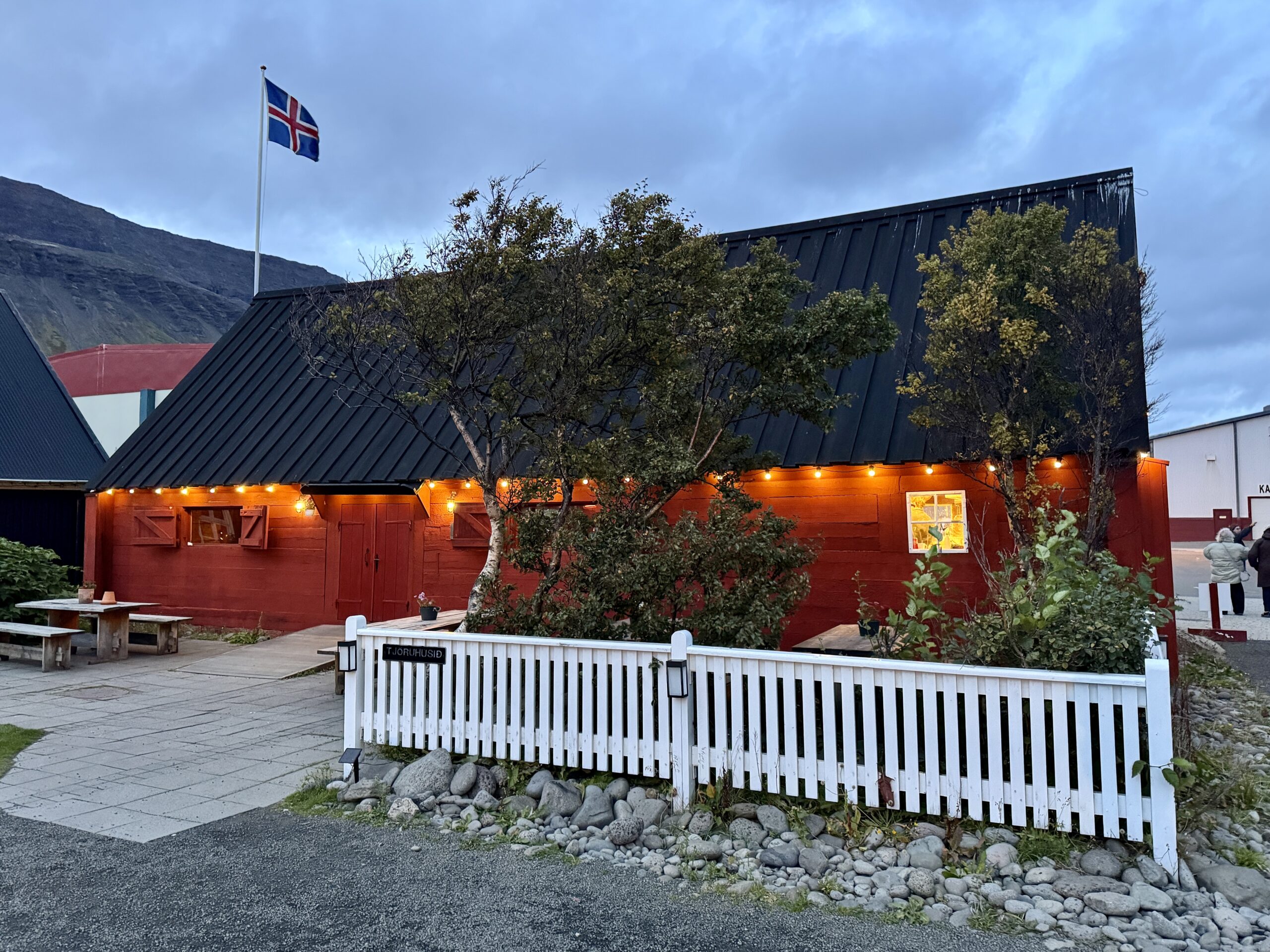
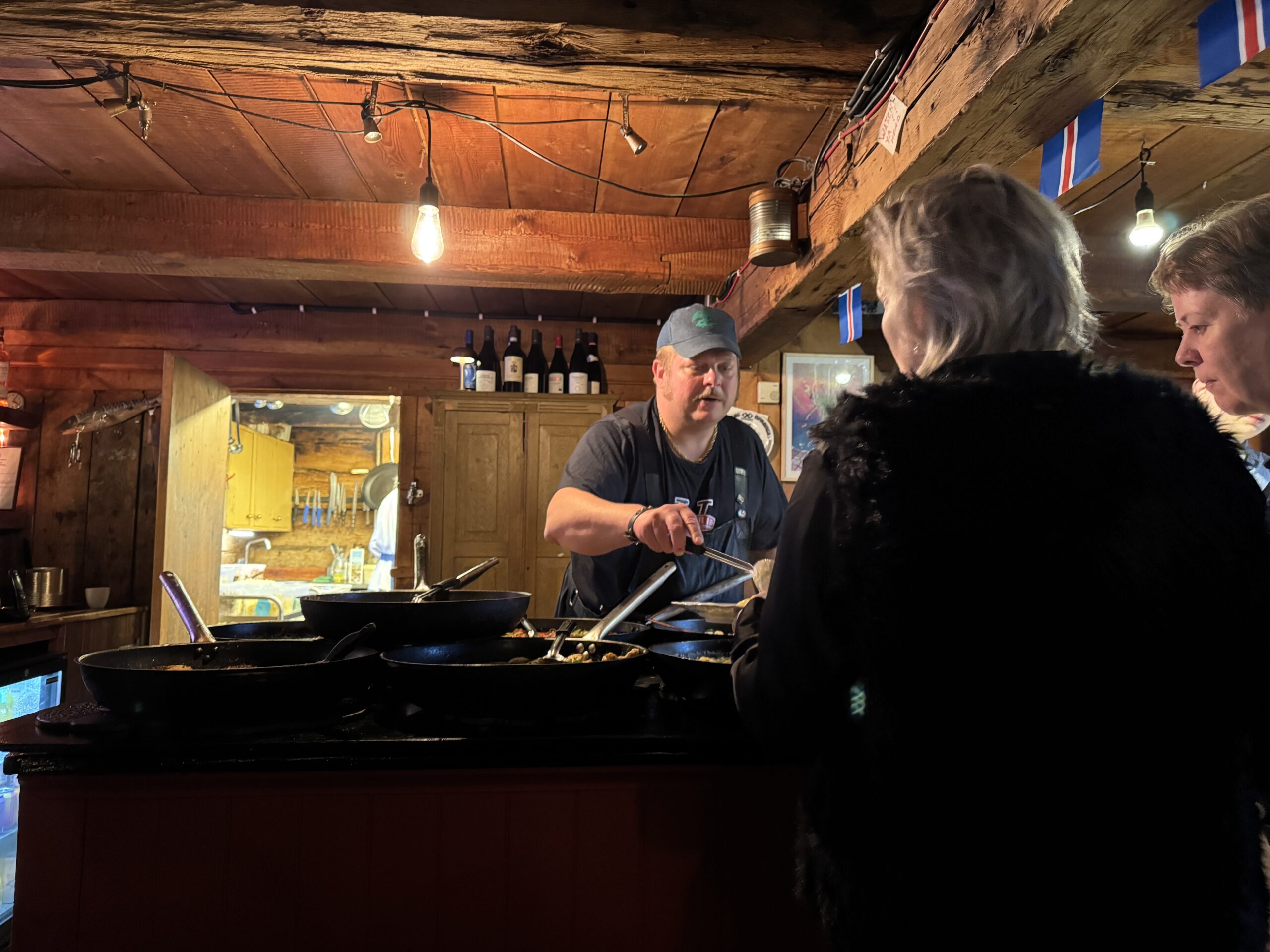
My last night in the Westfjords I had dinner at Tjöruhúsið in Ísafjörður. It’s been hailed as the best fish restaurant in Iceland, and while I haven’t tried enough of them to compare I will say that it was very good. Their website makes me laugh, as it basically just says lists their contact info and literally says “we are not very interested in marketing, or the internet in general.” I have to respect that.

The restaurant is housed in a building built in 1781. The ceilings are low, they have communal at large tables, and food is served as a buffet. They prepare around 8 different fish preparations in giant skillets and you can eat as much as you’d like. One thing I really appreciated is that they were thoughtful in seating me next to other solo travelers, which made it easier for us to have an interesting dinner conversation.

I may share more in future posts as I have many more photos and things I could say about the Westfjords. It’s truly a special place.

Noted & Done

Dear Lighthouse

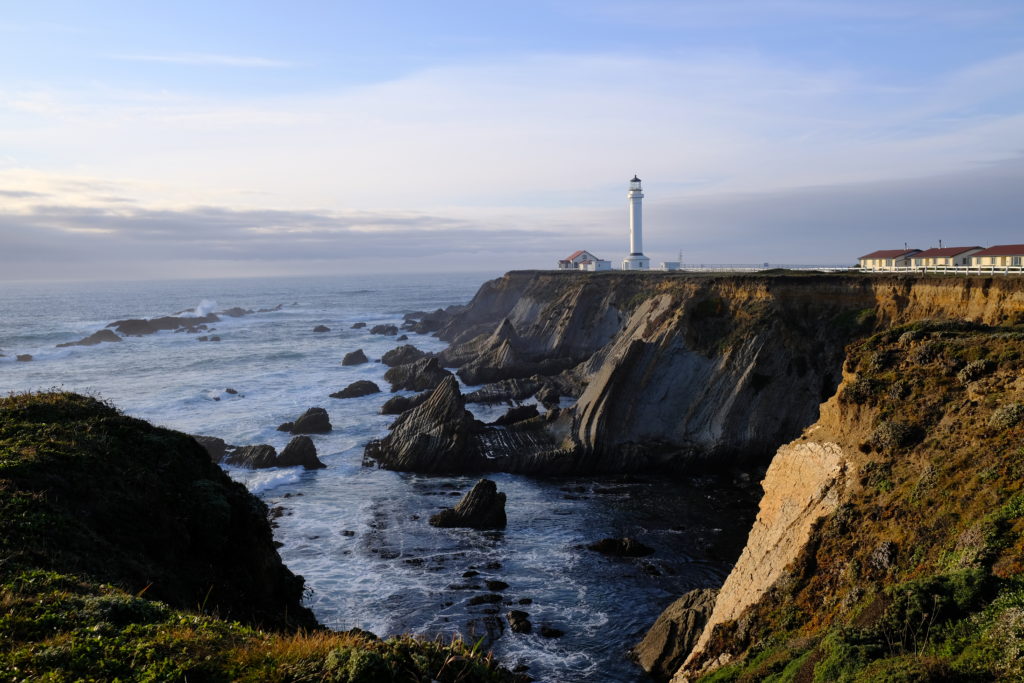
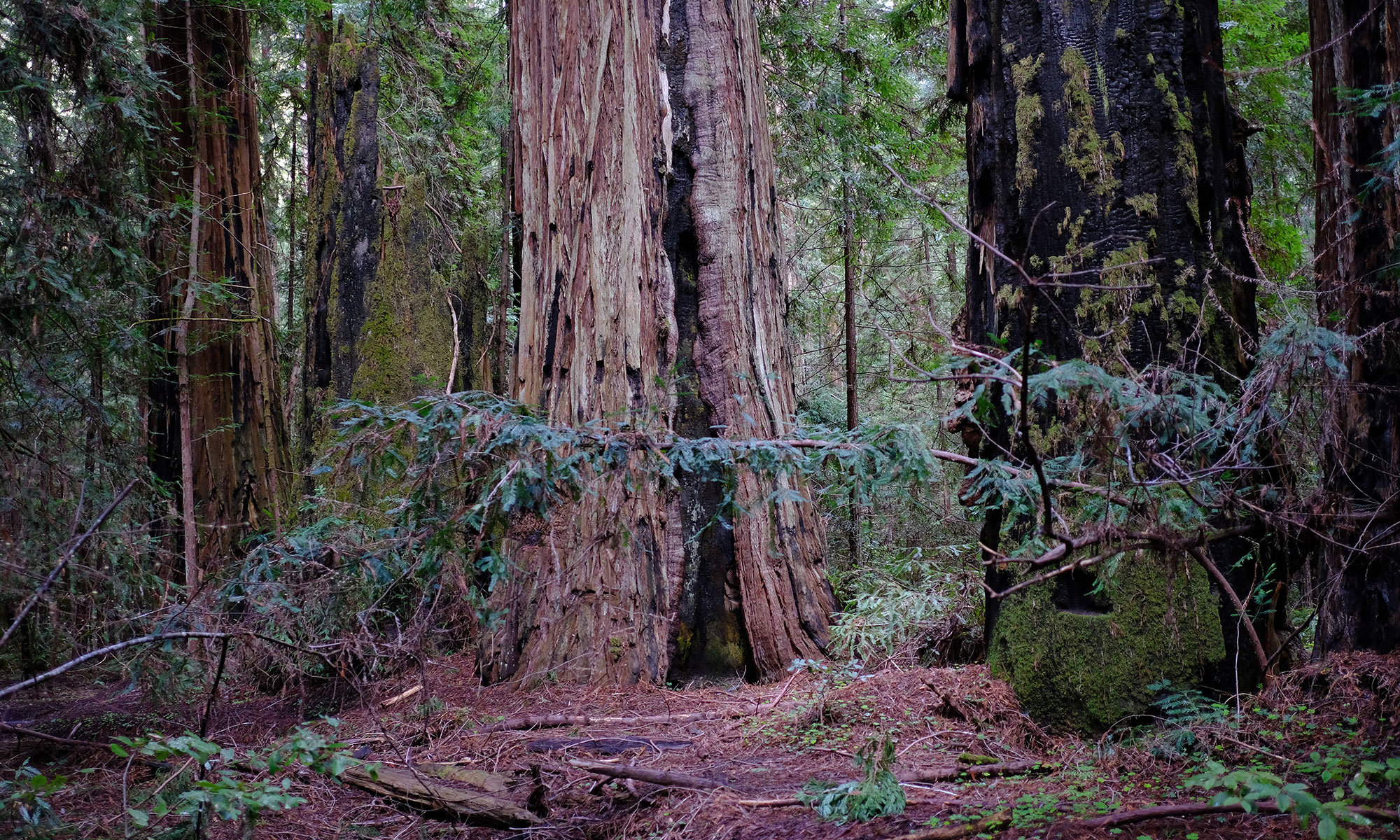
Just before lockdowns started in March of 2020, after my last week at IDEO, I took the California Zephyr from Chicago to San Francisco and spent a week in Mendocino County. I stayed in the keeper’s quarters at the Point Arena lighthouse, which is situated alongside the beautiful Stornetta Public Lands, and was lucky to have my trip coincide with a twice-yearly lens tour at the nearby Point Cabrillo lighthouse.

I had planned to meet Molly in La Paz, Mexico the following week, but we cancelled the trip and I headed home, into a year of COVID-19 shutdown and everything that followed. It’s been just over a year, and reflecting back reminds me not only of the beautiful landscapes but the sense of possibility I felt, which has been stunted by this pandemic. I’m hopeful for the return of that feeling in 2021.

Below is my submission to the Point Arena Light Station “150th + 1 Anniversary Writers Invitation” within their “Dear Lighthouse” category.

Point Arena Light Station, March 5th, 2020

Dear Lighthouse,

It’s hard to believe it’s been a year since we met. I suppose the memory is stronger for me, given the circumstances. I had just left my job, a bittersweet choice to spend less time traveling. My trip to see you was a personal interregnum, a space left intentionally blank, a time to look neither forward nor backward. I knew that change was coming, but didn’t understand the scale.

I traveled by train, a long continuous line connecting a Great Lake to a great ocean. From the observation car I watched night blanket the Midwest, and morning sun reveal the Rockies. Snow covered mountain passes gave way to red rock canyons. As we wound around the San Francisco Bay, a cruise ship was seeking permission to dock, its passengers infected with the novel coronavirus. We didn’t yet call it a pandemic, just a scary story set in other countries.

You, of course, know about the calm before the storm.

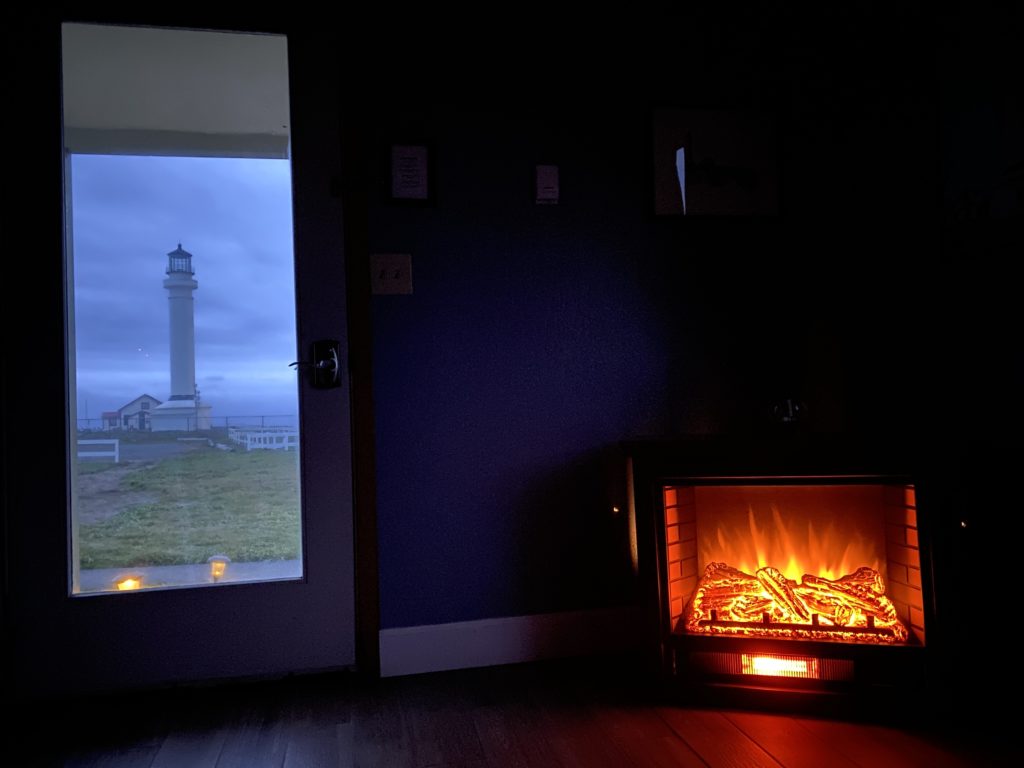
As I drove up the coast to meet you, I managed to stay in the present, immersing myself in the beauty of your neighbors. I hiked rugged coastlines. I napped beneath redwood trees. When I checked into your keeper’s quarters, I was thrilled to learn that I could see your light from my window. I watched you work as the vibrant sunset faded to monochrome.

How many countless people have you guided home safely? As the storm of infection swelled, and the fog of danger thickened, I knew that our time together was short. The future was rushing towards us, and I needed to be home.

It helps though, to know that you’re there.Your steadfast presence on the peninsula, the predictable cadence of your light. A year is a long time to be adrift.


My view from inside the Point Arena keeper’s quarters.