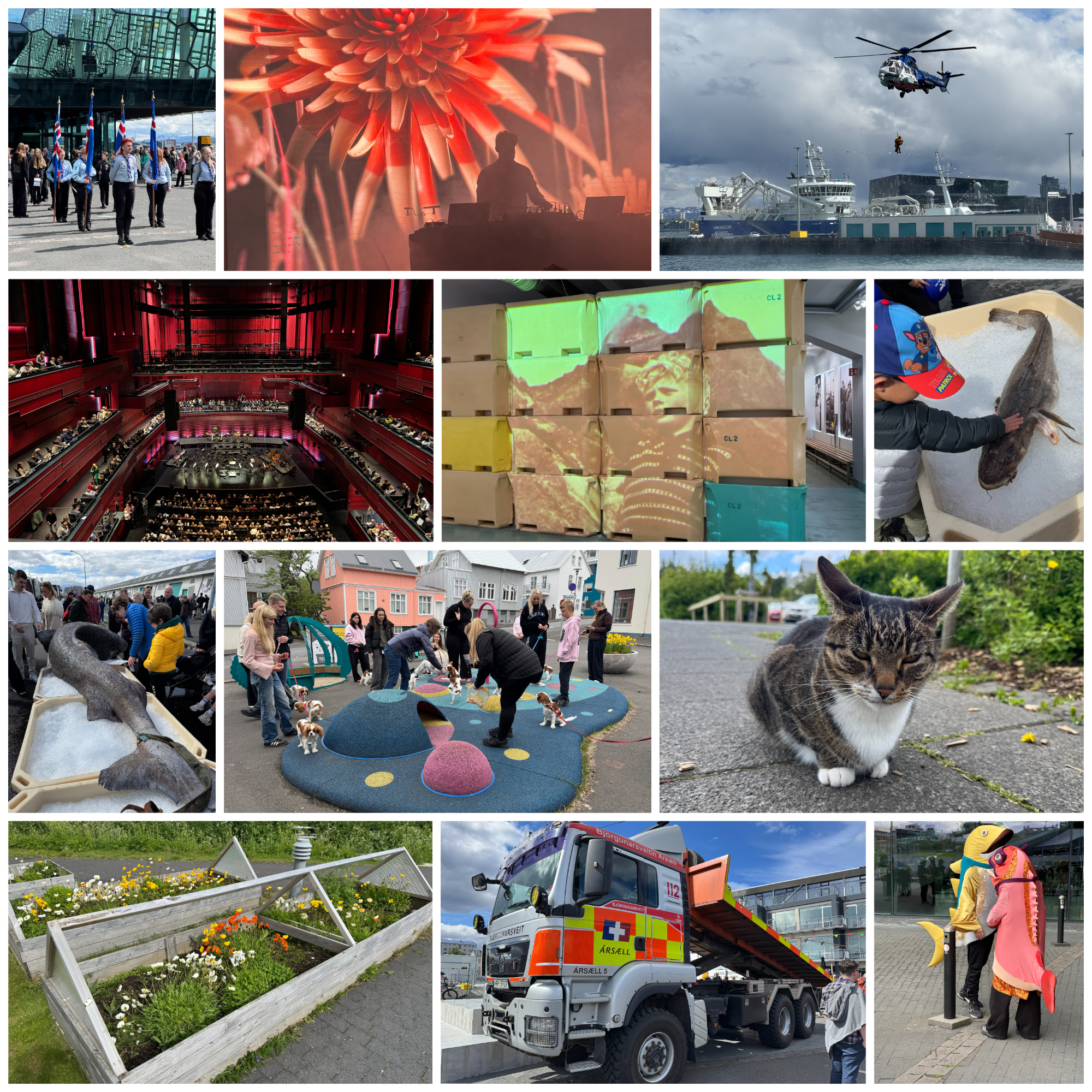
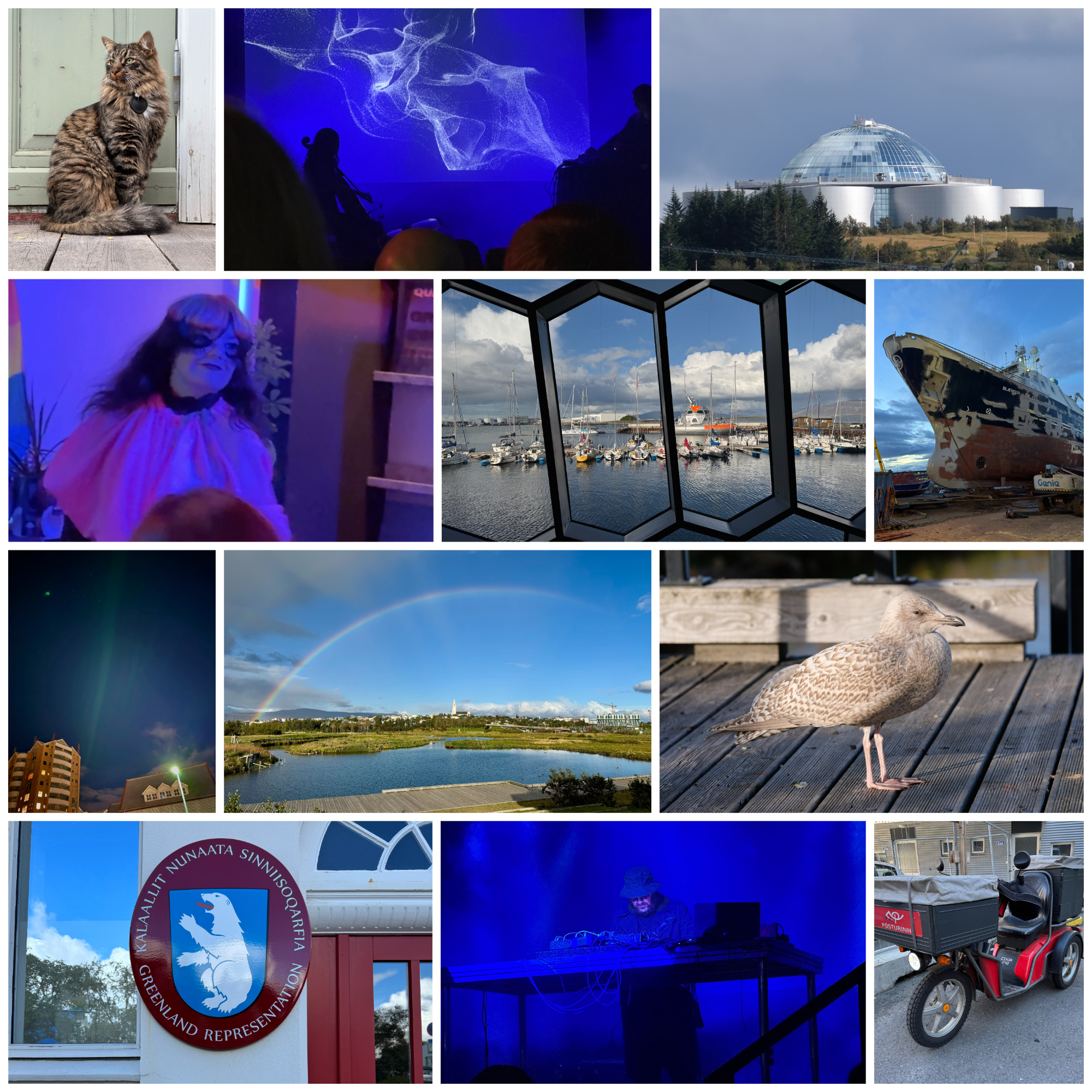
The Reykjavík Arts Festival is going on this week and I filled two more slots on my Icelandic musician bingo card. The first was a performance by Hildur Guðnadóttir and the Iceland Symphony Orchestra. Hildur is the artist-in-residence at this year’s festival, hosting multiple events throughout the two-week program.
Her concert was the first time I’d been in the main Eldborg hall at Harpa, and I was way up in the third-level cheap seats, which let me take in the full view of the space. Of the various events she was involved in this week, I was particularly interested in this one because it was focused on Hildur’s scoring work, including pieces from the films Joker and Tár, and billed as an event where she would discuss her work and influences. What I hadn’t fully thought through ahead of time was that (of course) that part would be in Icelandic. So, I didn’t get much from that, but the performance was still great and I was happy to experience Eldborg.
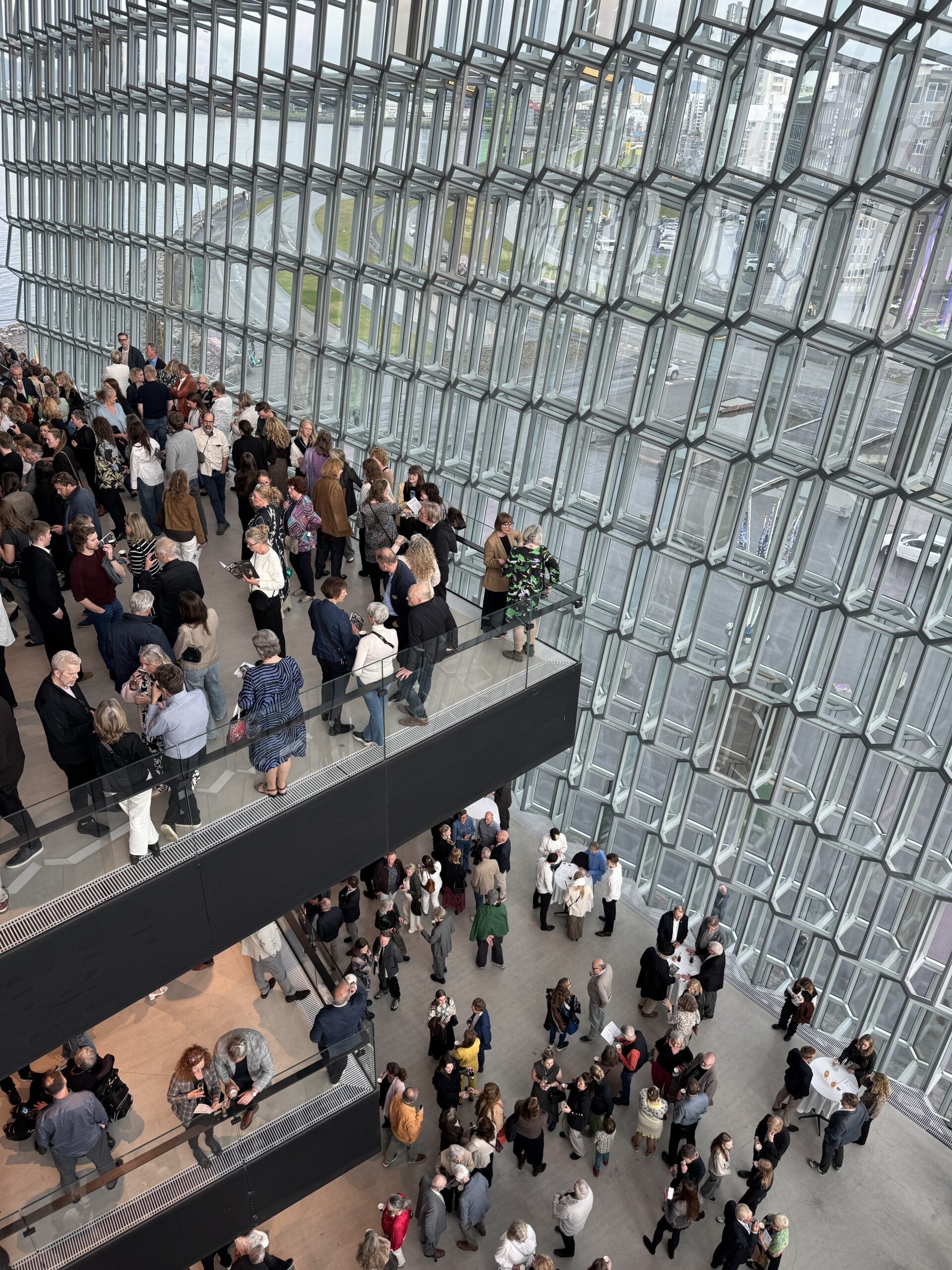
The concert was sold out and it was fun to see all the spaces in Harpa packed with people.
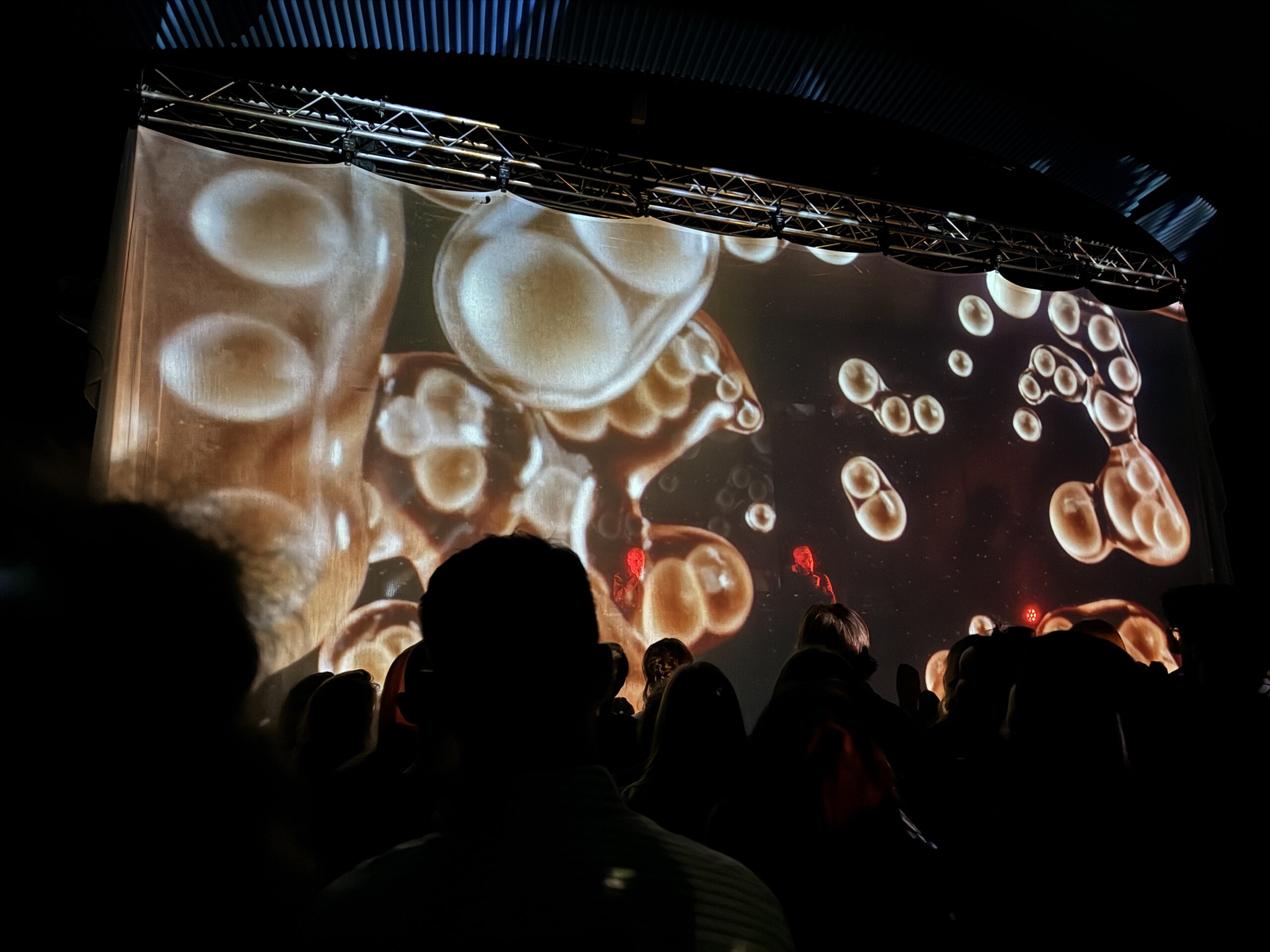
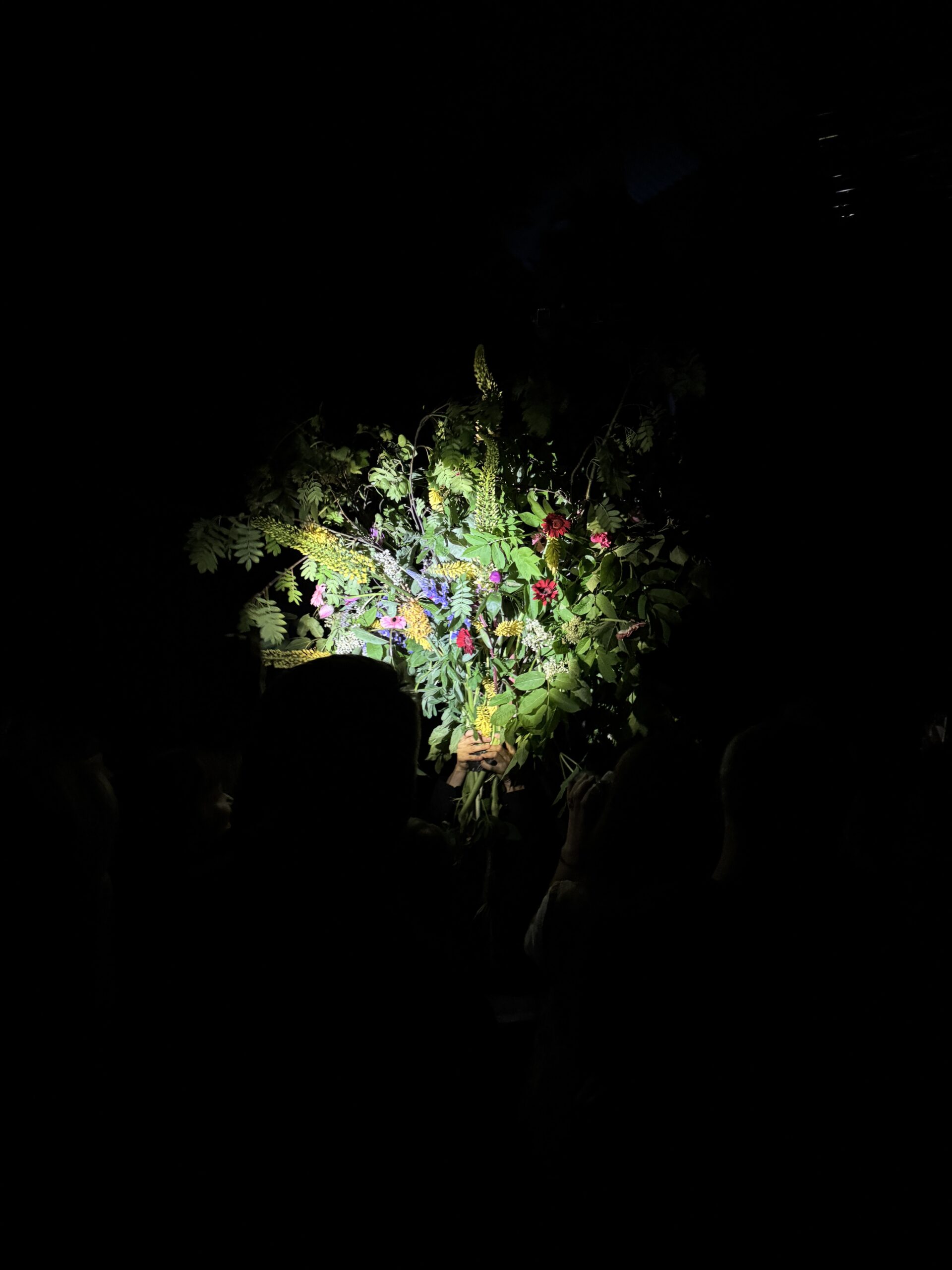
I also attended Fischersund: A Night of Scent & Music, a really unique concert combining sound, visuals, and scent. Fischersund is a perfumery and artist collective founded by Jónsi of Sigur Rós. They create scents based upon specific memories or elements of the Icelandic landscape. All the attendees got a small vial of Faux Flora No. 1, which is meant to invoke a plant’s lifecycle, and we were instructed to spray it at a coordinated time. Other scents were diffused into the room throughout the performance, including one moment where someone carrying a giant bouquet of flowers, doused in additional perfumes, wandered through the crowd.
Musically, it felt mostly like a Sigur Rós concert, but in a small venue with high-concept visuals and perfumery mixed in. There were a few production glitches that broke the spell, but if anything that only proved that they have achieved such a high level of immersion for the bulk of the show.
Jónsi and friendsA scent-saturated bouquet wandered through the crowd.
In a week that included the first day of spring, the weather in Iceland was still very much winter. As usual, it’s the wind that makes things harsh, reaching over 45 MPH and causing yellow travel warnings across much of the country. In less than two weeks I have a trip to Akureyri planned during Easter break, so I’m crossing my fingers that things improve.
Luckily there were some indoor activities to check out. The Stockfish Film Festival kicked off, and is conveniently held across the street from my apartment at Bíó Paradís. Yesterday, I went to two sessions, both focused on Icelandic shorts: five documentaries and six narrative shorts, each including a Q&A with the filmmakers. At least half of the films were directed by film students studying at the Iceland Academy of the Arts. I don’t know how it works at other film schools, but it was impressive to hear about the level of financial and expert support they receive. It sounds like there are people on staff to support lighting, sound — even intimacy coordination — during 10–12 hour shooting days, sometimes in remote locations. Film is one of the creative industries where Iceland punches above its weight, and this was a glimpse into the educational foundation that makes that possible.
It’s not just film students who are well supported. Earlier in the week I attended a lecture by Jens Schildt, a Swedish graphic designer who did extensive archival research into the Swedish business equipment company FACIT. His work is fascinating, and involved recreating some of the company’s typefaces and publishing a book. Because his collaborator was living in the Netherlands they were able to tap into generous Dutch funding for this kind of design project.
His lecture (also at Bíó Paradís) was organized by Iceland University of the Arts and the Association of Icelandic Graphic Designers. While talking to one of the design instructors, he mentioned receiving Erasmus funding to take his entire class of graphic design students on a trip to Belgium. Europe has always had more funding for the arts, but the contrast with America (especially under Trump) is so stark. Imagine living in a society that supports and rewards creative activities that don’t have an obvious commercial profit motive?
Jens Schildt presenting his archival research on FACIT at Bíó Paradís
March 18 marked the 100-year anniversary of Iceland’s first radio broadcast, and I attended the opening of an exhibition celebrating that milestone in the building where it happened. Loftskeytastöðin, which translates simply to “the radio station,” is a small building on the University of Iceland campus that I walk by multiple times a week. The main floor has a permanent exhibition dedicated to Vigdís Finnbogadóttir, the first woman president of Iceland, but the basement has rotating exhibitions.
There was a collection of some of the first radio receivers in Iceland, often with a unique story of how they came to the country. For example, one of the old shortwave radios belonged to a farmer who had taught himself German and wanted to listen to broadcasts from abroad to improve his language skills. Overall, the exhibition is small but interesting. I would have liked more information on the history of the building and broadcasting, but it focuses more on tangible artifacts from the history of radio.
Architectural detail on Loftskeytastöðin, the old radio station building.I do, of course, love the design of old radios, particularly shortwave models with city selectors.
Finally, I attended the opening performance for Harmonic Tremor by Ben Frost and Francesco Fabris at The Living Art Museum. The installation is set up as a series of upward-facing speaker cones, filled with lava collected from eruption sites on the Reykjanes peninsula. As the speakers vibrate, the lava shifts and bounces, slowly escaping the cone to create a pile of dust surrounding the speaker stand on the gallery floor. These eight speakers were augmented by many others throughout the space.
The performance was composed from field recordings made at the eruption site, including sound recorded from contact microphones placed directly on cooling lava. It felt like you were inside the eruption itself: ethereal, immense, at times startling. I’ve followed both of these artists for years, but never seen them perform, so I feel lucky to have been able to attend such an immersive joint performance. It felt like a very Icelandic experience to walk back home, in 40+ MPH wind and snow, after attending a sound performance based on nearby volcanic eruptions.
Harmonic Tremor installation by Ben Frost and Francesco Fabris at The Living Art Museum.
We’re one week into February, the only month that can fluctuate in length, but even with that quirk it’s always the shortest. I would believe it if you told me that’s why it was chosen for Black History Month, although the real purpose was to include the birthdays of Abraham Lincoln and Frederick Douglass, both happening this week. Meanwhile, Trump is using the occasion to post racist memes that he refuses to apologize for.
Lately I’m finding some psychological reprieve in the total and complete acceptance of who he is. When you already know the depths of his depravity and immorality, when you know that he will never change, when you know that the cruelty and corruption is the point, then you can, at the very least, stop the spike of adrenaline that is caused by each of his chaotic and hateful actions. There is no tipping point he hasn’t already crossed, no further transgression that will finally warrant accountability, no revealing document that whisks him out of our lives. This acceptance is not a form of endorsement, but a tactic to avoid having our emotions hijacked, so we can think more clearly.
We don’t need to find another smoking gun; they’ve been fired over and over again. What matters now is the breadth of the American populous that is fed up, the number of people who care more about rejecting fascism than party affiliation, the scale of citizens who are ready to use both their voting and economic power to stand up for humanity and democracy.
I don’t know. I really don’t. I’m here in the middle of the North Atlantic, trying to make sense of my own life while the world keeps spiraling off-axis. All I have for this week is the firmer realization that the tipping point will never be something he does, it’s something we do. The question I keep asking myself this week — how can we shift from hope to cope?
hope (verb): want something to happen or be the case cope(verb): deal effectively with something difficult
I went to a talk this week at the Nordic House by Katti Frederiksen, a linguist and writer from Greenland. It drew a large crowd, which I think was influenced by the increased attention and interest that Greenland has attracted geopolitically.
Some interesting things I learned from her talk:
In recent years, Inuit in Greenland have built stronger relationships with Inuit communities in Canada and Alaska. The youth in particular are more interested in strengthening bonds with indigenous communities worldwide, including Hawaii and Australia, than in connecting with Danish or even West Nordic countries (i.e. Iceland, Faroe Islands).
Connecting in-person with trans-Arctic Inuit is difficult because there are no direct flights. For example, to visit an Inuit community in Alaska she had to make four hops: Nuuk to Reykjavík to Seattle to Anchorage to the final destination in northern Alaska.
She also talked about the importance of Inuit influencers, and how Canadian Inuit have influenced Greenlanders through social media. There are some popular Greenlandic influencers, like Q’s Greenland.
In Greenland, the traditional Inuit language has been well preserved but many aspects of their culture (dress, music, food) have been eroded. She said that in Canada the opposite has happened, where the language is often lost but other cultural traditions remain strong. In this way, Greenlanders are re-learning about traditional practices from Inuit in Canada.
In terms of language, all education, government, and private sector work tends to be conducted in Danish. English is pervasive because of the Internet.
Greenlandic has distinct dialects by region: western, eastern, and northern. Traditionally, these communities did not mix much because it’s so difficult to travel. However, a big divergence with east Greenlandic is not just because of distance, but because Christian missionaries did not arrive there until much later. In the shamanic religious traditions, which remained prevalent for longer in the east, certain words were not allowed to be spoken in reference to the dead. This required communities there to invent many new words, which caused the eastern dialectic to diverge.
Speaking of Greenland, one of my photographs from the protest at the Greenlandic embassy from a couple of weeks ago was published in the print edition of the Reykjavík Grapevine this week (the one on the left).
This week was the Winter Lights Festival in Reykjavík, which involves projected light shows throughout the downtown area as well as concerts and other events. On Friday was Museum Night, where 36 museums were free and open from 6-11pm. I took advantage to visit some museums I hadn’t been to yet, including Whales of Iceland and the Reykjavík Maritime Museum. The latter is particularly well done and highly recommended.
Along with lighting up Hallgrímskirkja, there were a series of concerts inside dubbed HyperOrgel in which musicians utilized the MIDI interface on the church’s massive organ to create computer-controlled organ performances. This means that they could create their own interfaces for interacting with the organ, including shadow play in front of a projection and waving a wand. It also allowed for using other instruments to control the organ, or example a recorder and a theremin. I kept thinking that it was the musical equivalent of miraculin, the taste modifier in miracle fruit that subverts your expectations by causing sour foods to taste sweet.
I finally got to walk on a glacier. I’ve seen them from a distance when hiking alongside their imposing presence on the Laugavegur trail, and up close on a boat to the calving front in the Jökulsárlón glacial lagoon. I have memories of a planned glacier walk in Alaska that was scrapped when I was twelve years old, visiting my Aunt Debi with my grandparents, but that was too long ago to even remember the circumstances. This week I finally got on top of (and even inside!) the glacier Sólheimajökull, an outlet of the the larger Mýrdalsjökull ice dome sitting atop the Katla volcano.
Sólheimajökull terminusIcebergs reflecting in the glacial lagoon
Sólheimajökull is probably the most accessible glacier in Iceland, which is why I was able to visit it on a day-trip from Reykjavík. It’s a skinny, 12 km long valley, that terminates in a glacial lagoon that wasn’t even there in 2009, but grows 50 meters larger ever year as the glacier retreats due to rapid melting since the turn of the century. There is a timelapse video on Vimeo that captures the change from 2007 to 2018, and the Glacier Change website has numerous slide-over comparison photos, the most dramatic of which compares photographs from 1930 and 2023. My guide thought there may be only a couple more years where it will be possible to access the ice from easy approach we took, as the front pulls away into the valley.
The surface of Sólheimajökull is partly covered by black volcanic ash from the nearby Katla volcano, which hasn’t had a major eruption since 1918. Thin layers of ash can accelerate the melting of of the ice, since the darkened surface lowers reflectivity and increases heat absorption. But if the layer of ash is thick enough it can actually slow melting by acting as an insulating blanket.
Ash covering on the Sólheimajökull glacier
Once you get past the lagoon and actually up glacier the thickness of the ice becomes more obvious. What isn’t apparent when looking at the lagoon is that it’s 60 meters deep, which as our guide pointed out is nearly the height of the Hallgrímskirkja church in Reykjavík. That’s why exploring a glacier requires caution, because that surface is full of crevasses, which are cracks, but also moulins, which are formed by flowing water and can create drop offs all the way to the bottom. A glacier is not solid ice, there is always water melting and flowing within it.
The tour I took was not just walking on the glacier, but ice climbing into the glacier, and the photos above show the moulin that our guide identified for us to climb. The second shot, leaning over the edge, I took while attached to an anchored tether that hooked on to a harness. I would not want to lean over this edge otherwise, as a slip and fall would have been disastrous — I couldn’t see the bottom.
The crampons you wear for ice climbing are a little different than I was used to, mainly the addition of spikes near the toes, as it requires kicking the ice wall hard enough to stick and support your weight as you reach up and secure your next position.
Our guide identified a “blue ice” spot that was strong enough to anchor the rope, which could supposedly support up to 1,000 pounds. You strap the rope to your harness and then essentially just walk backwards over the edge of the moulin, walking down the ice wall with the tension of the rope supporting you. Then, once you’ve gone as deep as you’d like, you turn vertical and stab your feet into the ice to begin climbing out.
Making my way upAlmost to the top
Ice climbing was a lot of fun, and much easier once I got my technique down and stopped trying to pull myself up from the ice axes. Ideally you are stuck to the wall by your toes, and only use the axes to balance and take the next step up. Our guide was a Frenchman named Steve who was very patient with climbing newbies and apparently quite the adventurer himself. He’s planning a solo, 550 km unsupported ski trip across Greenland next year. I have photosets on Instagram of the glacier and a separate one for ice climbing. if you want to see more photos.
I would highly recommend this day-trip through Arctic Adventures for anyone who is interested. The transport option from Reyjavík also includes stops at the Skógafoss and Seljalandsfoss waterfalls, the latter of which is skipped later in the winter due to lack of daylight. But luckily for me, I got the opportunity to walk behind the falls as the sun was setting.
Behind Seljalandsfoss at sunset
The other big event this week was Iceland Airwaves, a 3-day music festival that grows to fill the whole week with numerous off-venue events and takes over the entire downtown area. I had a festival pass, and saw a least a dozen acts over four days. All of the venues are within walking distance, so it’s easy to check out a performance and decide to move on midway through if you’re not feeling it. In general it was a little too heavy on the dance/club side of things, but there was huge diversity with folk, hip-hop, neo-classical, rock, and electronic in the mix. Some of the acts I wanted to see simply went on too late for this middle-aged man, and jam-packed venues are less fun once it gets past drunk o’clock — but overall it was a fun experience.
A recent survey noted that the Icelandic sheep population has dropped by 100,000 in the past ten years, leaving only 350,000 sheep in Iceland. That means that today is the first time there has ever been more people than sheep in Iceland.
The USD/ISK exchange rate is still bumpy but is finally creeping back up. It reached its nadir right as I moved here, so any improvement is welcome from my perspective.
Finished watching season 3 of The Diplomat, which is no Borgen, but continues to hold up pretty well as a US political drama. Given that it’s been part of my studies I was delighted to see the United Nations Convention on the Law of the Sea show up as a plot element.
Last week I mentioned that the lighting of the Imagine Peace Tower was happening on October 9th, and I had tickets to take the ferry over to Viðey Island to attend in person. But the weather in Iceland had other plans. Starting the day before, the kind of winds that can only originate at sea hit Reykjavík, with gusts up to 56 MPH at the time I checked my weather app. The windchill dropped the temperature by 27°F and while it was calmer the following day the organizers still decided to cancel the lighting ceremony out of caution. I’m told it’s just typical autumn weather; it was mid-50s and calm soon after. But it gives me a better sense of why plans in Iceland need to be flexible when strong gale winds can whip up quickly.
Screenshot from the Windy.com app on October 8, 2025
I did get a chance to attend a related event, the Imagine Forum, an annual conference put on by the Höfði Peace Center, which had a theme this year of “Protecting Rights – Defending Peace.” The day-long event brought some powerful voices to Iceland, from areas of the world most grappling with peace and human rights.
The Iranian actress and activist Nazanin Boniadi talked about the severe restrictions that women in Iran face, and her work to establish international recognition and law around the term gender apartheid. Her stories of repression were paired with examples of women pushing back, risking and often facing horrific consequences. She emphasized the intergenerational aspect of hope in this fight, of how women in Iran can learn from their grandmothers, in photos and stories, about a time when they had more freedom than they do today.
Varsen Aghabekian, the Minister for Foreign Affairs and expatriates of the State of Palestine, spoke as the ceasefire in Gaza was agreed to and the world holds its breadth in hope that this could be the moment the genocide stops. It felt important to hear directly from her about the need for accountability, and the importance of a two-state solution, but I was left with the same intractable feelings about how that will be possible in the face of extremist attitudes.
The final speaker I want to highlight is the one that has stuck with me most, Vladimir Kara-Murza — a Russian opposition politician, historian and former political prisoner. In 2023 he was sentenced to a Siberian prison colony for his political views, and freed the following year as part of the largest prisoner exchange between the US and Russia since the end of the Cold War. He told stories of Putin’s rise to power that frighteningly mirror what Trump is doing in the US today, in particular his consolidation and control of the media. He also emphasized that we should not believe there is universal support for the Ukrainian invasion amongst Russian citizens. He told the story of a man jailed for five years for simply responded to an opinion poll and saying he was against the war. When the consequences for resistance are so extreme, there is no reliable data about public opinion.
These three speakers were representing terrible environments for human rights and peace, and yet it was striking how much each of them embodied feelings of hope. After his talk, Vladimir Kara-Murza was on a panel with Rósa Magnúsdóttir, Professor of History at the University of Iceland, and they both used their historical expertise to frame today against the arc of history. Asked about how he remains hopeful Kara-Murza told a story from the previous week, where he had flown into Frankfurt and then drove to Strasbourg for an event. He reflected on how that region of Alsace was soaked in the blood of history, after so many wars fought between Germany and France over the territory. Yet today you would never suspect it, with no border crossing, a single currency — it’s hard to even tell which country you’re in.
It’s hard to zoom out like this, when each day the grip of authoritarianism only seems tighten, and it’s easier to imagine tomorrow based on the trajectory of today than the cycles of the distant past. But as these speakers showed, the worse it gets the more important it is to remember that it doesn’t have to be this way. The grandmothers in Iran remember a different life, the collapse of oppressive regimes accelerates quickly when it occurs, and despite the tyrant’s attempts to hide it their actions are not popular. What I took away is the need for hope, and persistence, and perhaps hardest of all patience.
If you’re interested, a recording of the entire Imagine Peace Forum 2025 is available on Vimeo.
Next week is an major event I’ve been looking forward to since before moving to Iceland, and integral to my studies of the Arctic while I’m here. The Arctic Circle is the largest gathering of politicians, academics, business leaders and others focused on a wide range of Arctic-related topics. They’re expecting 3000+ attendees from over 70 countries, with lots of ministerial level speakers.
I’m not only attending, but will be a delegation volunteer, which means I’ll be on-call to support whichever delegation I get assigned, helping with whatever needs come up throughout the 3-day event. I don’t yet know which delegation that will be; I find out tomorrow. This means I’ll have full backstage access to the conference, and this week I attended an orientation that involved touring the Harpa conference center. I’m a little worried about providing concierge services to a foreign delegation when I’ve only just learned the ropes myself, but it should be an interesting learning experience.
From the top floor of Harpa conference center.
Last night I saw Hania Rani perform at Fríkirkjan, the Lutheran church built in 1903 in downtown Reykjavík. Almost a year ago I saw her for the first time at the Cedar Cultural Center in Minneapolis and was blown away. Similar to that concert, she was surrounded by numerous keyboards, including a grand piano, which she treated almost as a single instrument, swapping between them or playing them at the same time. The experience was fantastic, and the music a bit different than before as she was performing under her pseudonym Chilling Bambino, which is more synthesizer focused.
The keyboard setup for the Hania Rani show at Fríkirkjan.Photo via Instagram user @mona_blank.
Hania is Polish, and this performance was sponsored by the Polish Embassy. Immigrants from Poland make up the largest group of foreign-born inhabitants in Iceland, totaling 32% of the immigrant population in 2024.
Finished reading The Rebellious Ally: Iceland, the United States, and the Politics of Empire 1945-2006 by Valur Ingimundarson. This must be the most comprehensive English-language text on Iceland’s deeply intertwined history with the United States. I found it fascinating and if you’re at all interested in Iceland, American history, WWII, or the Cold War then I highly recommend it. It is not easy to find in print, but luckily the full book is available as a PDF download.
Related to the reflections above, on history as an avenue for hope, I don’t know why it took me so long to discover Heather Cox Richardson. She’s a professor of American history at Boston College and runs a widely read daily newsletter on politics. I’ve been finding her YouTube channel insightful.
It took two months, but it finally happened: I was in the same room as Björk. It was bound to happen eventually, given that Reykjavík is barely larger than Ann Arbor, MI. But in my imagination, the Iceland that Björk exists in can’t possibly be the same one where I live my daily life. If I was to see her shopping for groceries at Bónus it would shatter that illusion entirely, so thankfully the circumstances of this encounter still had an appropriate level of mystique. Apparently, on every full moon, Björk plays a DJ set at the record store Smekkleysa, which was founded by The Sugarcubes. She promotes it to her 2.2 million followers on Instagram, but since only a tiny fraction of them live in Iceland it draws a manageable crowd for an in-store performance. So. Much. Fun.
Overall, it was a big music week with the Extreme Chill experimental music festival spanning 5 of the last 7 days. Now in it’s 16th year, the program was held at venues all over town and my favorite sets were by Patricia Wolf, Seefeel, R-O-R, and Drew McDowall.
There was also a film screening of Hrafnamynd by Edward Pack Davee, who lived in Iceland as a child when his father was stationed at the now-closed NATO base. The through-line of the film is about his memories of that time, formed and influenced by slide photography of his childhood, combined with numerous return trips to Iceland as an adult. It’s a beautiful portrait of early-70s Iceland, ravens, and the limits of memory. Patricia Wolf did the soundtrack and performed live ahead of the screening.
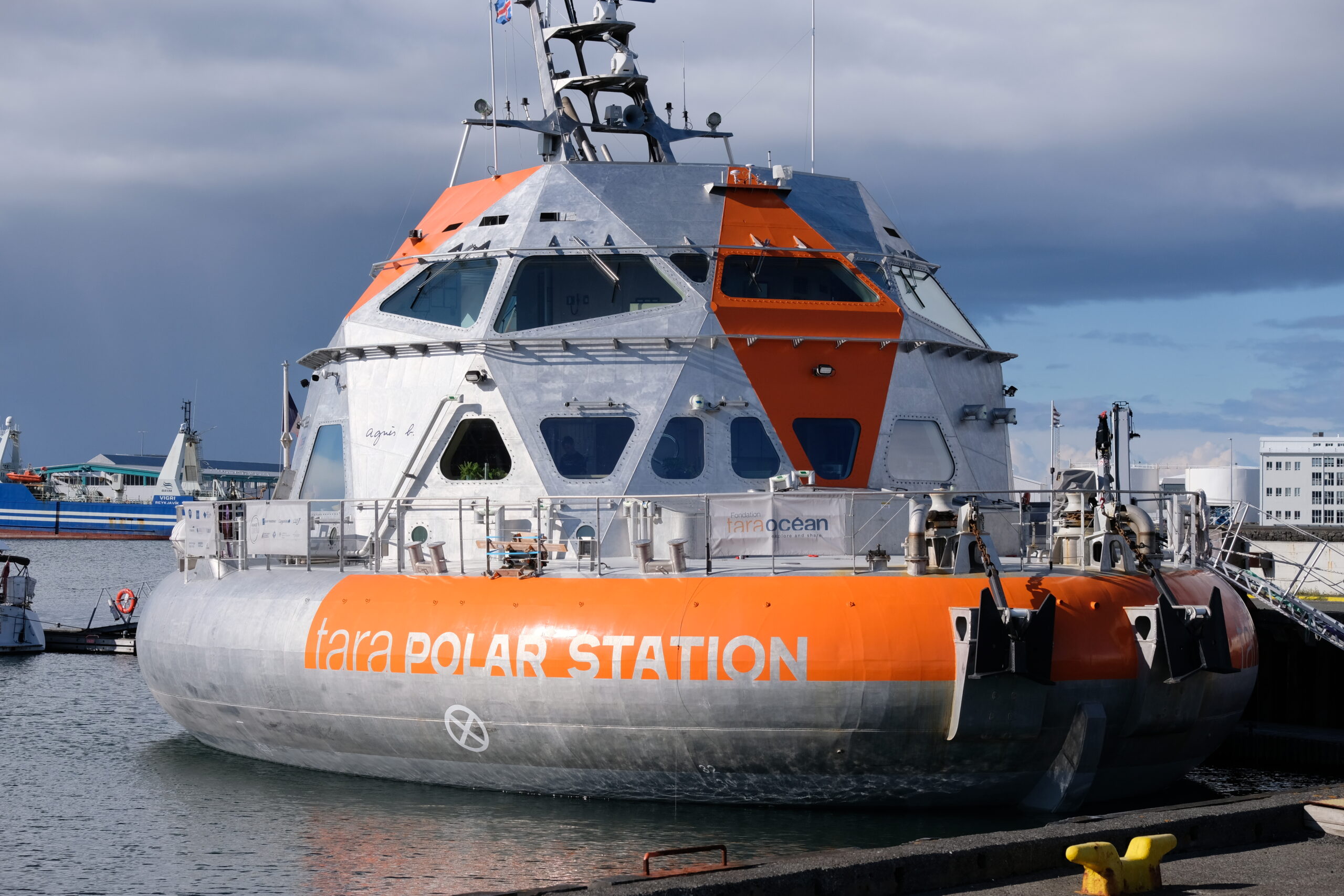
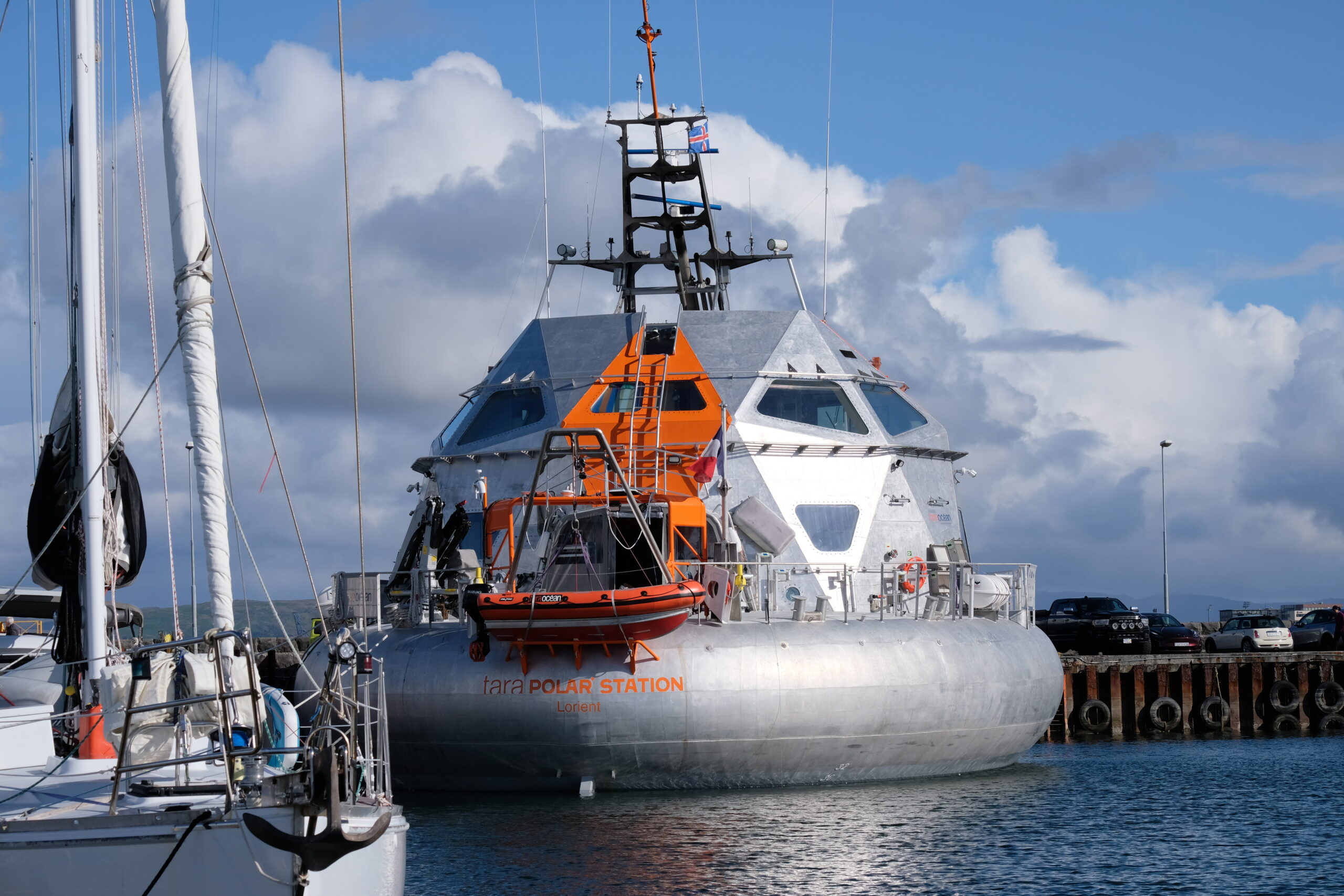
Walking near the harbor yesterday I noticed a unique vessel called the Tara Polar Station docked behind Harpa. I looked it up and found a good article that describes how it can withstand -52°C temperatures and provide living accommodations for 18 people. It’s first real expedition starts next year, which will last 18 months, including 14 months drifting in sea ice. That’s a pretty tight environment for 18 people to spend over a year stuck in the ice!
The research station will be docked in Reykjavík through October 20th, long enough to play a role in the upcoming Arctic Circle Assembly, which I’ll be attending. I hope to learn more about it during that event, and maybe find a way to get an onboard tour.
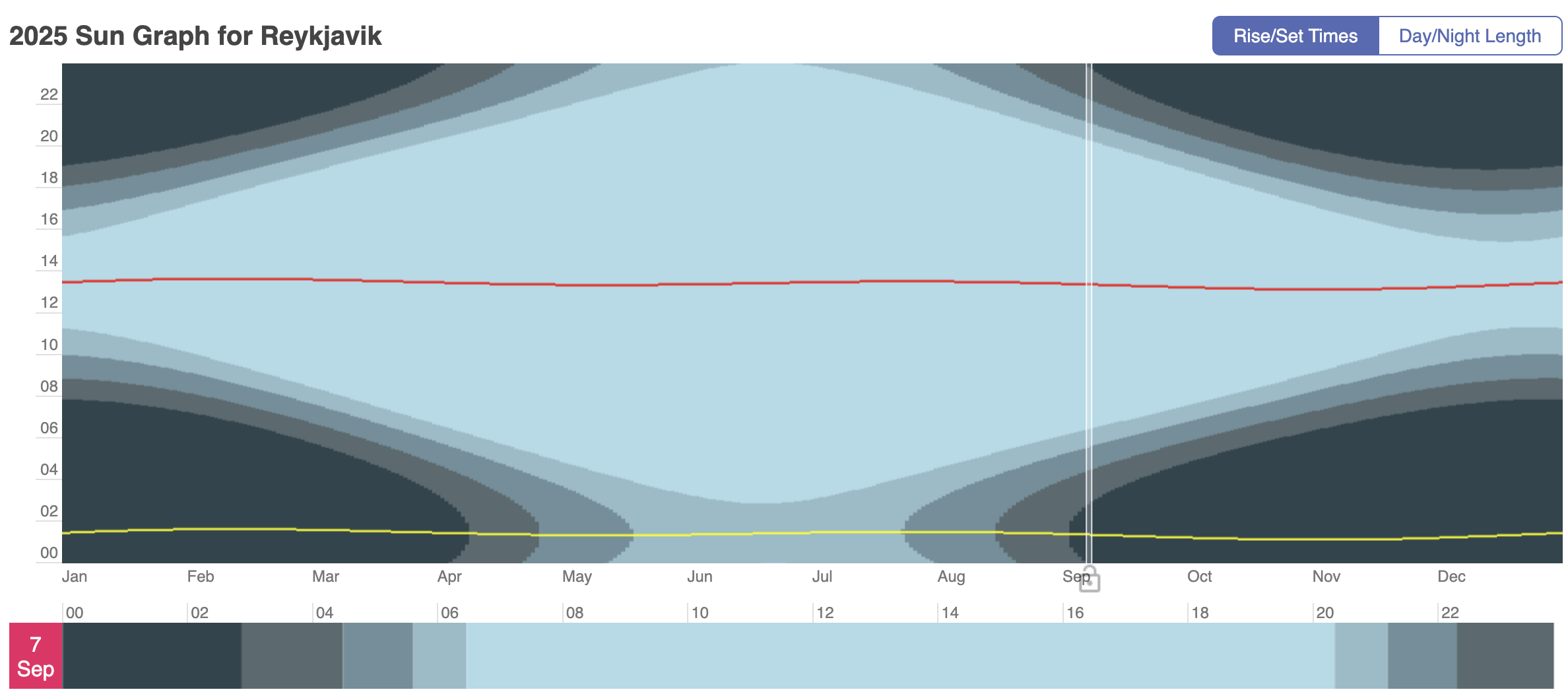
With the arrival of September the days are getting noticeably shorter here. The Sun Graph indicates that only now does Reykjavík have true “Night,” previously only reaching “Astronomical Twilight.”
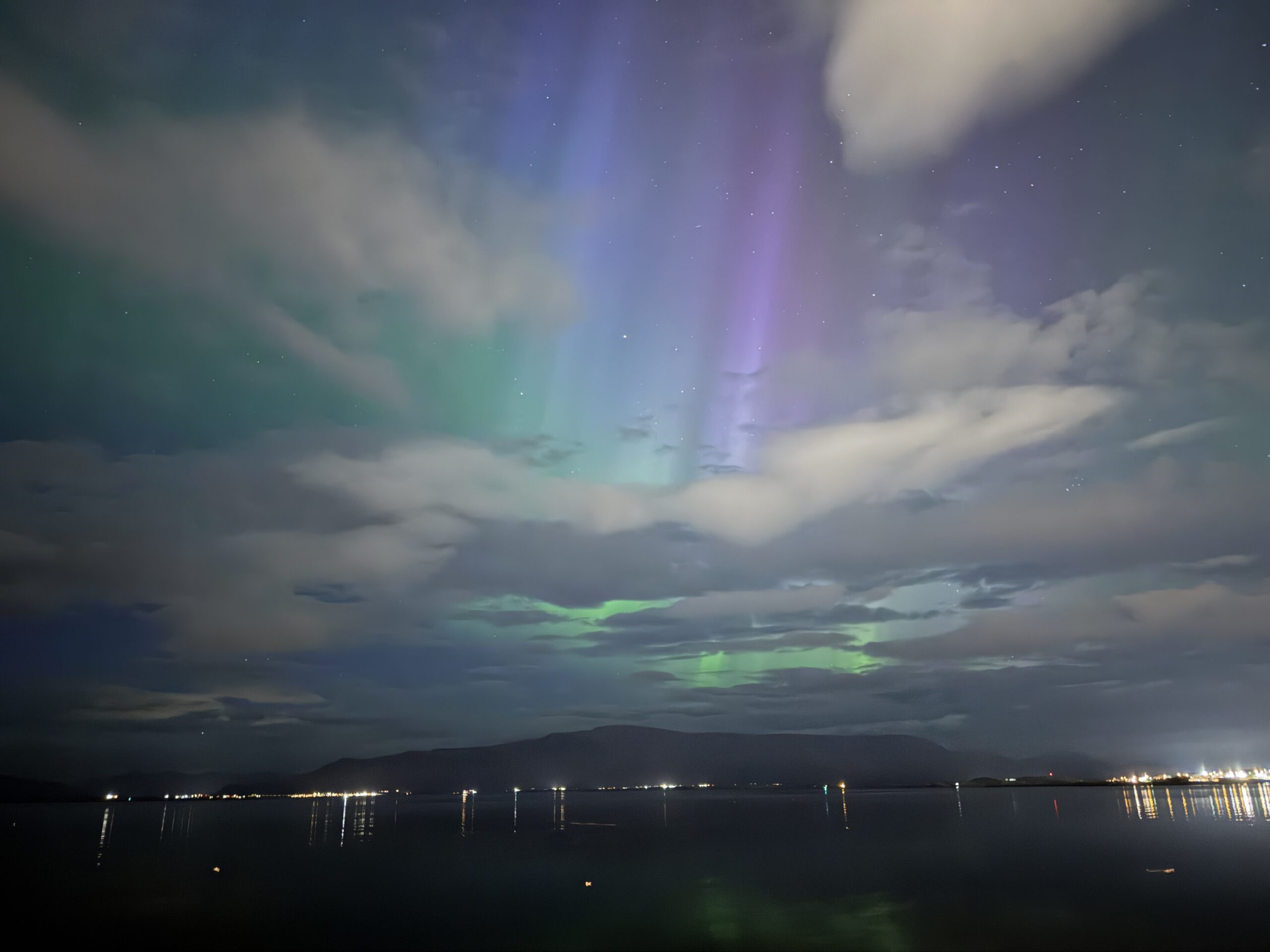
One side effect is that it’s dark enough now to see aurora, and the last week had enough solar weather for me to spot the Northern Lights. There’s obviously light pollution from the city, so they were pretty faint with the naked eye, but the long exposures on an iPhone let you to see what’s hiding in the darkness.
Northern Lights over Mt. Esja
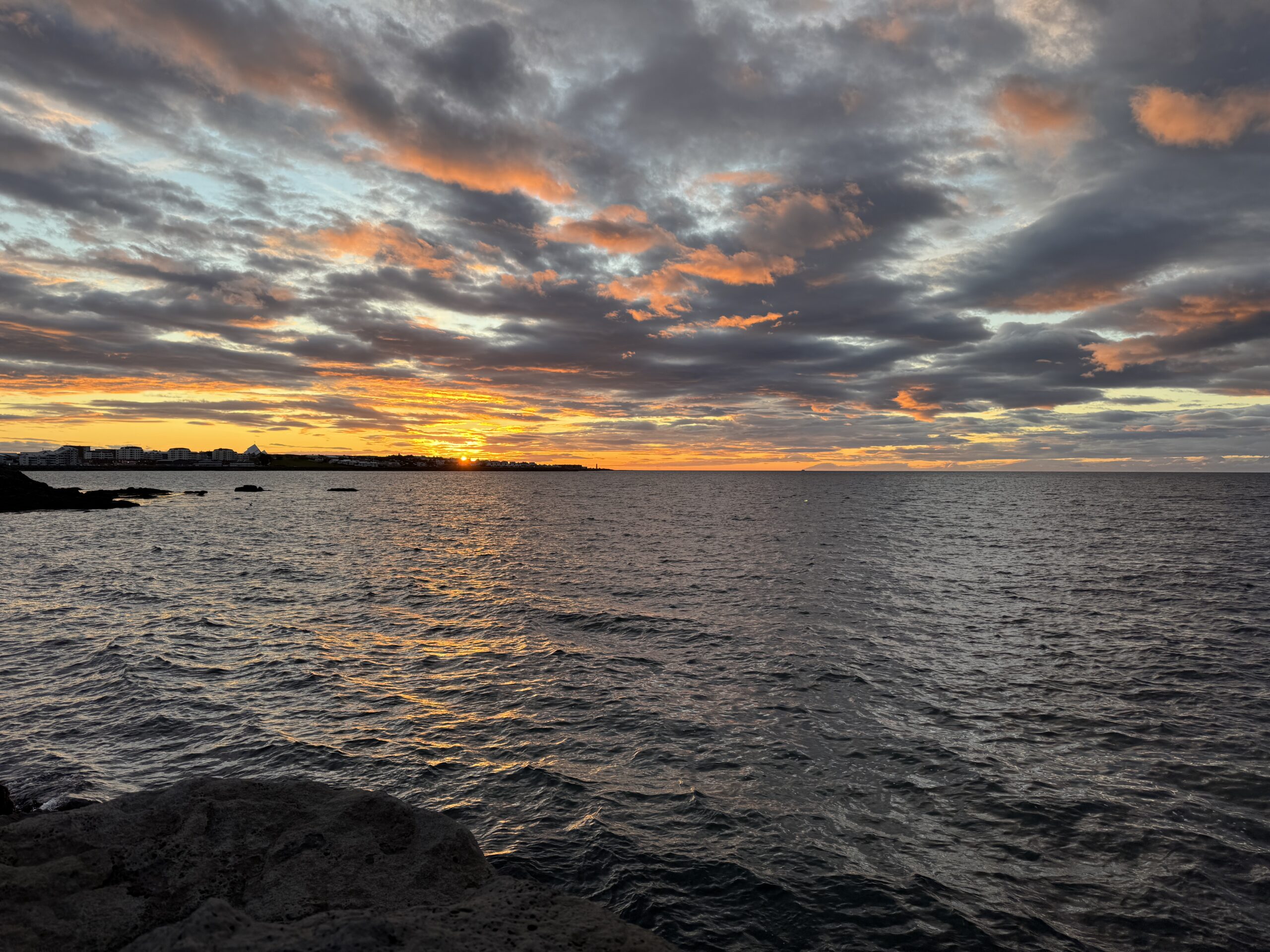
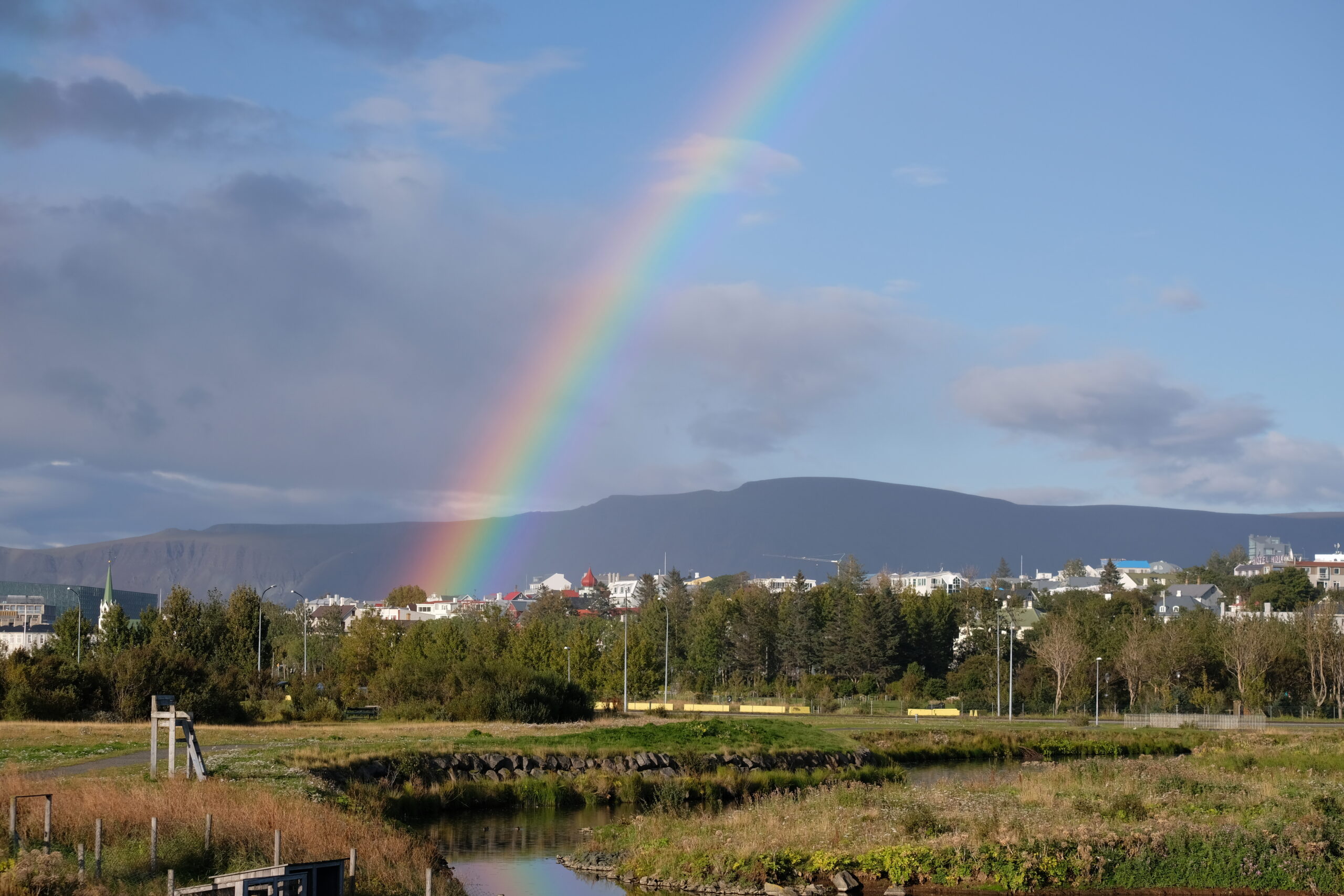
In general, the sky was very impressive this week. Here are a couple more examples:
Sunset over the Seltjarnarnes peninsula Rainbow in front of Mt. Esja, taken from the Nordic House
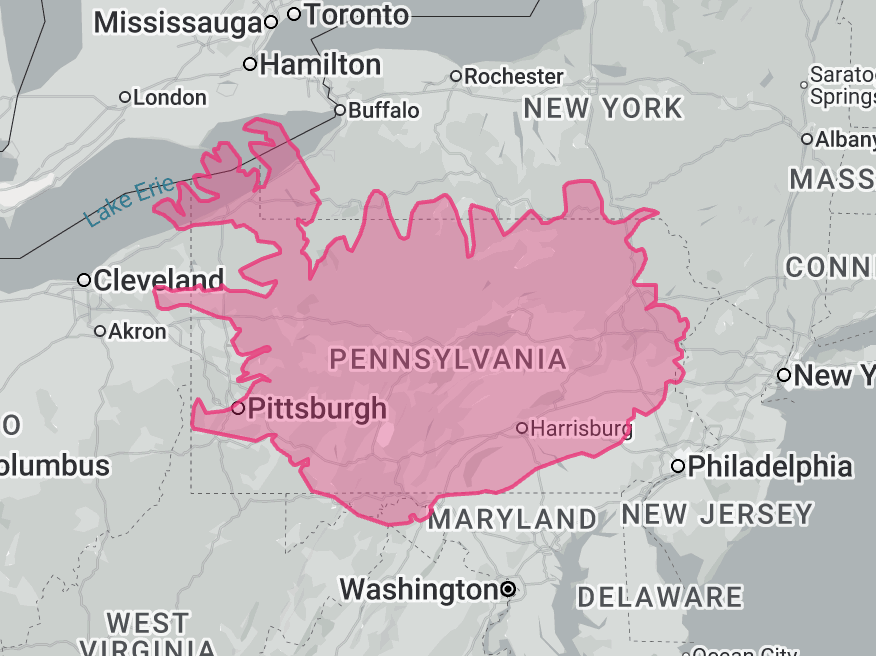
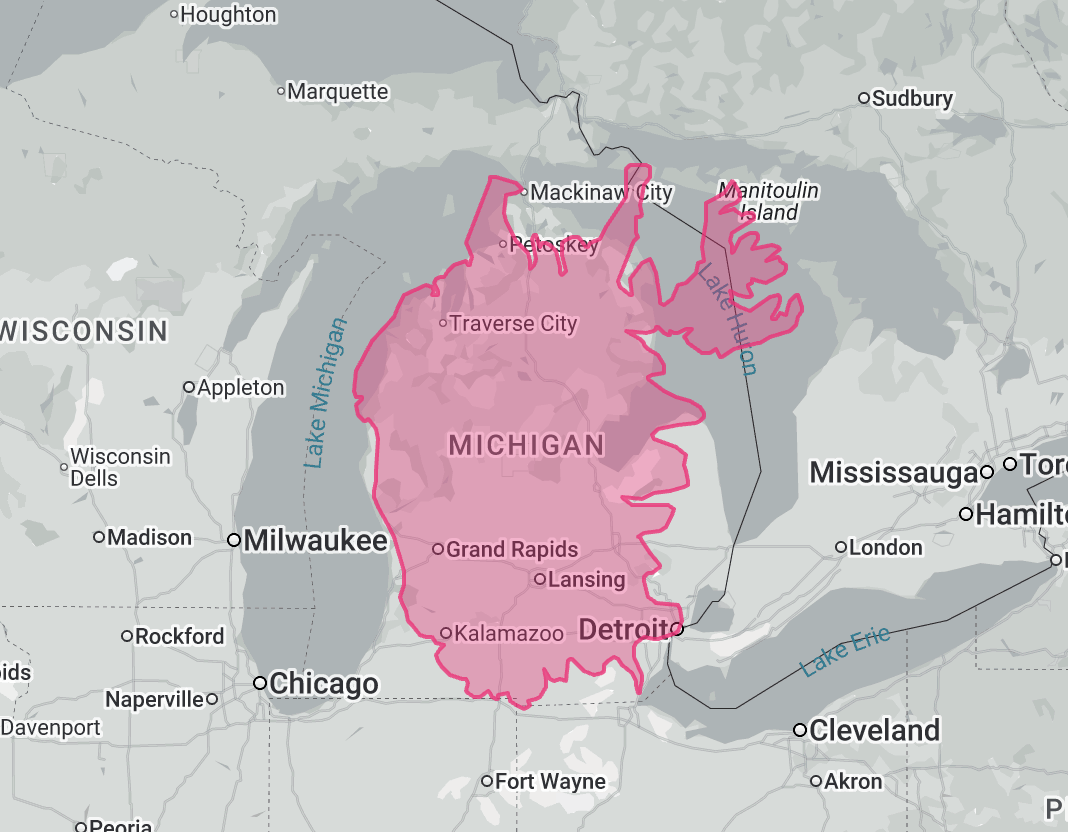
The final thing I’ll point out this week is a fun website called The True Size where you can move countries (or US states) around a typical Mercator map projection to see how they compare. We all know that map projections are distorted, but a tool like this really helps to show how dramatic those distortions are as you reach the poles.
Funny enough for me, since I know these places so well, Iceland is roughly the size of both Pennsylvania and the lower peninsula of Michigan.
Noted & Done
I watched Summer Light, and Then Comes the Night, an Icelandic film based on the novel by Jón Kalman Stefánsson. It’s my favorite of the three books I’ve read by him, and despite finishing it over 2.5 years ago the movie brought back imagery from the book so vividly that at times it felt like I’d watched it before. Unlike many Icelandic films, this one is easily accessible; it’s available to rent or purchase on Amazon Prime.
I’m planning a trip to the Westfjords in a couple of weeks for a long weekend. If you’ve been, and have recommendations, let me know! I plan to stay in Patreksfjörður and Flateyri.
Wikipedia tells me that 81% of Icelanders never smoke, but I guess I go to a lot of the same places as those 19%. I find smoking to be noticeably more common here, or maybe it’s just that there isn’t the courtesy of standing 10+ feet away from an entrance, so I end up walking through smoke more often.
I had to wrangle with all kinds of problems on the Moped Army website this week. I guess it’s par for the course, but running a website in 2025 is an especially unforgiving chore. The site gets hammered by unscrupulous AI bots scraping the forum to build their models, search engine traffic is down because Google just serves AI answers instead of sending people to the site, and the lack of traffic combined with plummeting ad rates means revenue is cut in half. I’ve been running the site for 28 years now, and the amount of time I have to spend fending off attacks, scammers, and other bad actors is much higher now than any point in the past. I’ll keep on keeping on, but all of these additional headaches don’t bode well for the health and longevity of the independent web.
A YouTube account called The Fireside Tapes is posting videos from the Fireside Bowl in the late ’90s. That venue, at that time, was a big part of my life. I hadn’t yet moved to Chicago, so I’d grab a friend and drive 2.5 hours from Kalamazoo to catch a show. We always drove back the same night, blurry eyed but happy, speeding home on I-94 with the windows down to stay awake.
It’s great to see these videos since very few people recorded shows during those years. It was costly and cumbersome, so at most there’d be one person with a Hi8 camera or a DAT recorder. Aspiring photographers took photos, but the film and processing were too expensive for most people.
Even at very low resolution, seeing this era of the Fireside Bowl brings back a lot of memories and reminds me how young we all were, bands and audience alike. Venues like this tended to blur the lines between the two, with the stage barely a foot tall and no backstage area or green room. After a set, the band would move their gear to the side and join the audience.
The Fireside Tapes has an Instagram account you can follow, with custom title graphics for each upload. It’s such a great way to bring a bit of branding, consistency, and high resolution to these low-res archives. I’m not sure who is behind these accounts, but thank you!