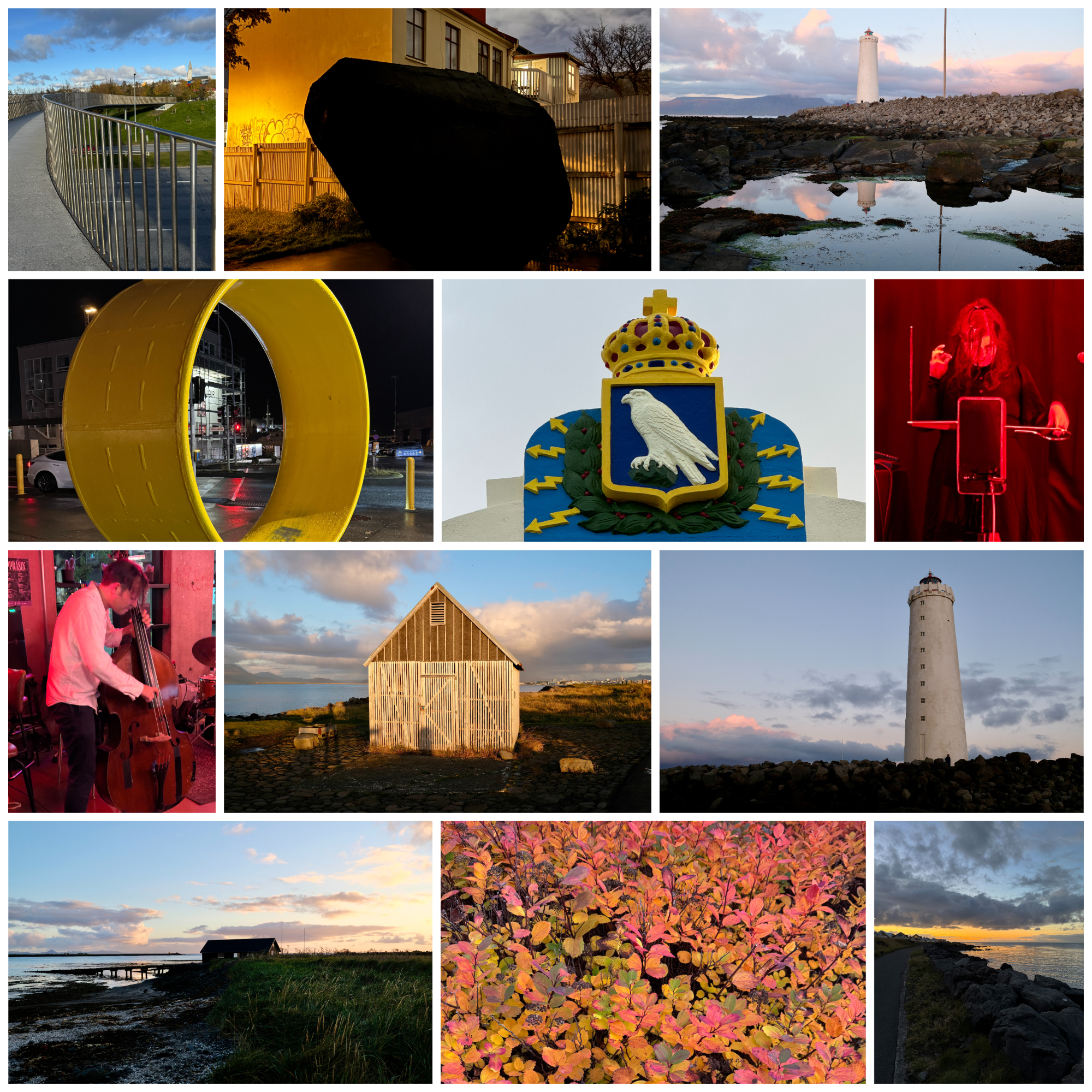
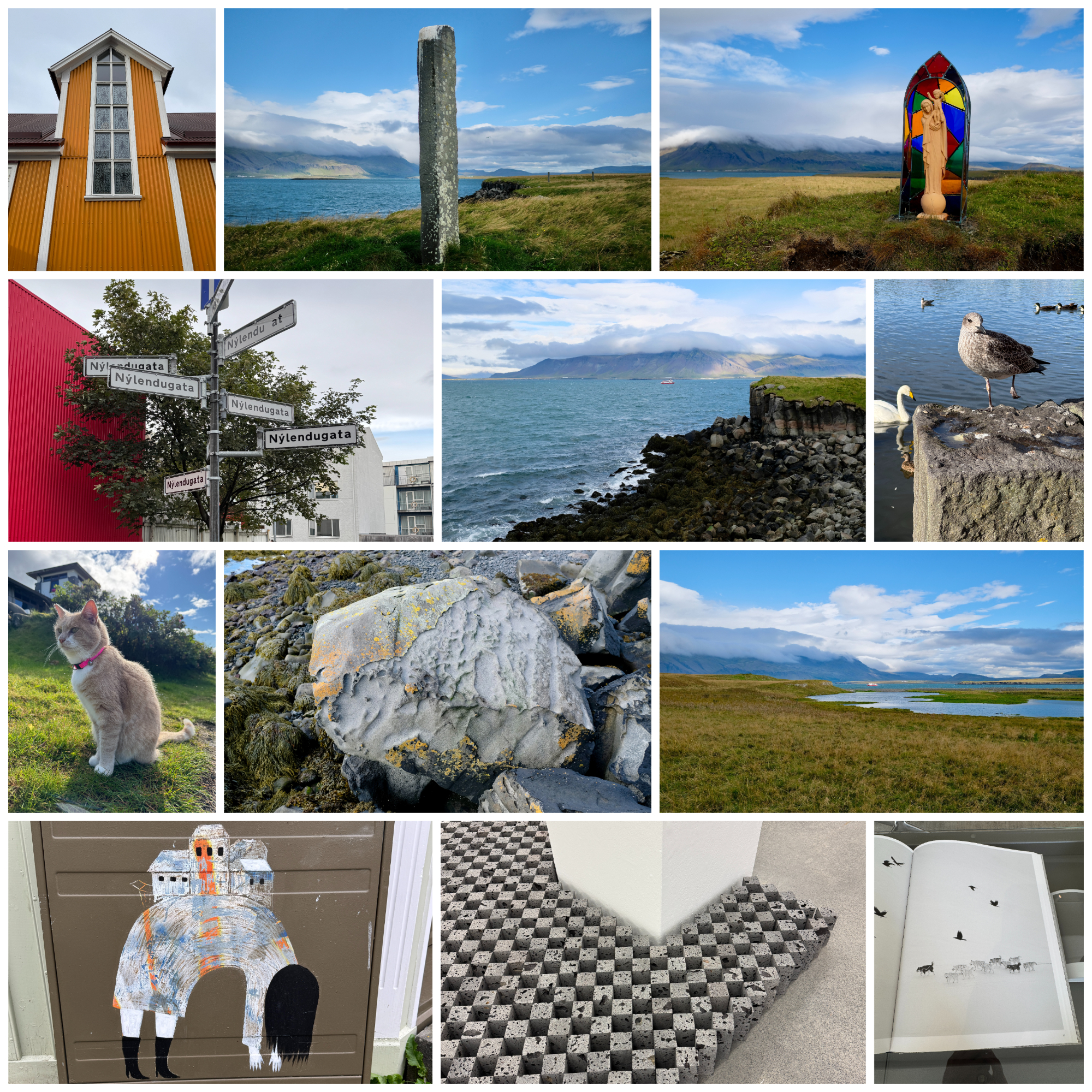
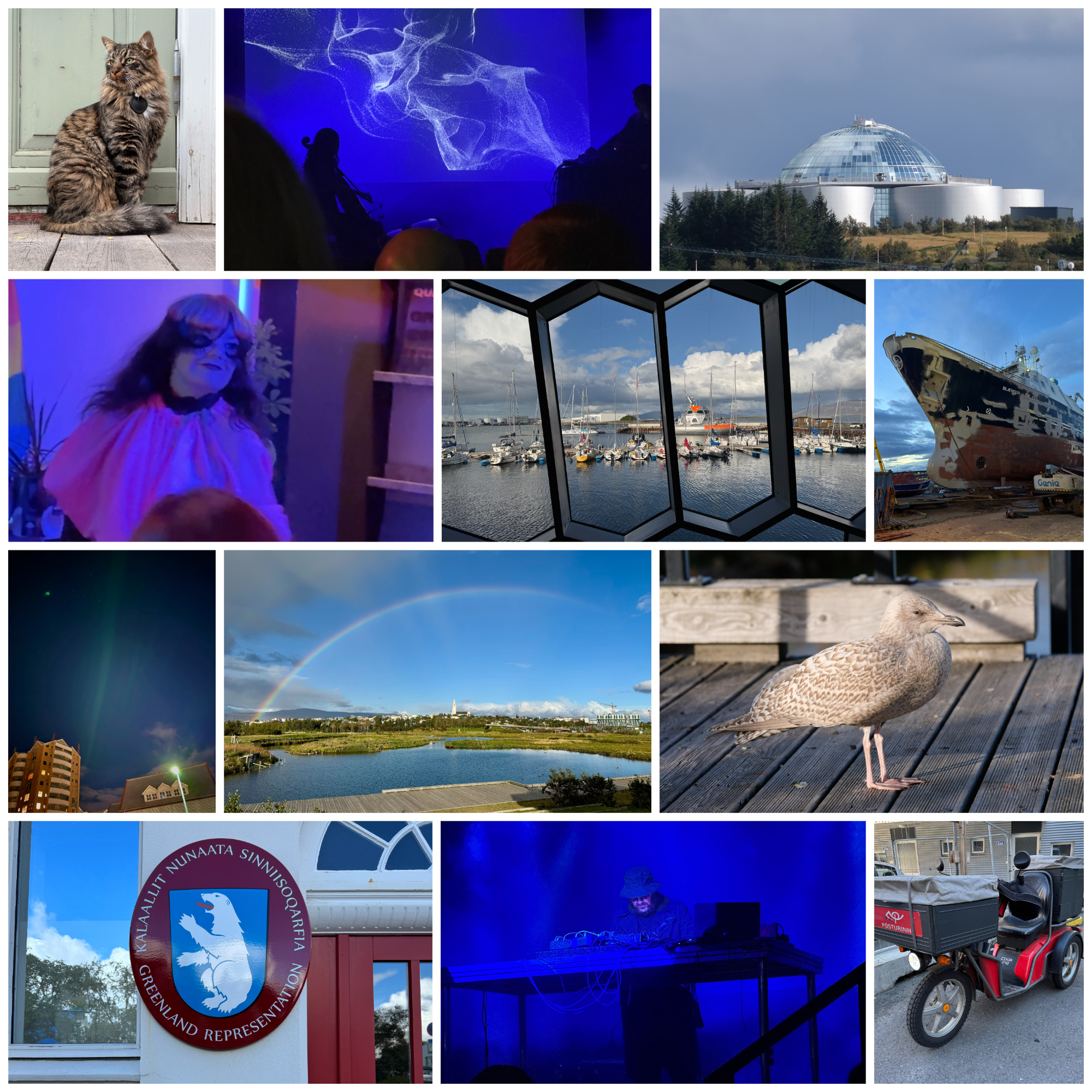
After my trip to the Westfjords last week, this one has been pretty heads-down. The weather was mostly dreary, with enough rain that 50 meters of the ring road in eastern Iceland was simply washed away. The timing of various coursework sort of stacked up on me, which means I have a few presentations and a few essays all due this coming week. But honestly, that’s not such a bad thing to overlap with inclement weather.
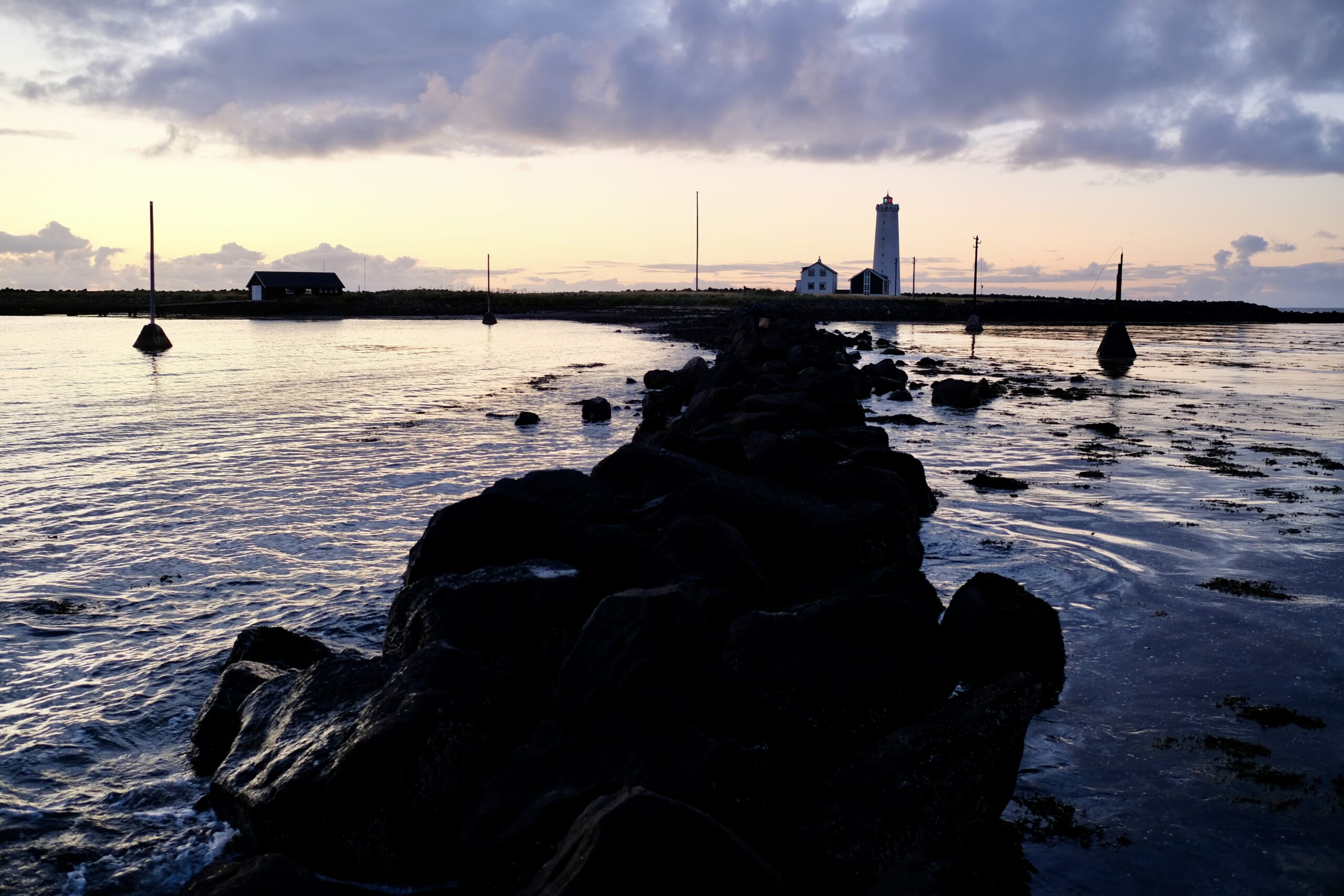
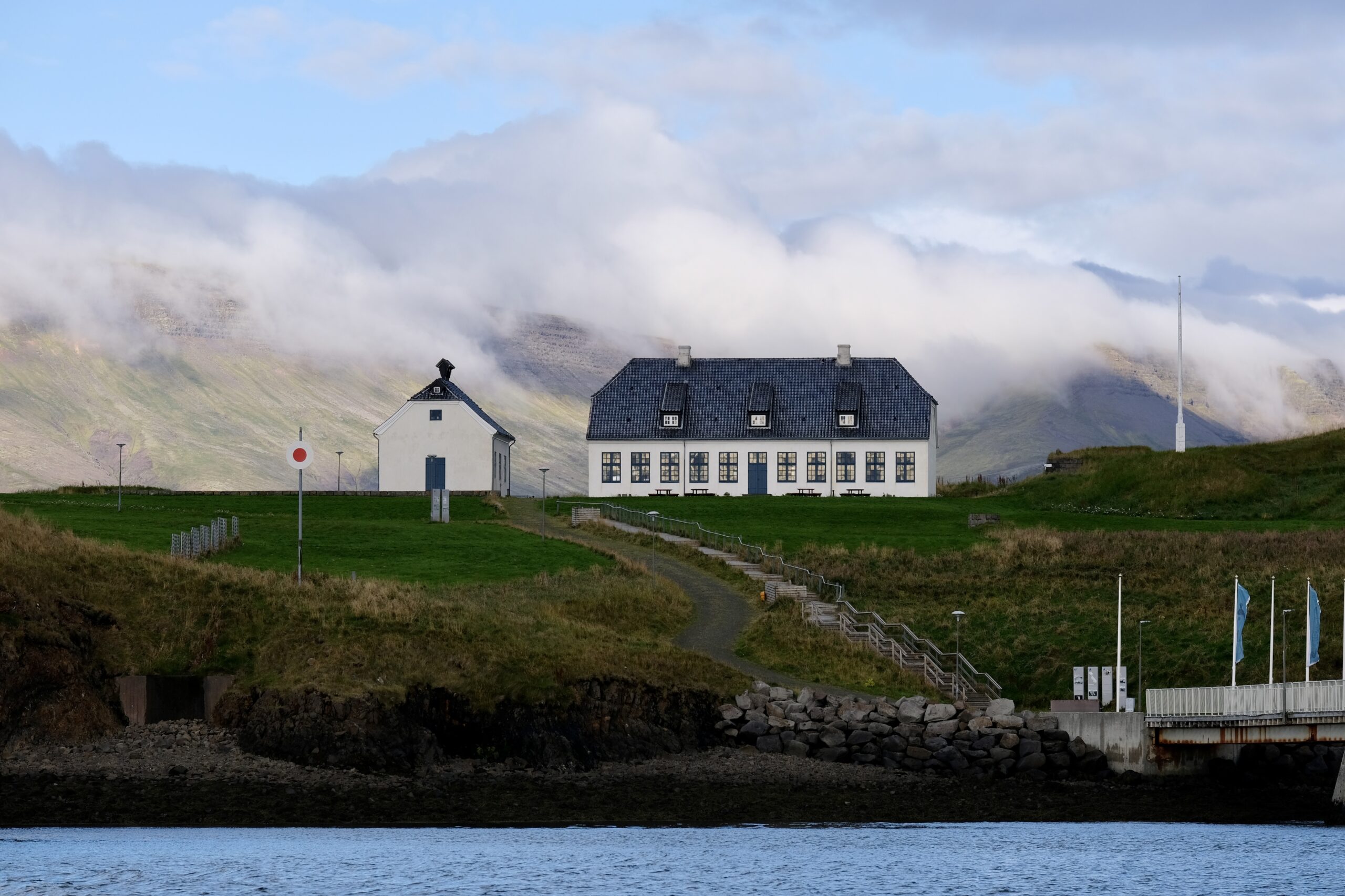
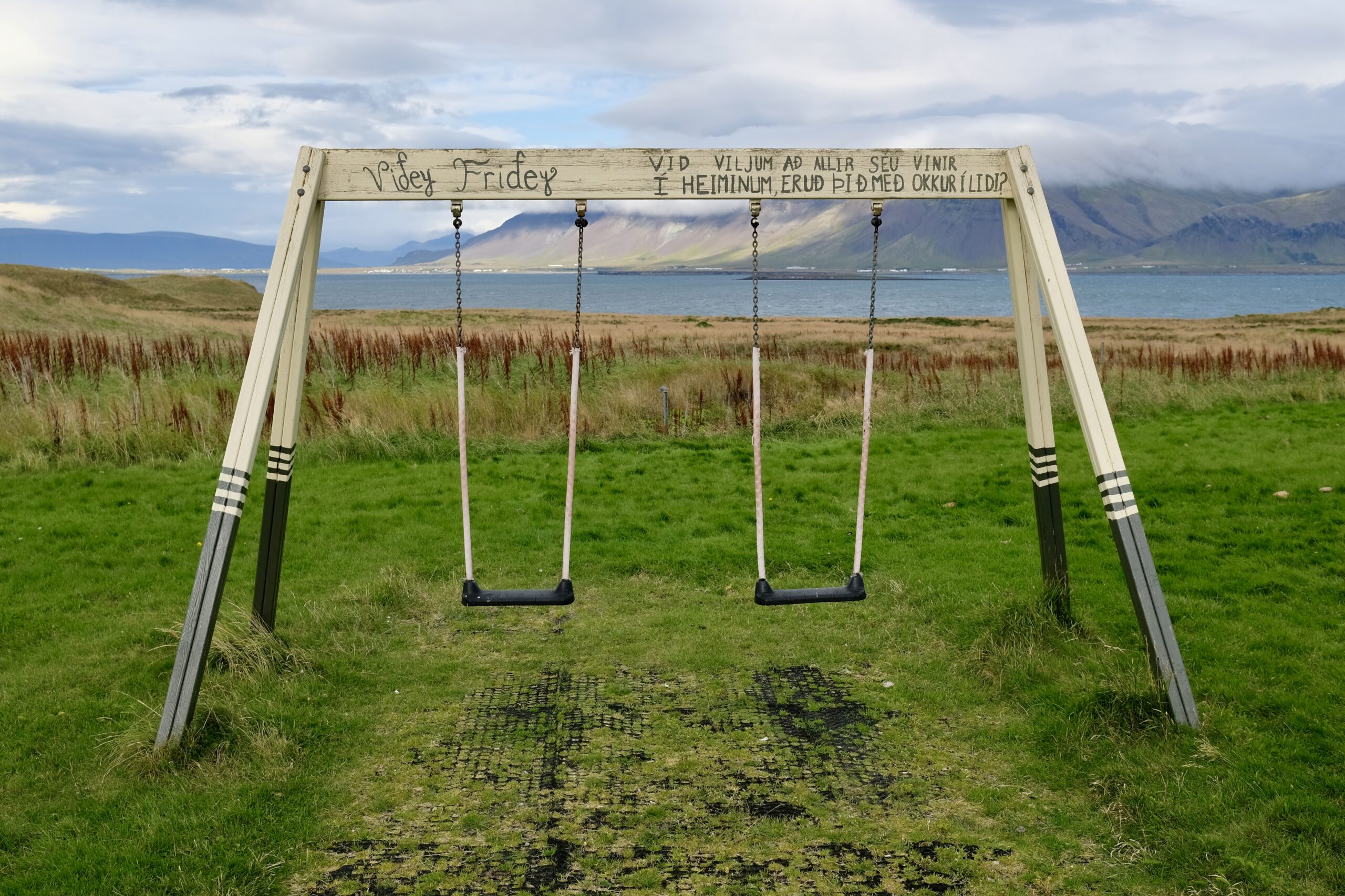
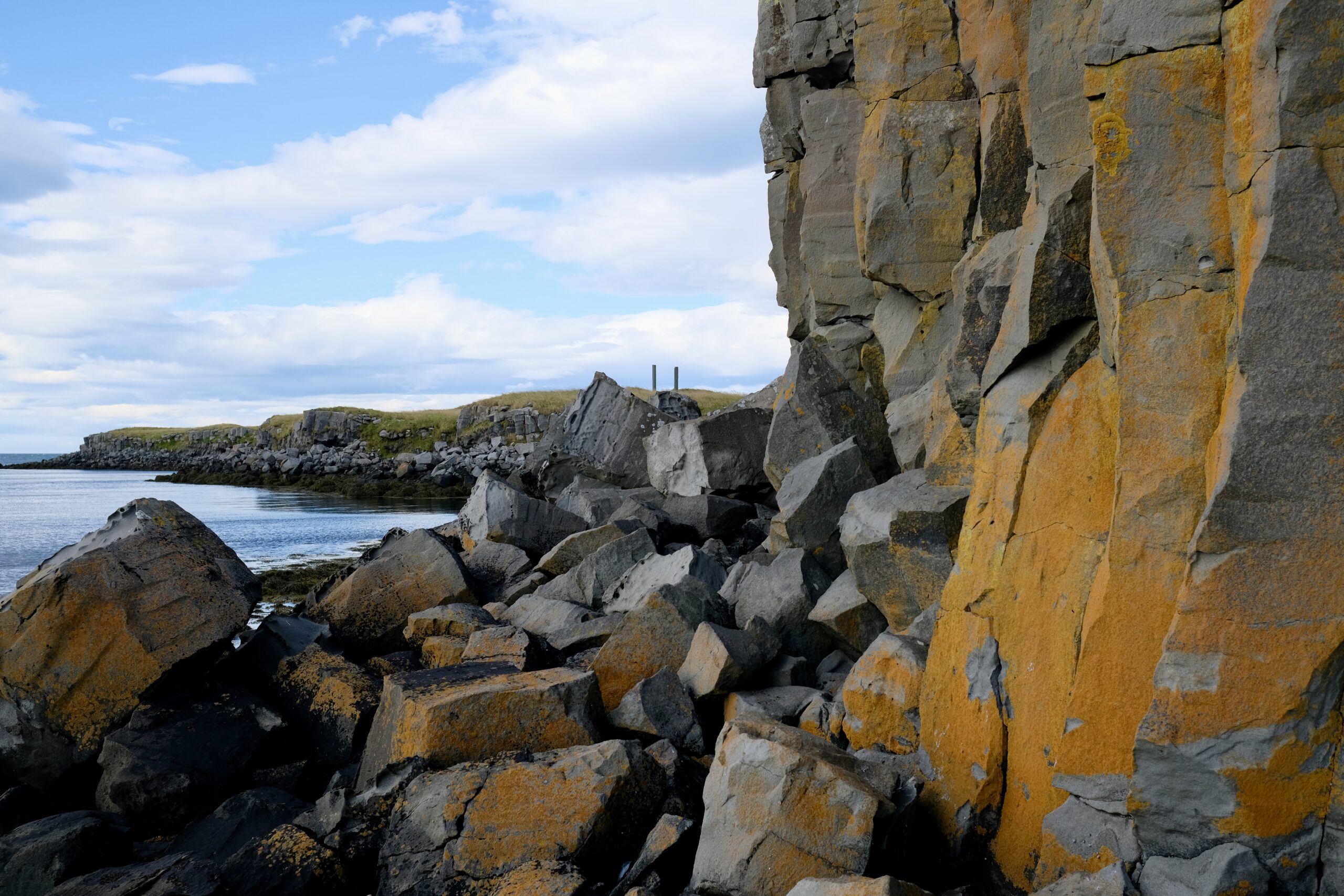
Island of Grótta
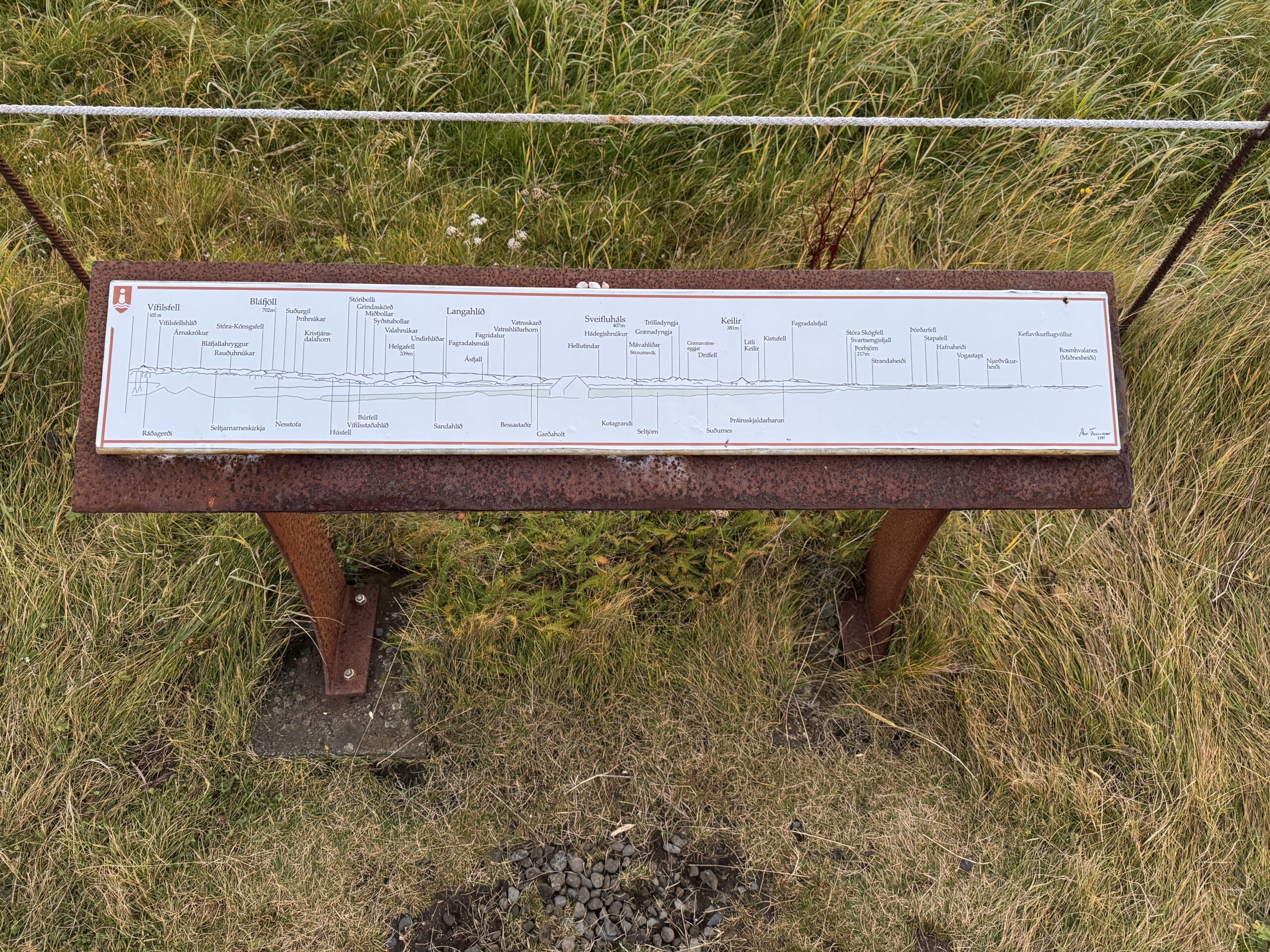
A fascinating thing about Iceland is that everything has a name. The photo above is from the Island of Grótta, which I visited yesterday off the tip of the Seltjarnarnes peninsula, but you’ll find similar horizon-labelling signs throughout the country. They indicate the names of not just prominent peaks or landmarks, but every valley, ridge, indentation, rock outcropping, and farm. Armed with this vocabulary, you could refer to the environment with incredible precision, and combined with all the nuanced words for wind (this website lists 14) then just imagine the richness in which you could describe air moving through the landscape.
And yet, names for Icelandic people are more limited. This week the Icelandic Personal Names Committee approved seven new names, and while I confess that I don’t know quite how it works there is apparently a defined list of names that parents must choose from. Combined with the patronymic naming structure used in Iceland, this leads to a lot of similar sounding names. The approval of a name is based partly on its ability to work with Icelandic grammar and alphabet rules, although there are additional criteria depending on if it’s a given name, middle name, or surname.
All of the official rulings of the Personal Names Committee are public, and the most interesting (of course) are the denials. This one for Óskir was rejected because it’s already the plural of the established proper name Ósk, while this one for the middle name Hó got stopped by the ambiguous judgement that it could “cause trouble for the name bearer.” The middle name Boom was ruled against as it is “not derived from an Icelandic root word,” which is required for middle names, but not given names. I feel like I could easily lose an afternoon digging through this database (and shoutout to Google Translate for making that possible).
Tomorrow, September 29, is my birthday. I’m just happy to put this one behind me, but time marches forward and somehow I’m 47 years old.
Went to a Hekla show at Mengi, which was my second time seeing her perform this month as she was also part of the Extreme Chill Festival. What can I say, I’m a fan of the theremin.
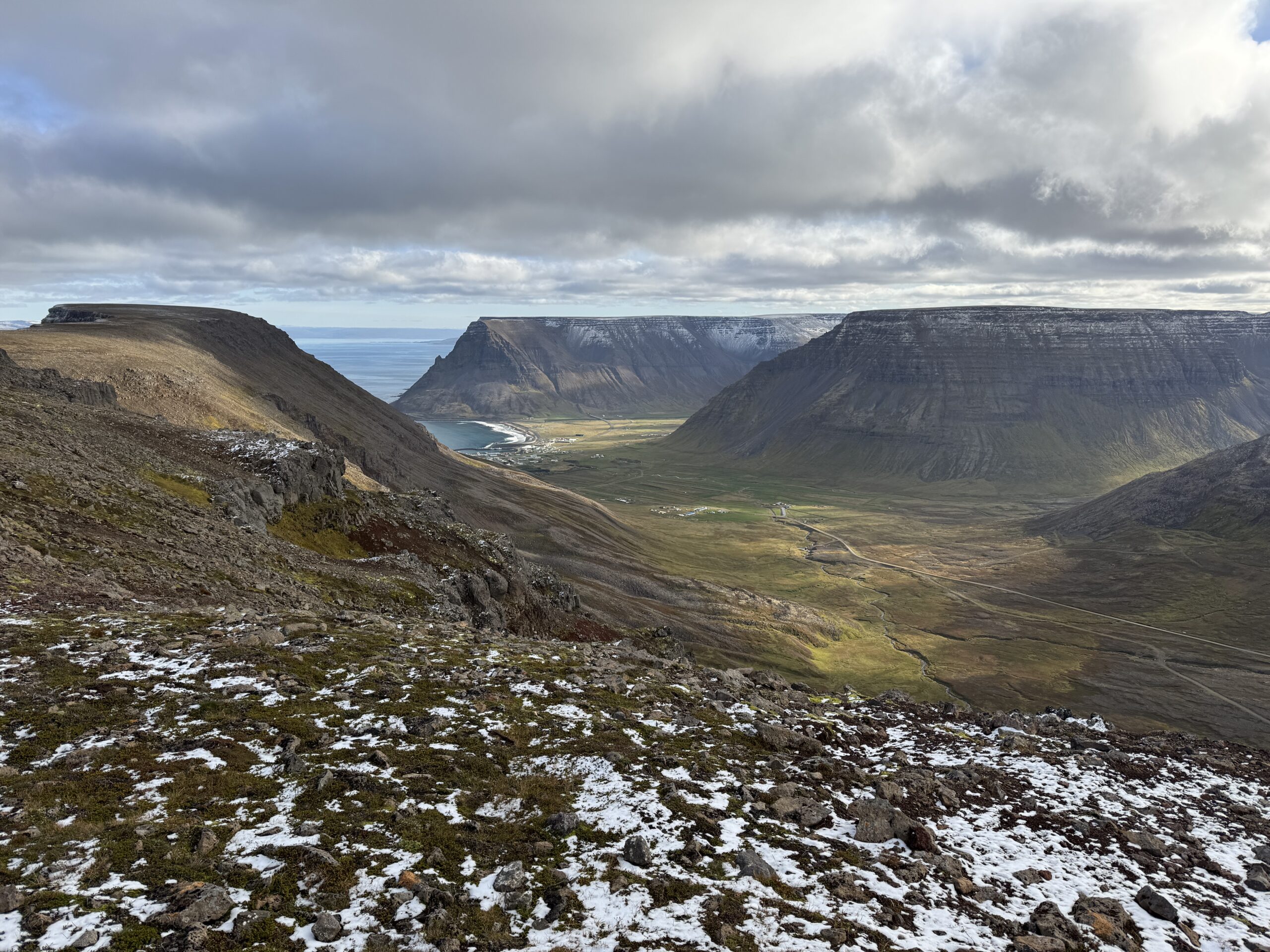
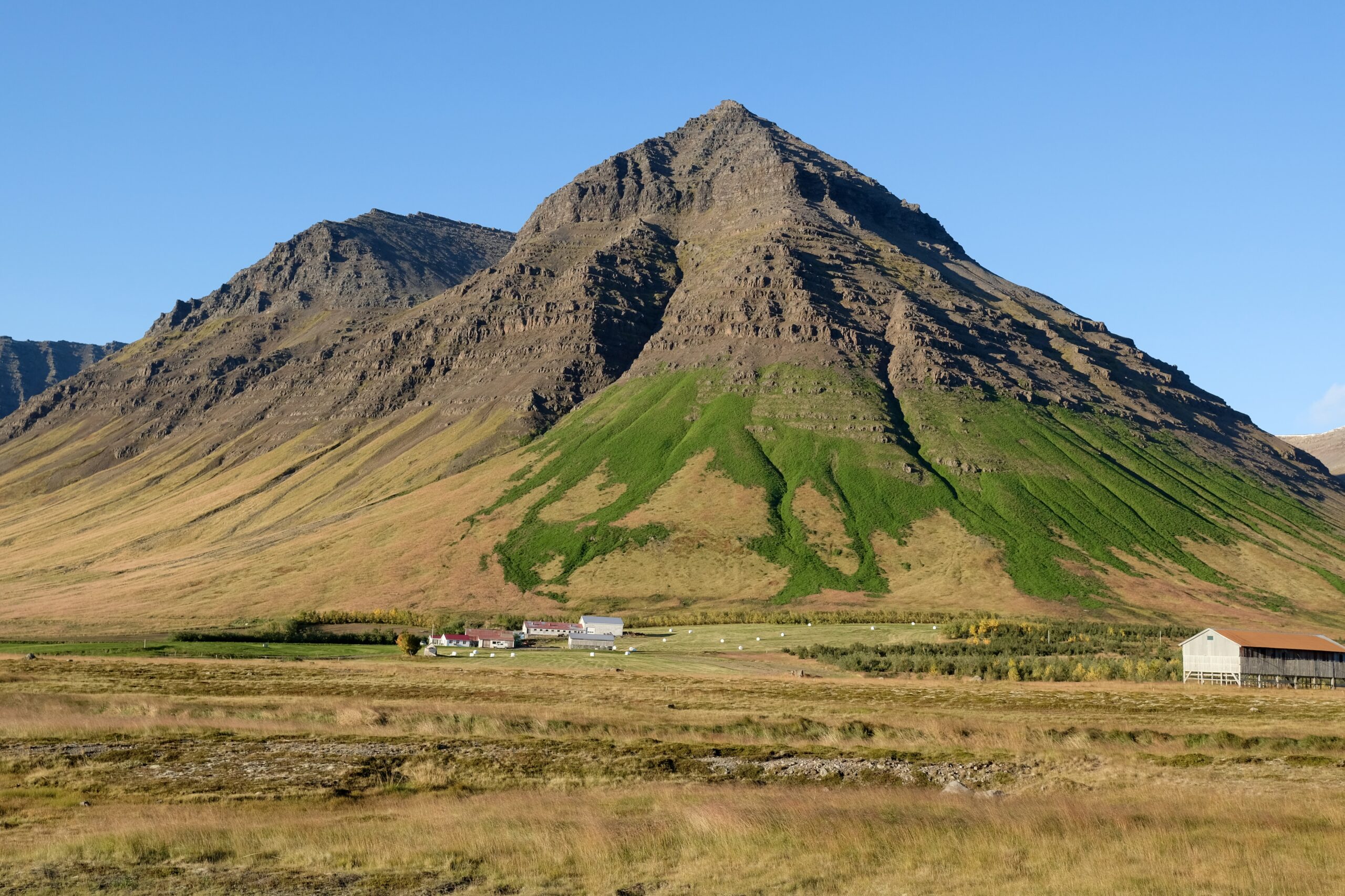
I just got back from my first trip to the Westfjords, a region that has fascinated me for a long time. It’s like Iceland turned up to 11: least populous, most remote, deepest fjords, oldest landscapes. As a multi-day excursion off the ring road it’s sometimes overlooked by tourists, even when they’ve circled the whole country. It felt to me like a bigger version of the Faroe Islands, reminding me of the area around Klaksvík, as well as the southern island of Suðuroy. There’s something calming for me about these landscapes. The sharply steep mountains hold their rocks at an impossible angle of repose, sparing only a tiny strip of flat land along the water to site a village. It’s as if the hills are gently squeezing the fjord, and like a geologic version of the Temple Grandin hug machine, it induces a sense of stillness and quietude.
I had the opportunity to take a long weekend trip because my Thursday classes were cancelled this week, due to my professor traveling. The timing was perfect, as this is about as late into the year as I’d want to go. Winter comes early in the Westfjords, but right now the autumn foliage in the mountains is all rusty reds and yellows, with only occasional pockets of snow and ice at higher elevations.
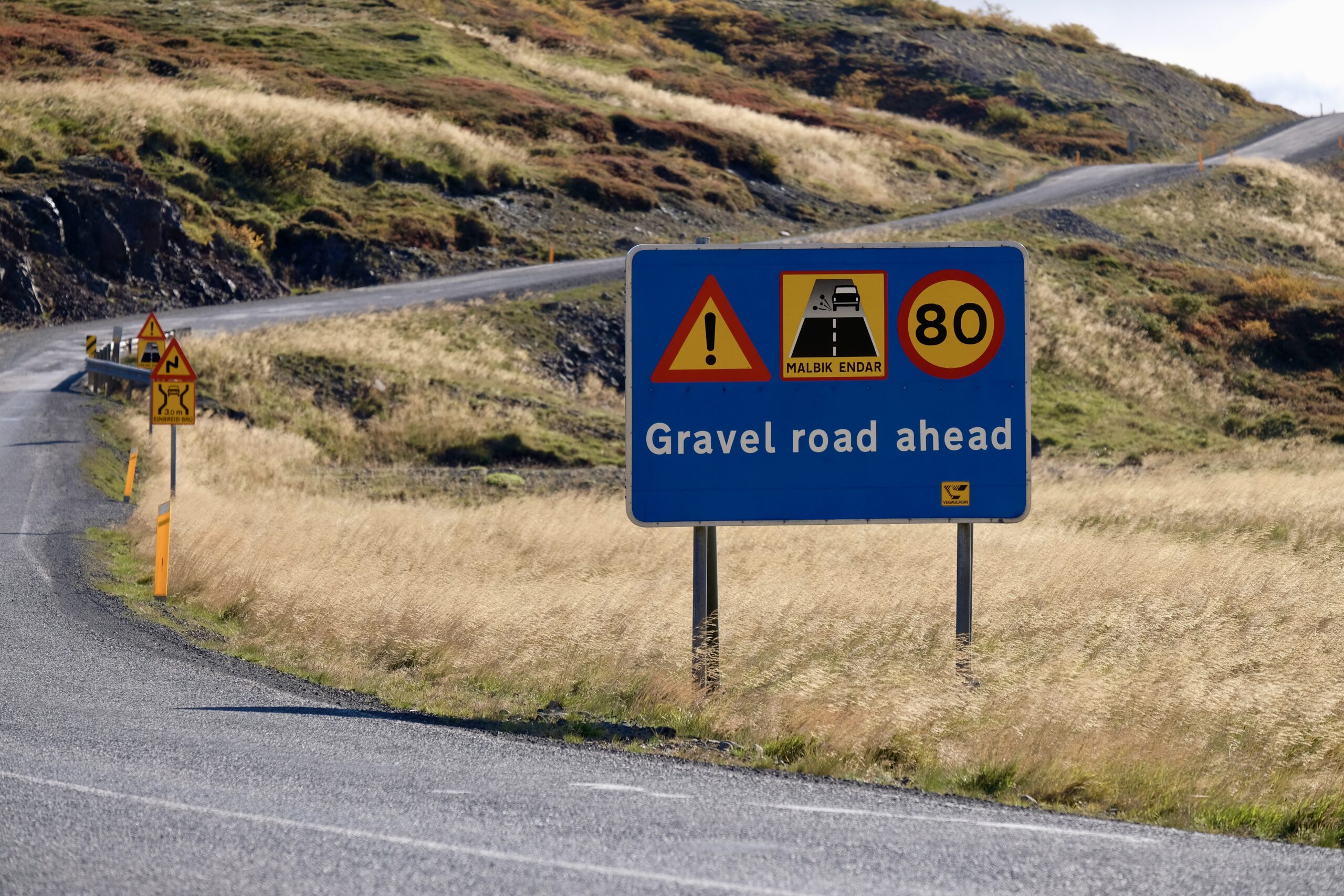
The primary “two digit” roads (e.g. 60, 61) through the region are mostly, but not completely paved. The “three digit” roads (e.g. 612, 624) are paved in proportion to the size of the village they lead to, and the spur roads that snake into valleys to reach a single farm are always gravel. The weather was nearly perfect — sunny and blue skies — although windy and cold of course. I rented a basic 2-wheel drive car, which worked fine, but it would have been tricky in mud or ice. Only once did judge that I should turn around, when I found myself climbing a steep grade over a mountain to an abandoned farm and the path turned to snow. It’s good to know that my tiny inner voice of self-preservation is still alive and well.
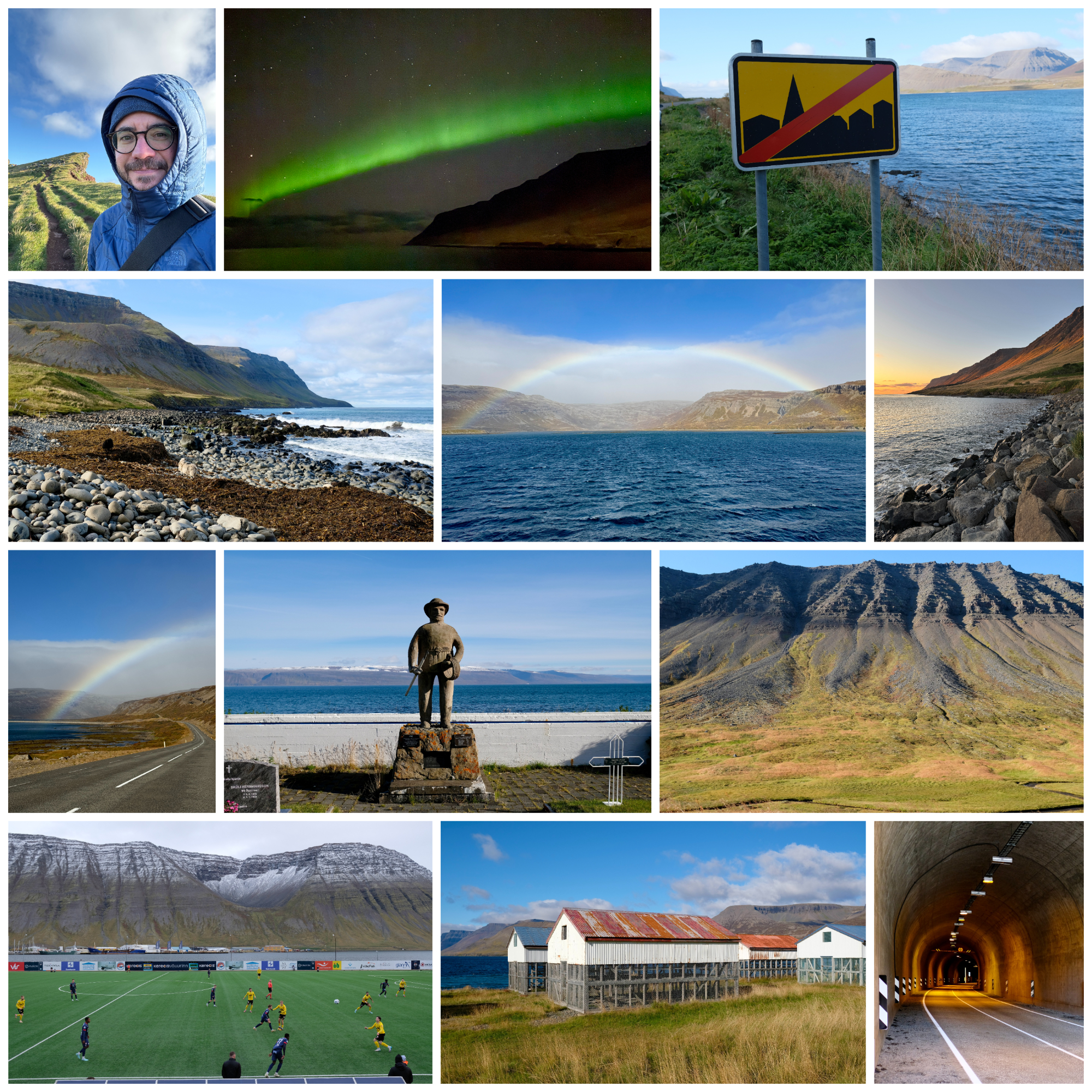
But in general, the good weather made it easy for me to just roam around — to the cliffs and water falls on the sightseeing maps, as well as the back streets of tiny villages, the harbor corridors of fish processing plants, and even a local football match. I have photo sets on Instagram for each day (day 1, day 2, day 3), but I’ll highlight some favorite moments below.
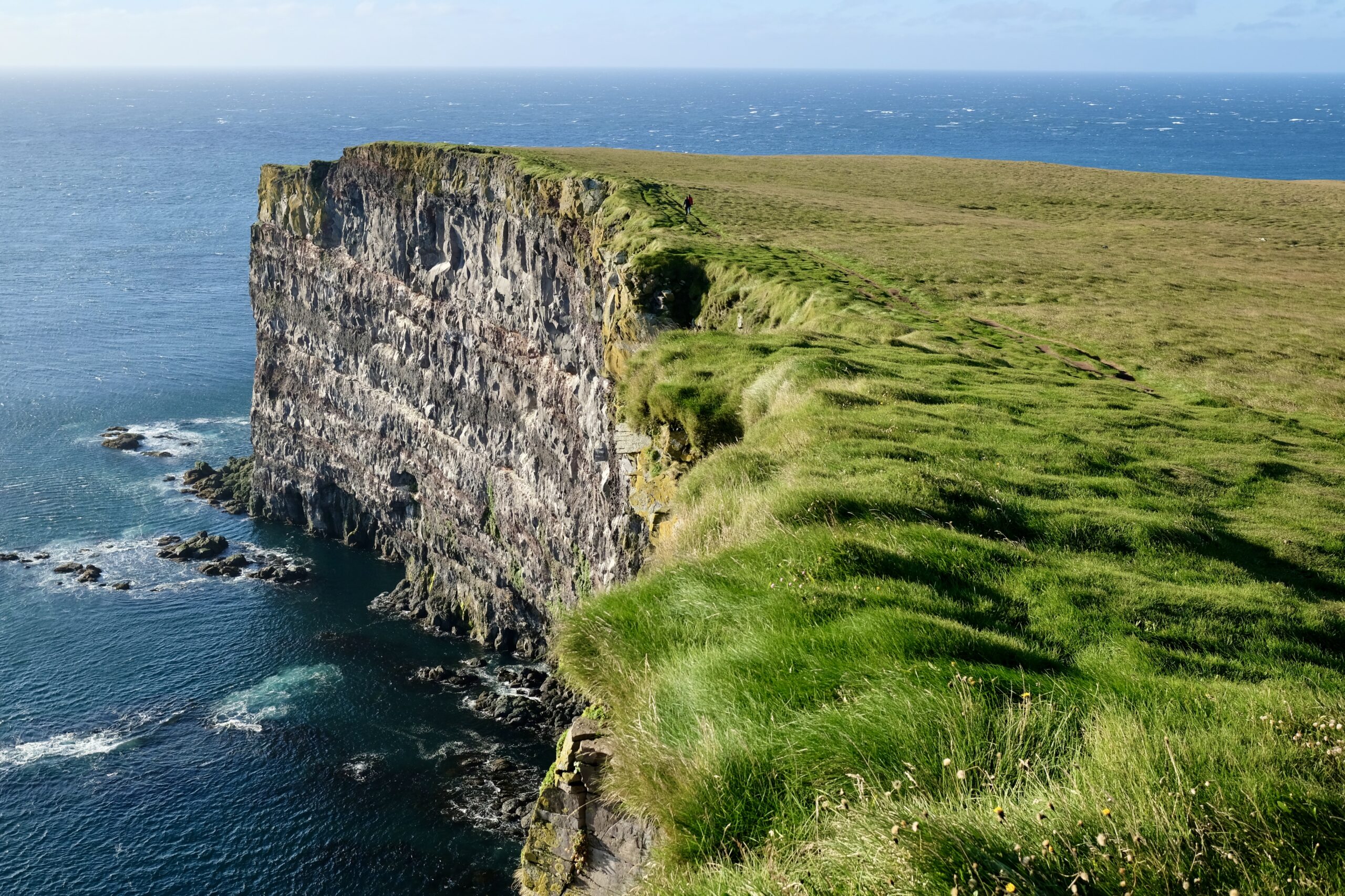
The Látrabjarg sea cliffs are on the southwest tip of the Westfjords. A reason for me to go back is that earlier in the year these cliffs are full of sea birds (including puffins). It’s the westernmost point in Iceland, as well as Europe (although apparently the Azores make that claim too).
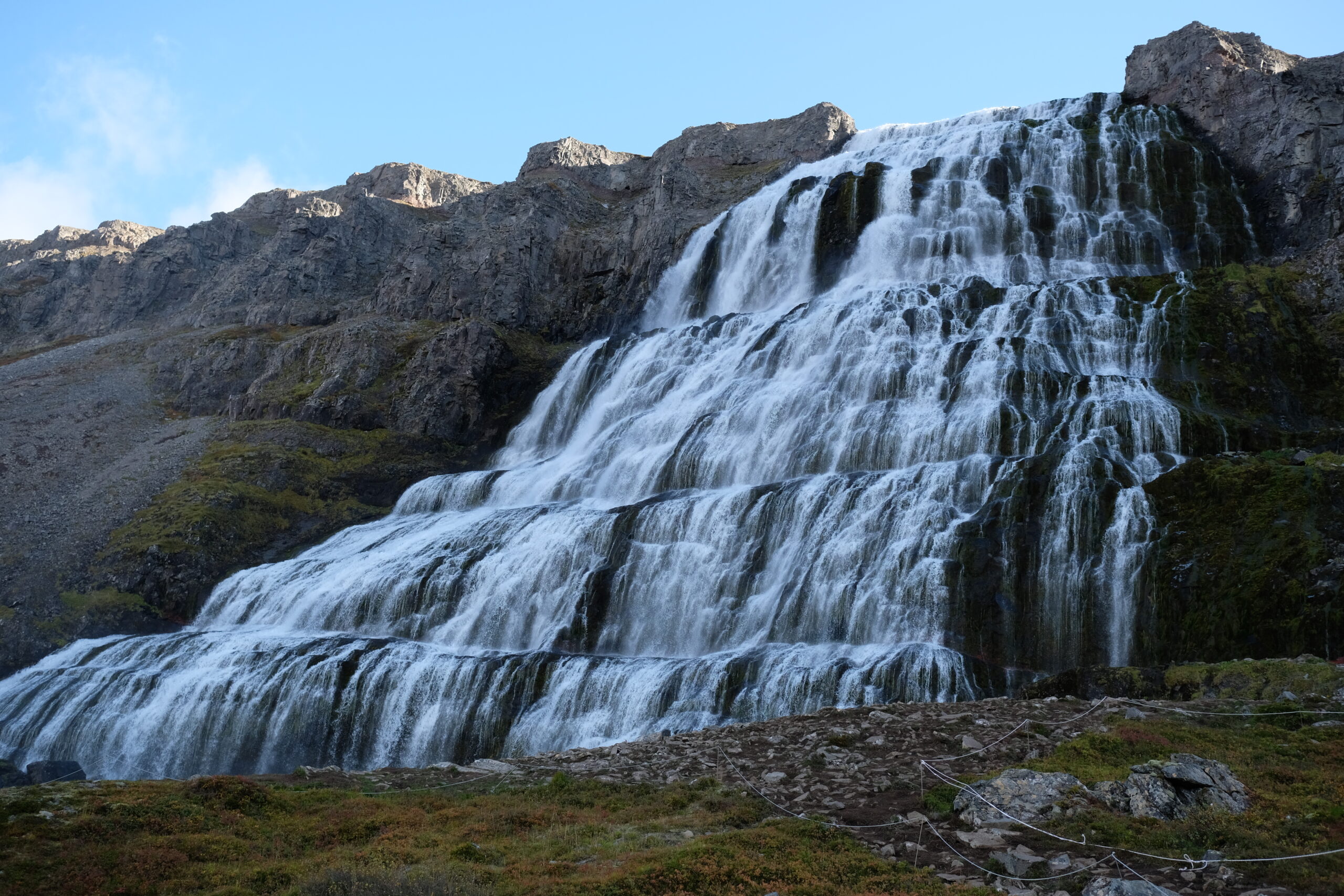
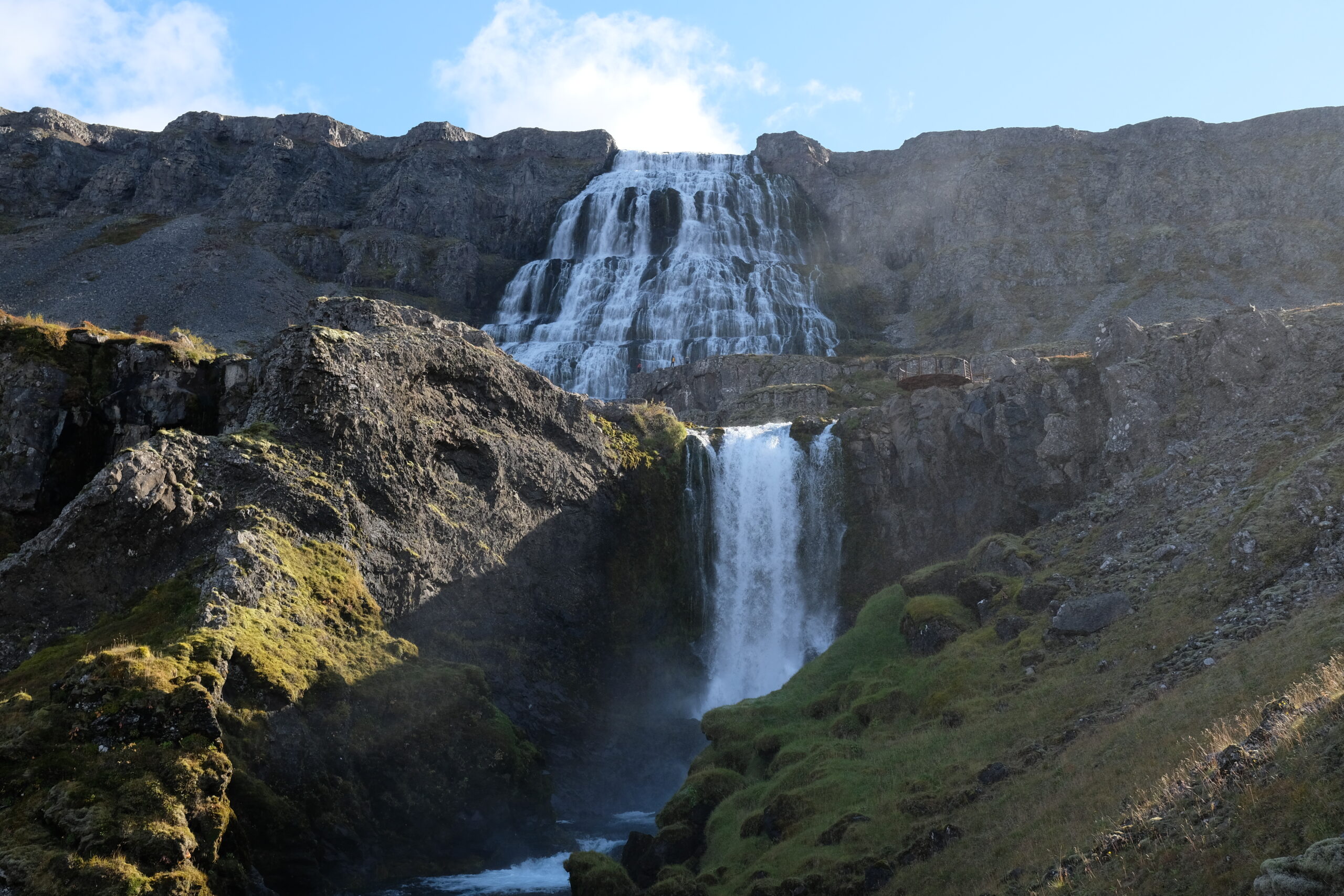
The Dynjandi waterfalls is a massive cascade that feeds numerous other waterfalls below it. I really wonder what this one is like in the winter, as it was already starting to ice up and the dispersed nature of the cascade makes me think it could freeze in interesting ways.
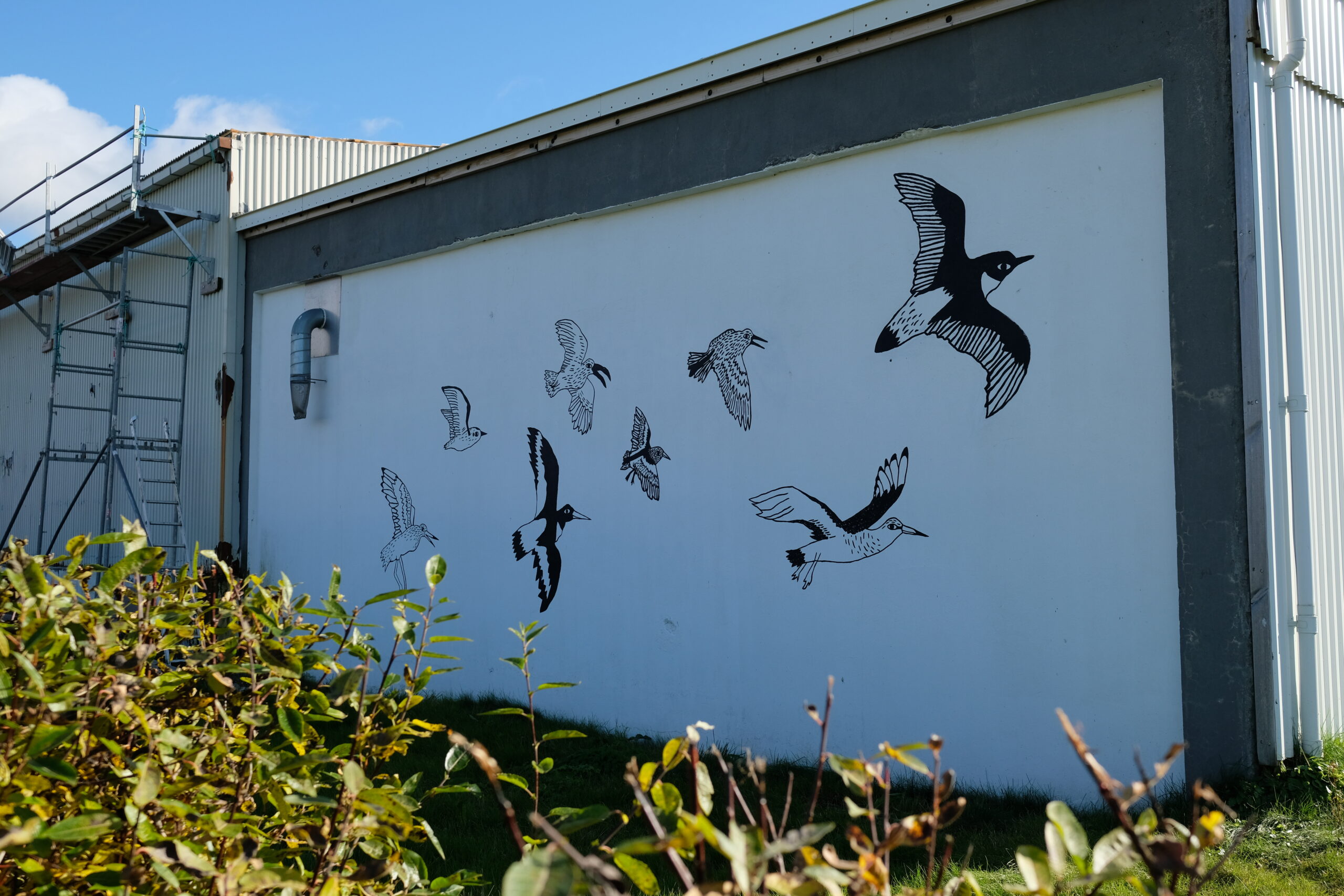
I spotted these birds while driving around the back roads of Þingeyri, and they looked strangely familiar. I realized that it was because they were painted as part of a scene in a movie I recently watched, Summer Light, and Then Comes the Night, which must have been filmed in that village.
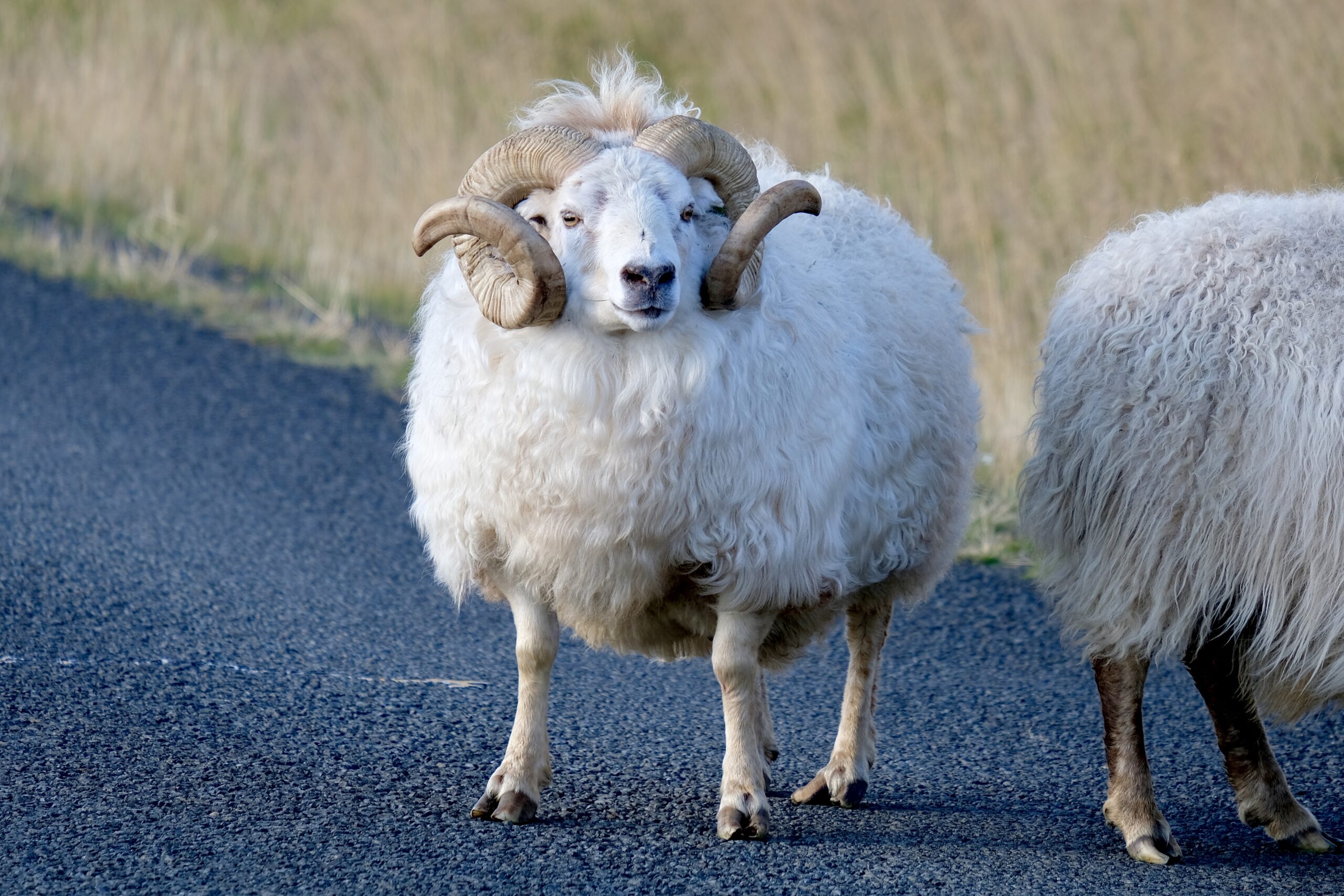
I met a lot of sheep, but these were the finest set of horns.
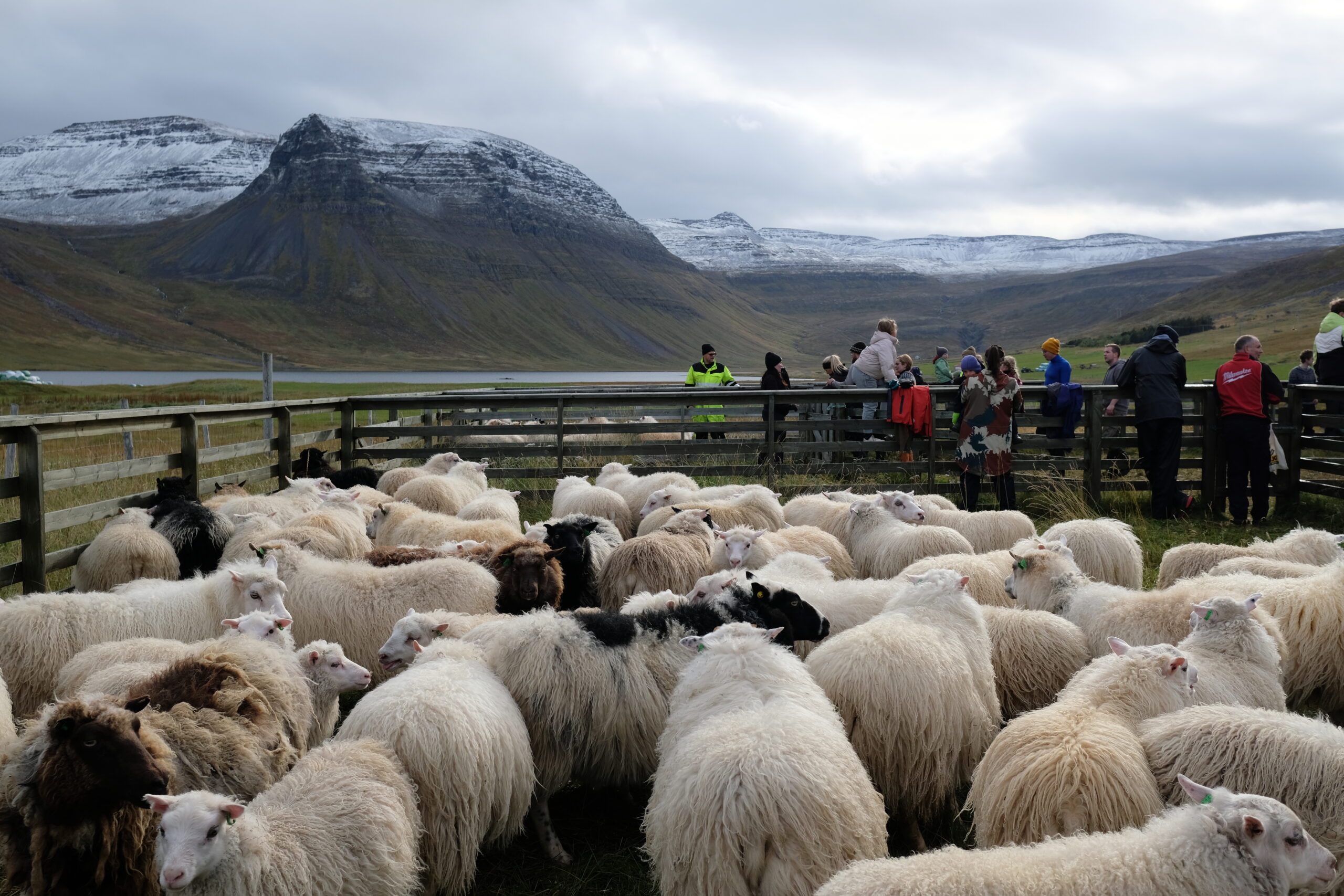
One payoff for rambling down a gravel road was encountering a sheep roundup in progress! I’ve been wondering how to attend one of these, so it was a real treat to stumble into it. I felt like the outsider that I was, so I snuck in quietly and tried not to get in the way. Everyone there knew each other and were having a lovely time. They sorted the sheep they had rounded up that morning from the nearby area and corralled them into different pens. Then they loaded all the ones that belonged to a particular farmer into a truck.
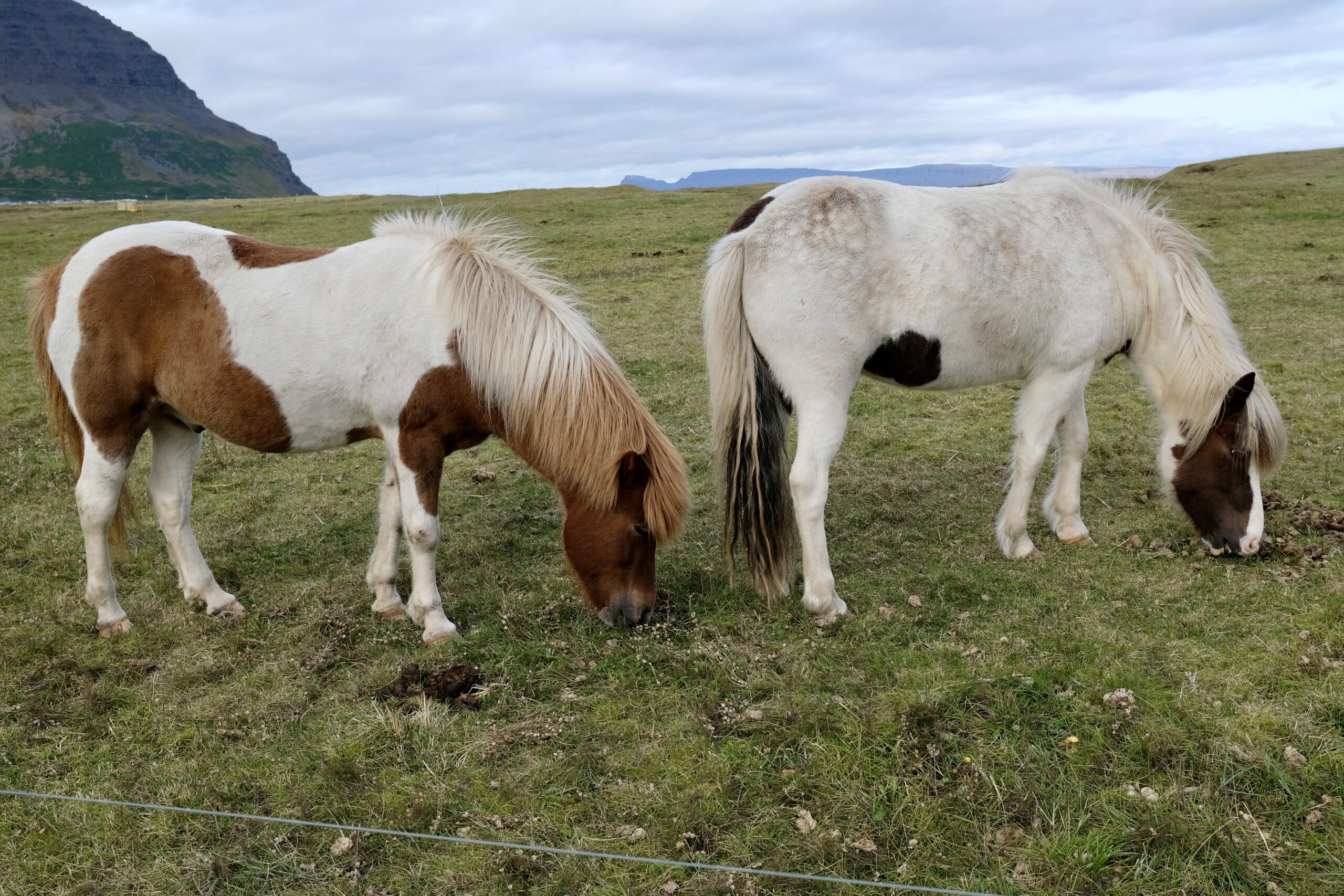
I also met some horses, but there were fewer in the Westfjords than on the southern coast.
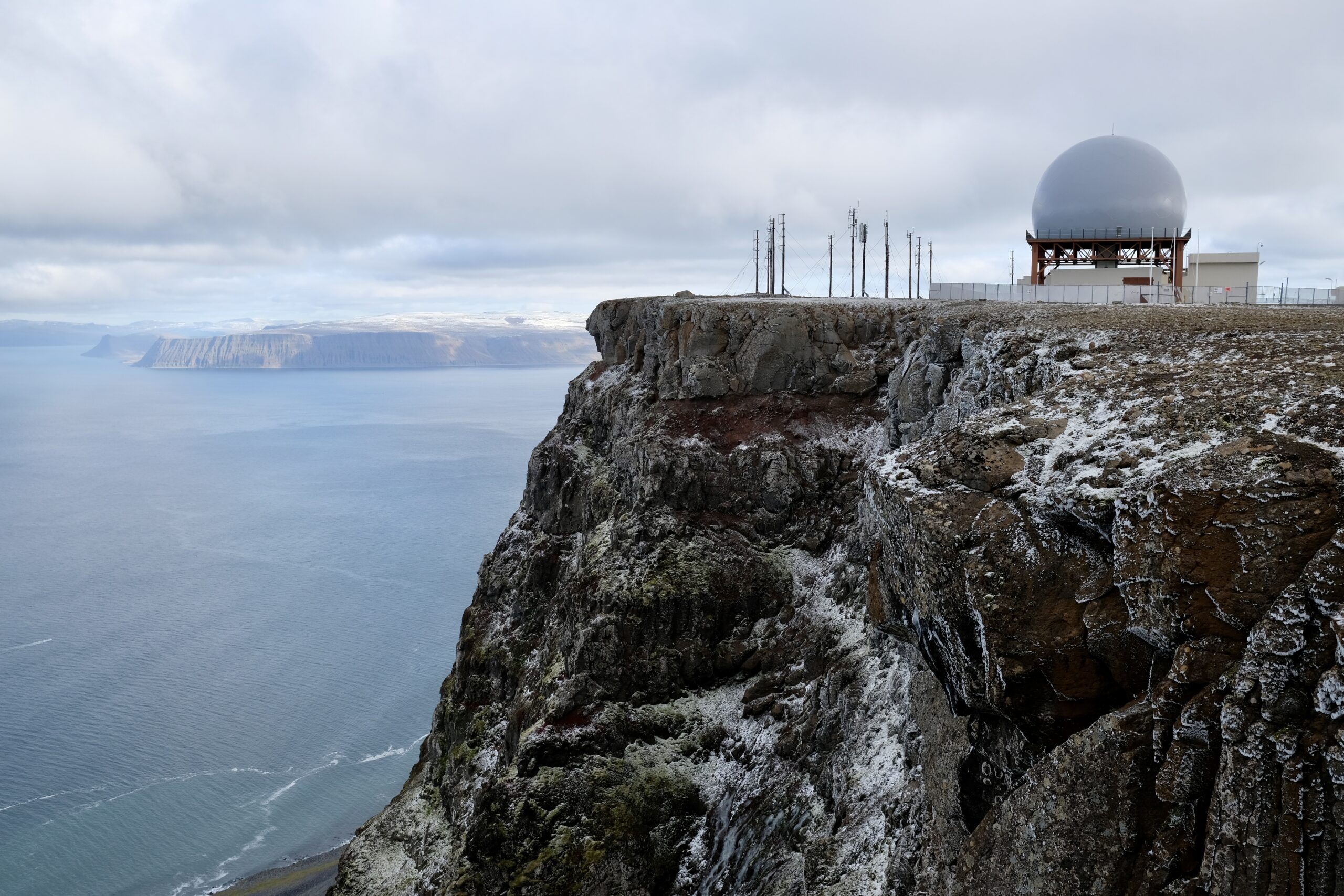
These views are from the top of the mountain Bolafjall. The radar station up there was built as a NATO project and is now operated by the Icelandic Coast Guard.
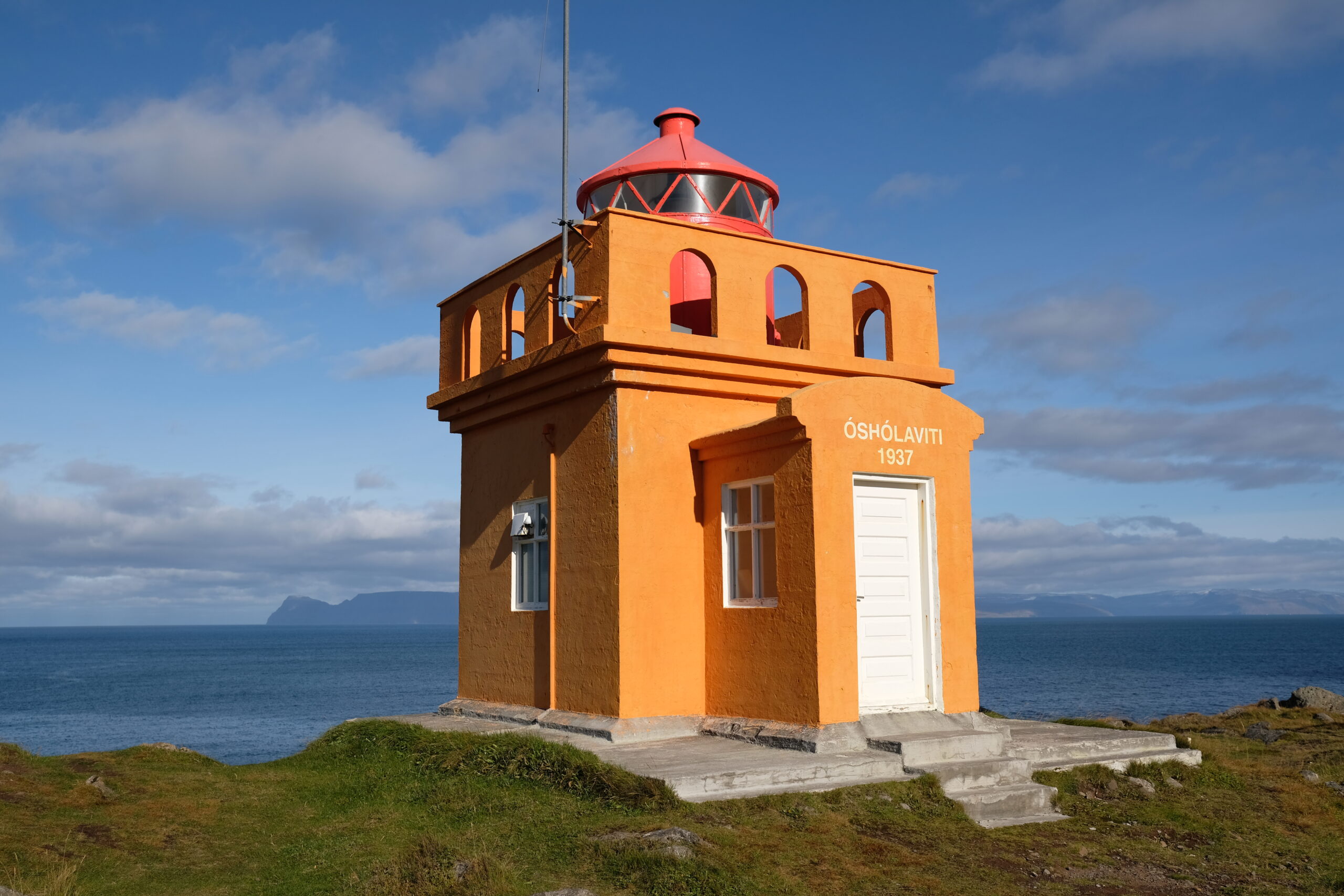
I am, of course, a fan of lighthouses and this is a fine specimen. Not all the lighthouses in Iceland are orange, but it’s a fairly common color.
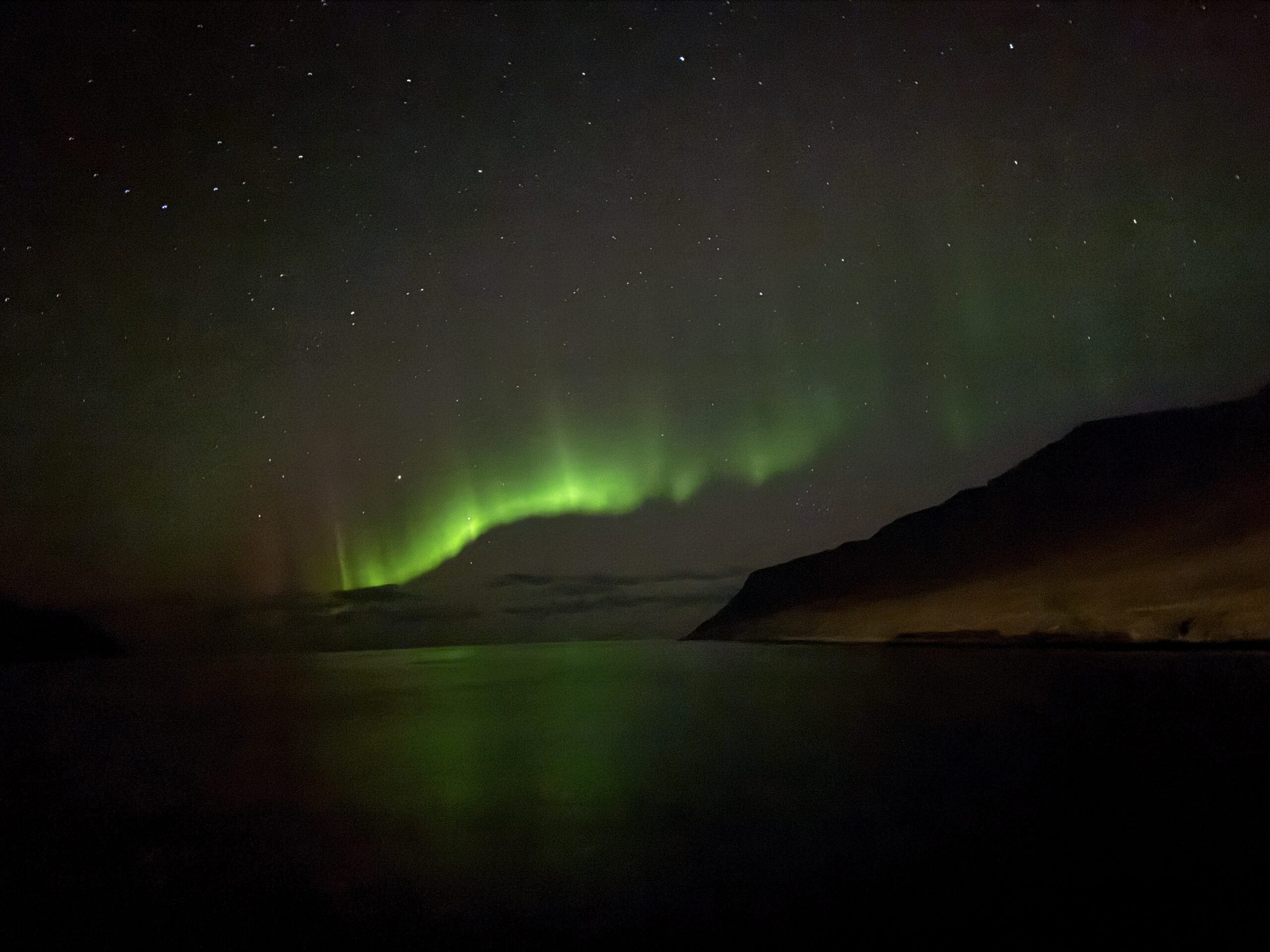
I saw the Northern Lights! I’ve seen them in Reykjavík, but this was on another level. They were much more visible to the naked eye, and I watched them dance around for about 45 minutes until it got too cold to stay out anymore. This was in Flateryi, and they were bright enough to reflect on the water near the village seawall. The aurora forecast wasn’t very strong, but on a very clear night there’s always a chance. An added bonus was the backdrop of so many stars, the kind of immersive astronomical view you can only get in such a remote place.
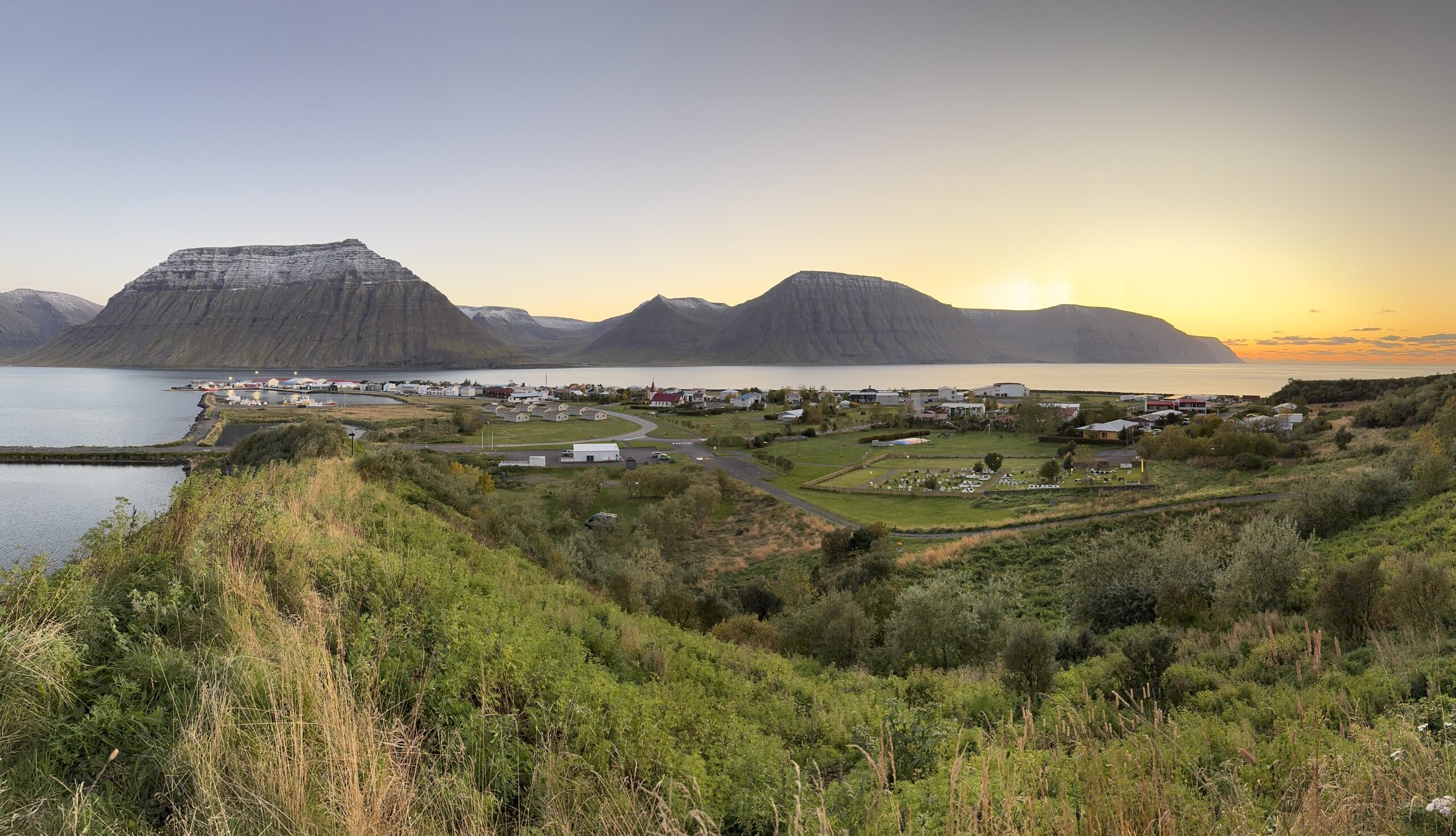
Flateryi is a interesting little village where I spent two nights. This photo is taken from atop the avalanche barriers above the town. These barriers were initially built after an avalanche in 1995 killed 20 people (approximately 10% of the town). There was another avalanche in 2020, and these barriers successfully diverted the debris away from the village, but it landed in the harbor and caused a tsunami that destroyed numerous boats. I’m not sure how the current work is meant to improve upon this infrastructure, but it’s a multi-year construction project managed by Lithuanian workers living in temporary housing set up on the edge of town. My understanding is that it’s slow going since they can only make progress during the summer months.
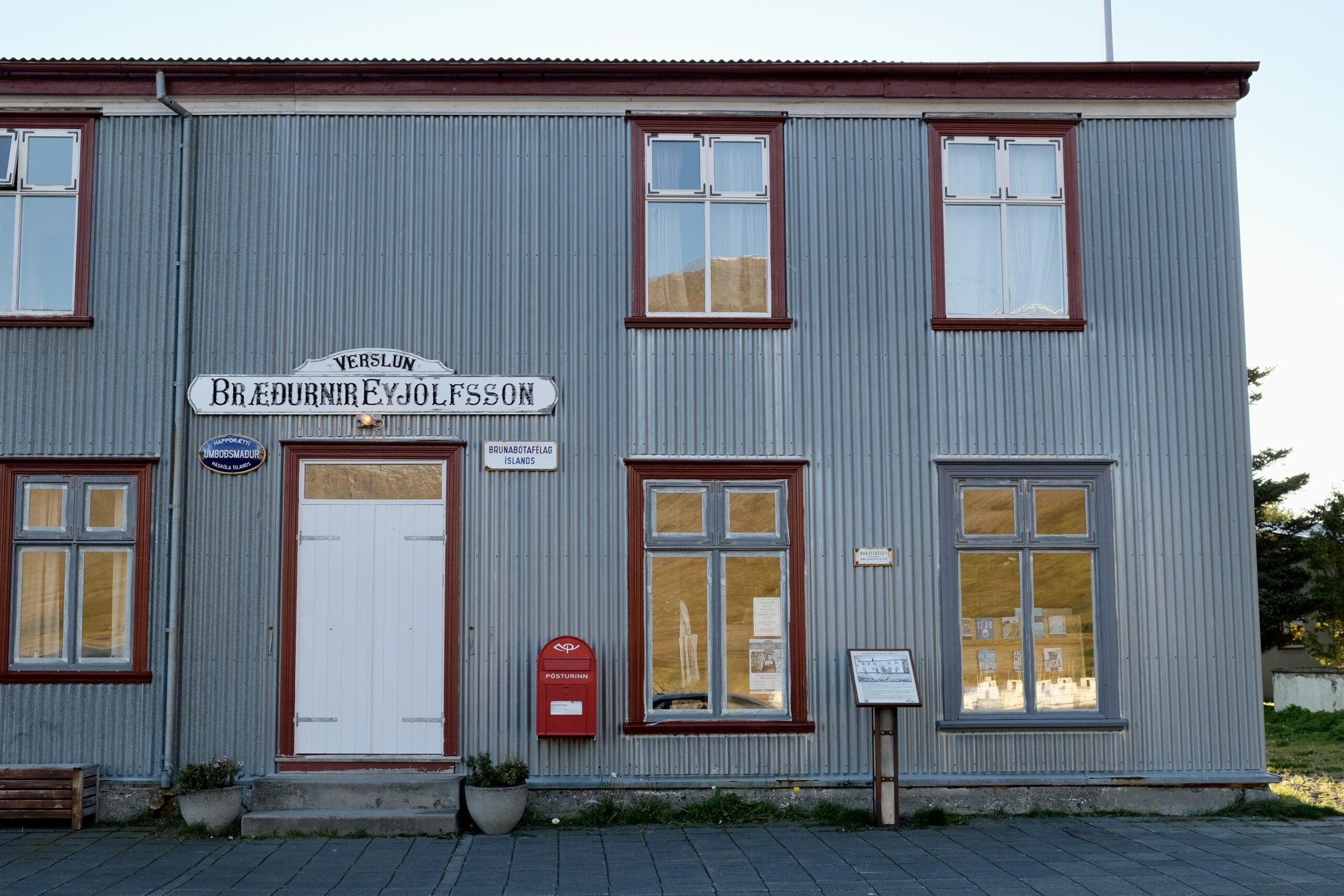
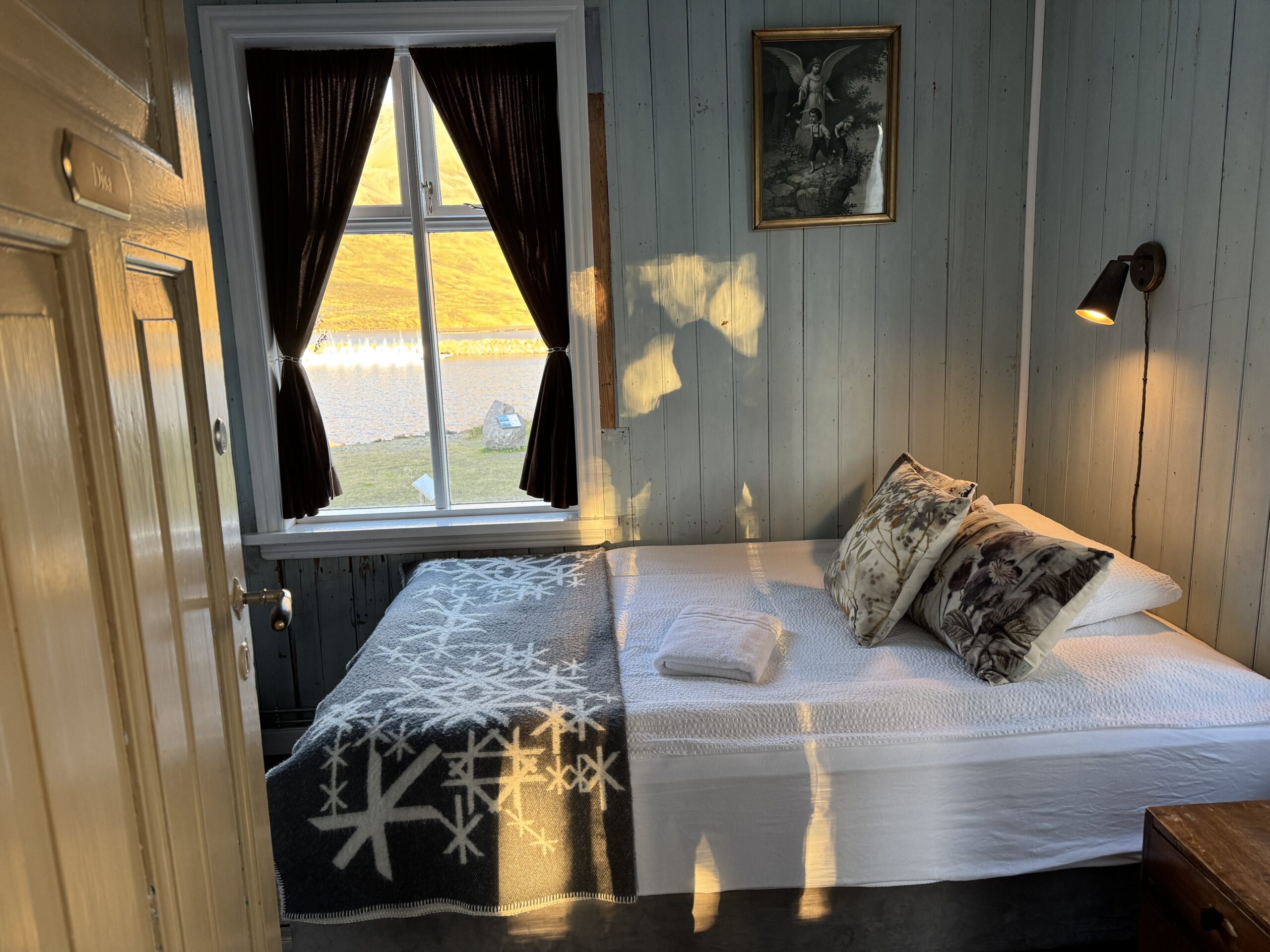
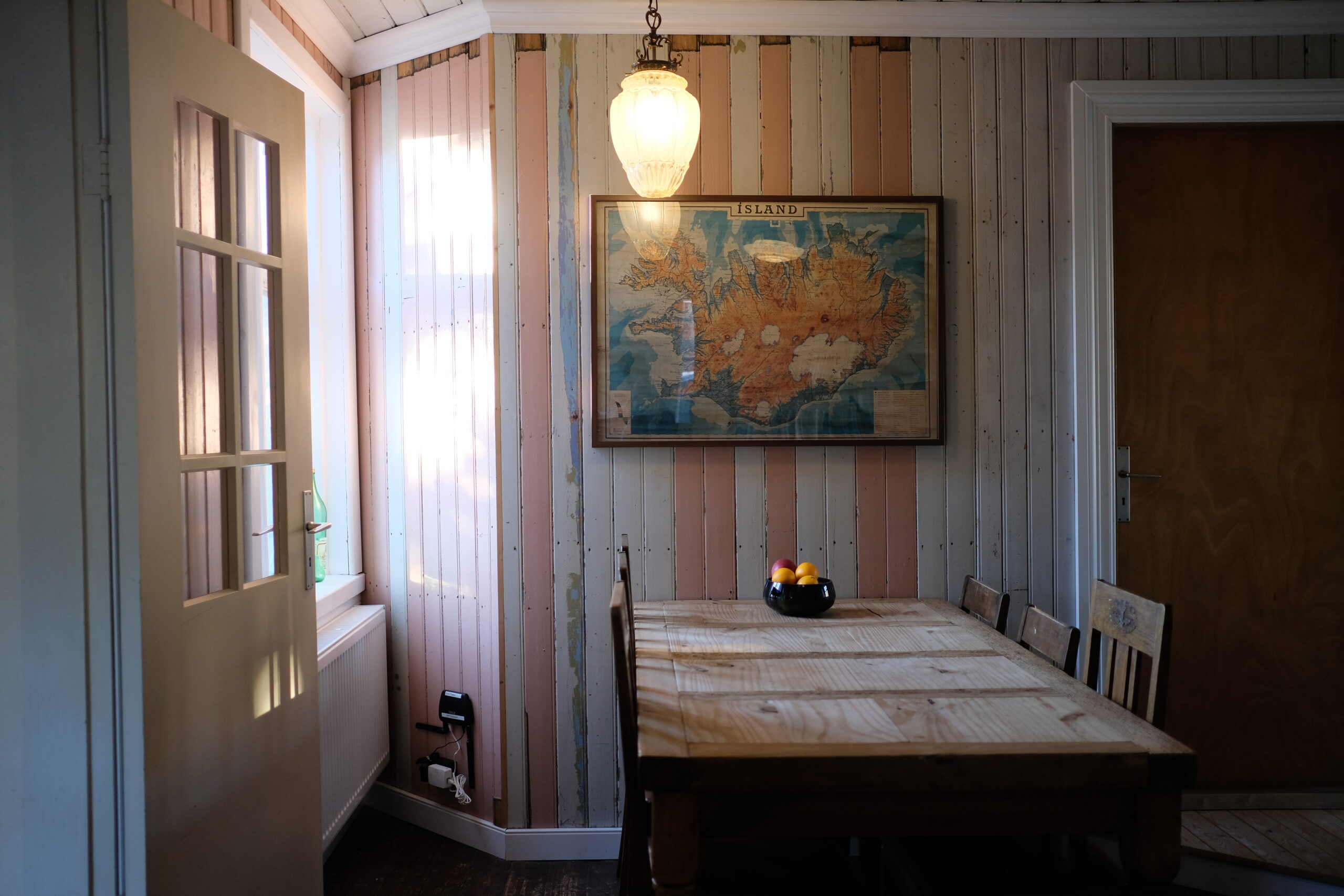
Flateryi is also home to the oldest bookstore in Iceland, and I stayed in one of the three guest rooms above the store. It’s has been run by members of the same family since 1914, and the first floor includes a museum that preserves the house exactly as it was when the current proprietor’s grandparents lived there. The upstairs is also a bit frozen in time (in a good way). Each guest room is named for the child who originally occupied it; I stayed in Dísa’s bedroom.
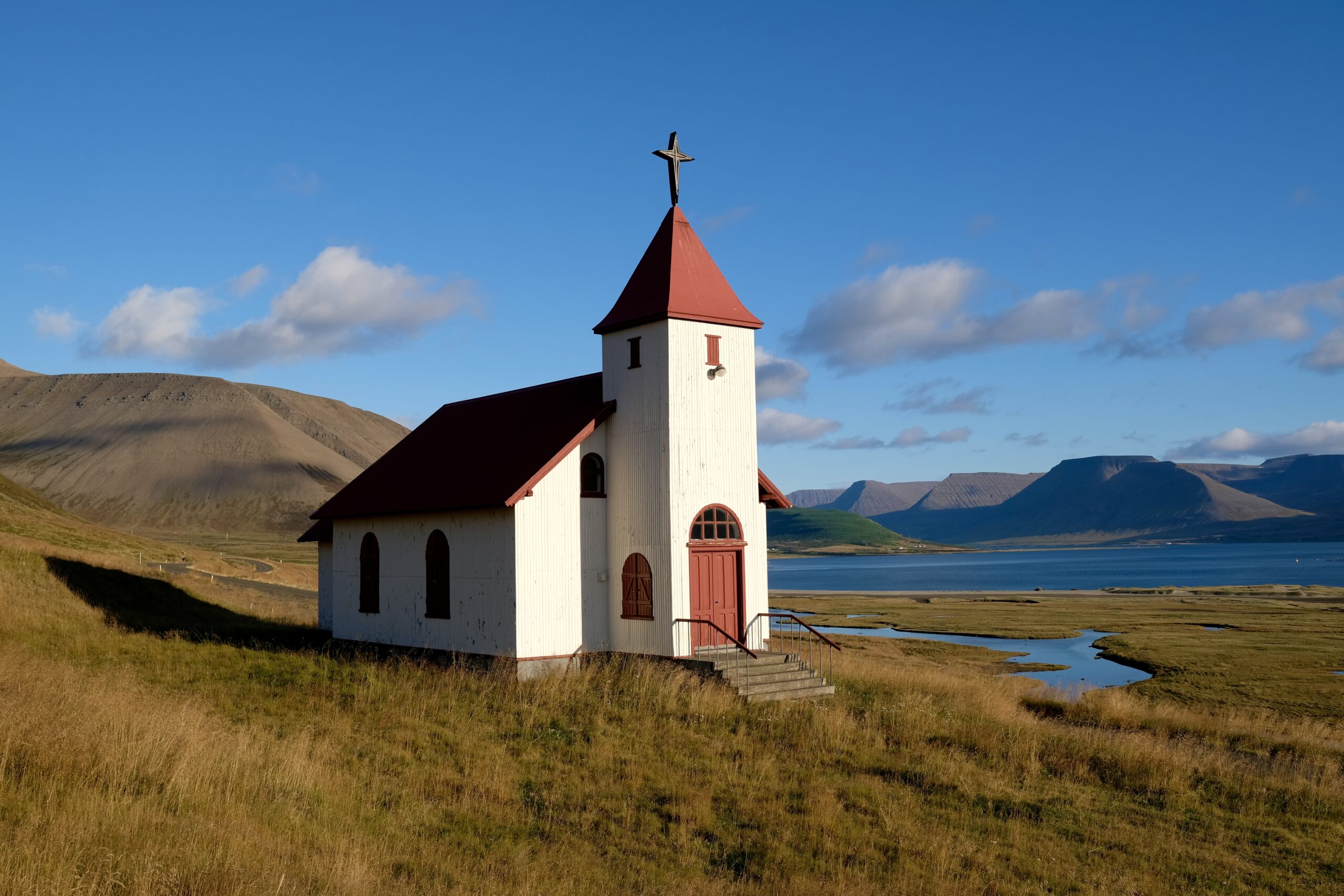
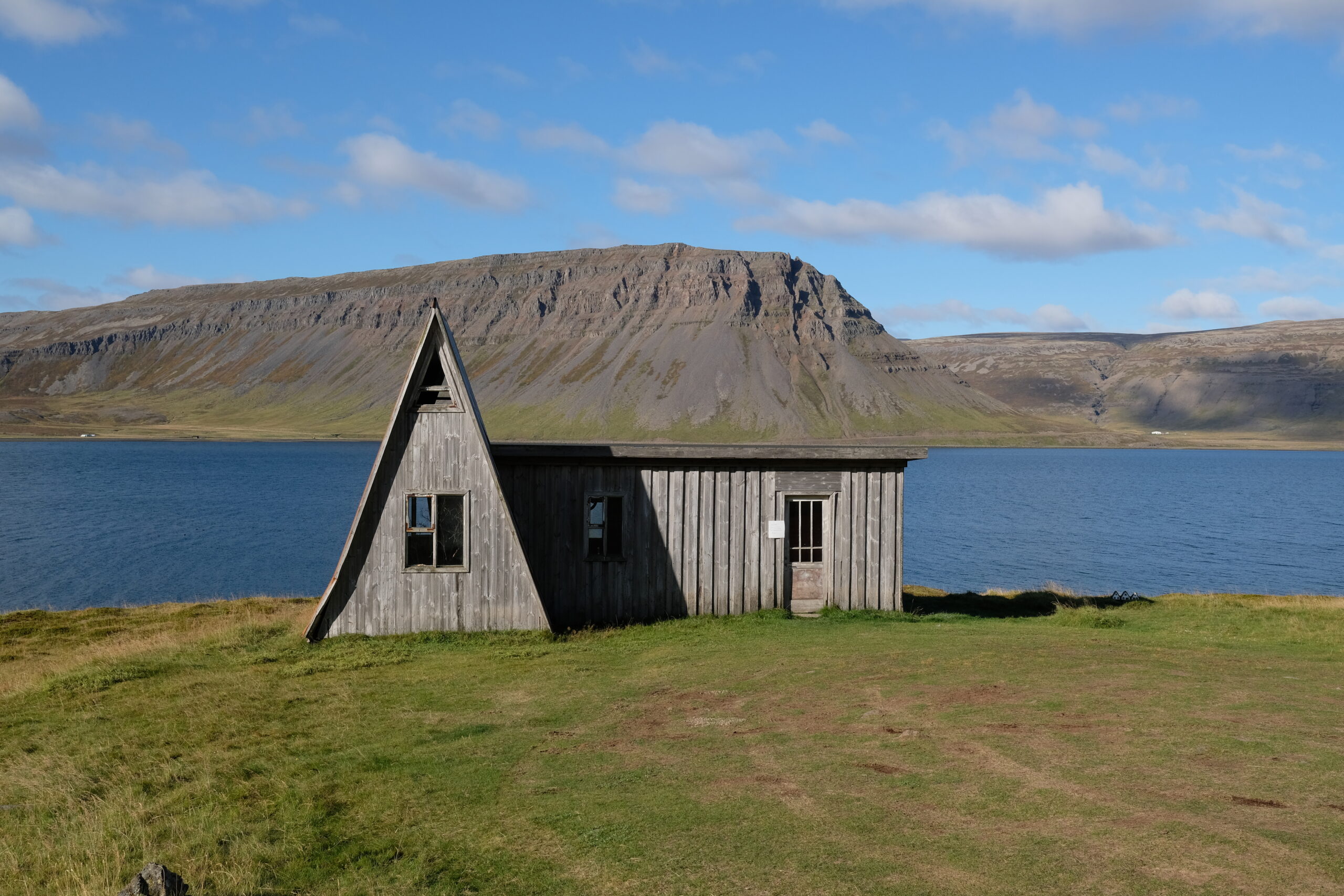
And then of course there were the endless landscapes, and the buildings in them, that in their starkness and simplicity let you appreciate the landscape even more.
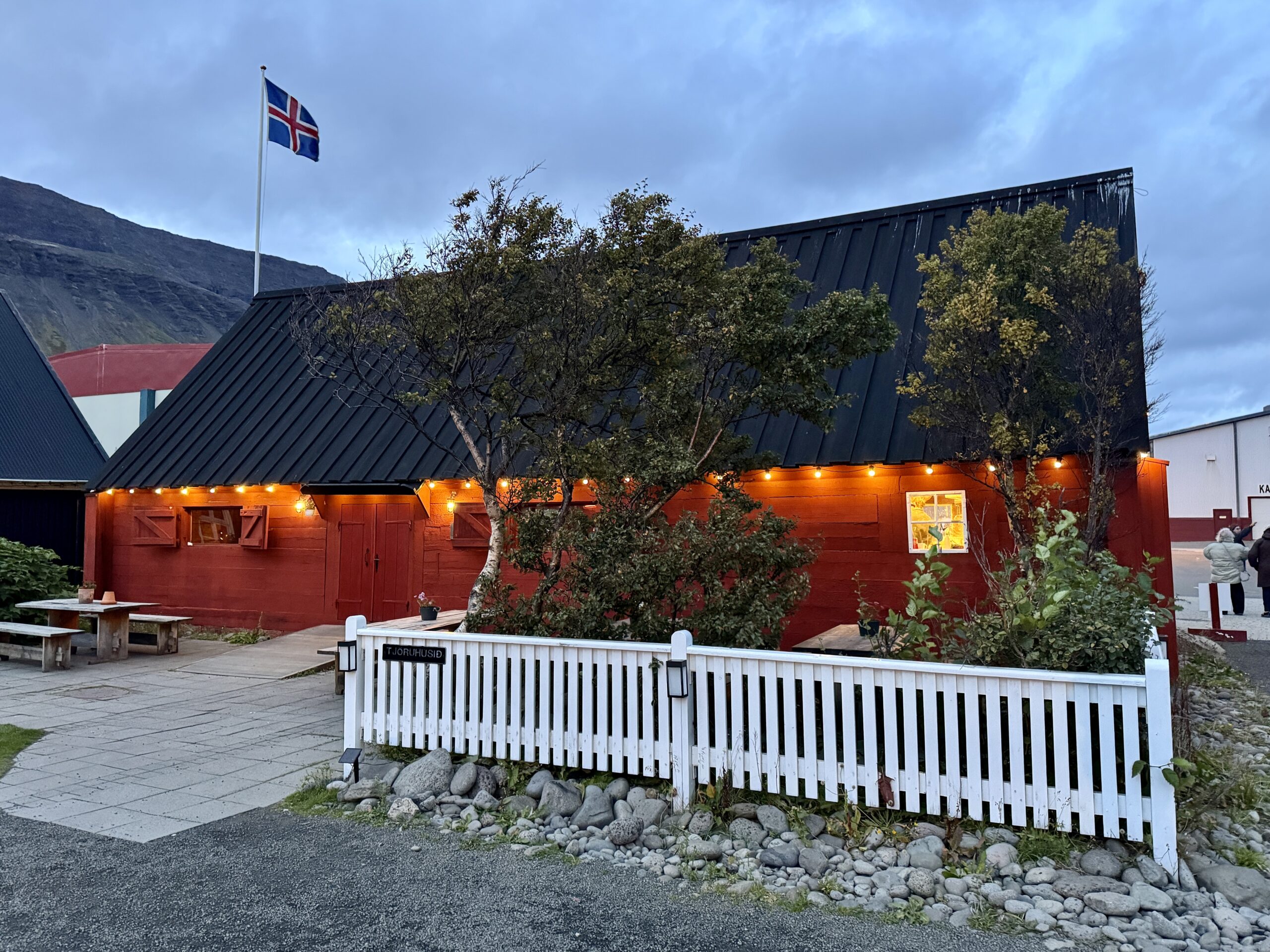
My last night in the Westfjords I had dinner at Tjöruhúsið in Ísafjörður. It’s been hailed as the best fish restaurant in Iceland, and while I haven’t tried enough of them to compare I will say that it was very good. Their website makes me laugh, as it basically just says lists their contact info and literally says “we are not very interested in marketing, or the internet in general.” I have to respect that.
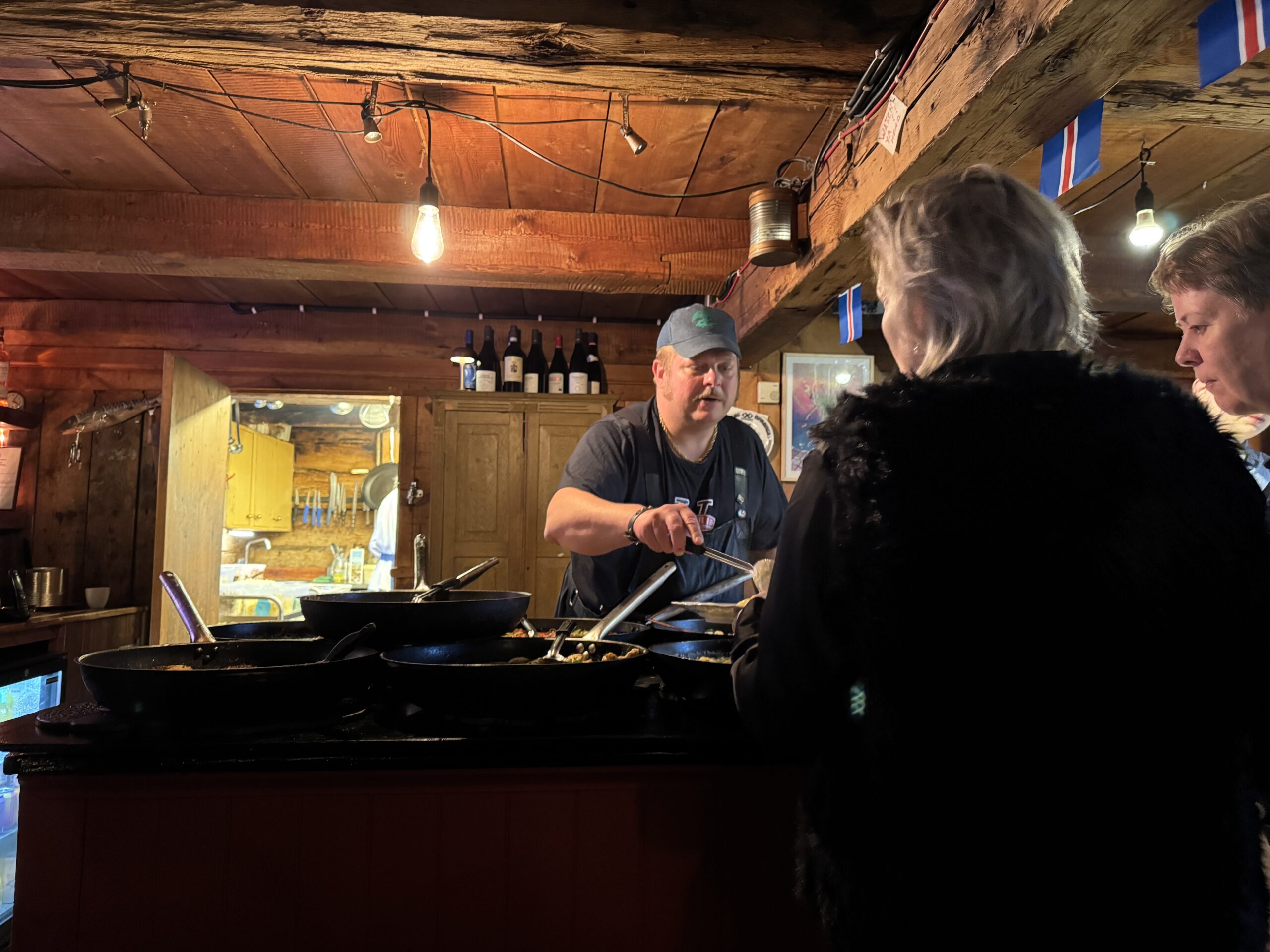
The restaurant is housed in a building built in 1781. The ceilings are low, they have communal at large tables, and food is served as a buffet. They prepare around 8 different fish preparations in giant skillets and you can eat as much as you’d like. One thing I really appreciated is that they were thoughtful in seating me next to other solo travelers, which made it easier for us to have an interesting dinner conversation.
I may share more in future posts as I have many more photos and things I could say about the Westfjords. It’s truly a special place.
The ferry to Viðey Island operates on two different schedules labeled “summer” and “winter,” and like most other seasonal timetables in Iceland, winter begins on September 1st. So my trip this week to the uninhabited island, just off the coast of Reykjavík, was limited to the 3-hour window in which the ferry operates off Skarfabakki pier. While it’s the largest island in the Kollafjörður Bay, at 0.62 square miles it can be almost fully explored in those 180 minutes. The tiny and infrequent ferry, combined with my relatively greater than average willingness to traverse uneven terrain in high winds, means that I regularly felt like I had the place to myself.
And what a place. A five minute boat ride from a dense industrial port, with a full view of the city skyline, but it feels like you’ve been transported to the countryside. It’s certainly the most isolated and wild place you can find within city limits, and just distant and quiet enough for wildlife to relax in their perceived solitude, like the seal I spotted fully surfaced and sunning himself on a rock. The Viðey House greats you upon arrival, one of the oldest building in Iceland built in 1755 and fully restored into a cafe.
The Viðey House
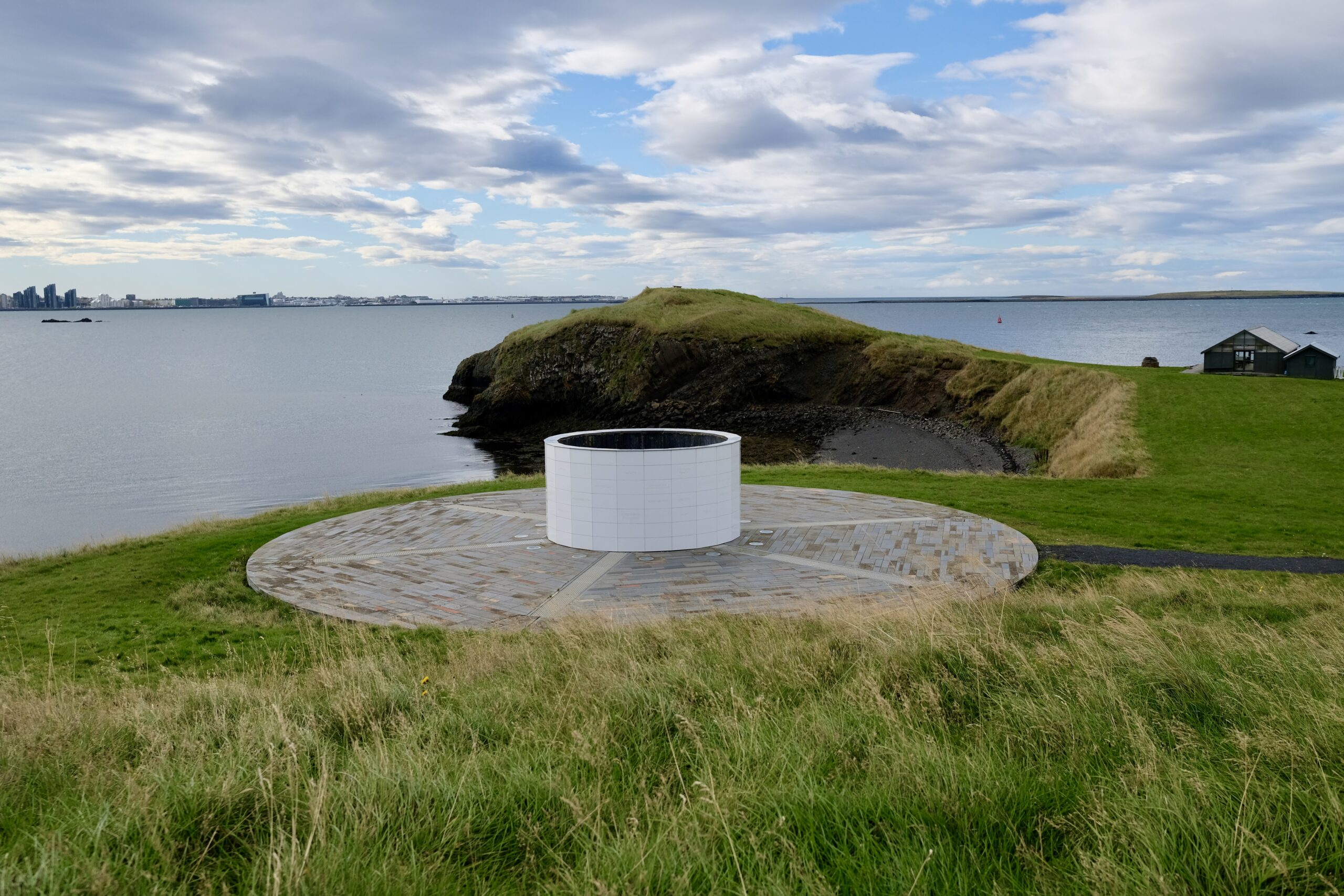
The Imagine Peace Tower is a short distance away, designed by Yoko Ono as a tribute to John Lennon. The words “Imagine Peace” are carved into the white stone in 24 different languages, and 15 embedded lights form a luminous nighttime tower. I thought that perhaps it was broken, since I’ve never seen it lit, but apparently it only operates from Lennon’s birthday (Oct 9) to the day he was shot (Dec 8), and then for 1-week periods around New Year’s and the spring equinox. So I’ll look for it then.
Imagine Peace Tower by Yoko Ono
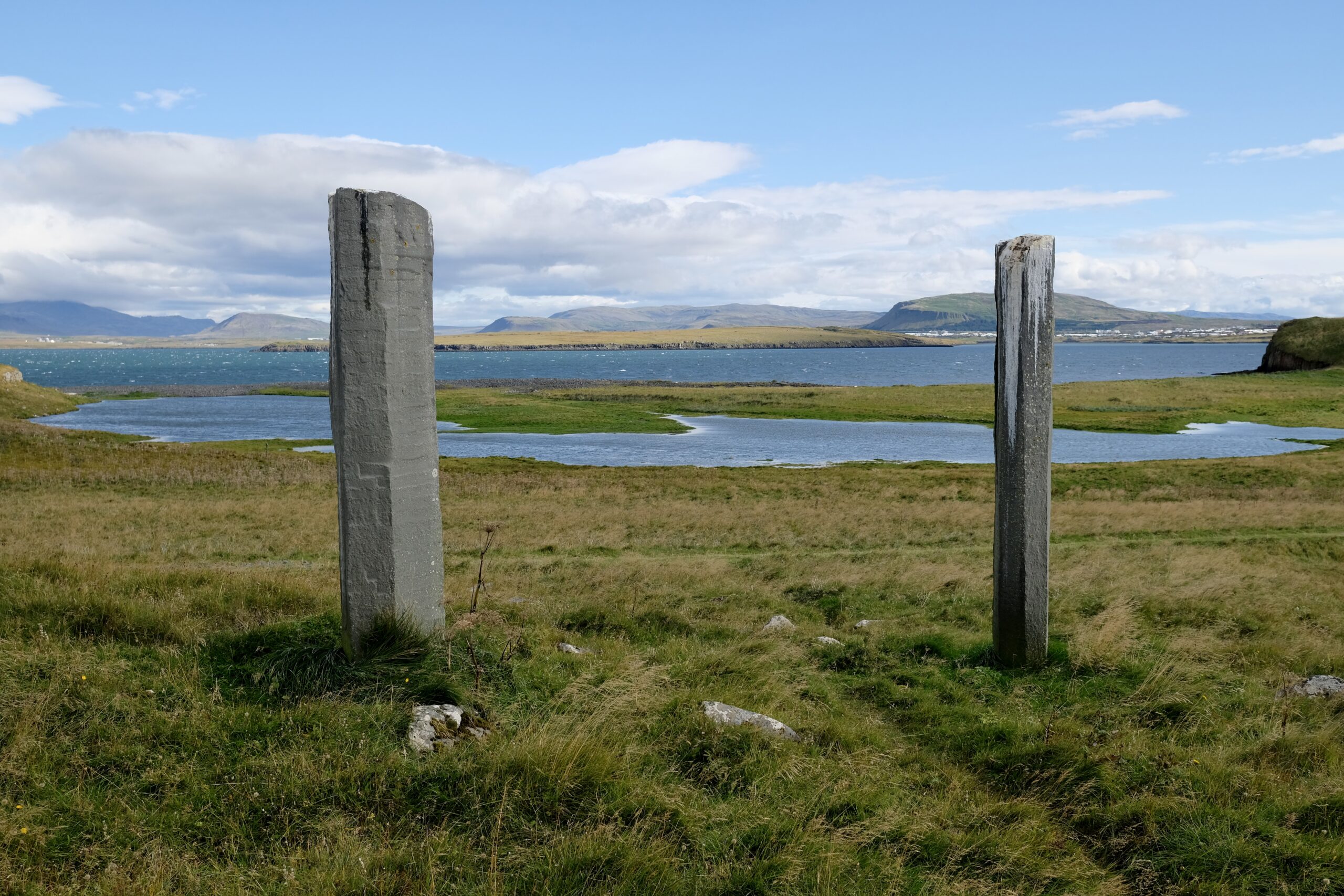
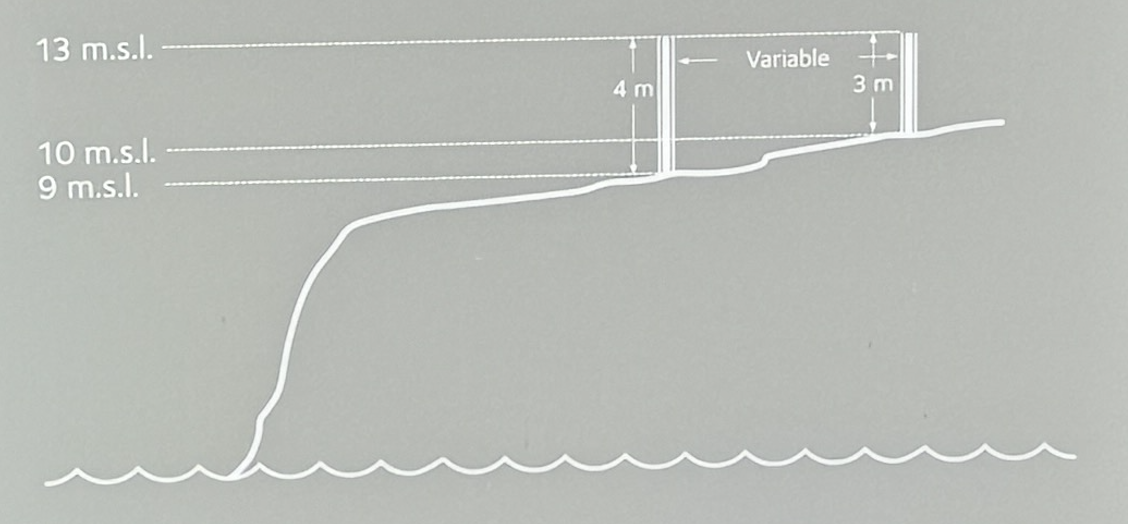
The western part of Viðey, connected by an isthmus to the main island, is the site of an artwork by Richard Serra called Áfangar, which was installed in 1990. It consists of 9 pairs of basalt pillars, where one is 4 meters in height and the other is 3 meters. But they are positioned in the landscape so that the shorter one stands 9 meters above sea level, and the taller of the pair is 10 meters above sea level. In this way, all the columns across the island are a consistent height.
A pair of basalt pillars framing the landscape, part of Richer Serra’s Áfangar artwork.Diagram showing the measurements of Richard Serra’s environment artwork Áfangar on Viðey Island.
In general, it was just nice to wander around the island. To get a closer view of Mt. Esja, be surrounded by water, and walk through the grasses changing to autumn colors. My midwest brain is hardwired to anticipate the arrival of Fall color this time of year, and I’ve been curious to see how that shows up here.
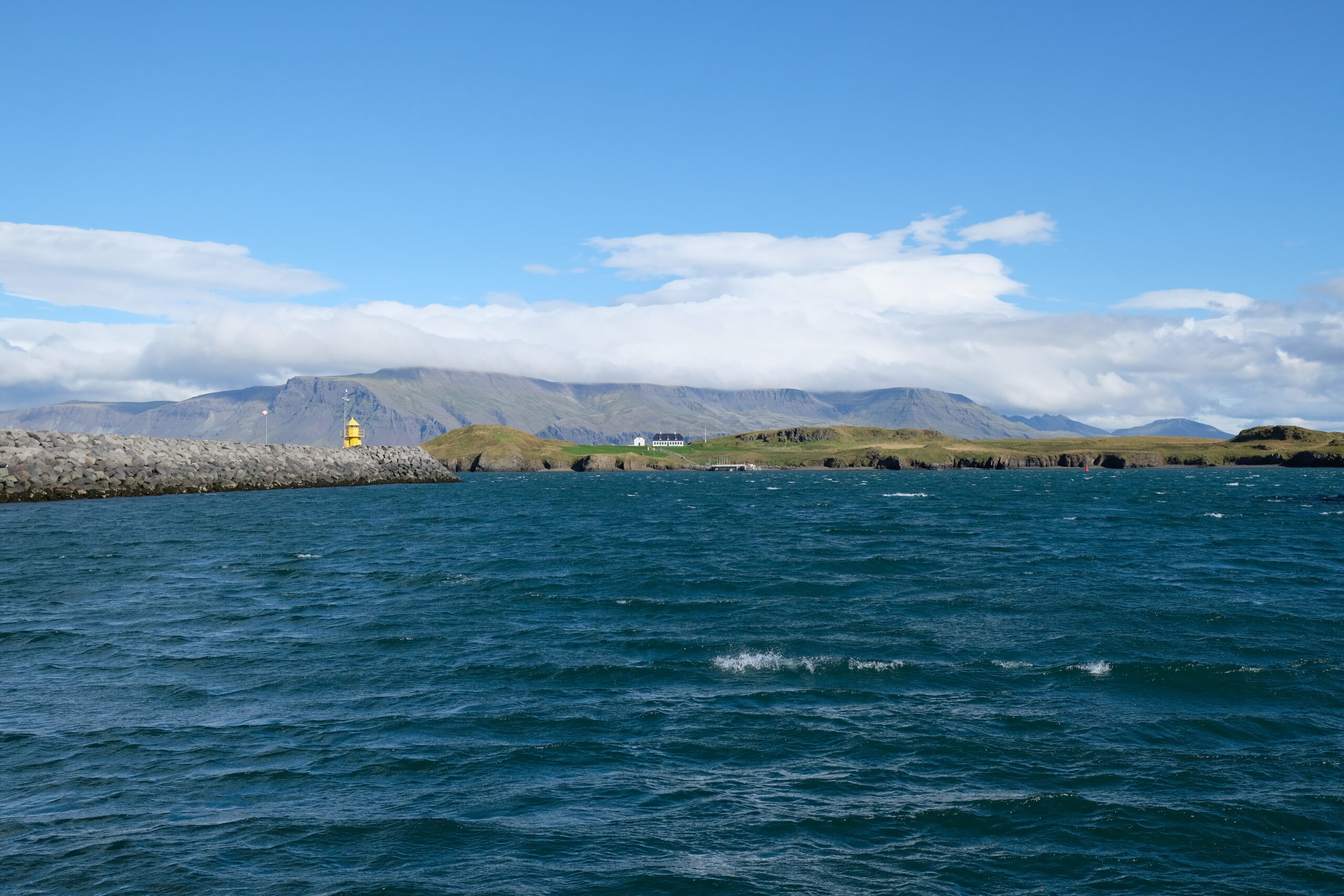
The view of Viðey Island from the Skarfabakki pier. Not very far way.
When I finish reading a book I might mentioned it the “Noted & Done” section at the bottom of these posts, and if you’re viewing the blog on a computer-sized screen you’ll see a sidebar that displays recent books pulled from my Goodreads account. But I wanted to draw more attention to, and heartily recommend, the new book by Bill McKibben Here Comes the Sun: A Last Chance for the Climate and a Fresh Chance for Civilization. In this relatively slim volume the renowned environmentalist not only makes the expected case that solar power is the best option for the health of our planet, but he shines a light on what most of us have missed — it is now also the cheapest option.
From the purview of Donald Trump’s climate-denying, fact-destroying, oil-industry-governed hellscape this cost tipping point for solar energy is easy to overlook. But apparently, in just the last couple of years, increases in solar cell efficiency and decreases in manufacturing cost at scale have have dramatically reduced the price of solar power. In the US, due to the previously mentioned context, this might be less true than in other countries. But that difference is now entirely artificial and driven by unnecessary barriers, from onerous permitting processes to tariffs on Chinese-made goods. But the rest of the world has noticed, and it’s dramatically changing their energy calculus. Take for example this surprising Wall Street Journal article from earlier this week, entitled Oil Giant Saudi Arabia Is Emerging as a Solar Power.
I do recommend reading the book, but for the highlights right away I’d suggest reading McKibben’s recent New Yorker article. There’s enough in that piece to open your eyes to the change that’s happening worldwide, where apparently people are deploying a gigawatt’s worth of solar panels — the equivalent of one coal-fired power plant — every 15 hours! It’s faster, cheaper, decentralized, repairable, recyclable, and clean. I honestly find very little to be optimistic about these days, so reading Here Comes the Sun was the first genuinely hopeful burst of excitement I’ve had in a while. There are obviously still lots of barriers, with Trump fighting like hell to make sure that his oil executive friends continue to profit as the world careens towards climate catastrophe. But when the social, and moral, and (finally!) economic incentives all align it gives me hope that the old regime is finally fragile enough to break.
Met with someone from the Arctic Circle to discuss the possibly of being a delegate volunteer at their upcoming Assembly. I’m hoping that works out.
Dropped the mini-course related to the above-mentioned Assembly. Upon further reflection I decided it wasn’t worth it as I’m going to attend no matter what and I don’t need credits. So now I’m down to a normal course load of 30 ECTS.
Finished season 3 of Foundation. The first two seasons had so much scene setting to establish the incredibly complex back story. This latest season still introduced a ton of new characters but I feel like I was able to follow along and enjoy it more. I hear that season 4 has already been green lit.
It took two months, but it finally happened: I was in the same room as Björk. It was bound to happen eventually, given that Reykjavík is barely larger than Ann Arbor, MI. But in my imagination, the Iceland that Björk exists in can’t possibly be the same one where I live my daily life. If I was to see her shopping for groceries at Bónus it would shatter that illusion entirely, so thankfully the circumstances of this encounter still had an appropriate level of mystique. Apparently, on every full moon, Björk plays a DJ set at the record store Smekkleysa, which was founded by The Sugarcubes. She promotes it to her 2.2 million followers on Instagram, but since only a tiny fraction of them live in Iceland it draws a manageable crowd for an in-store performance. So. Much. Fun.
Overall, it was a big music week with the Extreme Chill experimental music festival spanning 5 of the last 7 days. Now in it’s 16th year, the program was held at venues all over town and my favorite sets were by Patricia Wolf, Seefeel, R-O-R, and Drew McDowall.
There was also a film screening of Hrafnamynd by Edward Pack Davee, who lived in Iceland as a child when his father was stationed at the now-closed NATO base. The through-line of the film is about his memories of that time, formed and influenced by slide photography of his childhood, combined with numerous return trips to Iceland as an adult. It’s a beautiful portrait of early-70s Iceland, ravens, and the limits of memory. Patricia Wolf did the soundtrack and performed live ahead of the screening.
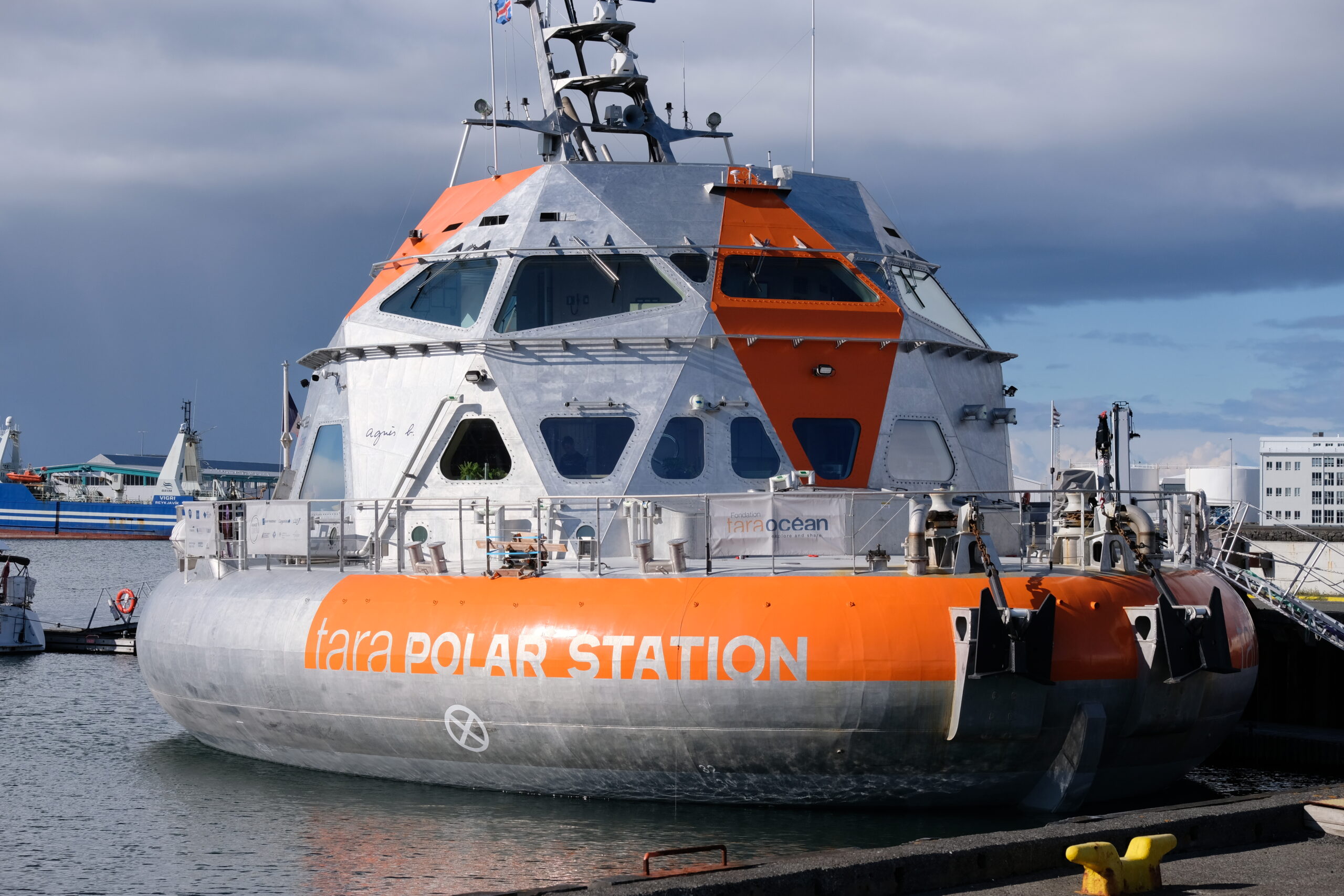
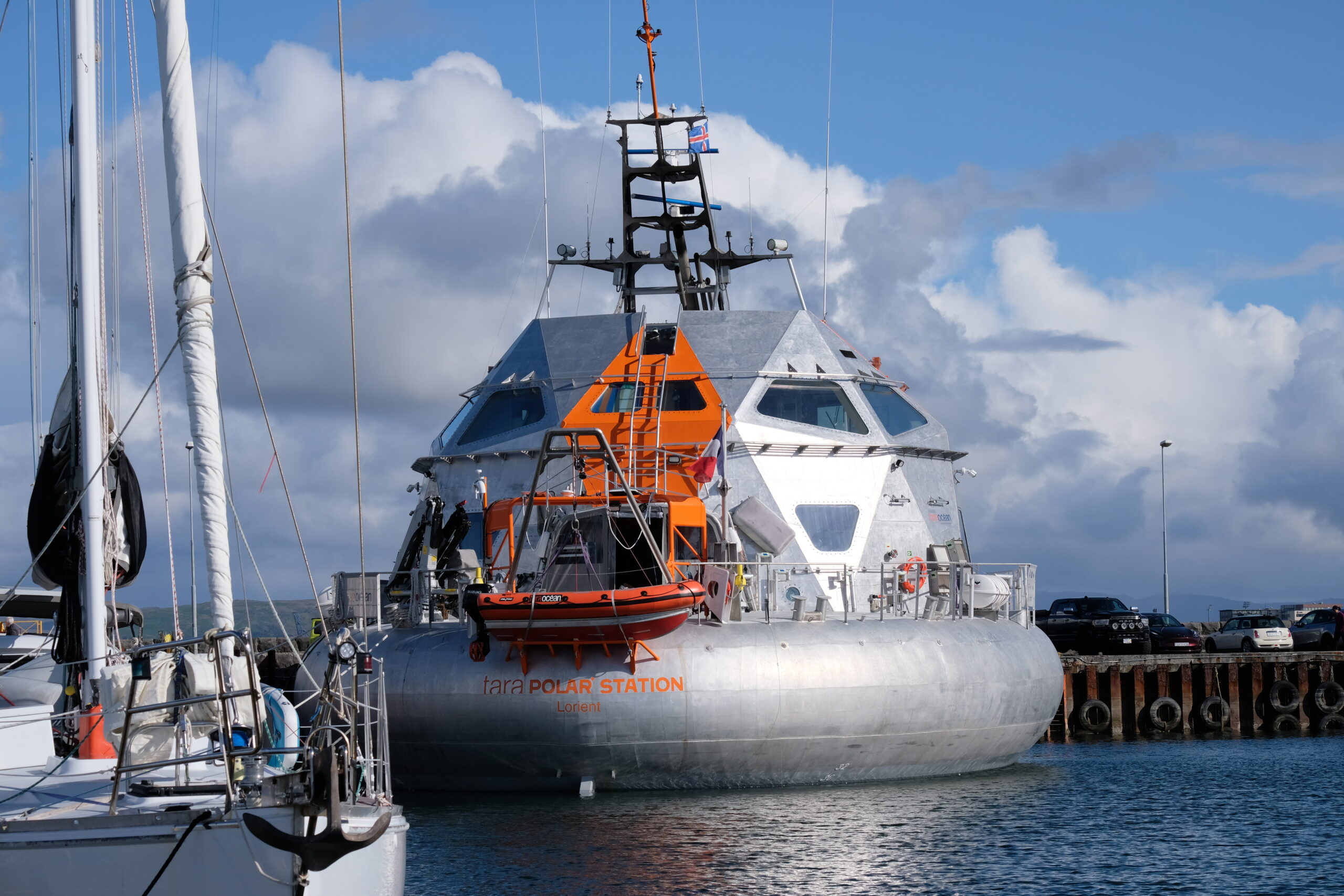
Walking near the harbor yesterday I noticed a unique vessel called the Tara Polar Station docked behind Harpa. I looked it up and found a good article that describes how it can withstand -52°C temperatures and provide living accommodations for 18 people. It’s first real expedition starts next year, which will last 18 months, including 14 months drifting in sea ice. That’s a pretty tight environment for 18 people to spend over a year stuck in the ice!
The research station will be docked in Reykjavík through October 20th, long enough to play a role in the upcoming Arctic Circle Assembly, which I’ll be attending. I hope to learn more about it during that event, and maybe find a way to get an onboard tour.
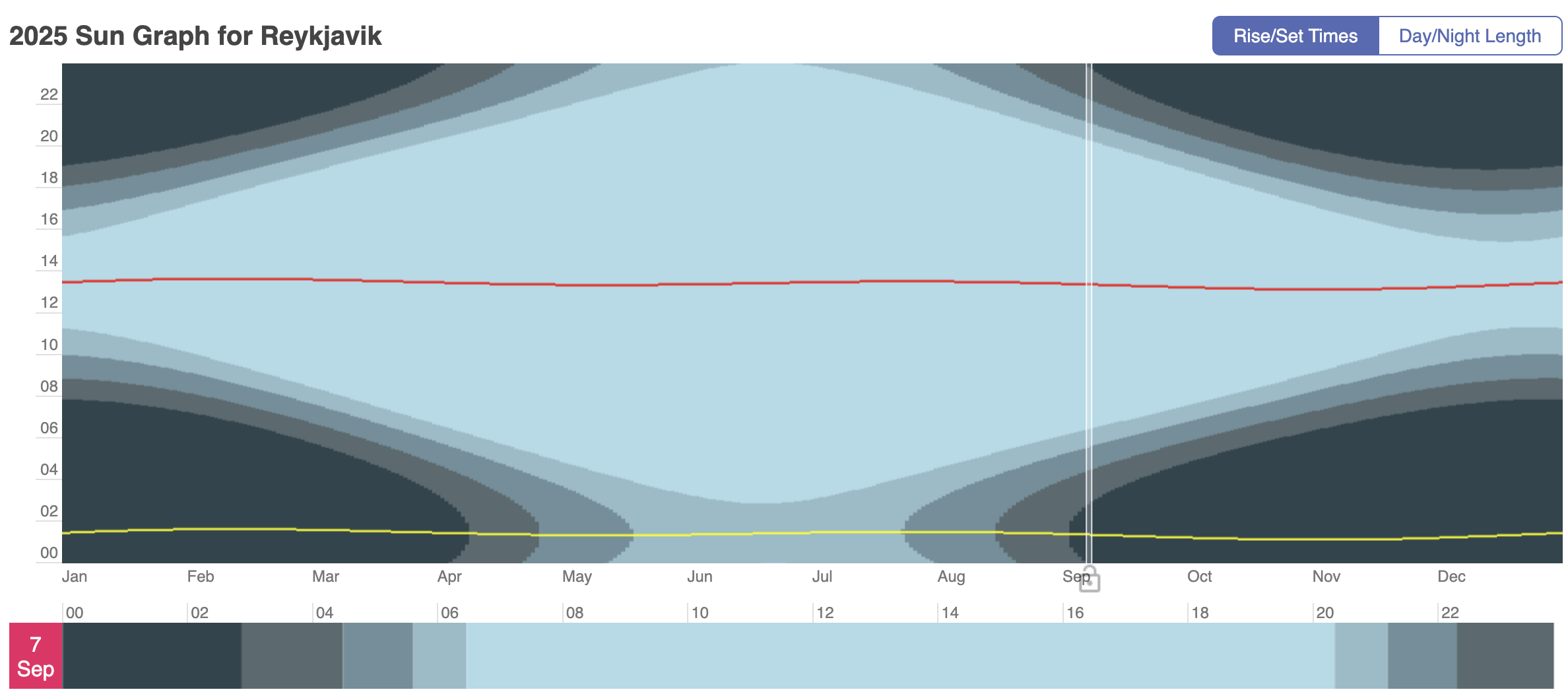
With the arrival of September the days are getting noticeably shorter here. The Sun Graph indicates that only now does Reykjavík have true “Night,” previously only reaching “Astronomical Twilight.”
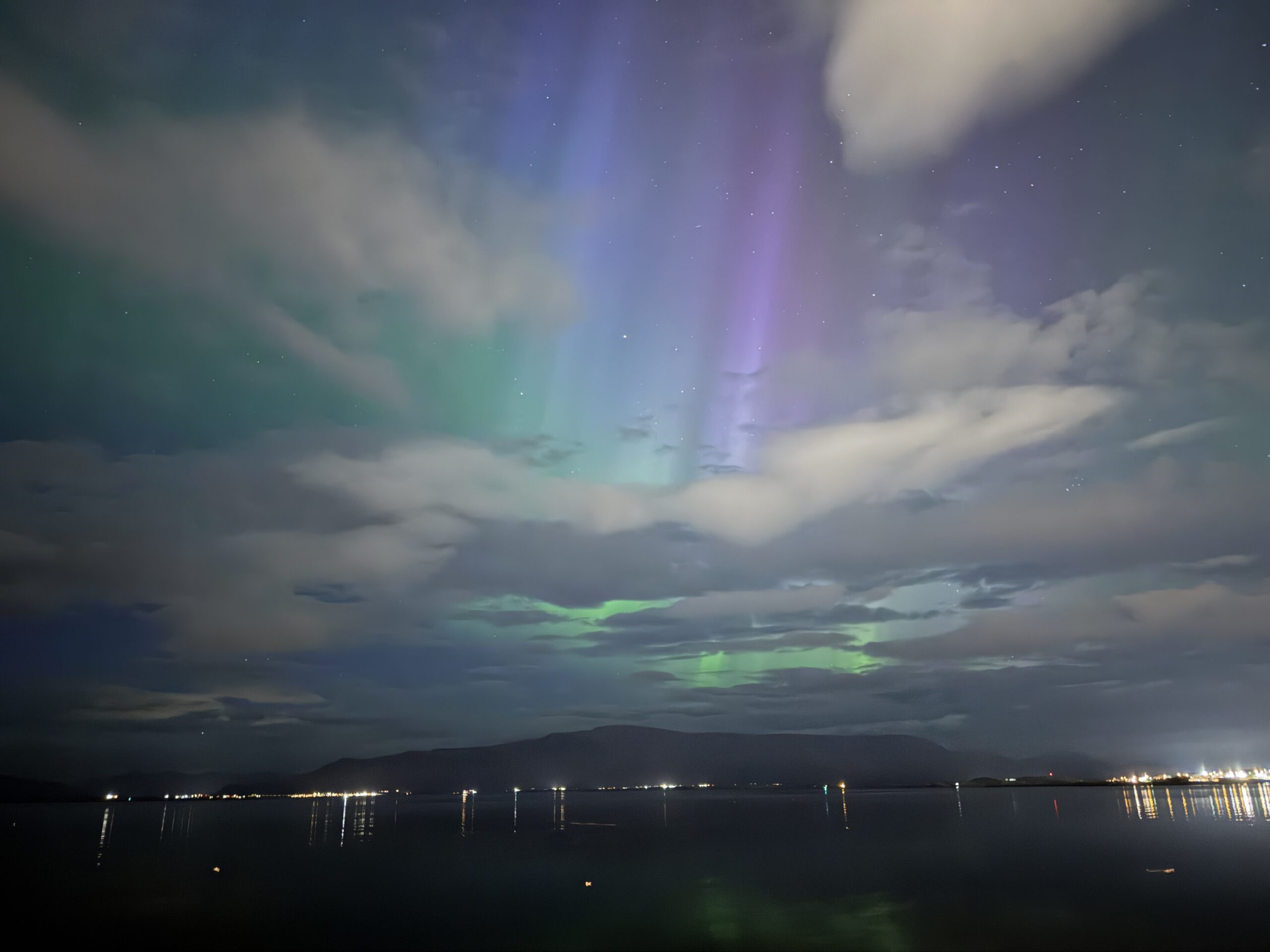
One side effect is that it’s dark enough now to see aurora, and the last week had enough solar weather for me to spot the Northern Lights. There’s obviously light pollution from the city, so they were pretty faint with the naked eye, but the long exposures on an iPhone let you to see what’s hiding in the darkness.
Northern Lights over Mt. Esja
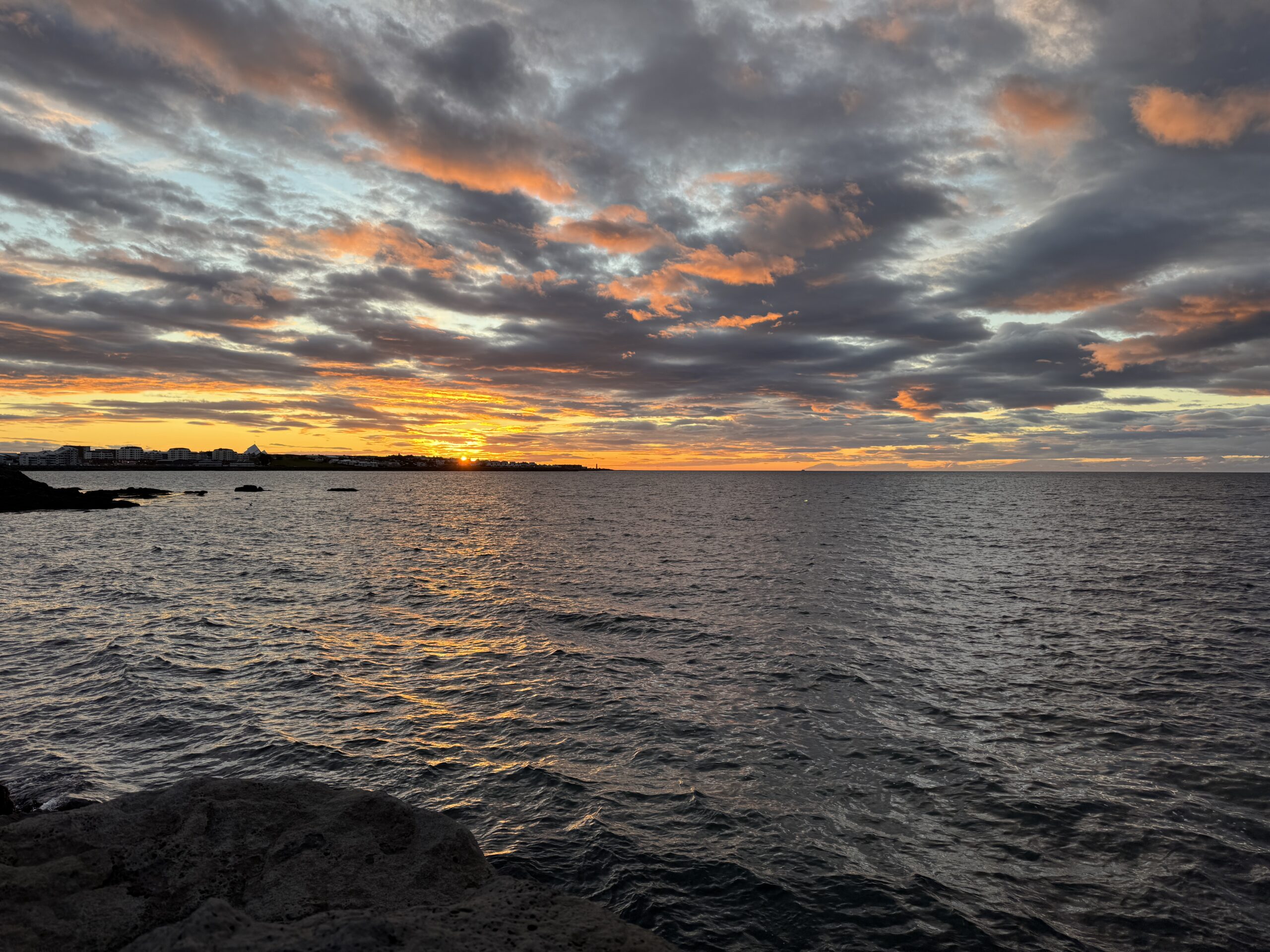
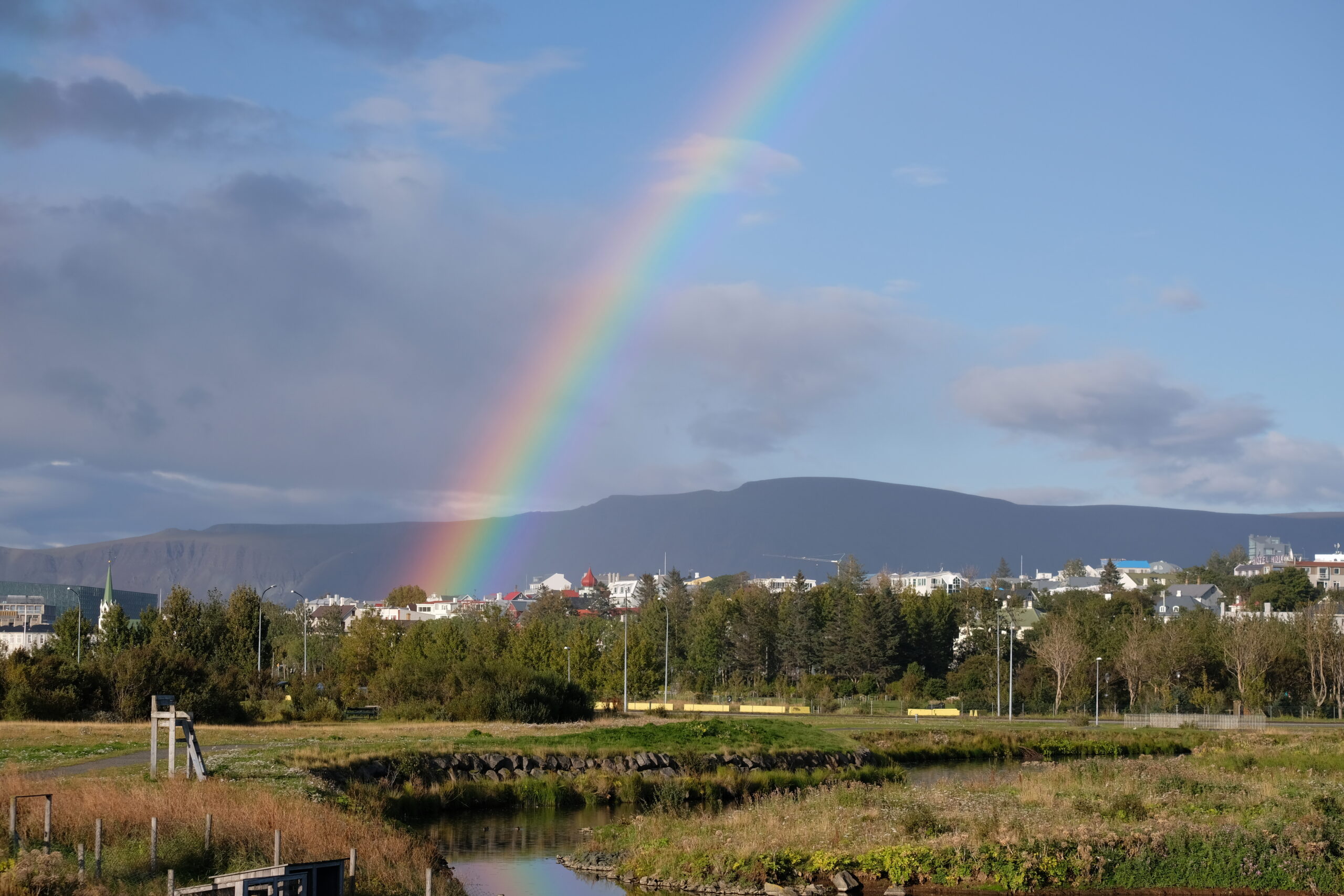
In general, the sky was very impressive this week. Here are a couple more examples:
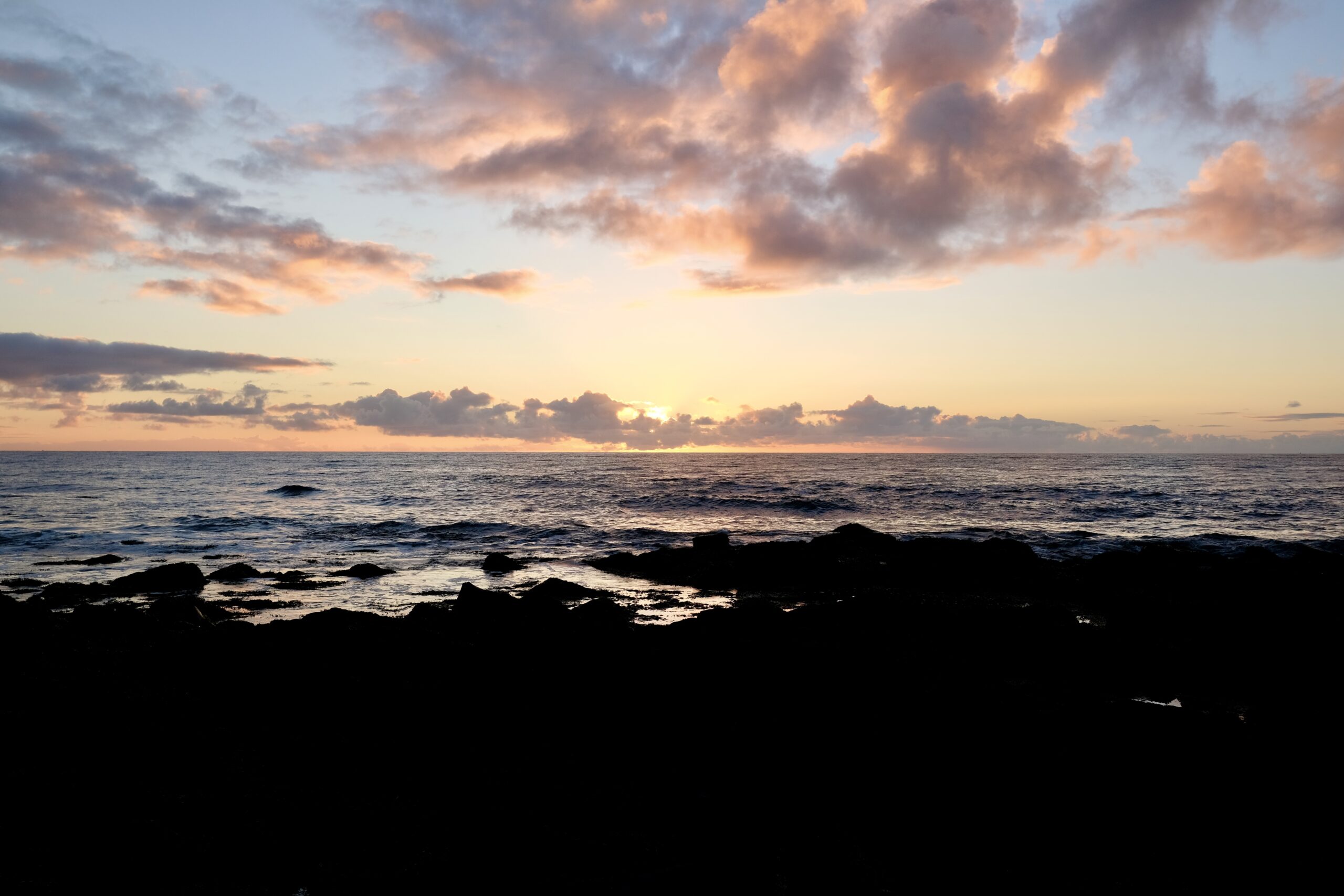
Sunset over the Seltjarnarnes peninsula Rainbow in front of Mt. Esja, taken from the Nordic House
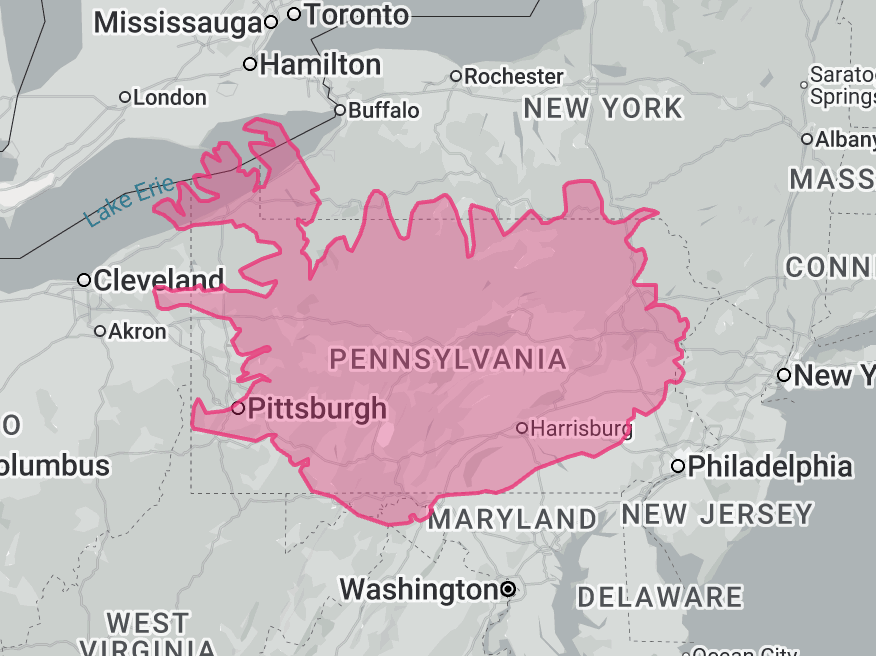
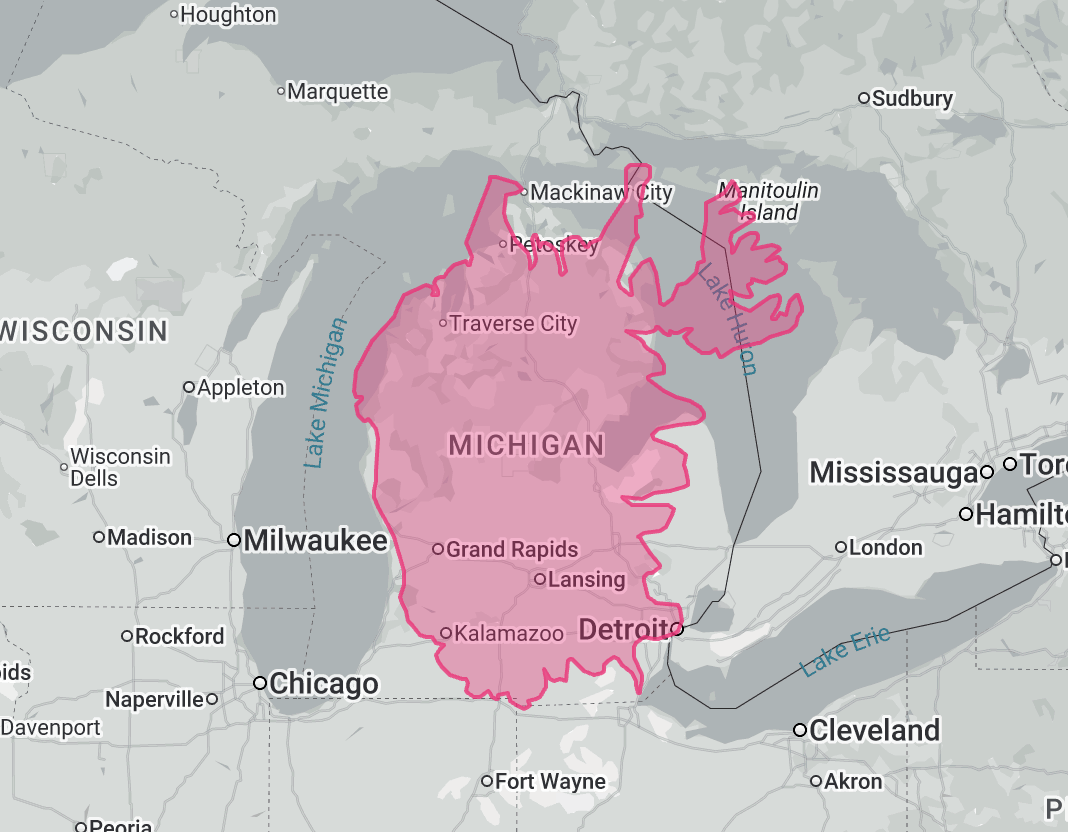
The final thing I’ll point out this week is a fun website called The True Size where you can move countries (or US states) around a typical Mercator map projection to see how they compare. We all know that map projections are distorted, but a tool like this really helps to show how dramatic those distortions are as you reach the poles.
Funny enough for me, since I know these places so well, Iceland is roughly the size of both Pennsylvania and the lower peninsula of Michigan.
Noted & Done
I watched Summer Light, and Then Comes the Night, an Icelandic film based on the novel by Jón Kalman Stefánsson. It’s my favorite of the three books I’ve read by him, and despite finishing it over 2.5 years ago the movie brought back imagery from the book so vividly that at times it felt like I’d watched it before. Unlike many Icelandic films, this one is easily accessible; it’s available to rent or purchase on Amazon Prime.
I’m planning a trip to the Westfjords in a couple of weeks for a long weekend. If you’ve been, and have recommendations, let me know! I plan to stay in Patreksfjörður and Flateyri.
Wikipedia tells me that 81% of Icelanders never smoke, but I guess I go to a lot of the same places as those 19%. I find smoking to be noticeably more common here, or maybe it’s just that there isn’t the courtesy of standing 10+ feet away from an entrance, so I end up walking through smoke more often.
I had to wrangle with all kinds of problems on the Moped Army website this week. I guess it’s par for the course, but running a website in 2025 is an especially unforgiving chore. The site gets hammered by unscrupulous AI bots scraping the forum to build their models, search engine traffic is down because Google just serves AI answers instead of sending people to the site, and the lack of traffic combined with plummeting ad rates means revenue is cut in half. I’ve been running the site for 28 years now, and the amount of time I have to spend fending off attacks, scammers, and other bad actors is much higher now than any point in the past. I’ll keep on keeping on, but all of these additional headaches don’t bode well for the health and longevity of the independent web.