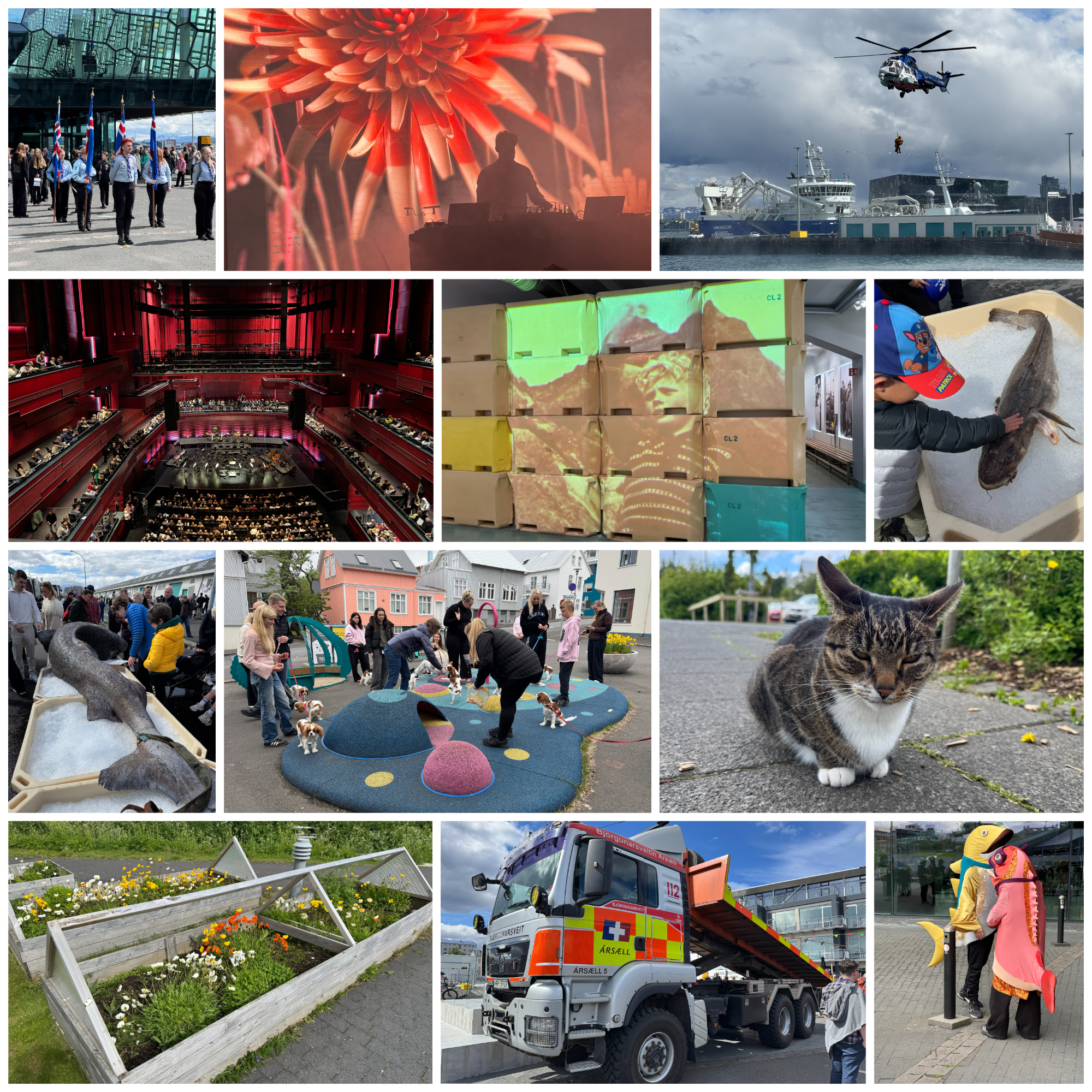
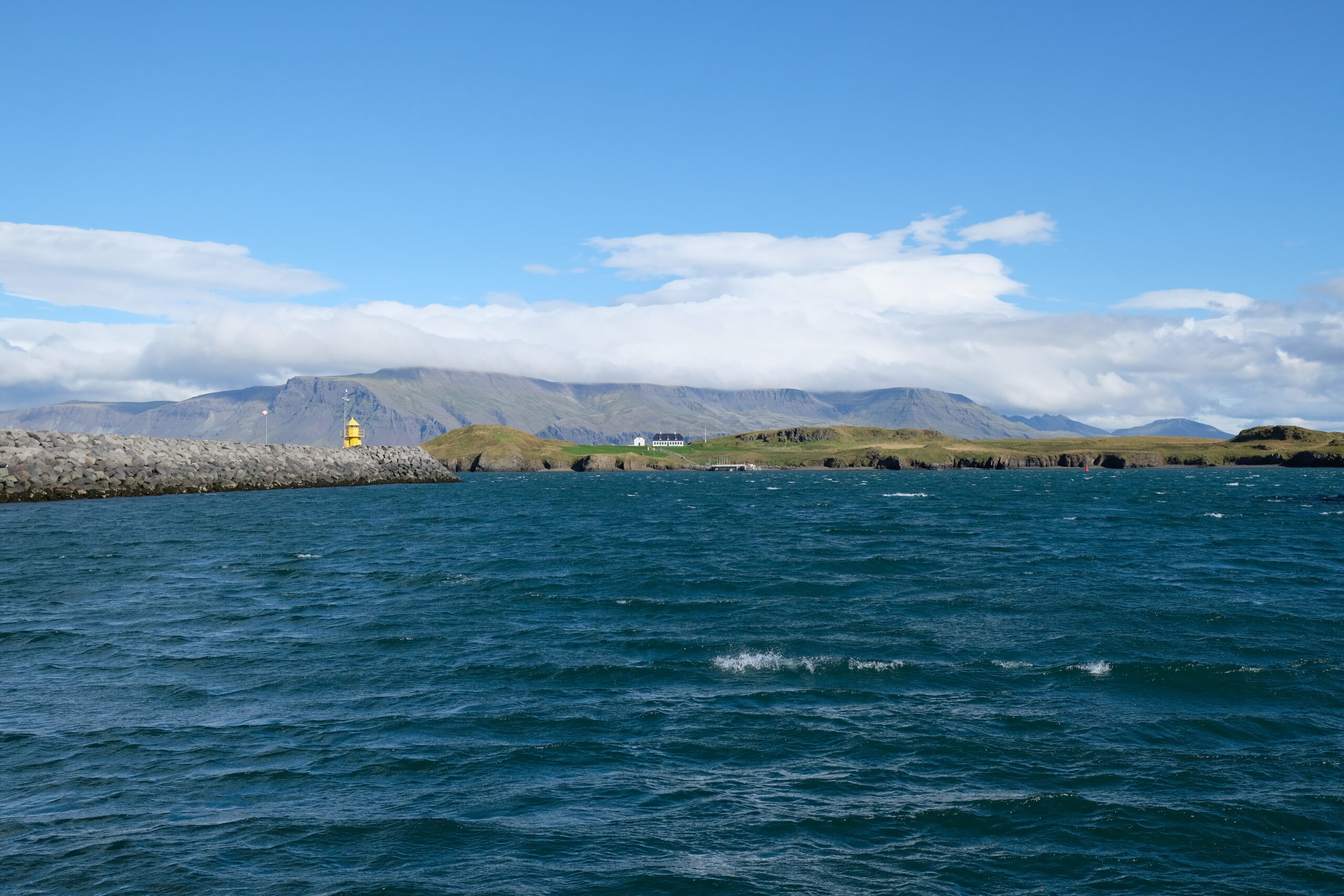
The Reykjavík Arts Festival is going on this week and I filled two more slots on my Icelandic musician bingo card. The first was a performance by Hildur Guðnadóttir and the Iceland Symphony Orchestra. Hildur is the artist-in-residence at this year’s festival, hosting multiple events throughout the two-week program.
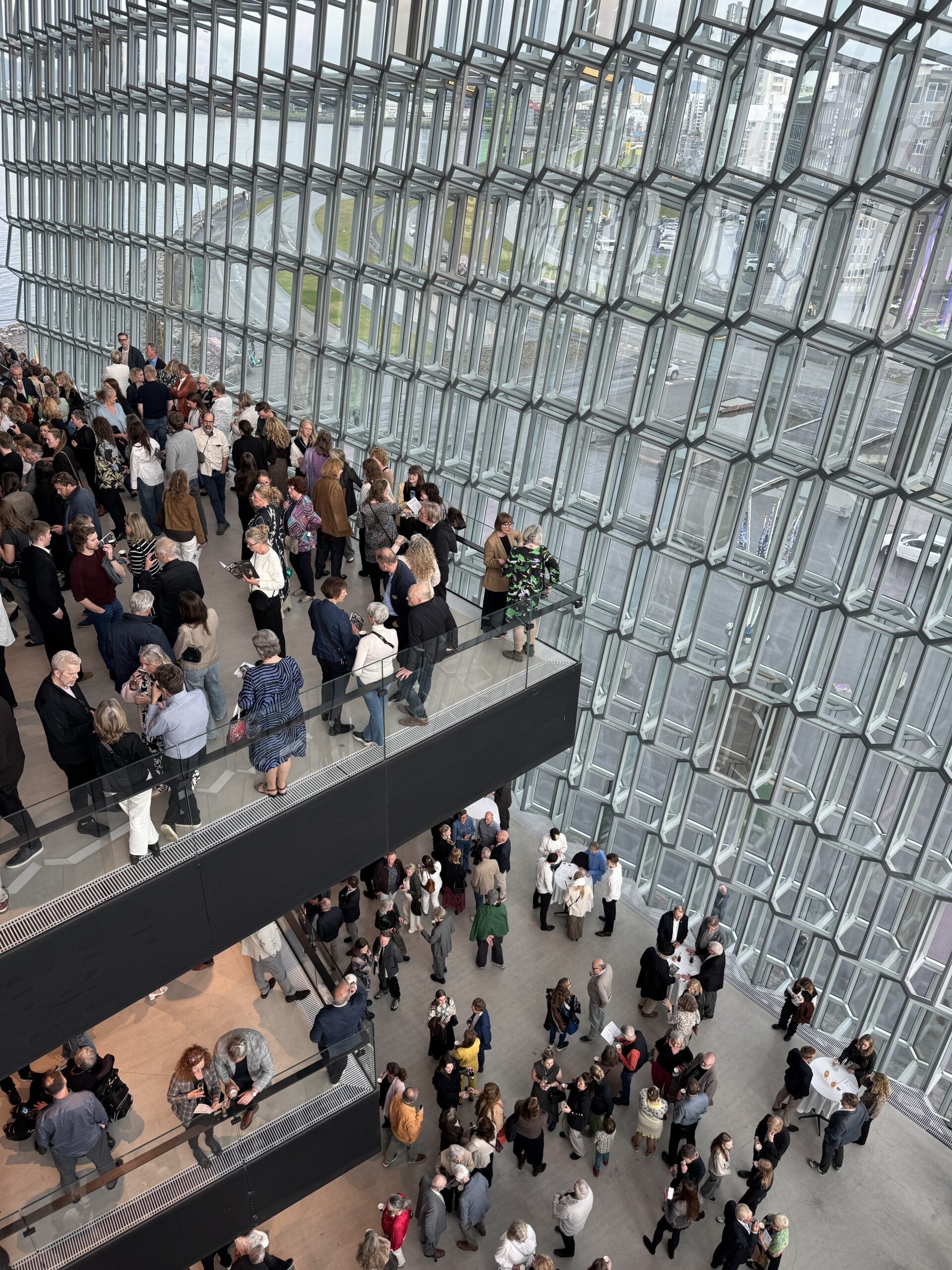
Her concert was the first time I’d been in the main Eldborg hall at Harpa, and I was way up in the third-level cheap seats, which let me take in the full view of the space. Of the various events she was involved in this week, I was particularly interested in this one because it was focused on Hildur’s scoring work, including pieces from the films Joker and Tár, and billed as an event where she would discuss her work and influences. What I hadn’t fully thought through ahead of time was that (of course) that part would be in Icelandic. So, I didn’t get much from that, but the performance was still great and I was happy to experience Eldborg.
The concert was sold out and it was fun to see all the spaces in Harpa packed with people.
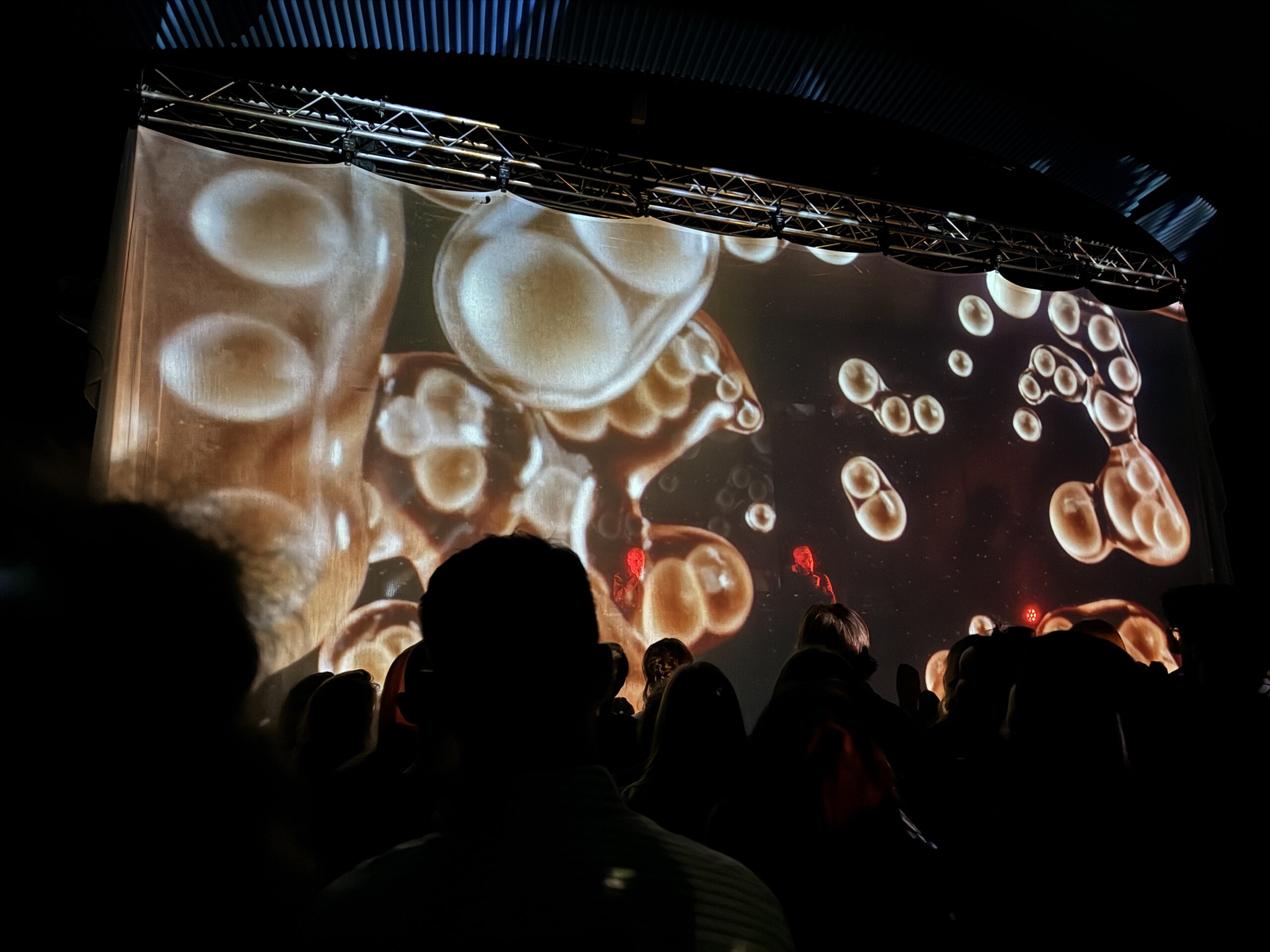
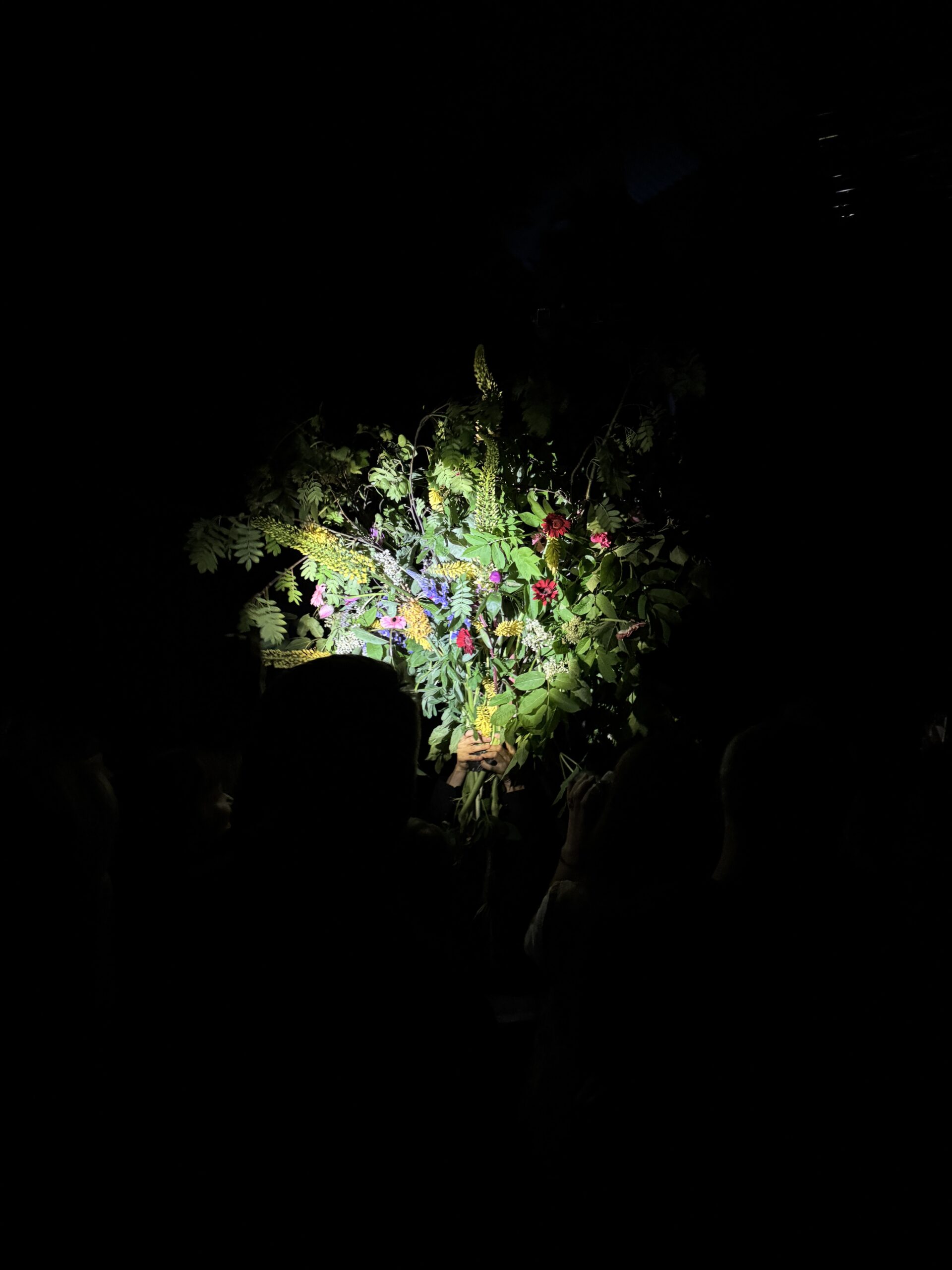
I also attended Fischersund: A Night of Scent & Music, a really unique concert combining sound, visuals, and scent. Fischersund is a perfumery and artist collective founded by Jónsi of Sigur Rós. They create scents based upon specific memories or elements of the Icelandic landscape. All the attendees got a small vial of Faux Flora No. 1, which is meant to invoke a plant’s lifecycle, and we were instructed to spray it at a coordinated time. Other scents were diffused into the room throughout the performance, including one moment where someone carrying a giant bouquet of flowers, doused in additional perfumes, wandered through the crowd.
Musically, it felt mostly like a Sigur Rós concert, but in a small venue with high-concept visuals and perfumery mixed in. There were a few production glitches that broke the spell, but if anything that only proved that they have achieved such a high level of immersion for the bulk of the show.
Jónsi and friendsA scent-saturated bouquet wandered through the crowd.
For most of the last two weeks my parents have been in Iceland. After a couple of days in Reykjavík, we traveled around the country together, driving 1500 miles counter-clockwise on the Ring Road with excursions into Vestmannaeyjar, the Eastfjords, and around various peninsulas. They were on a tour of Iceland in 2021, so there was a little bit of overlap with that, but we did the kind of exploring that a tour would never support: driving down gravel roads deep into mountain passes, roaming the back streets of harbors in tiny fishing villages, tracking down sculptures in the mountains. A couple of years ago there would have been no way they’d be up for some of the hikes we did — up a volcano, on a glacier — but knee replacements do wonders and they have three new knees between them.
There were far too many great sites and moments to chronicle in one post, but I’ll touch on some of the highlights and things that were new to me. I have lots of photosets on Instagram if you want to see more.
On top of the Eldfell volcano in Vestmannaeyjar (Westman Islands).Map of my road trip around Iceland with my parents in May 2026.
Our first stop was Vestmannaeyjar, which was the trickiest to plan around because the ferry is operating on a single engine and can’t make it across the strait in bad weather. Luckily the weather was good enough to sail there on schedule, but on advice from an agent at the ferry terminal I swapped our return trip the next day to be the first ferry out at 7am, in order to guarantee that we wouldn’t be trapped.
I love those islands, and was happy for another chance to hike up the Eldfell volcano to get a view of the whole archipelago. It was a lot greener when I was there last August, but this trip offered the chance to see a new site-specific artwork by Ólafur Elíasson that was installed earlier this month. It’s called “The Wanderer’s Perspective” and consists of two parts: a viewing sphere that frames the volcano, and a new walking path up to its summit (still in development). The walking path will follow the route of a giant piece of lava from the 1973 eruption that was nicknamed Flakkarinn (The Wanderer) because of how far it traversed across the landscape.
The viewing sphere is easily accessible, and frames the volcano in a way that the sun aligns with the volcano’s peak at 1:30pm on January 23, the exact date and time of the eruption. Circular holes in the roof trace the sun’s trajectory on July 3, the day the eruption was declared over.
“The Wanderer’s Perspective” by Ólafur Elíasson“The Wanderer’s Perspective” by Ólafur Elíasson“The Wanderer’s Perspective” by Ólafur Elíasson
Leaving the Westman Islands we visited lots of spots along the south coast, and it turned out that the earlier ferry was a great idea because there’s so much to see along this stretch. We stopped by the Seljalandsfoss and Skógafoss waterfalls of course, but also the Sólheimajökull glacier, Reynisdrangar beach, and Hjörleifshöfði cave. The next day we hiked the Fjaðrárgljúfur canyon and walked on the Svínafellsjökull glacier before it started raining heavily. That may have contributed to lack of ice on Diamond Beach, but it was still fun to check out the massive icebergs in Jökulsárlón glacial lagoon.
My parents at Fjaðrárgljúfur canyon.Svínafellsjökull glacier tongueJökulsárlón glacial lagoon
After staying in the night in Höfn, we drove into the Eastfjords the next day, venturing further east than I’d been in Iceland before. It immediately felt different for me, taking in new sites versus driving through ones I’d seen two to four times before. More firsts came fast, as this region is where the wild reindeer live and we added them to our animal sightings along with the pervasive sheep and horses. It was earlier enough in the year that their antlers were still velvety and we even spotted a couple of calves.
Reindeer in the EastfjordsTwo reindeer in the EastfjordsA female reindeer and her calf, in the Eastfjords.
Also in the Eastfjords was Petra’s Stone Collection, an absolutely amazing place showcasing a single woman’s collection of rocks and minerals found all around Iceland over her lifetime. It is impossible to convey the size and scope of her collection but it’s like nothing I have ever seen. See my Instagram photoset for more.
Petra’s Stone CollectionI can’t believe how many colors and textures were in this one rock.
We stayed in Seyðisfjörður, which is reached by driving over a mountain pass that was still covered in deep snow. The town is where the Smyril Line ship arrives in Iceland after sailing from Denmark via the Faroe Islands. It’s also one of the two locations that were used in the Icelandic TV series Trapped, the other being Siglufjörður where we also stayed a few days later. I’m looking forward to rewatching the show now that I’ve spent time in both places.
Sheep with her lamb in Seyðisfjörður.
While there, we also hiked up the mountain to see Tvísöngur, a sound sculpture by the German artist Lukas Kühne that consists of a series of interconnected concrete domes. The plaque notes that it can be viewed as a visualization of the Icelandic five-tone harmony tradition, and dubs it “singing concrete.” The experience is that if you stand directly underneath each dome your voice resonates strongly back to you, in an effect that feels as if you have headphones on, piping your amplified words back into your ears. It’s a strikingly simple design but a really fun and powerful effect.
Tvísöngur sound sculpture
Nearby was another sculpture, squarely aligned with my interest in subsea cables, called “Hvernig gengur?” — How is it going? — and was commissioned by Iceland Telecom to commemorate the 100th anniversary of the first telegraph cable laid between Scotland and Iceland in 1906, which came ashore in Seyðisfjörður.
Hvernig gengur? sculpture.
Our next stop in the Eastfjords was Borgarfjörður Eystri, the puffin capital of Iceland, where an islet named Hafnarhólmi is home to thousands of burrows. Stairs and platforms allow visitors to walk around part of the islet, providing an extremely close up view of the puffins from every possible angle. When we arrived, this closeness already made it the best puffin site I’d been to, even surpassing Mykines on the Faroe Islands. But soon after 8pm a majority of the birds that had been out to sea returned, in a seemingly coordinated ritual. At that point the hills were absolutely swarmed, with puffins taking off and landing, going in and out of their burrows, billing their mate, and strutting around.
The crowd gathered to view them all seemed to understand what a special moment this was, adopting library-hushed speaking levels and careful footsteps; it was a quiet and reverent place. These funny little birds have the ability to make everyone smile as they awkwardly fly and waddle around on their bright orange feet.
Puffin at Borgarfjörður Eystri.Puffin at Borgarfjörður Eystri about to take flight.Puffin at Borgarfjörður Eystri with its mouth open.
As we started heading northwest, our first stop was the hike to Stuðlagil canyon. The water at this time of year isn’t the turquoise color you often see in photos, but the basalt columns along the river’s edge are stunning. If you’re thinking of going, I recommend hiking in on the east side of the canyon. The west side has more infrastructure, and you can drive up to the lookout spot, but there are still hundreds of steps down to the river and you can’t walk down into the canyon. You’ll see some of it, but most of the views will be just out of sight. The eastern side has a new parking lot further along the canyon, so it’s now only a ~3 miles hike instead of what used to be ~6 miles.
Stuðlagil canyon from the eastern bankStuðlagil canyon from the eastern bankStuðlagil canyon
As we headed west we started to get back into areas of North Iceland I’d visited in early April. We went to the Hverir geothermal area, visited the cows at Vogafjós Farm Resort, stayed on a farm near Lake Mývatn, and visited Goðafoss. There was a massive cruise ship docked in Akureyri, deploying 20+ full-size buses to the sites in the area. I’m not a fan of that kind of travel, or being around those kinds of crowds, so it was nice to head up the peninsula to Siglufjörður where we spent the last two nights of the trip.
It was rainy, and even snowed, the final two days — but that was okay. We stayed at the excellent Sigló hotel, which has a geothermal hot tub overlooking the harbor and mountains that is great in any weather. We also visited The Herring Era Museum, which has excellent artifacts from the town’s history when it was Iceland’s fish export epicenter.
Hot tub at the Sigló hotel in Siglufjörður.Rainbow over Eyjafjörður.Sauðanesviti lighthouse
As we headed back to Reykjavík we detoured to see the sea stack Hvitserkur. We also passed by one of the most interesting sheep roundup pens I’ve seen in Iceland, situated unusually right by the beach.
Hvitserkur sea stackSheep roundup pen by the ocean, just north of Hvammstangi on route 711.
The final trip was to the Reykjanes Peninsula, to drop my parents off at the airport but also to explore the area around Grindavík. We saw the fresh lava flows that covered the old road, as well as the magma barrier walls that surround the power plant and town.
Overall, it was a great trip around the country and I’m happy that I was able to do it with my parents. One of the interesting things about traveling with other people is that they notice different things than you do. When my brother visited Iceland he pointed out many aspects of the architecture that I hadn’t seen. My Mom notices artifacts, furniture, and how people construct their homes in ways that I might overlook. She also has an incredible eye for interesting rocks and was always finding good ones as we hiked. My Dad, not surprisingly, sees the farming activity in rural Iceland with a level of depth that most of us would overlook. I see the tractors, sheep, and hay bales but he’s looking at soil type, fertilizer composition, and water management practices. We all have our travel eccentricities — I did track down a monument to a telegraph cable after all — but it was interesting to see Iceland through their eyes.
Dad examining fertilizer bags.Dad examining the soil.
In a week that included the first day of spring, the weather in Iceland was still very much winter. As usual, it’s the wind that makes things harsh, reaching over 45 MPH and causing yellow travel warnings across much of the country. In less than two weeks I have a trip to Akureyri planned during Easter break, so I’m crossing my fingers that things improve.
Luckily there were some indoor activities to check out. The Stockfish Film Festival kicked off, and is conveniently held across the street from my apartment at Bíó Paradís. Yesterday, I went to two sessions, both focused on Icelandic shorts: five documentaries and six narrative shorts, each including a Q&A with the filmmakers. At least half of the films were directed by film students studying at the Iceland Academy of the Arts. I don’t know how it works at other film schools, but it was impressive to hear about the level of financial and expert support they receive. It sounds like there are people on staff to support lighting, sound — even intimacy coordination — during 10–12 hour shooting days, sometimes in remote locations. Film is one of the creative industries where Iceland punches above its weight, and this was a glimpse into the educational foundation that makes that possible.
It’s not just film students who are well supported. Earlier in the week I attended a lecture by Jens Schildt, a Swedish graphic designer who did extensive archival research into the Swedish business equipment company FACIT. His work is fascinating, and involved recreating some of the company’s typefaces and publishing a book. Because his collaborator was living in the Netherlands they were able to tap into generous Dutch funding for this kind of design project.
His lecture (also at Bíó Paradís) was organized by Iceland University of the Arts and the Association of Icelandic Graphic Designers. While talking to one of the design instructors, he mentioned receiving Erasmus funding to take his entire class of graphic design students on a trip to Belgium. Europe has always had more funding for the arts, but the contrast with America (especially under Trump) is so stark. Imagine living in a society that supports and rewards creative activities that don’t have an obvious commercial profit motive?
Jens Schildt presenting his archival research on FACIT at Bíó Paradís
March 18 marked the 100-year anniversary of Iceland’s first radio broadcast, and I attended the opening of an exhibition celebrating that milestone in the building where it happened. Loftskeytastöðin, which translates simply to “the radio station,” is a small building on the University of Iceland campus that I walk by multiple times a week. The main floor has a permanent exhibition dedicated to Vigdís Finnbogadóttir, the first woman president of Iceland, but the basement has rotating exhibitions.
There was a collection of some of the first radio receivers in Iceland, often with a unique story of how they came to the country. For example, one of the old shortwave radios belonged to a farmer who had taught himself German and wanted to listen to broadcasts from abroad to improve his language skills. Overall, the exhibition is small but interesting. I would have liked more information on the history of the building and broadcasting, but it focuses more on tangible artifacts from the history of radio.
Architectural detail on Loftskeytastöðin, the old radio station building.I do, of course, love the design of old radios, particularly shortwave models with city selectors.
Finally, I attended the opening performance for Harmonic Tremor by Ben Frost and Francesco Fabris at The Living Art Museum. The installation is set up as a series of upward-facing speaker cones, filled with lava collected from eruption sites on the Reykjanes peninsula. As the speakers vibrate, the lava shifts and bounces, slowly escaping the cone to create a pile of dust surrounding the speaker stand on the gallery floor. These eight speakers were augmented by many others throughout the space.
The performance was composed from field recordings made at the eruption site, including sound recorded from contact microphones placed directly on cooling lava. It felt like you were inside the eruption itself: ethereal, immense, at times startling. I’ve followed both of these artists for years, but never seen them perform, so I feel lucky to have been able to attend such an immersive joint performance. It felt like a very Icelandic experience to walk back home, in 40+ MPH wind and snow, after attending a sound performance based on nearby volcanic eruptions.
Harmonic Tremor installation by Ben Frost and Francesco Fabris at The Living Art Museum.
In Iceland they only recognize two seasons: winter and summer. The first day of summer this year is April 23rd, and it came up in one of my classes this week because our final exam is scheduled on that day. “But that’s the first day of summer!” warned one of the Icelandic students. Apparently in Iceland it’s a public holiday, with parades and the day off work. Although often the temperatures that day are still below freezing.
I’m pretending that spring exists, and that it’s here, even if it only shows up for a handful of hours at a time, and only when skies are clear enough for the sun warm a tiny bit of exposed skin. During this “spring” I’m trying to explore the edges of the capital region more, places where the bus can take me to the outskirts of Reykjavík, closer to the mountains or along new shorelines. It’s great living downtown, but I’m curious what else I can see beyond walking distance — but without needing to rent a car. I hear there’s a good Polish restaurant in the suburbs.
Yesterday, I went to Gufunes, and the Geldinganes Headland, which wrap around Faxaflói Bay with a backside view of Viðey Island. I primarily went to see Hallsteinsgarður, a sculpture park with large aluminum sculptures by Hallsteinn Sigurðsson. They are situated along the shoreline, framing the water and mountains with a beautiful contrast between the stark geometric forms and organic landscape.
It’s an unusually mild winter in Reykjavík, or so I’m told. This week brought the first snow of the new year that actually stuck around, blanketing Mt. Esja and whipping in the wind. Mostly, that’s meant more inside time, more busing instead of walking, and some February cabin fever. But today was the kind of bright winter day that I like — blue sky, calm breeze, snow but not ice, and temperatures just below freezing.
I took the opportunity to visit the Ásmundarsafn location of the The Reykjavík Art Museum, which has three venues, with this being the one I hadn’t visited yet. It’s dedicated to the sculpture of Ásmundur Sveinsson, who designed and built the building, which served as his home and studio. His sculpture is installed in various spots around town, but it was interesting to see in its full variety, and the space itself is quite unique. More photos on Instagram.
The outside of the Ásmundarsafn museum in Reykjvík.
Since early January, the artist Finnur Arnar Arnarson has been living in a tent inside the museum, while he paints the inside of building’s dome. His tent sits incongruously in an sunlit atrium, on a platform of rough pallets, with the growing detritus of his stay collecting around it. Visitors are able to ascend into the dome where he’s painting, although there’s barely room to move around his scaffolding and supplies. It all comes together as a kind of work-in-progress performance piece. It’s not clear to me if his painting will be permanent, or if the dome acts as a canvas for other artists over time.
The tent where Finnur Arnar Arnarson is staying inside of the Ásmundarsafn museum.
I want to recommend a book I recently finished called Underground Empire: How America Weaponized the World Economy by Henry Farrell and Abraham Newman. It’s about how America wields power over countries through non-military means, primarily focused on dollar dominance and Internet infrastructure. After Russia’s full-scale invasion of Ukraine, four years ago, I was fascinated by some of the unprecedented moves to sanction the country, such as banning them from SWIFT, the international financial transaction processing system. At the time, I wanted to learn more about the history of sanctions and picked up The Economic Weapon: The Rise of Sanctions as a Tool of Modern War, but its historical focus on the interwar period was too far removed for me.
In contrast, Underground Empire is much more up-to-date, and looks at not only sanctions but other less official ways the US has used financial and technological chokepoints to coerce actors to go their way. For example: the successful push to get other countries to stop doing business with the Chinese technology company Huawei. The book brings together multiple interest areas of mine — international relations, financial networks, the Internet — and weaves a cohesive story across all presidential administrations in the post-9/11 era.
Some of the stories and history the authors draw upon were familiar to me, but it’s one of those rare books that succeeds in filling my knowledge gaps. I came away with a better understanding of OFAC, as well as clarity on how the Eurodollar works and why it would be hard for another country to unseat the US dollar as the global reserve currency. I also have a fuller picture of the extent to which US digital infrastructure dominance should scare other countries, and why nations around the world should be moving to establish digital sovereignty.
The book came out in 2023, so the authors didn’t know there would be a second Trump presidency. Even if they had contemplated it, it’s unlikely they would have guessed that by March 2026 he would have so thoroughly damaged the global world order. In many ways, the book is a cautionary tale of how America got addicted to abusing its power of economic and technical coercion. Trump, of course, has no restraint and will maximally leverage these advantages through any means possible. For the last 25 years the world has been on a leash that the US could yank whenever it wanted, but wriggling out of that collar seemed too hard and too costly. Today, with Trump holding it taut to their neck, I think the calculus is shifting.
Nerdy thing 2: the HTTP status code for a request that can not be completed for legal reasons, such as government censorship, is HTTP 451. Named after Fahrenheit 451.
My eyes are glad that this week is over. Too much looking at tiny words, at close proximity, on laptops, tablets, phones, and printouts. A few years ago I got bifocals, an aging rite of passage, added new complexity to the eyeglasses I’ve worn since second grade. But they do nothing for the kind of stiffness of focal length that I increasingly experience if I spend too long on close-up work. When I stop to look at a distance the world is blurry, and stays that way for a long while until my eyes slowly adjust. I’ve learned that it’s called an “accommodative spasm” which is such a strange phrase that it’s honestly kind of a silver lining if I get to use it regularly.
Luckily the solution is simple, and something we probably all need to remember: it’s healthy to just stare off into the distance every once in a while.
While out on an evening walk along the waterfront this magical pillar of light turned on! It’s Yoko Ono’s Imagine Peace Tower, the base of which I saw on Viðey Island when I visited a few weeks ago. I was surprised, because I knew it wasn’t supposed to start until John Lennon’s birthday on October 9th. It turned off again after 15 minutes, so I’m guessing this was just a test.
I got tickets to attend the official lighting ceremony this week. My timing will unfortunately be tight, with some other commitments immediately beforehand, but I’m hoping I can catch the last ferry before the 8pm event. If you want to watch, they’ll be streaming it live on their website (4pm ET).
Relatedly, I was excited to learn this week that the score for Reichardt’s film Old Joy, performed by Yo La Tengo, is now available on vinyl. It came out earlier this year, 19 years after the film was released!
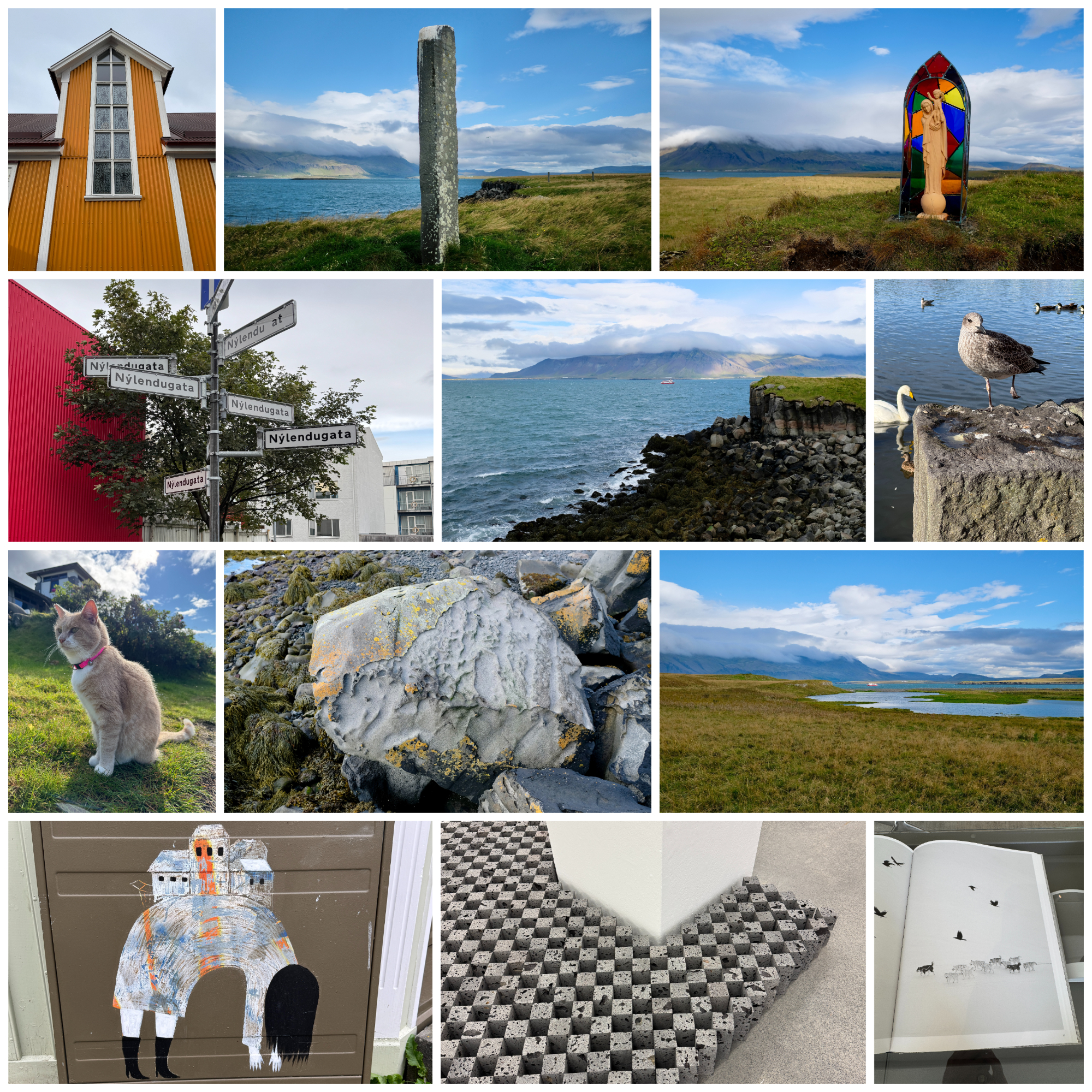
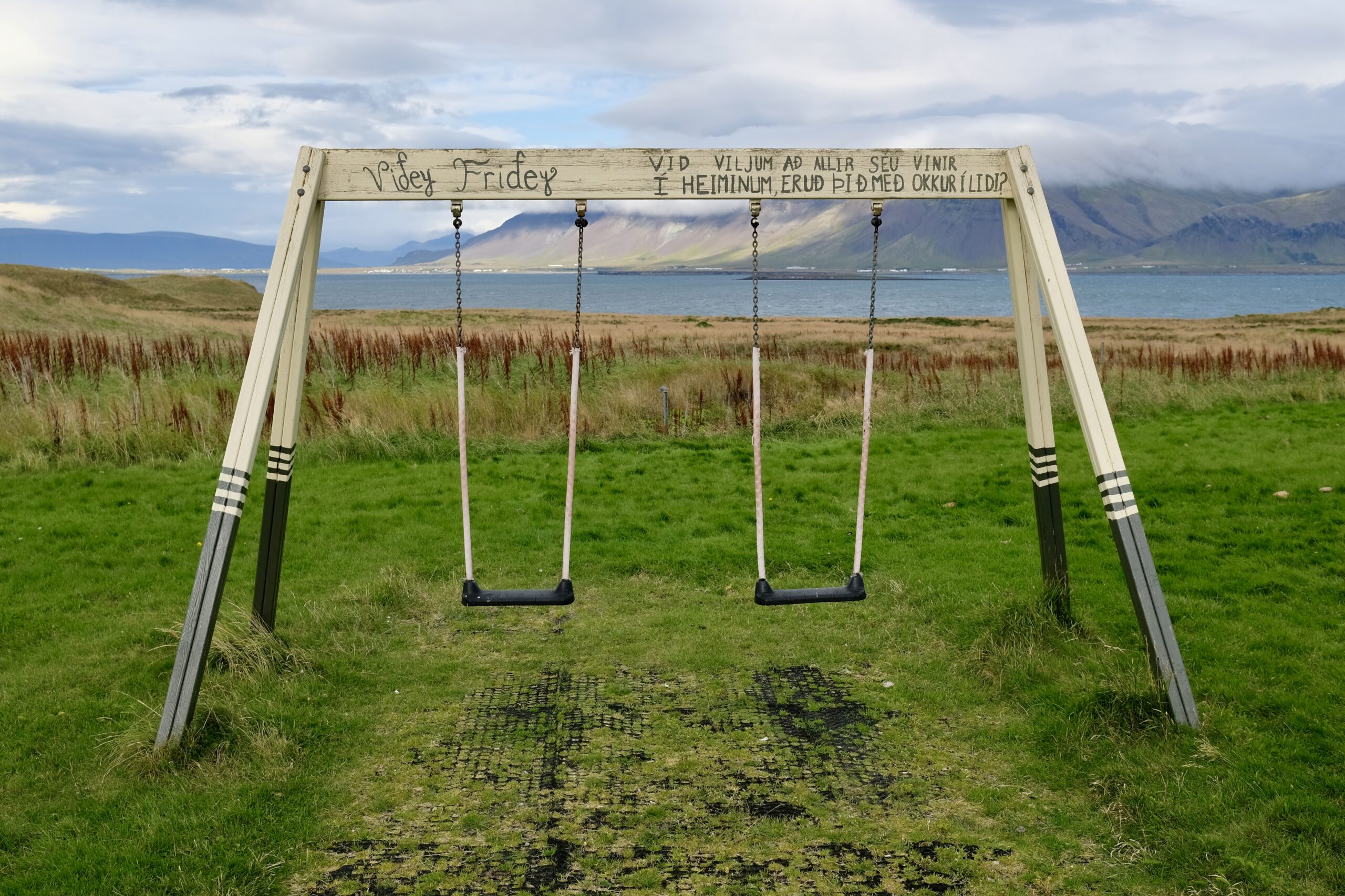
The ferry to Viðey Island operates on two different schedules labeled “summer” and “winter,” and like most other seasonal timetables in Iceland, winter begins on September 1st. So my trip this week to the uninhabited island, just off the coast of Reykjavík, was limited to the 3-hour window in which the ferry operates off Skarfabakki pier. While it’s the largest island in the Kollafjörður Bay, at 0.62 square miles it can be almost fully explored in those 180 minutes. The tiny and infrequent ferry, combined with my relatively greater than average willingness to traverse uneven terrain in high winds, means that I regularly felt like I had the place to myself.
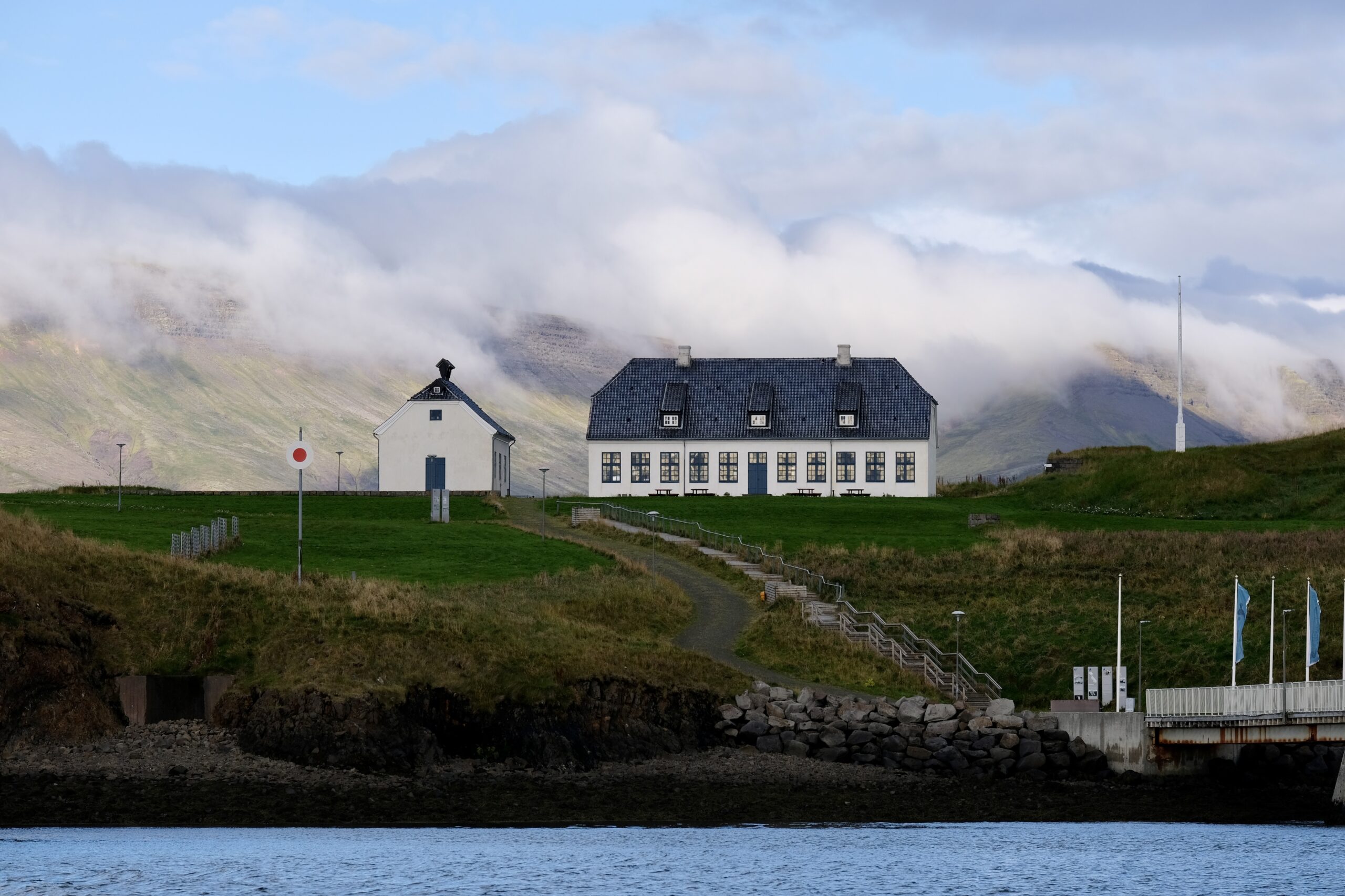
And what a place. A five minute boat ride from a dense industrial port, with a full view of the city skyline, but it feels like you’ve been transported to the countryside. It’s certainly the most isolated and wild place you can find within city limits, and just distant and quiet enough for wildlife to relax in their perceived solitude, like the seal I spotted fully surfaced and sunning himself on a rock. The Viðey House greats you upon arrival, one of the oldest building in Iceland built in 1755 and fully restored into a cafe.
The Viðey House
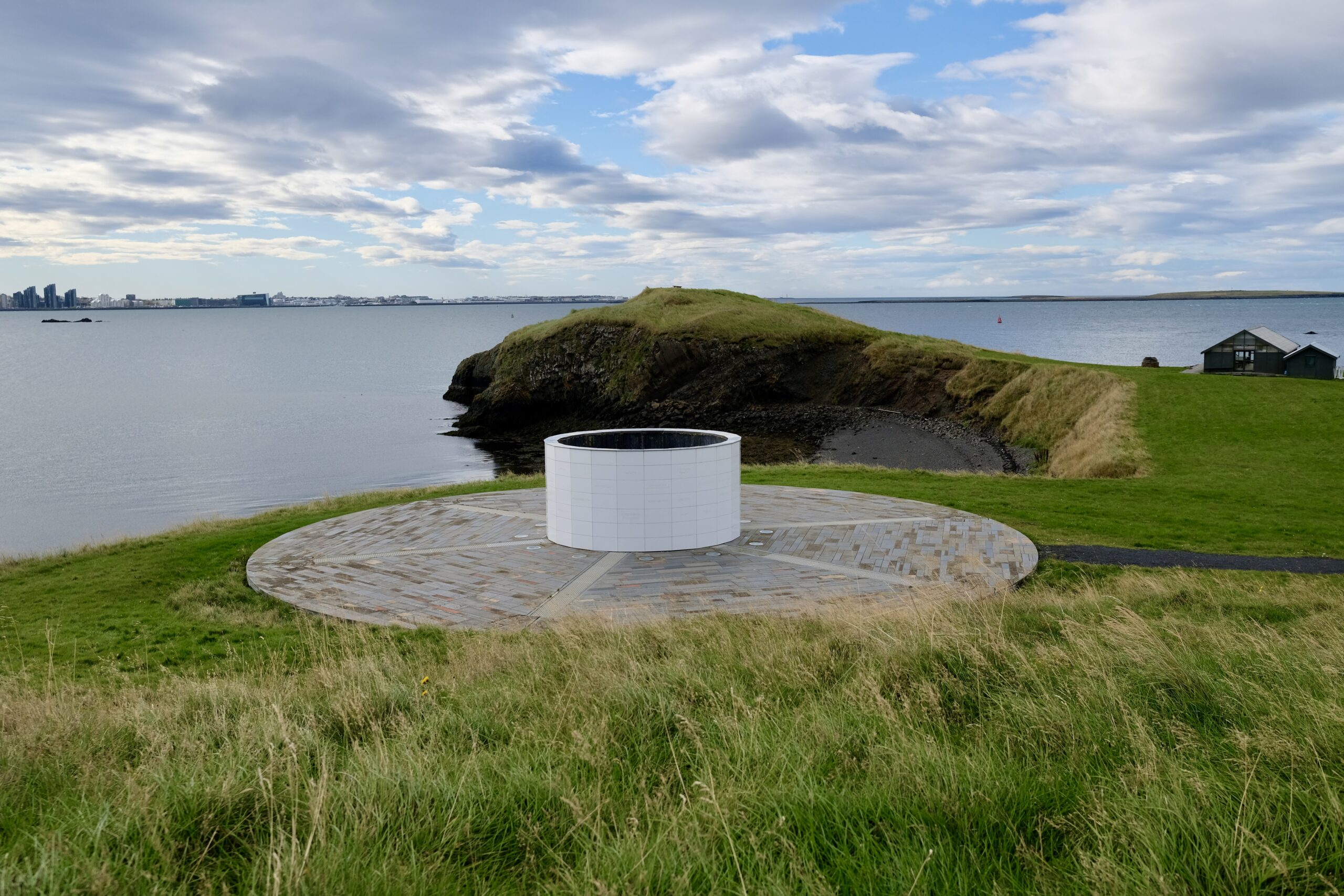
The Imagine Peace Tower is a short distance away, designed by Yoko Ono as a tribute to John Lennon. The words “Imagine Peace” are carved into the white stone in 24 different languages, and 15 embedded lights form a luminous nighttime tower. I thought that perhaps it was broken, since I’ve never seen it lit, but apparently it only operates from Lennon’s birthday (Oct 9) to the day he was shot (Dec 8), and then for 1-week periods around New Year’s and the spring equinox. So I’ll look for it then.
Imagine Peace Tower by Yoko Ono
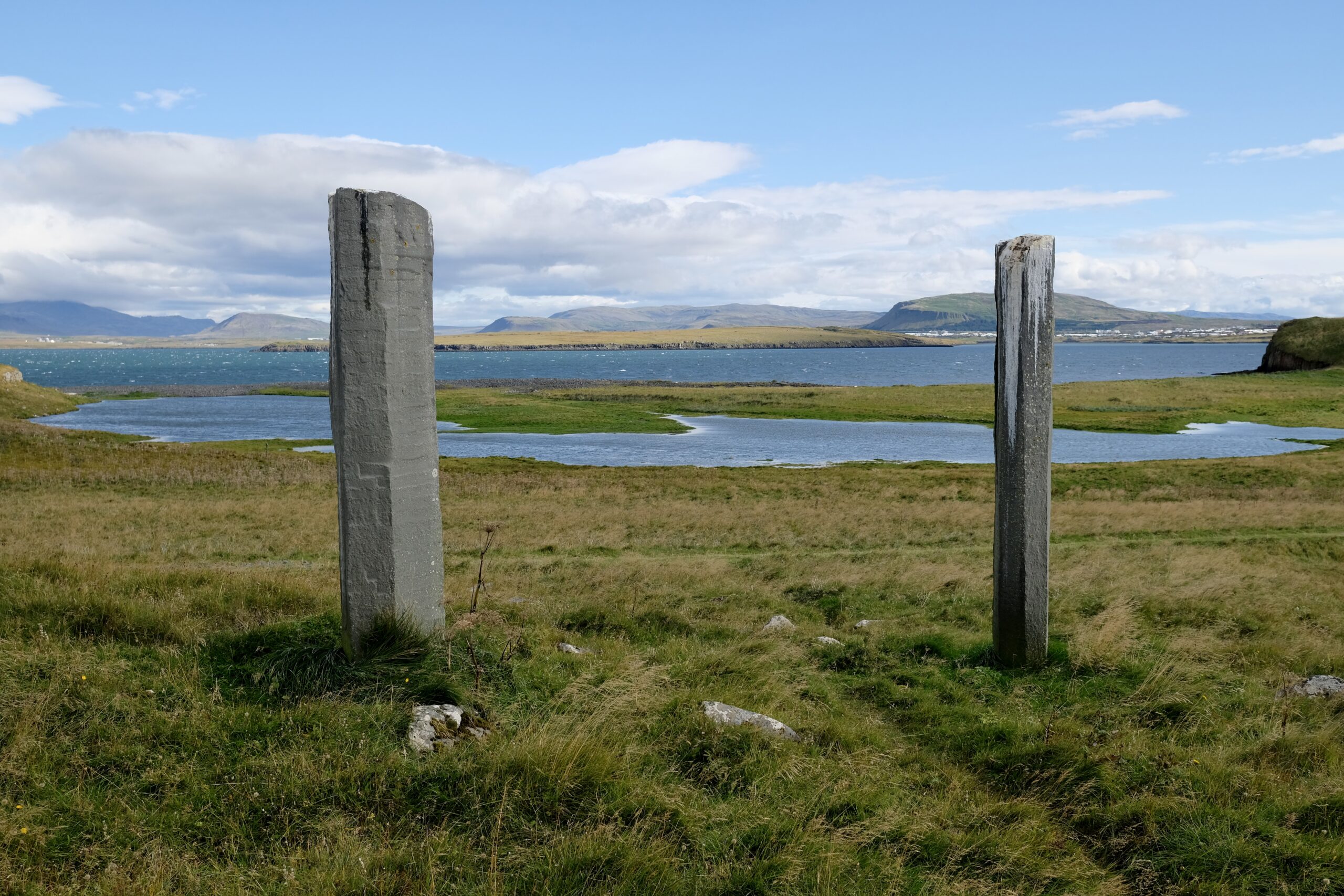
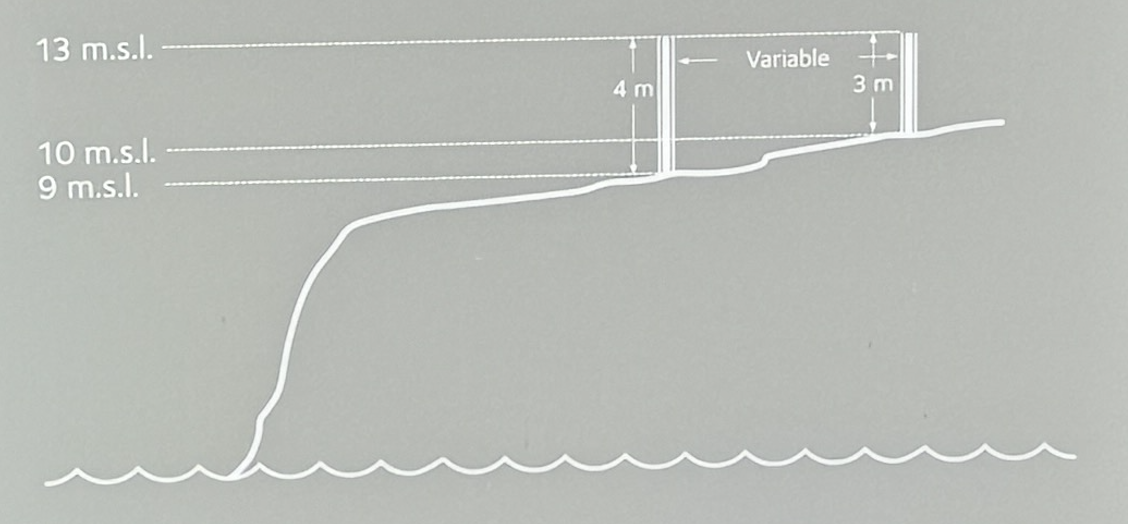
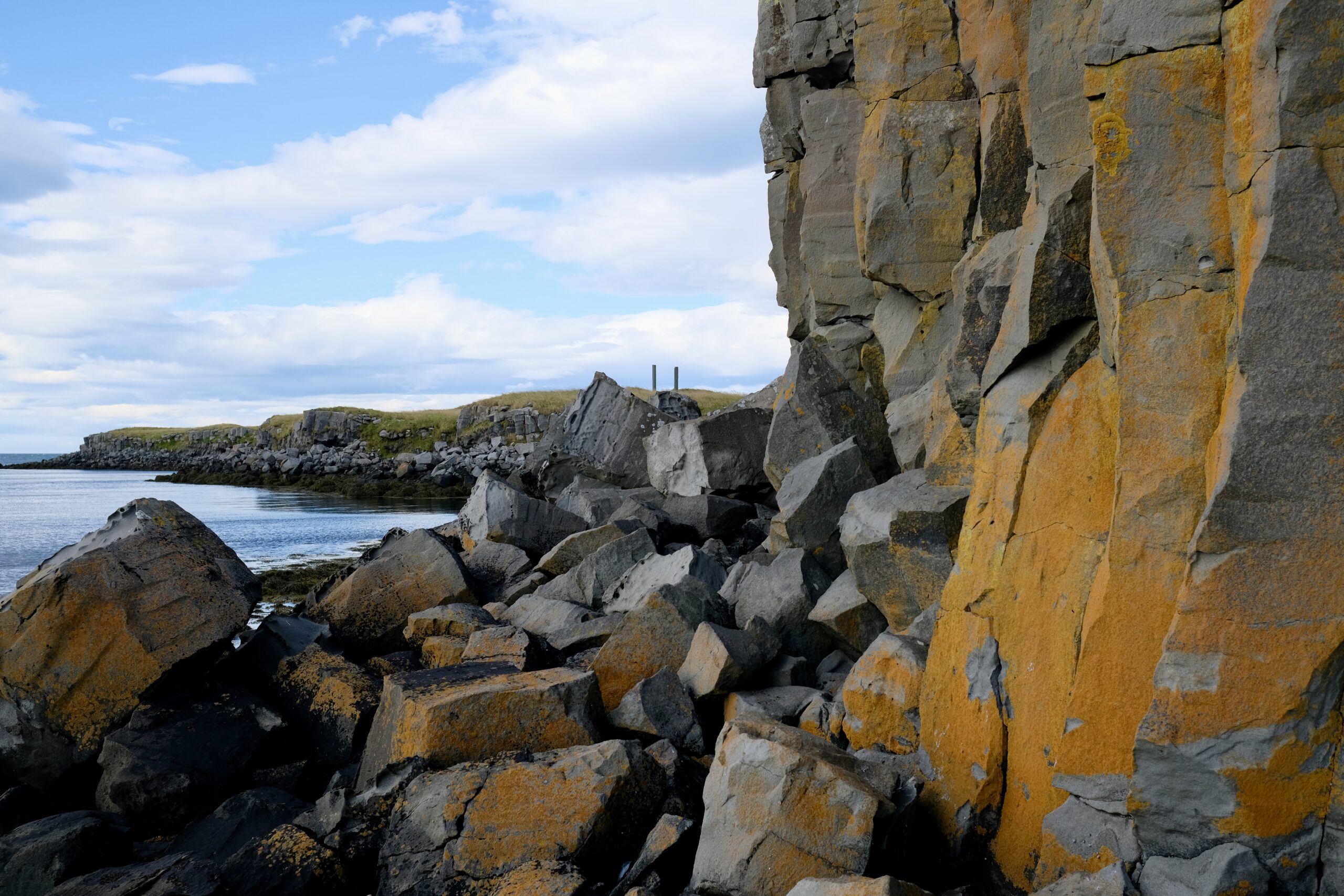
The western part of Viðey, connected by an isthmus to the main island, is the site of an artwork by Richard Serra called Áfangar, which was installed in 1990. It consists of 9 pairs of basalt pillars, where one is 4 meters in height and the other is 3 meters. But they are positioned in the landscape so that the shorter one stands 9 meters above sea level, and the taller of the pair is 10 meters above sea level. In this way, all the columns across the island are a consistent height.
A pair of basalt pillars framing the landscape, part of Richer Serra’s Áfangar artwork.Diagram showing the measurements of Richard Serra’s environment artwork Áfangar on Viðey Island.
In general, it was just nice to wander around the island. To get a closer view of Mt. Esja, be surrounded by water, and walk through the grasses changing to autumn colors. My midwest brain is hardwired to anticipate the arrival of Fall color this time of year, and I’ve been curious to see how that shows up here.
The view of Viðey Island from the Skarfabakki pier. Not very far way.
When I finish reading a book I might mentioned it the “Noted & Done” section at the bottom of these posts, and if you’re viewing the blog on a computer-sized screen you’ll see a sidebar that displays recent books pulled from my Goodreads account. But I wanted to draw more attention to, and heartily recommend, the new book by Bill McKibben Here Comes the Sun: A Last Chance for the Climate and a Fresh Chance for Civilization. In this relatively slim volume the renowned environmentalist not only makes the expected case that solar power is the best option for the health of our planet, but he shines a light on what most of us have missed — it is now also the cheapest option.
From the purview of Donald Trump’s climate-denying, fact-destroying, oil-industry-governed hellscape this cost tipping point for solar energy is easy to overlook. But apparently, in just the last couple of years, increases in solar cell efficiency and decreases in manufacturing cost at scale have have dramatically reduced the price of solar power. In the US, due to the previously mentioned context, this might be less true than in other countries. But that difference is now entirely artificial and driven by unnecessary barriers, from onerous permitting processes to tariffs on Chinese-made goods. But the rest of the world has noticed, and it’s dramatically changing their energy calculus. Take for example this surprising Wall Street Journal article from earlier this week, entitled Oil Giant Saudi Arabia Is Emerging as a Solar Power.
I do recommend reading the book, but for the highlights right away I’d suggest reading McKibben’s recent New Yorker article. There’s enough in that piece to open your eyes to the change that’s happening worldwide, where apparently people are deploying a gigawatt’s worth of solar panels — the equivalent of one coal-fired power plant — every 15 hours! It’s faster, cheaper, decentralized, repairable, recyclable, and clean. I honestly find very little to be optimistic about these days, so reading Here Comes the Sun was the first genuinely hopeful burst of excitement I’ve had in a while. There are obviously still lots of barriers, with Trump fighting like hell to make sure that his oil executive friends continue to profit as the world careens towards climate catastrophe. But when the social, and moral, and (finally!) economic incentives all align it gives me hope that the old regime is finally fragile enough to break.
Met with someone from the Arctic Circle to discuss the possibly of being a delegate volunteer at their upcoming Assembly. I’m hoping that works out.
Dropped the mini-course related to the above-mentioned Assembly. Upon further reflection I decided it wasn’t worth it as I’m going to attend no matter what and I don’t need credits. So now I’m down to a normal course load of 30 ECTS.
Finished season 3 of Foundation. The first two seasons had so much scene setting to establish the incredibly complex back story. This latest season still introduced a ton of new characters but I feel like I was able to follow along and enjoy it more. I hear that season 4 has already been green lit.