Iceland: Week 3

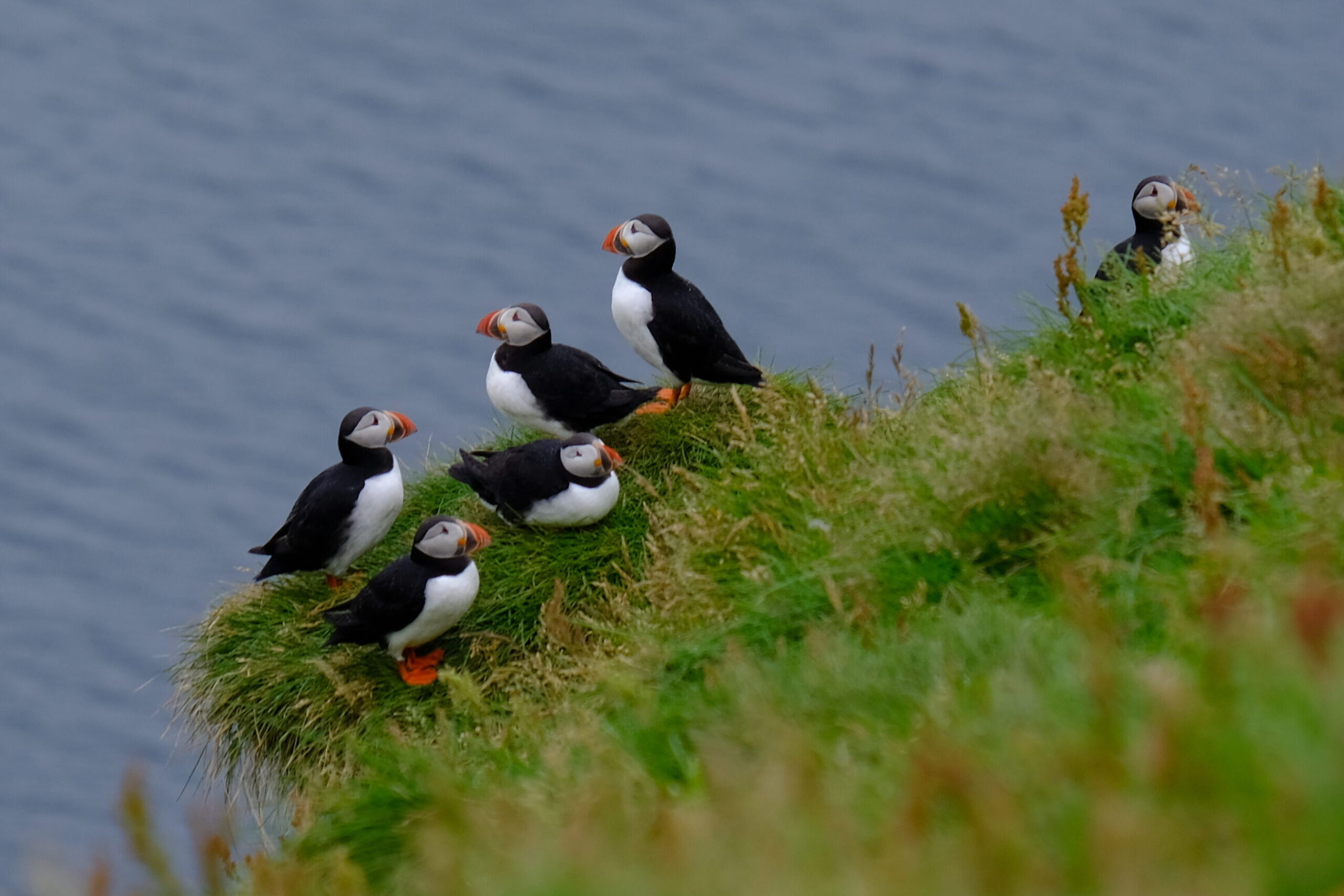
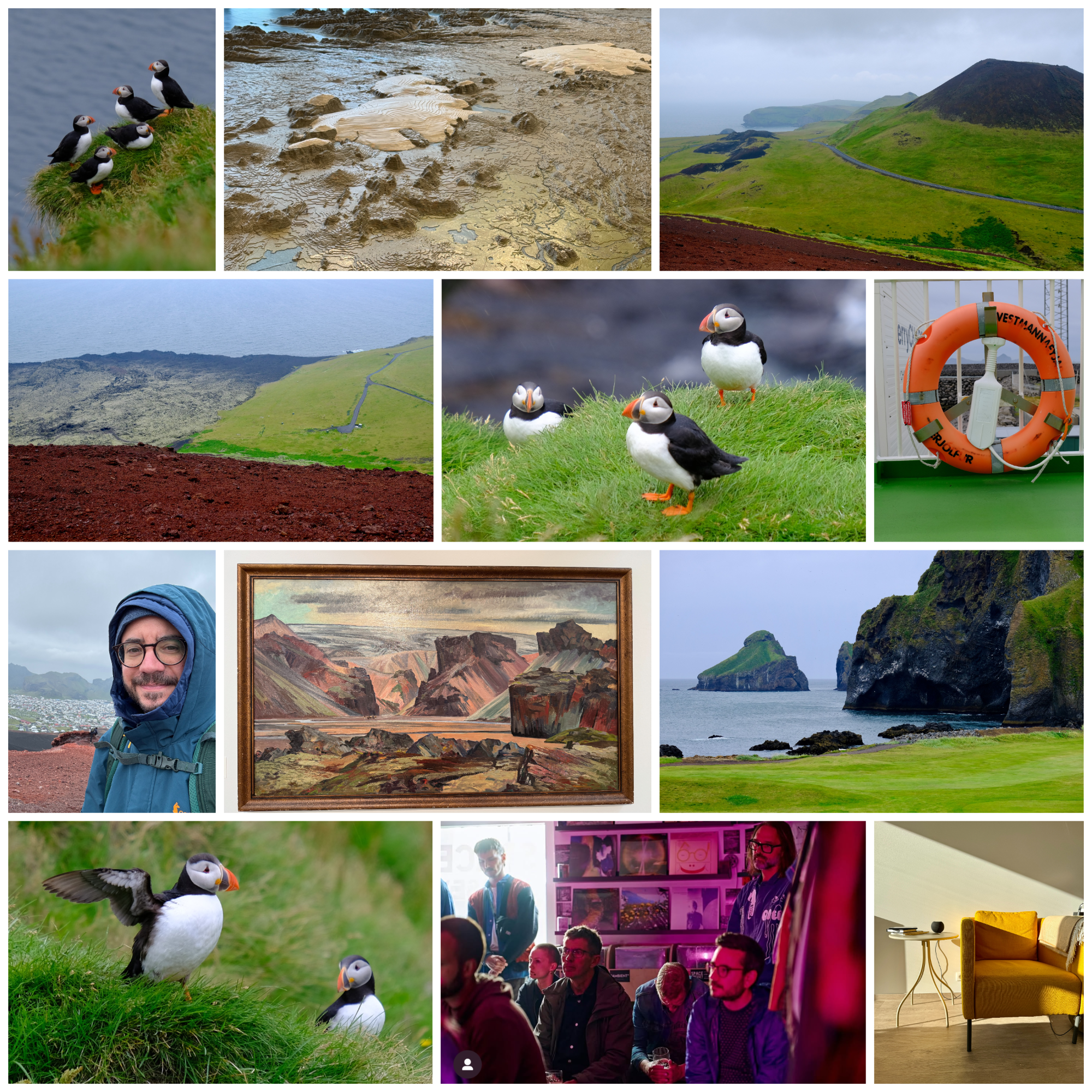
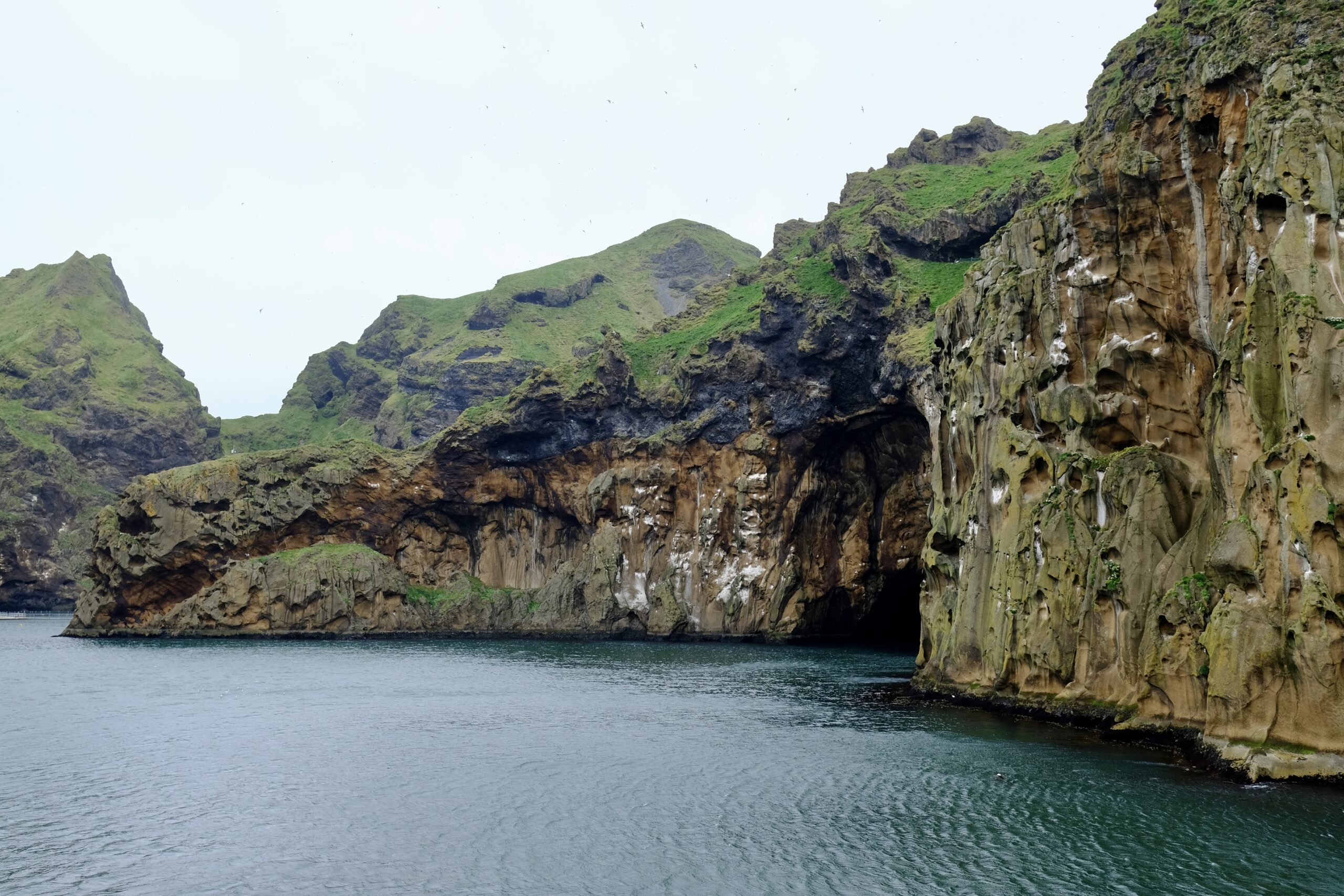
Last week started with a day-trip to Vestmannaeyjar, or the Westman Islands, an archipelago off Iceland’s southern coast that I’ve wanted to visit for a long time. Of course I did — it’s an island off an island — I’m always up for the next most isolated spot. There were a couple of things I knew about Vestmannaeyjar ahead of time: a volcanic eruption forced an evacuation in 1973 and it’s home to Europe’s largest puffin colony.
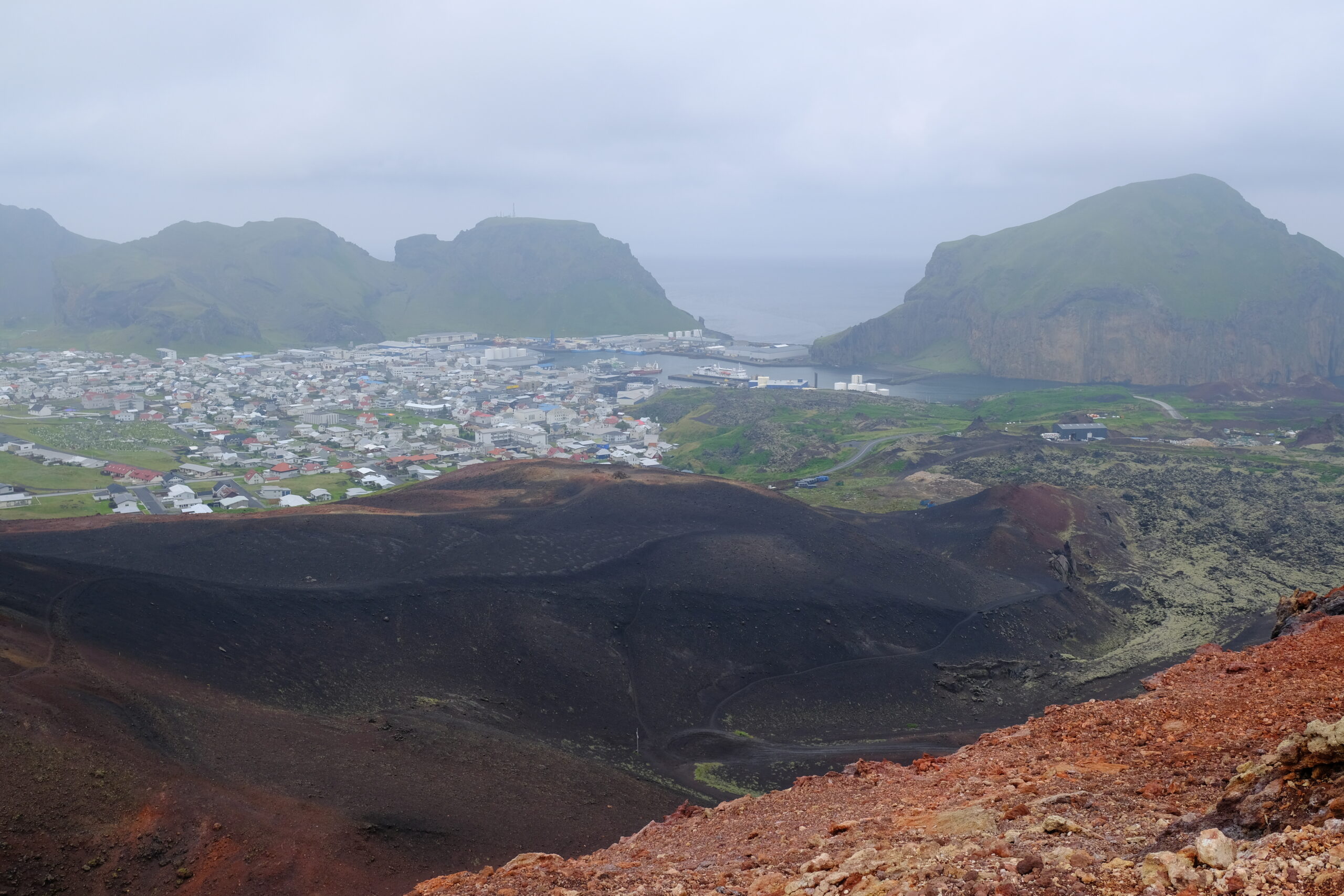
View from the top of Eldfell volcano
The cliffs along the harbor

Over the last few years my interest in the islands was piqued by a few different pieces of media. The first was a movie called The Deep, a 2012 Icelandic film about the real story of a fisherman who survived a shipwreck and managed to withstand the cold of the North Atlantic for 6 hours while he swam home to Vestmannaeyjar, eventually walking dragging himself to shore and walking home across the lava fields. Great film, but hard to find.

Luckily the other two are readily available, and both about puffins. First is the 20 minute documentary Puffling (full video on Vimeo) that follows people on Vestmannaeyjar as they work to rescue baby puffins (which are called pufflings!) that get lost in the town and need to be taken back to the cliffs. And finally the New York Times Magazine writer Sam Anderson recorded a podcast about his experience of traveling to Vestmannaeyjar and rescuing pufflings. I highly recommend both.

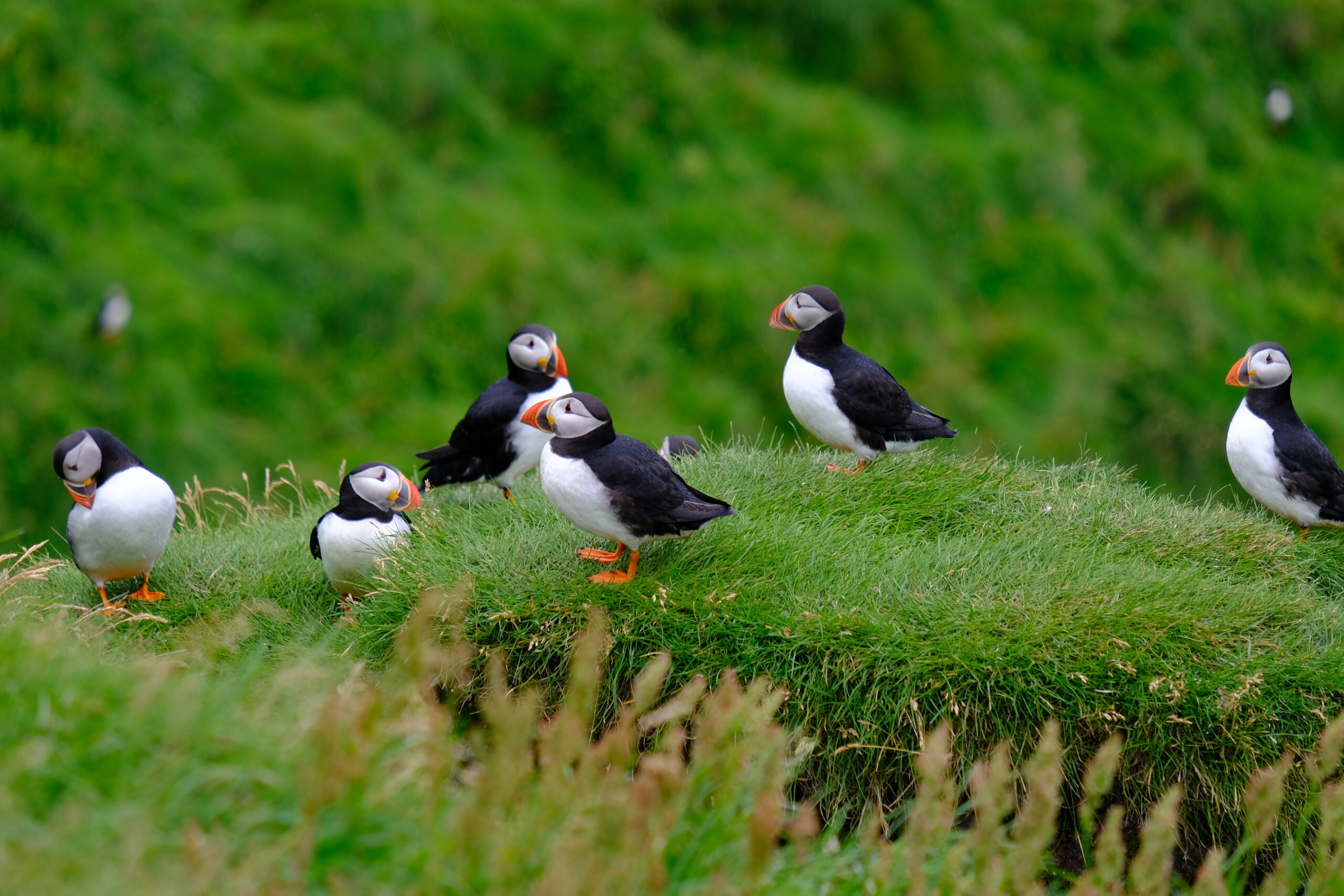
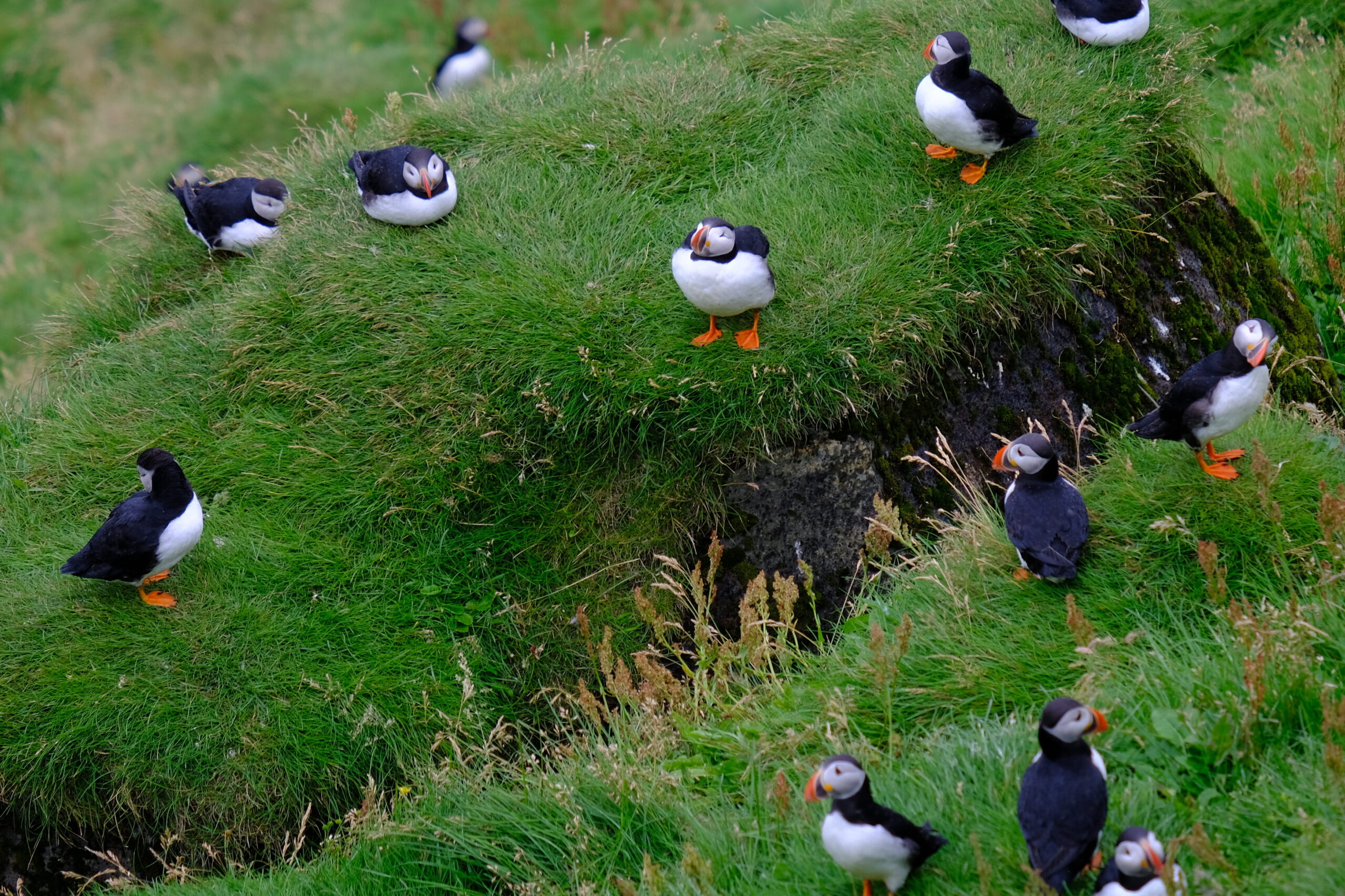
I didn’t get a chance to save any lost pufflings, but I did get to see hundreds, if not thousands on the Stórhöfði peninsula, the southernmost tip of Heimaey island. The only experience I can compare this to was visiting Mykines island in the Faroe Islands in 2018. There, we walked amongst the burrows, watching puffins poke their heads in and out. The cliffs on Vestmannaeyjar are too steep for that, you’re looking down and across at a hill filled with burrows. But the number of puffins is noticeably greater and there is a small viewing shack that can shield you from the weather.
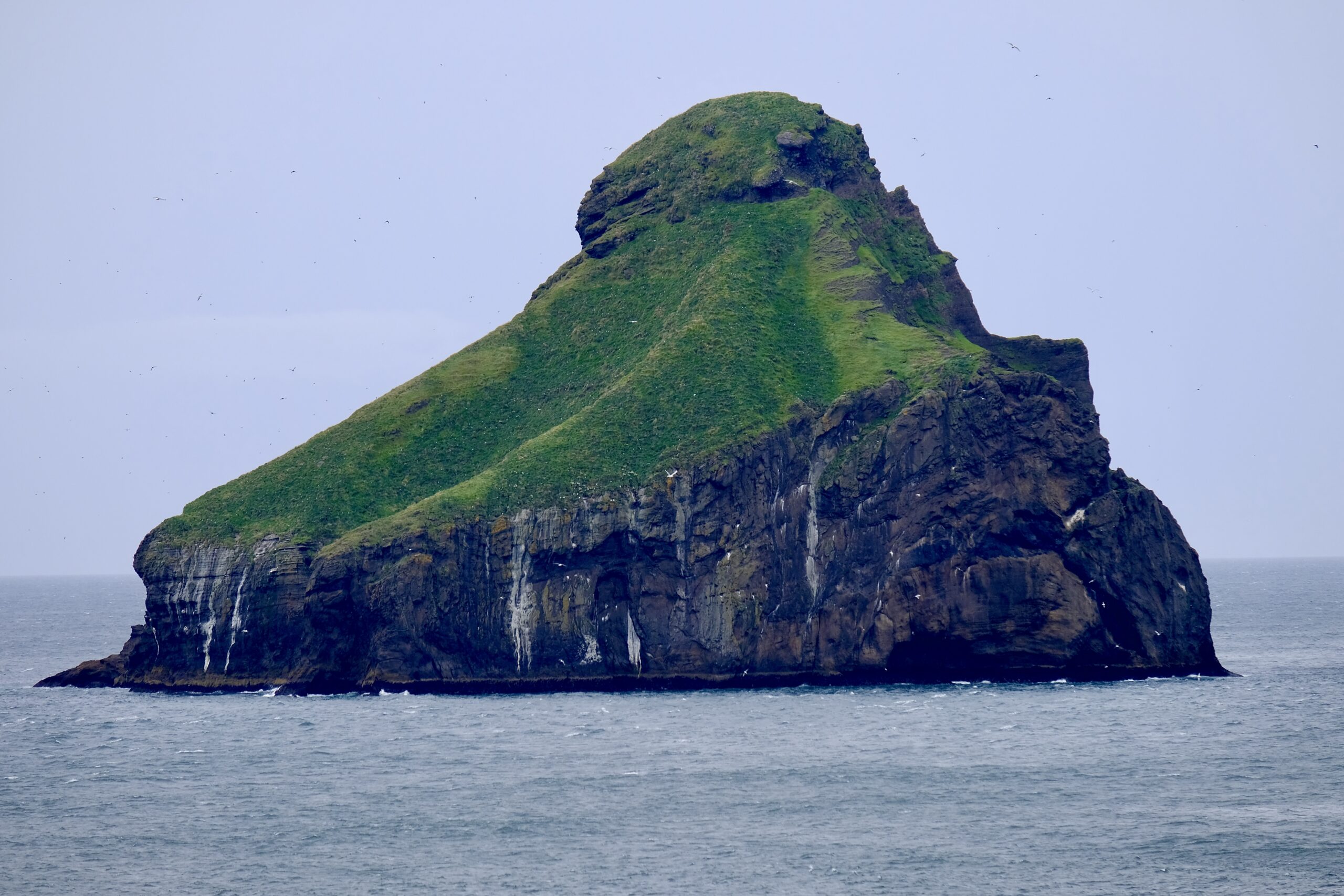
In general, the Westman Islands reminded so much of the Faroe Islands, especially the uninhabited rocks standing alone with a forbidding lack of shoreline. There are 16 islands in total, of which only Heimaey is occupied, but 6 others have a single hunting cabin perched on them, like an isolation look-alike contest with the Faroes’ Stóra Dímun. The southernmost island of Surtsey is brand new, having been formed by a volcanic eruption in just 1967.
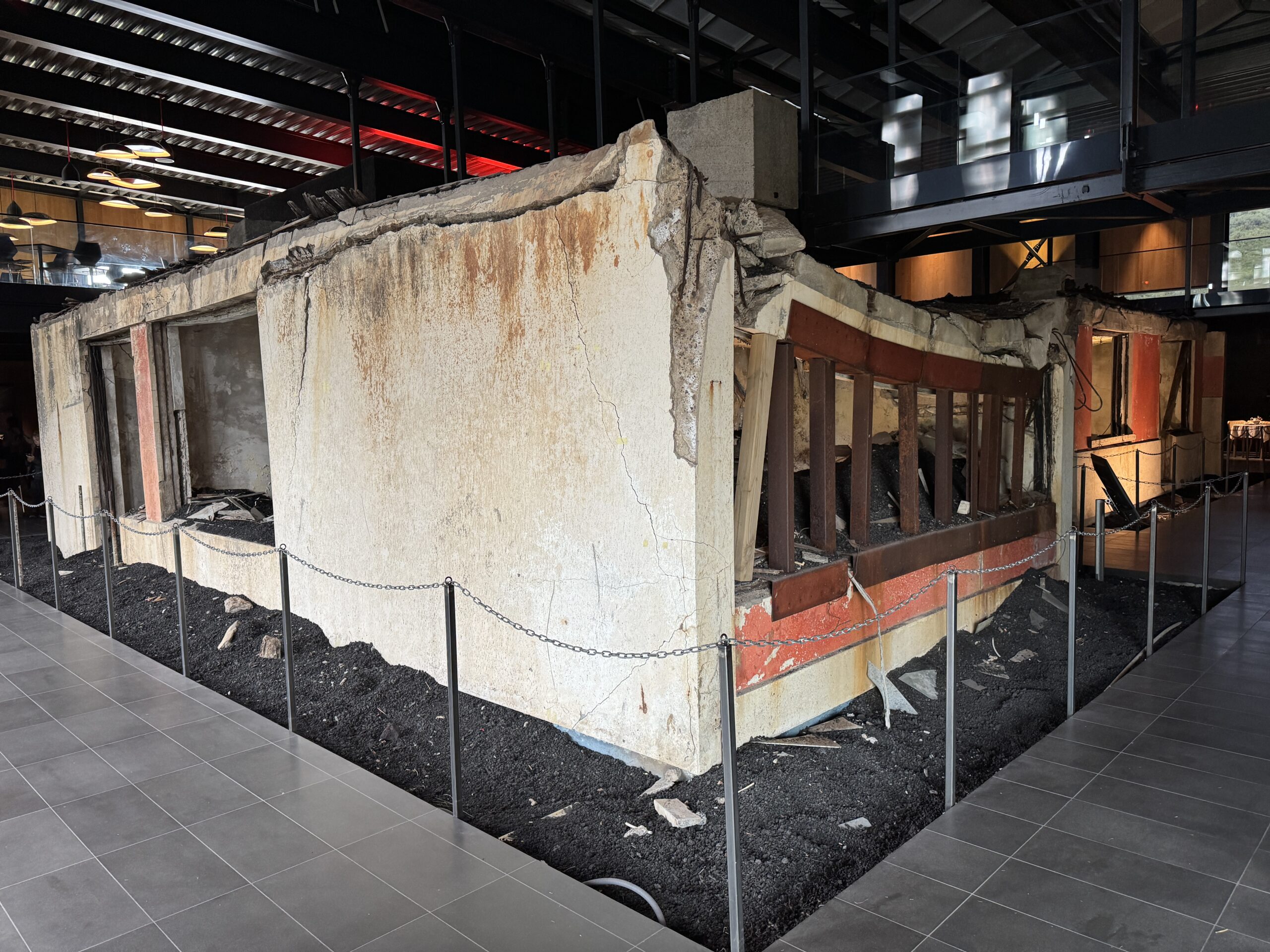
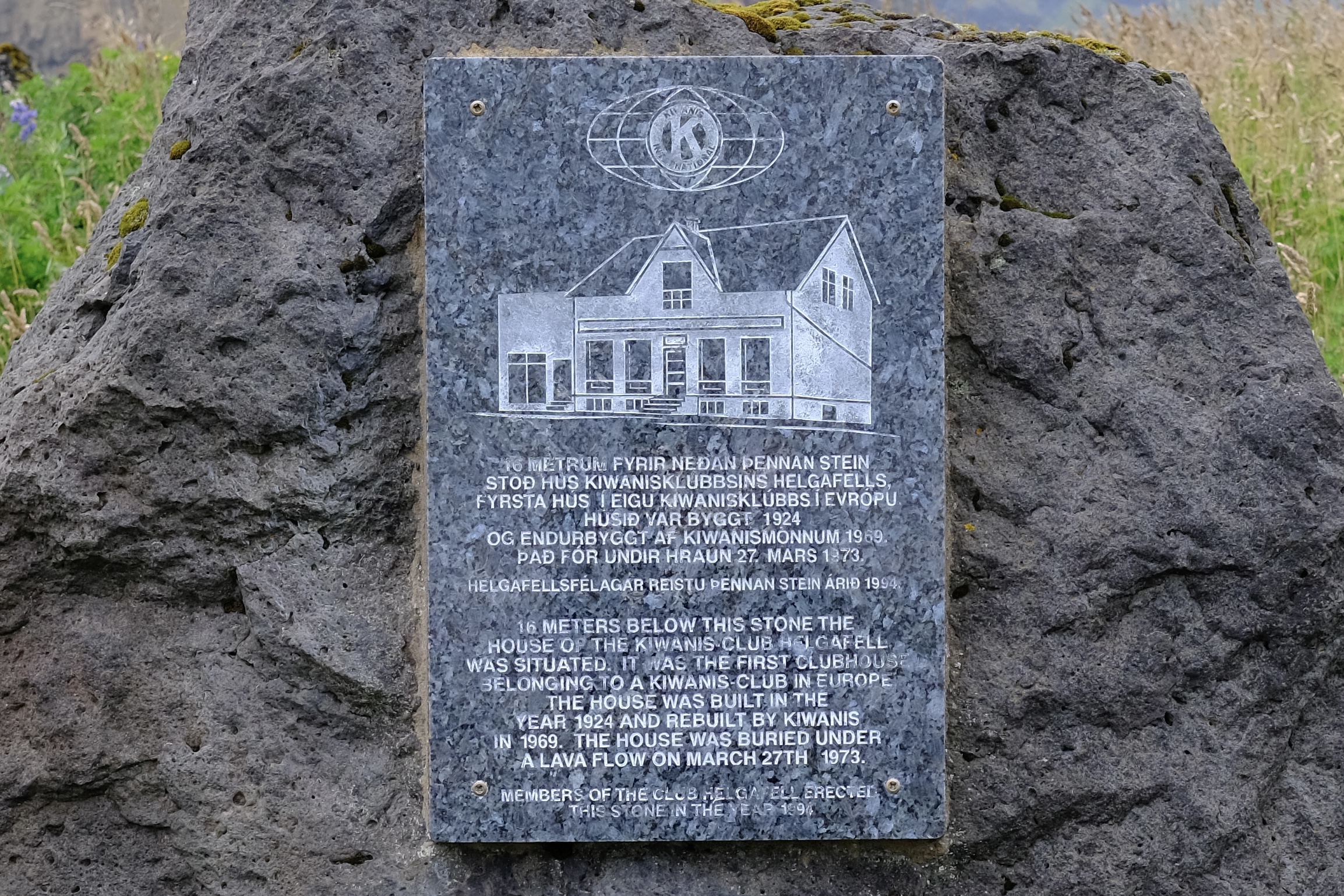
I also hiked to the top of the Eldfell volcano, the one that erupted in 1973 covering the town in ash and lava. It’s an amazing view from up there, and provides a sense of scale to the eruption and destruction. What are now lava fields were once houses, and as you walk through them there are signs indicating a house, or the church, or the power plant is buried below you. The Eldheimar museum memorializes and tells the story of the eruption, and it’s incredibly well designed. The museum building itself is constructed around a house that was excavated from the ash and left in situ.
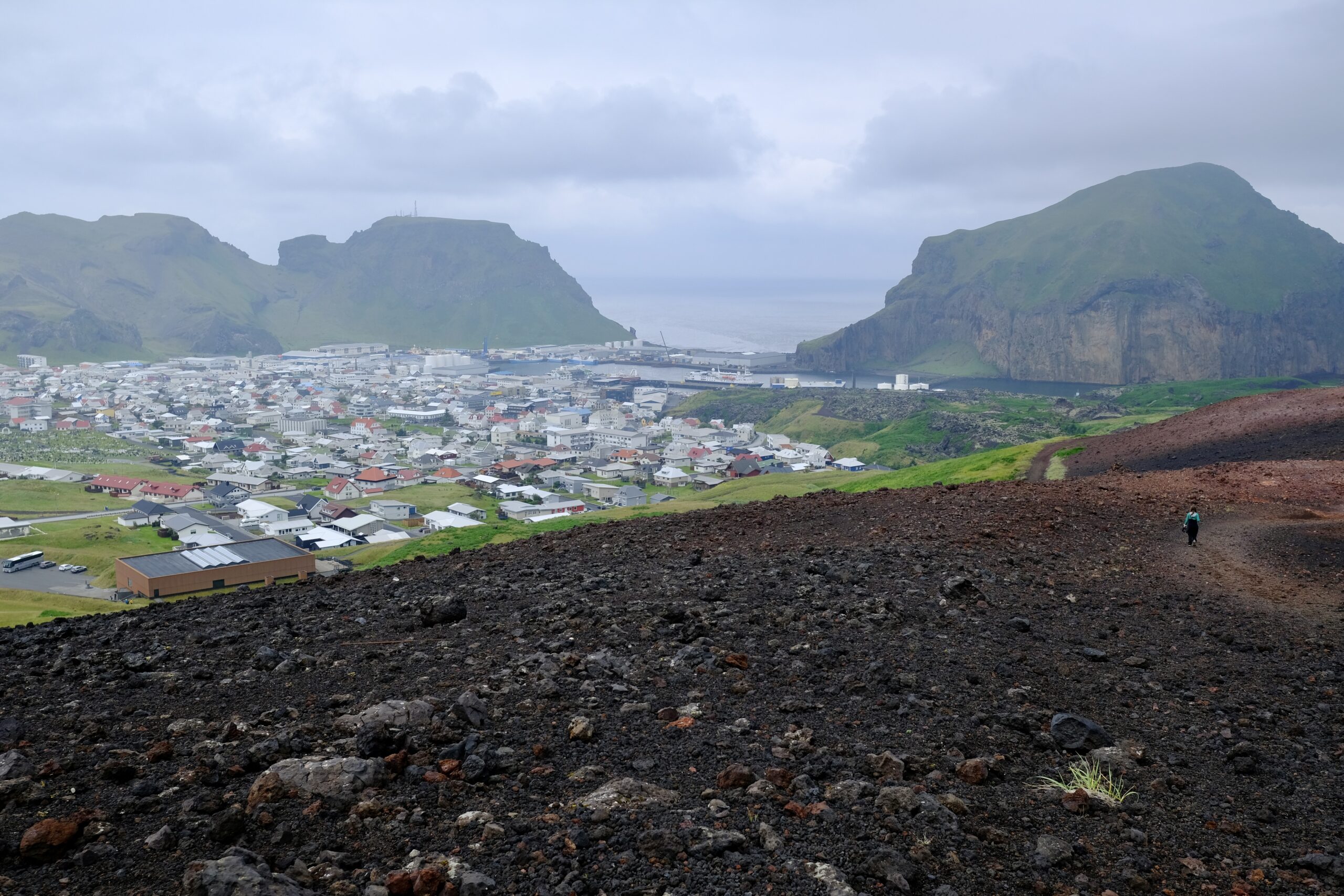
The Eldheimar museum is the building in the bottom left.
The old Kiwanis Club is 16 meters below this plaque.
An excavated home that was completely covered in ash during the Eldfell eruption in 1973

In other news, I finally completed all of the administrative tasks I’d been working on. I got my residency card, after going back to the Directorate of Immigration in person to nudge them to complete it. That opened up the ability to upgrade my phone plan to full capabilities. I also got my student ID card from the University of Iceland, which gives me access to buildings after hours and entitles me to various discounts like a half-price monthly bus pass. I also made a second trip to IKEA and a local retailer Elko, and now have pretty much everything I need for my apartment.

I’m certainly not jet lagged anymore, three weeks in, but I do feel oddly time shifted in various ways. It’s probably a combination of the time zone (4 hours ahead of Eastern) and the fact that the sun doesn’t set until midnight. It’s an awkward shift, because just as I’m looking to get some sleep the work day is ending in the US, the news recaps are available on my podcasts, and many people I know are getting off work. Also, I think my body is confused by the temperature, which is in the 50s and I’m wearing a puffy coat every day. Don’t get me wrong, I very much prefer this to sweltering heat, but my body still gets confused that it’s August.

Noted & Done

Iceland: Week 2

My first week in Iceland had a lot of necessary logistics and administrative tasks, getting settled in my apartment and wrapping my head around living in a new country. But in my second week I was able to start exploring, not just around Reykjavík but more broadly into the countryside and Highlands.

The week began with my mind back in the USA since Emoji had a vet appointment to clean his teeth and extract at least one. My little guy is an old man by dog standards, and because of his heart condition it always makes me nervous when he has to go under anesthesia. The procedure went okay, but when they got a better look during surgery they discovered that many additional teeth needed removal — they extracted 14! Apparently dogs have ~42 total, but given that he’s lost 10 in the past that means he’s down to less than half. He’s doing okay, but every dog owner on the streets of Reykjavík can attest to me missing him as I stop for lengthy conversations with their pups.

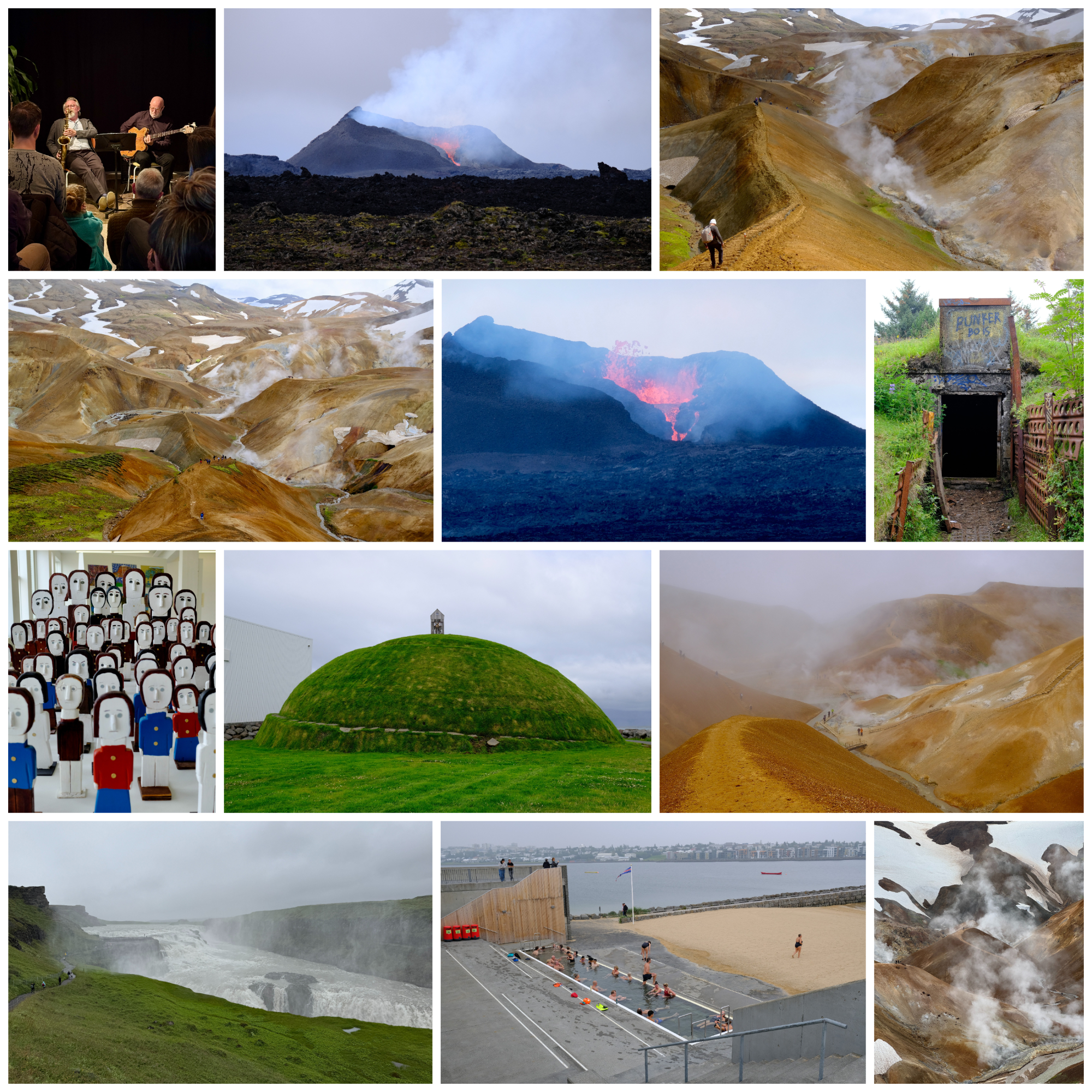
My city explorations this week were long exploratory walks, reaching beyond the tourist streets to find myself on industrial corridors and inside abandoned WW2 bunkers. I’ve always liked to see a city this way, through the alleys and backyards. I hiked around Öskjuhlíð, a forested area near the Perlan Museum, walked along the southern coastline penned in by the domestic airport, and stumbled upon unexpected finds like the clubhouse of the Icelandic Radio Amateurs (ÍRA). I hugged the edges of the harbor through the Grandi District, stumbling onto gems like the The Living Art Museum hidden among the fishing trawlers and shopping centers.

But more importantly, I got outside the city. Classes for my graduate program don’t start until August 18, so my goal is to take advantage of my flexible schedule before then to see some parts of Iceland that I’ve never visited before.

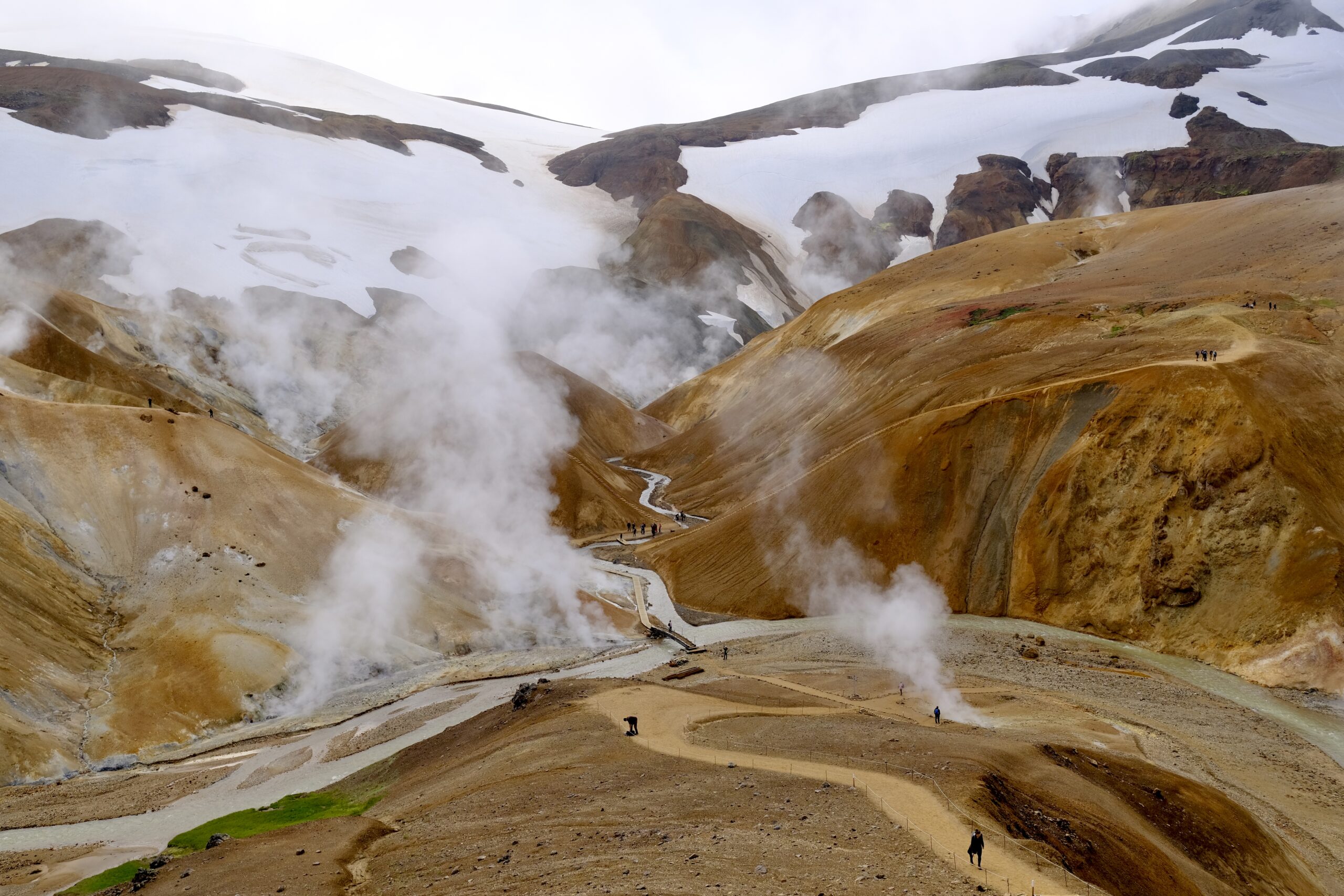
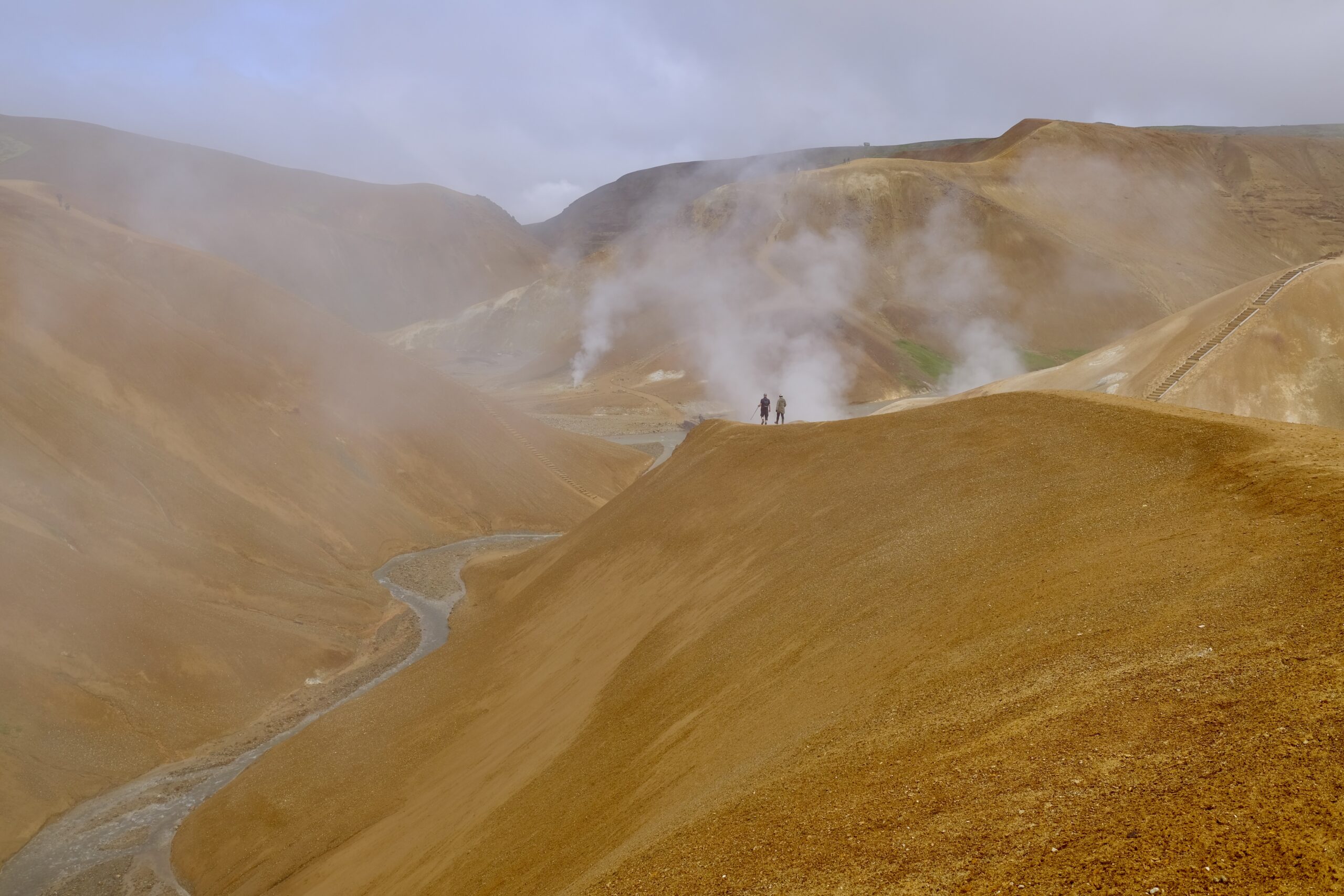
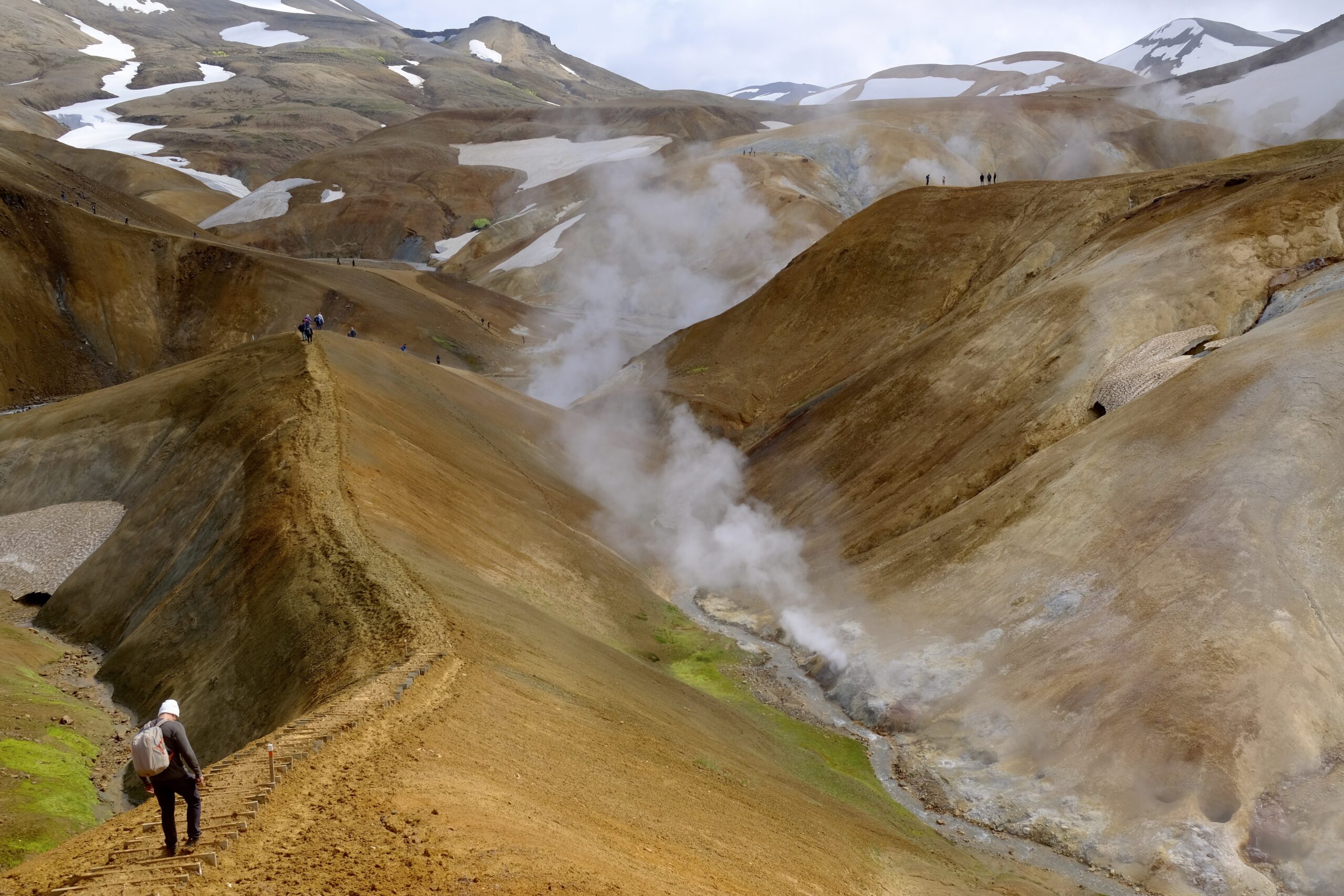
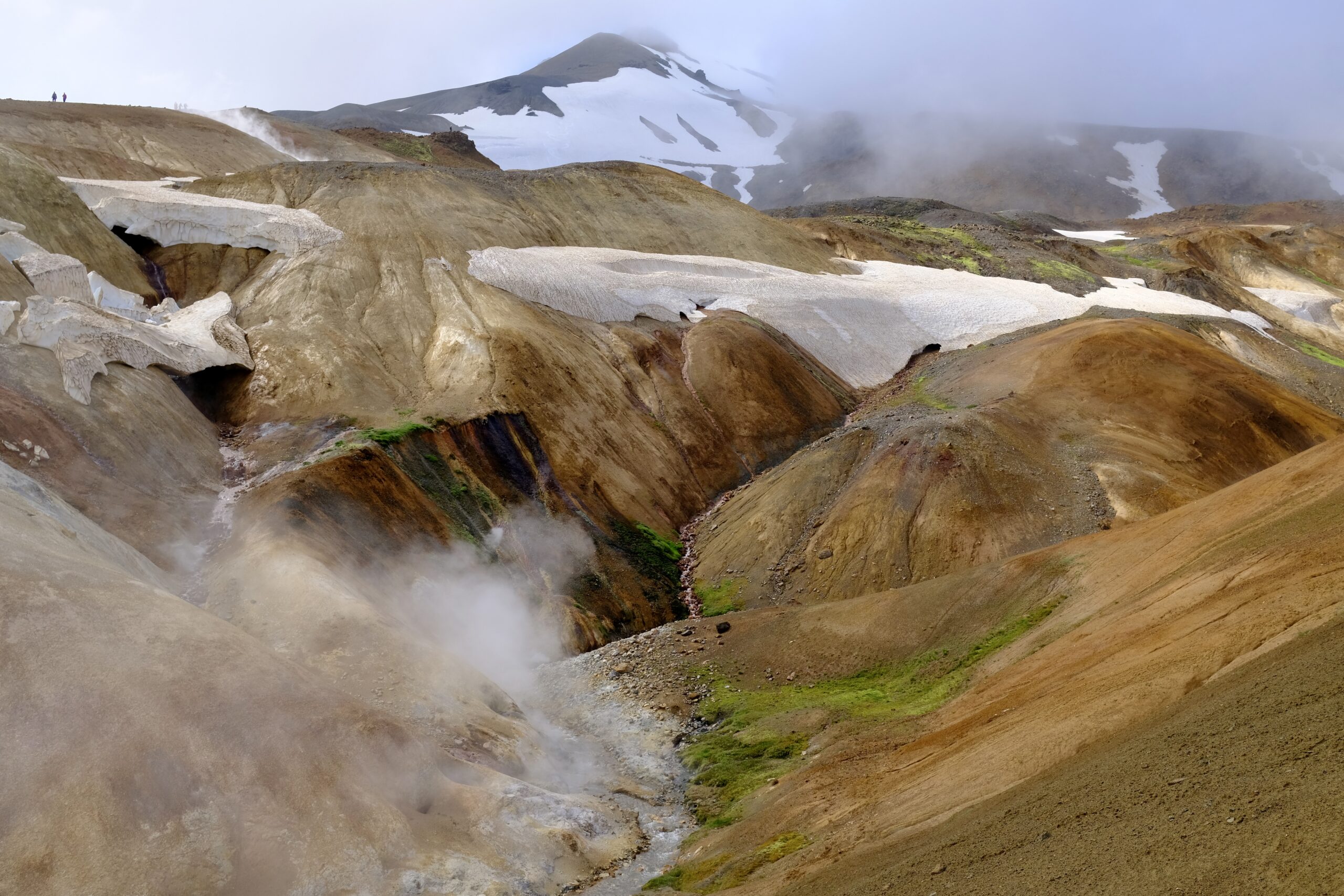
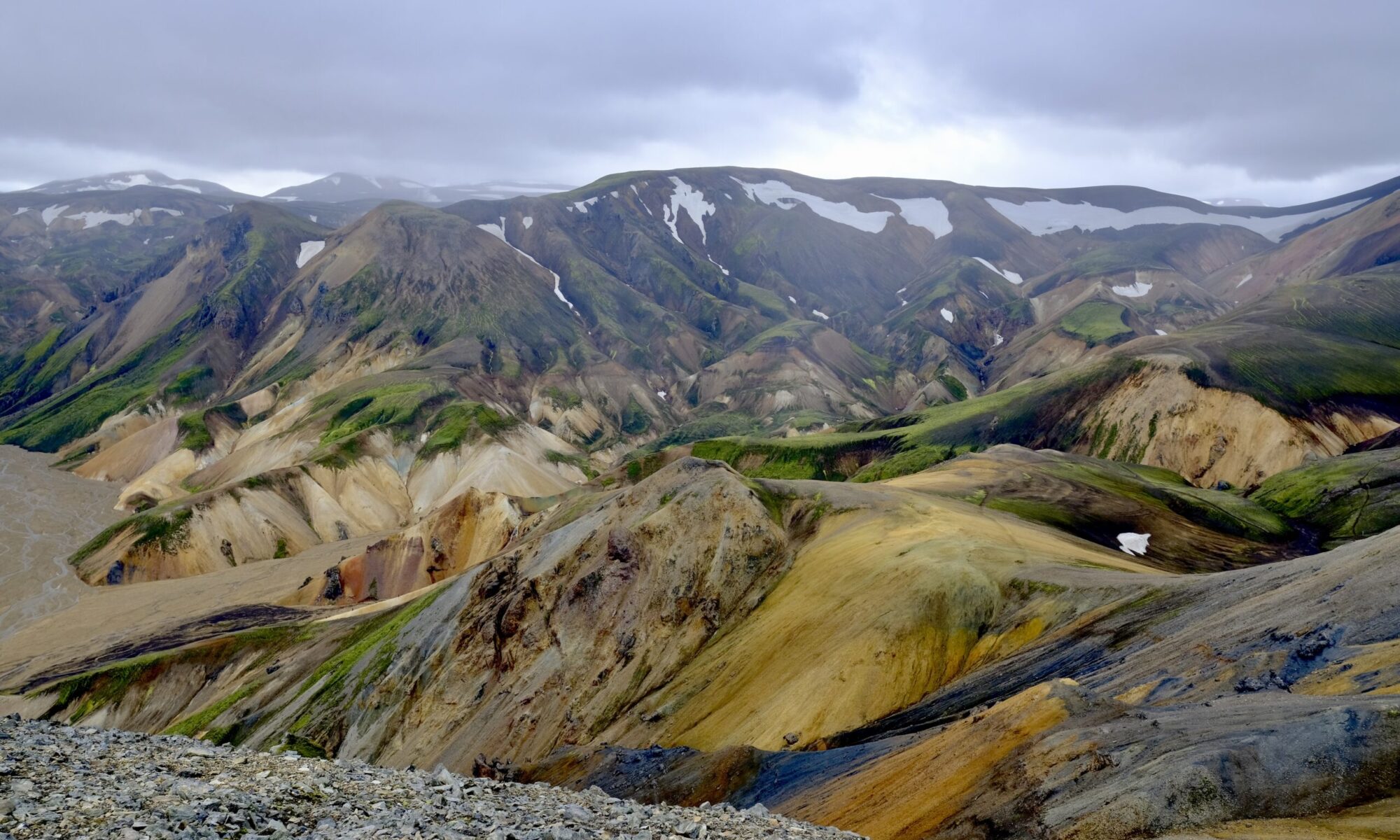
On Wednesday I went to the Hveradalir geothermal area in Kerlingarfjöll, a mountain range in the Highlands between the Langjökull and Hofsjökull glaciers. It’s an stunning place, where boiling waters create steam that billows through the muddy hills, mixing with fog to continually obscure and reveal the mix of greens, browns, reds, and snow white of the landscape. I was in Yellowstone earlier this summer, which felt like a geothermal opener to this main act. The hills were steep and muddy, and the slow ascent and decent of other hikers provided a useful sense of scale when looking out over the vast landscape. This was my first time in the Highlands, and I loved it. The road there was as rough as I’d been warned about, probably the worst I’ve experienced outside of Costa Rica, but landscapes were otherworldly.

The view as you enter into the Hveradalir geothermal area in Kerlingarfjöll.
Most of the hiking paths are along these ridges, which are reinforced with wooden planks on the steepest parts, but given the mud I should have brought my hiking poles for stability.
This view came just after descending a portion that was completely fogged in, with maybe 15ft visibility. The weather varied a lot over the hours that I was there.
Snow lingers through late July. Our guide showed me a photo from earlier in the Spring where his van was driving through recently plowed snow that formed a tunnel as tall as his vehicle.

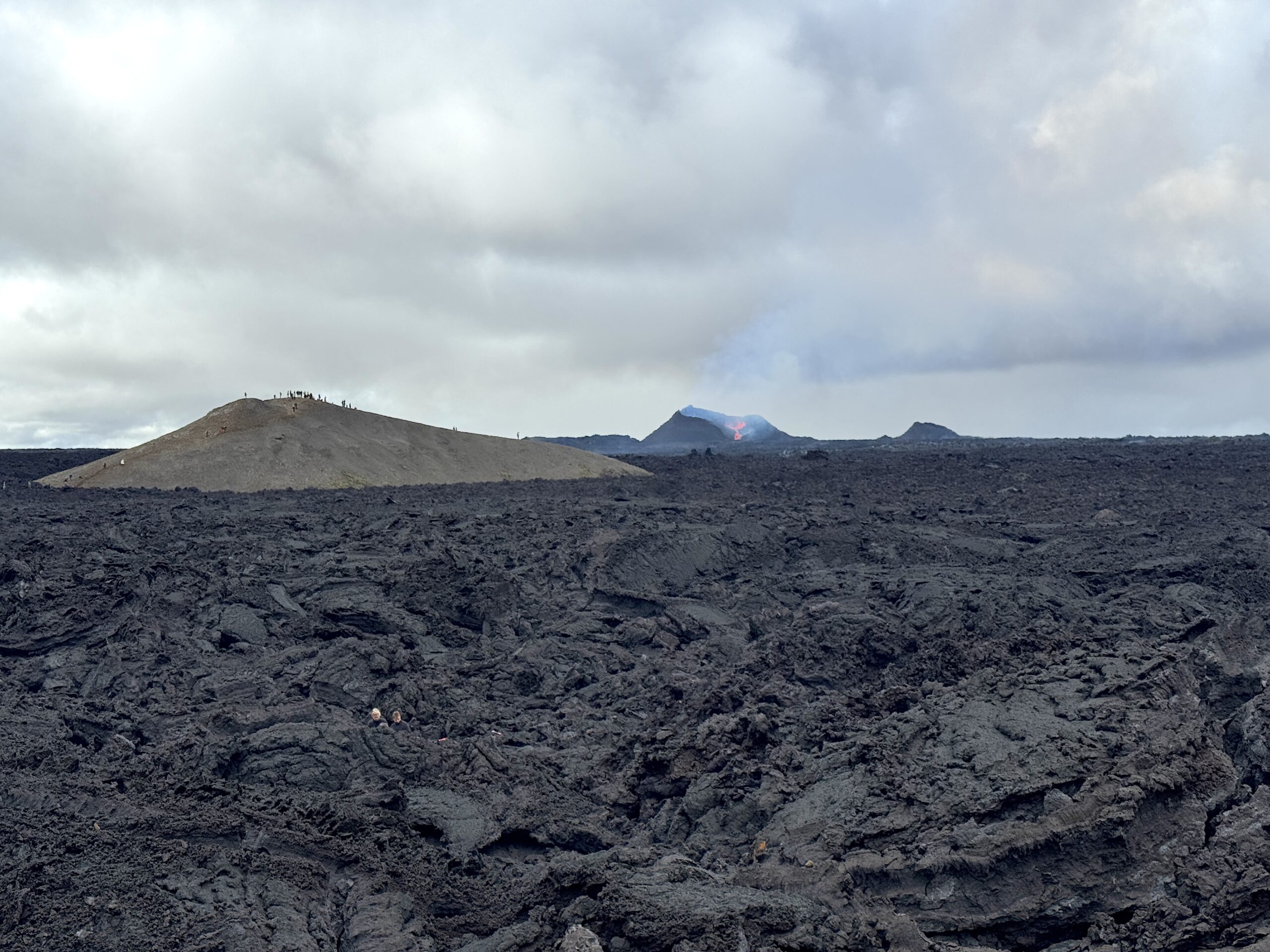
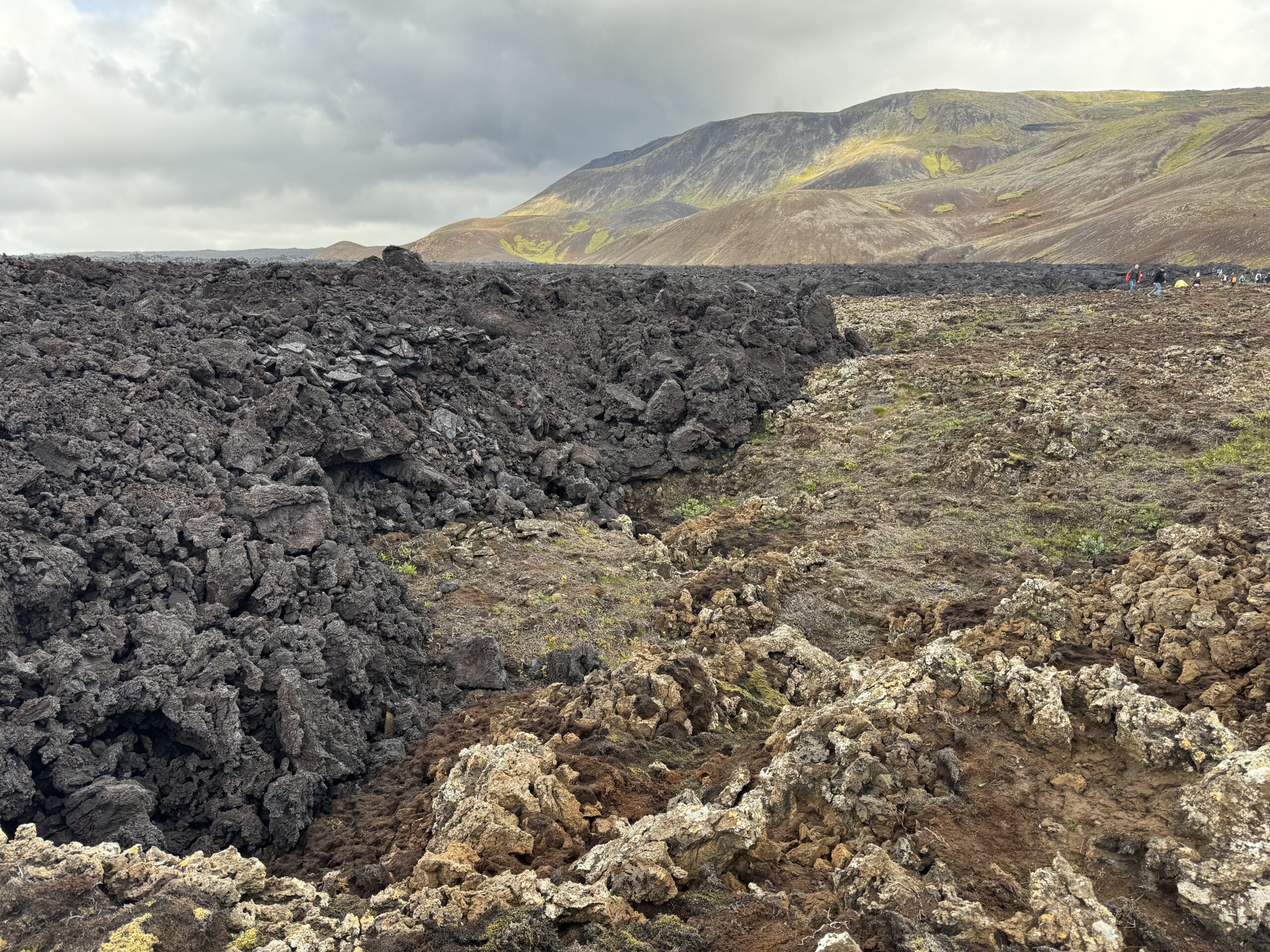
I also went to see the volcanic eruption happening on the Reykjanes Peninsula. Last week the Sundhnúksgígar fissure had its 9th eruption and while it had calmed down a lot there was still a chance of seeing flowing lava. So on Saturday I joined a group heading down the peninsula, and hiked in to a newly established viewing area roughly a mile from the most active crater. There was a hill at the site, completely surrounded by recently cooled lava flows. I couldn’t miss the opportunity to walk across that field to see newly created lava spouting from the closest and highest viewpoint, although now I see that there is official guidance against doing that. 😬

It rained sporadically, which hissed and turned to steam as it filtered through the cooled and blackened crust of the lava’s exterior and hit the molten core. In the shortened distance from the top of the hill I could see with my naked eyes the magma spewing violently from the crater and a river of lava flowing down directly into the field between us. It’s honestly quite humbling to witness the power of the earth like this, a fact that was reinforced on the drive back as we saw where flows from previous eruptions had encroached on the town of Grindavík and destroyed roads and pipelines in the area around the Blue Lagoon.

A closeup video of the eruption, shot through my 50-200mm Fuji lens. Good for capturing, but my binoculars provided the best view.
The lava field from the recent eruption, with the hill I climbed up for a better view.
The edge of the lava flow, which I was told advanced about 20 meters since the day before. If you peered in closely in certain spots you could see the red hot lava underneath. Near the edges it also smelled of burning, likely from the moss it was consuming as it advanced.

Noted & Done

  • Got my pool card, which I can use at any pool in the city of Reykjavík.
  • Saw Victor Shepardson at Nordic House.
  • Saw Tonik Ensemble at Nordic House.
  • Saw Skúli Sverrisson & Óskar Guðjónsson at Mengi.
  • Figured out the laundry situation in my apartment building.
  • Waited to hear back from the Directorate of Immigration about my residency card (I was supposed to get it this week).
  • Finished reading Your Absence Is Darkness, a novel by Jón Kalman Stefánsson. It’s the third book I’ve read by him, and like much of Icelandic literature and movies it’s both beautiful and tragic.
  • Visited the Gullfoss waterfall on the way to the Highlands.
  • Visited the Seltún Geothermal Area on the way to see the volcanic eruption. A very interesting, if short, trail through bubbling pools and steamy ground. Similar in scope to some areas I saw in Yellowstone.