Iceland: Week 46

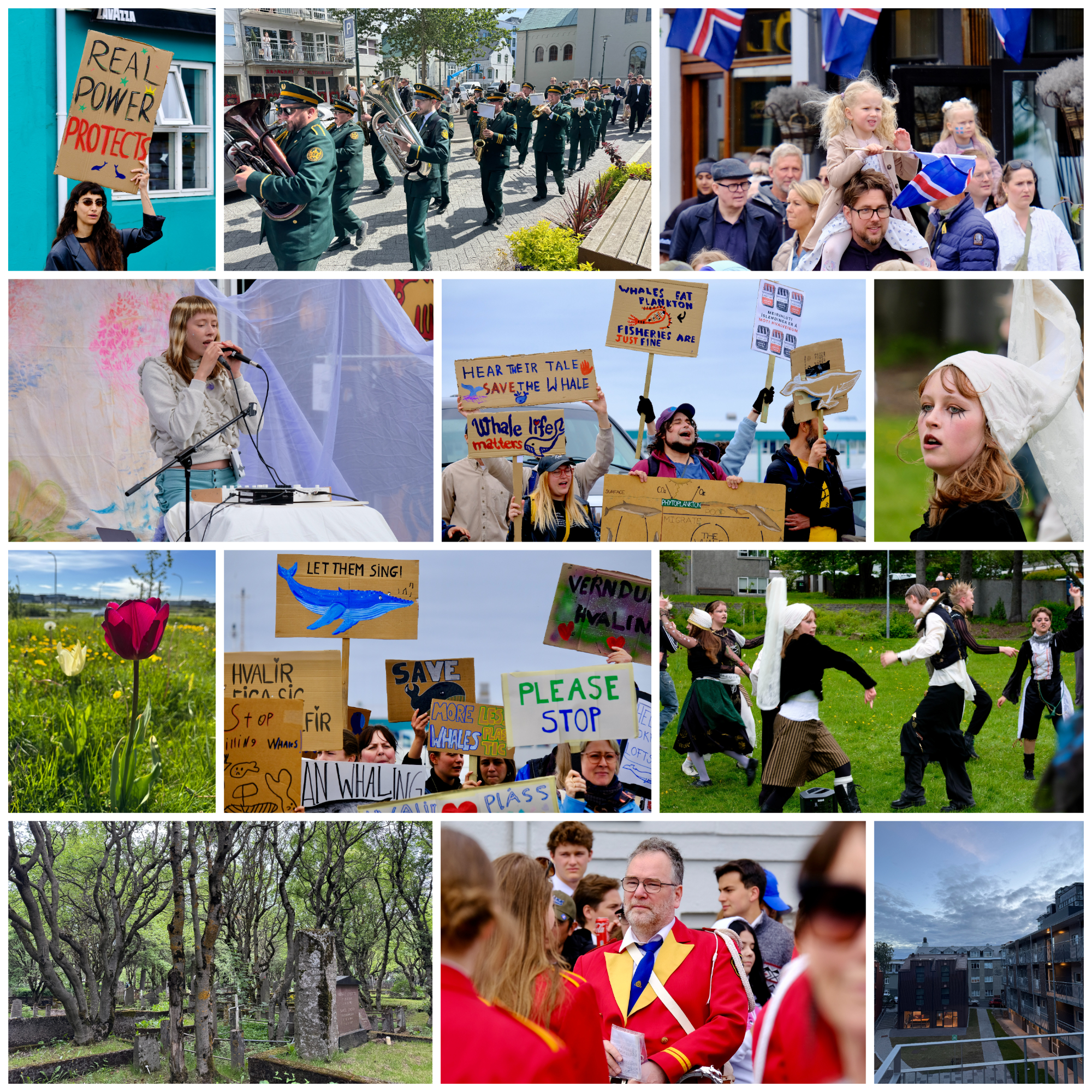
There are lots of parades in Iceland. This week’s parade was in honor of Icelandic National Day, when the country officially broke ties with Denmark to form an independent republic on June 17, 1944. Not to be confused with Sovereignty Day, when Denmark first recognized Iceland’s autonomy on December 1, 1918. Of course it’s a bit strange that at the time of independence Iceland was still under Allied occupation, but the celebrations this week didn’t dwell on that.
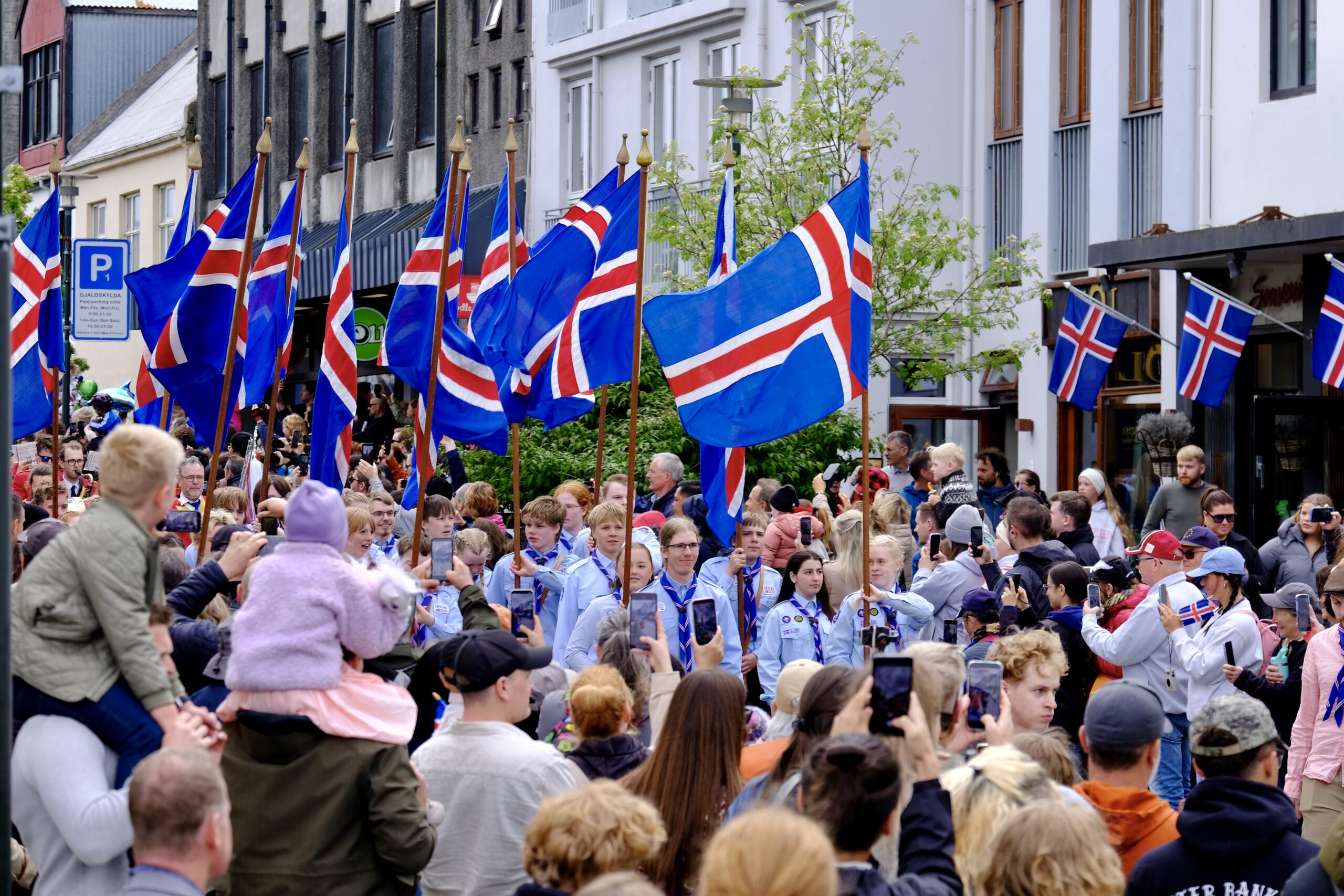
Parade for Icelandic National Day in Reykjavík

There are also lots of protests. Today’s protest was against whaling, a topic that flared up this week since Icelandic whaling ships returned to the sea for the first time after a two-year hiatus. This led environmental activist Hólmsteinn Harðarson to board one of the vessels, which then illegally registered him as a passenger and travelled with him against his will for three hours. Hólmsteinn was at the protest today, which concluded peacefully, but did involve an old man and his wife driving slowly past the crowd and flipping off the organizers. More photos on Instagram.
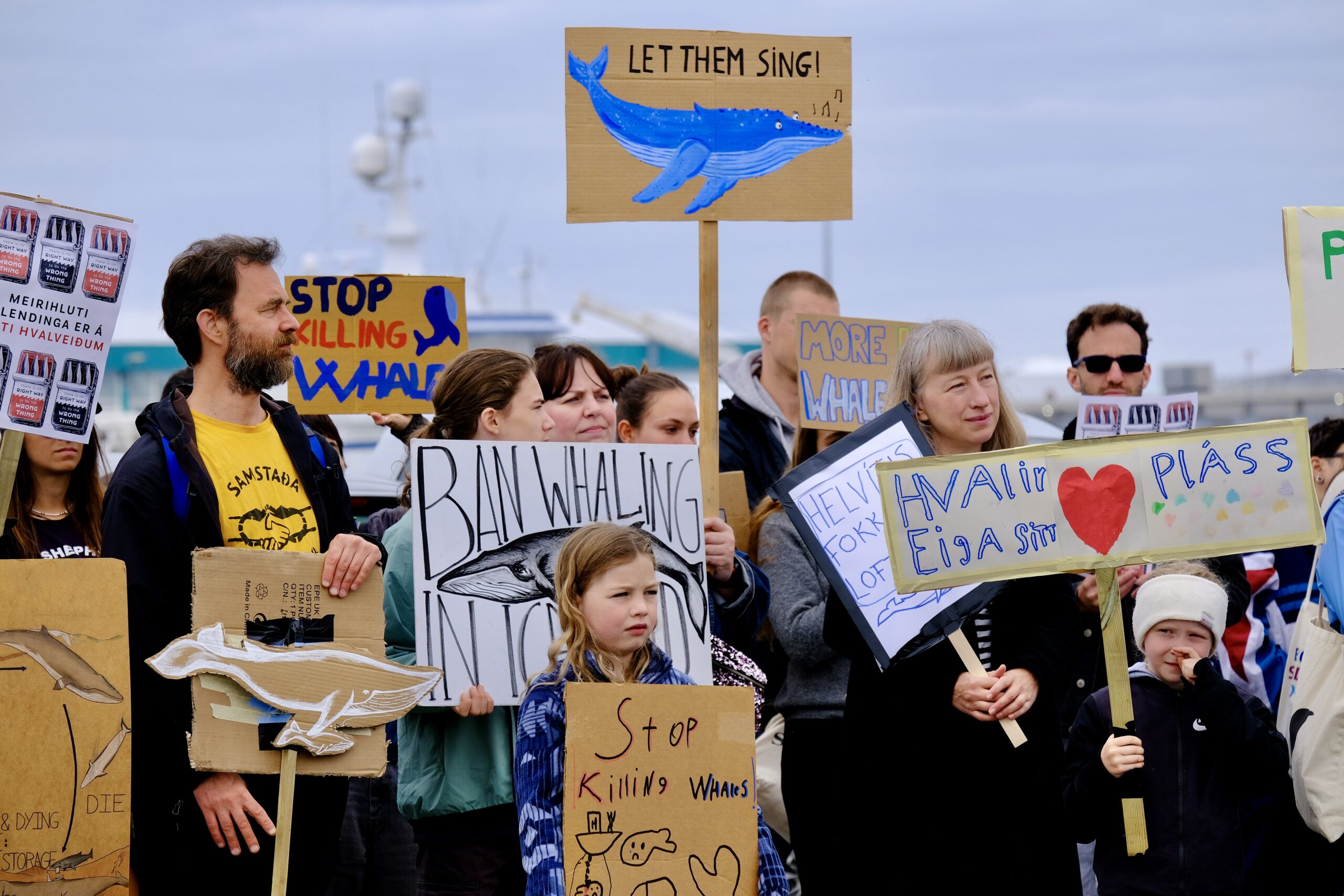
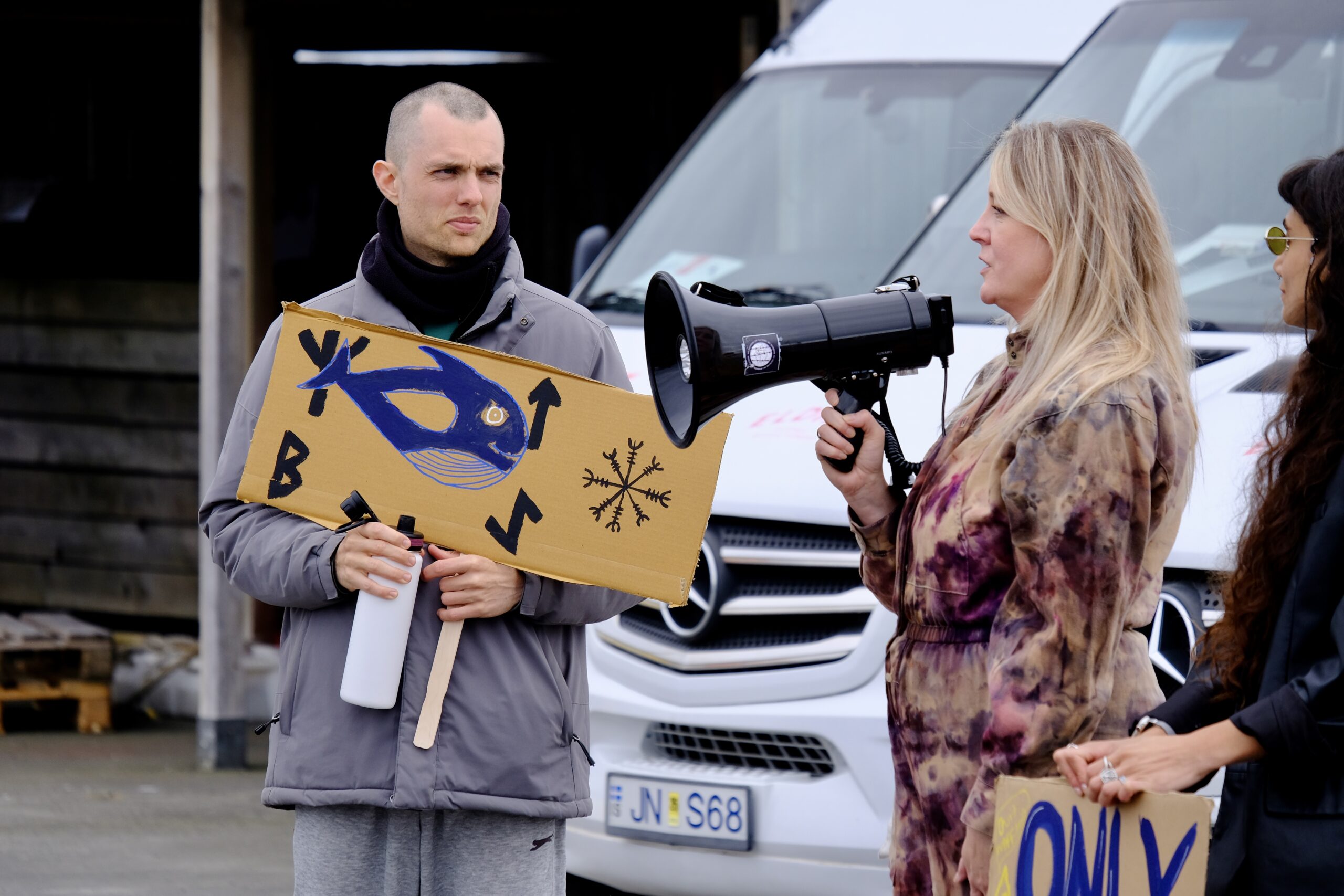
Anti-whaling protest in Reykjavík.
Hólmsteinn Harðarson, who boarded a whaling boat in protest this week.

On Wednesday, I attended a conference on National Security Dialogue: Democracy in an Era of Information Disorder at the University of Iceland, which focused on how disinformation continues to impact democratic institutions. This is an increasing concern in Iceland. As a small and isolated country, it has natural protection from many physical threats. But disinformation campaigns aren’t contained by oceans, and Iceland is a very digitally connected country. Moreover, I’ve seen firsthand how Icelanders use Facebook for everything, so they are susceptible to the peculiarities of a platform that has abandoned content moderation in the wake of Zuckerberg’s authoritarian contact high under the Trump administration.

The conference did not leave me hopeful. I thought the Icelanders who spoke failed to meaningfully address the challenges and that too many speakers leaned on ideas of education, media literacy, and traditional media funding as solutions. There’s nothing “wrong” with those ideas, but they’re woefully inadequate to address the scale and sophistication of foreign influence operations from actors like Russia, using technology like agentic AI. It reminds me of when I was at the CFPB, and the anti-regulation crowd wanted to focus on financial education instead of supervision and enforcement. Helping people identify fraud is fine, but stopping people who are defrauding them before it happens is better.

The one speaker who I was impressed with was Janis Sarts, Director of the NATO Strategic Communications Centre of Excellence in Latvia. He was on top of the current technical capabilities and challenges, including data poisoning of foundation models and AI agents simulating human behavior on social media to avoid detection. He also touched upon relationship bots, and how most AI girlfriend/boyfriend apps are from Chinese companies, speculating about the potential for a long-game AI honey trap.
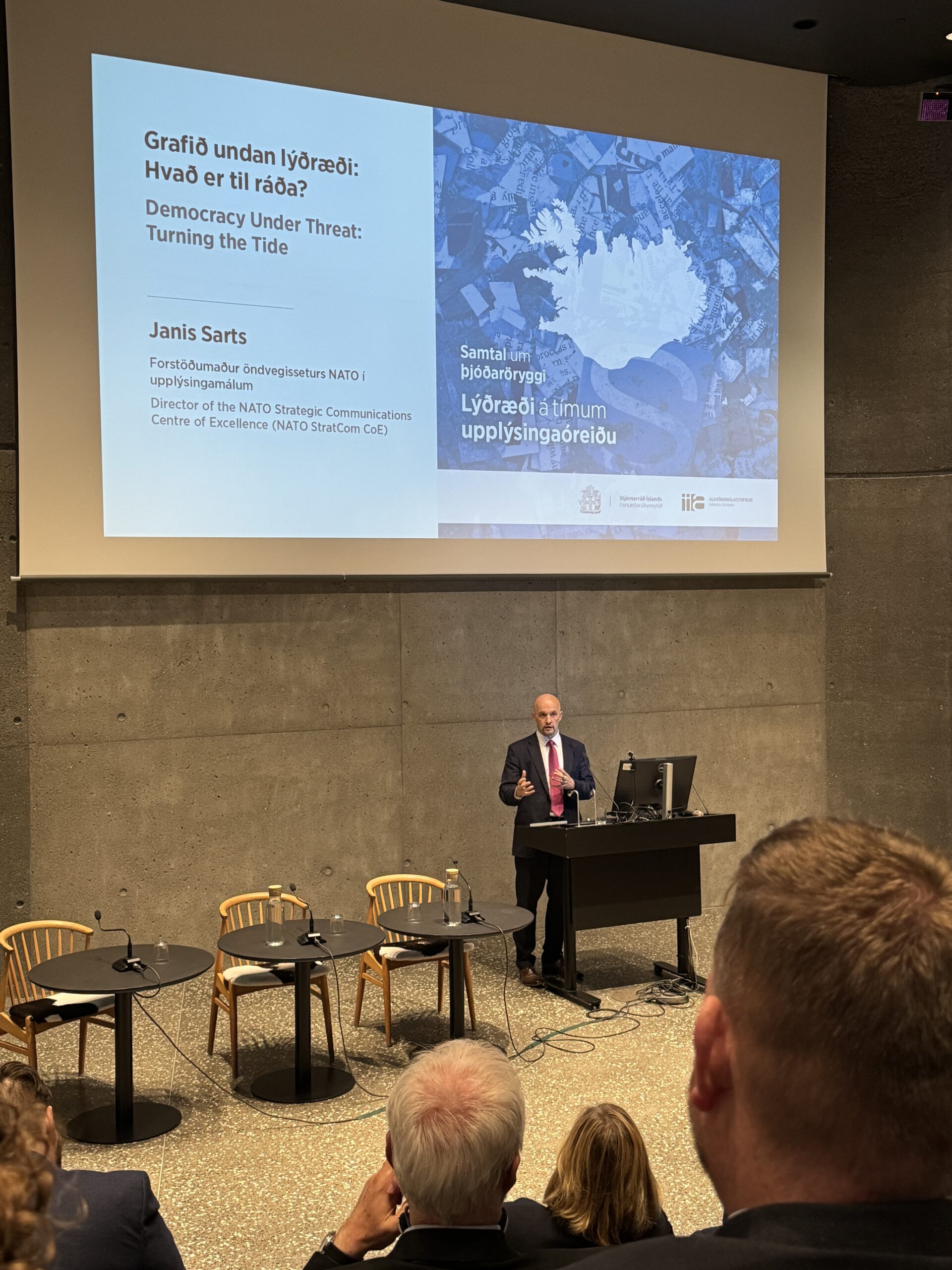
Janis Sarts presenting at the National Security Dialogue: Democracy in an Era of Information Disorder conference in Reykjavík.

In his view, AI will soon be the main force shaping people’s information reality, and it will be much worse than social media because at least there we could see and track the spread of disinformation, whereas the conversations happening on LLMs are hidden from view. On the topic of education, he pointed out how we all want to believe that critical thinking can have an impact, but his studies show that it rarely does. His group has successfully targeted their own soldiers to disobey orders and reveal GPS coordinates, even though those people had been trained in InfoSec two weeks before. The NATO center he runs seems to publish interesting reports. The one I bookmarked, and what he was surely drawing from in his talk, was Beyond Spam Bots: The Rise of AI-Powered Disinformation Machines and the Imperative for Strategic Response.

The conference was also the first time I’d seen Kristrún Frostadóttir, the Prime Minister of Iceland, speak. I honestly don’t know enough about Icelandic politics to say whether or not I agree with her stance on various topics, but as an American, the contrast to my own country is stark. Our country is run by an 80-year-old authoritarian grifter whose ignorance and corruption are a massive source of disinformation, a narcissist who shifts the blame for the fallout of all his idiotic actions. In contrast, Iceland has a 37-year-old woman leading the Social Democratic Alliance who used her 15 minutes at the conference to speak not only about the threat of disinformation due to technical advancements, but also about how politicians have to take responsibility for the fact that citizens who feel marginalized, or in need, are more susceptible to the influence of bad actors. It’s just nice to be around politicians who don’t make me feel like I’m losing my mind.
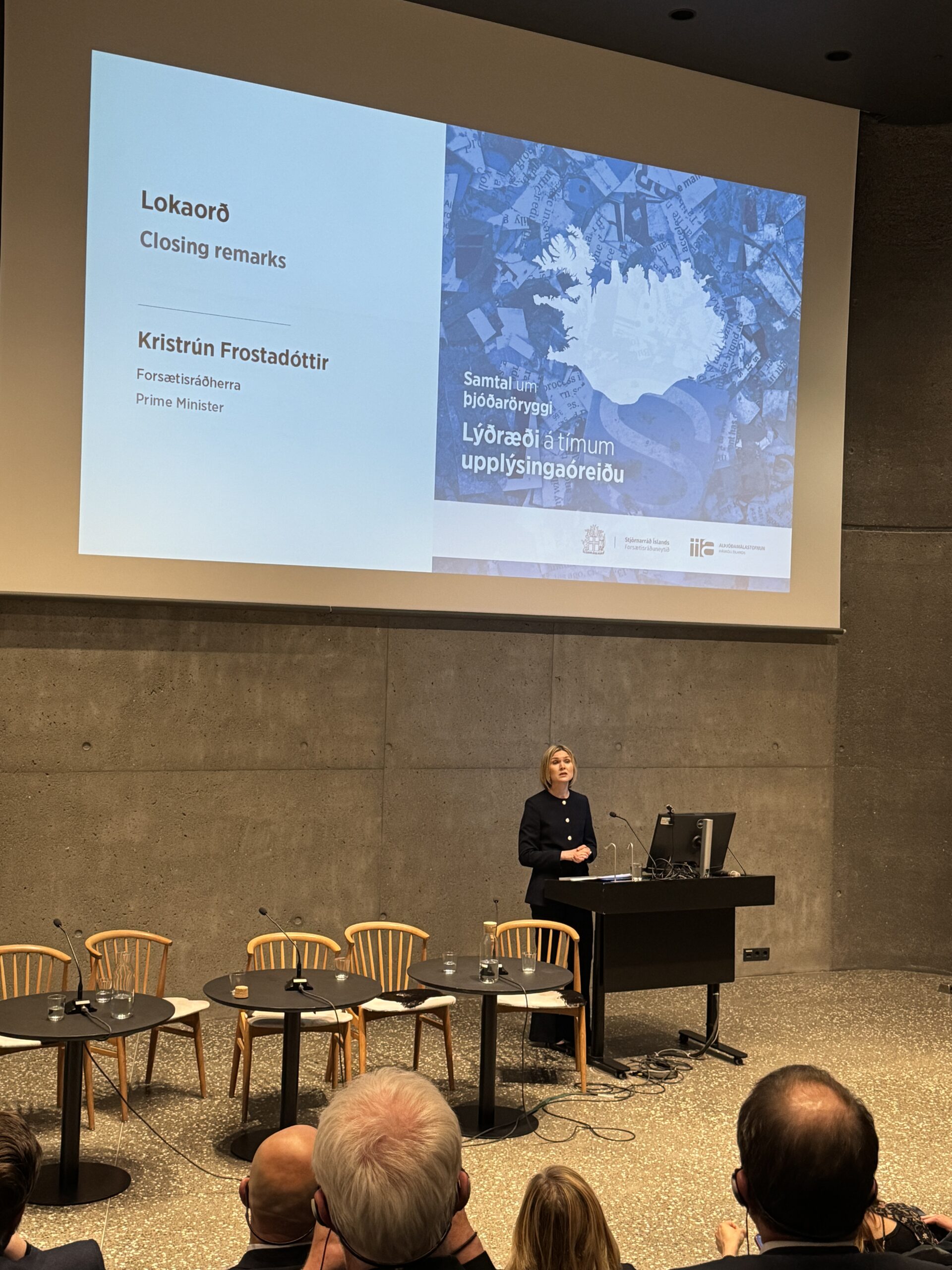
Kristrún Frostadóttir, the Prime Minister of Iceland, at the National Security Dialogue: Democracy in an Era of Information Disorder conference in Reykjavík.

In other news, my brother’s family arrived in Iceland yesterday. They are vacationing on their own for a handful of days before spending a few nights in Reykjavík. It’ll be great to hang out with them here. When Isaiah visited last December, it was almost as dark as it gets, and yesterday was summer solstice, so he’s getting to experience the extremes of daylight.

Noted & Done

  • I picked up my official Masters-level Certificate in International Affairs this week, which usefully came with an English-translated copy. I managed to achieve a level of First Class with Distinction!
  • I caught a set from Lúpína’s release concert marathon, where she performed her new EP six times over the course of the day. I think she’s one of the best new Icelandic pop musicians. She opened Iceland Airwaves last year, but still plays tiny free shows at Kaffibarinn. Listen on all the streaming services or her YouTube.
  • In Icelandic celebrity sighting news, I’ve now seen actor Björn Hlynur Haraldsson walking around town twice in the last two weeks.
  • I launched a major overhaul of the Personal Messaging system on Moped Army. The main new feature is the ability to attach photos, but in order to feel comfortable doing that, I had to build a whole new flagging and moderation system that will make it harder to abuse.
  • Bíó Paradís is showing World Cup matches next door to me, but I haven’t watched any yet. For those of you who are following closely, what’s a good matchup to catch?

Iceland: Week 14

Over the last three days I attended the Arctic Circle Assembly, the largest annual pubic gathering on Arctic topics spanning politics, science, security, and culture. Its inclusive framing means that people who might otherwise be siloed into their own fora bump up against each other, and a commitment to open dialog makes those overlaps more interesting. What that looks like in practice is that every session (including the plenaries) includes a Q+A where anyone in the audience can ask as question, whether the speaker is an academic, head of state, or military leader.

It’s me!

The assembly is obviously important to Iceland, and a key way for the country to position itself as an important figure in Arctic topics, especially in light of the so called Arctic 5 (US, Canada, Norway, Russia, Denmark via Greeland) sometimes excluding Iceland from certain decisions. The former President Ólafur Ragnar Grímsson is the Chairman of the Arctic Circle and moderates the plenary sessions, the former Prime Minister Katrín Jakobsdóttir is the Senior Emissary and Chair of the Polar Dialogue, and the current PM Kristrún Frostadóttir was hosted for a Q+A. Prominent political figures from many nations spoke and took questions, including US Senators Lisa Murkowski from Alaska and Angus King from Maine — although they Zoomed in due to the ongoing government shutdown in Washington.

US Senators stuck in Washington because Republicans refuse to fund healthcare.

The political conversations were tilted heavily towards topics of security in the Arctic, with concerns about the return of great power politics, Russian’s continued aggression and isolation, and China’s growing interest in the Arctic. Mirroring the situation within the Arctic Council, the primary governance body for the region, Russia was not present at this year’s event. Or rather, they were not there to represent themselves but were a backdrop in nearly every conversation. The Russian invasion of Ukraine has caused turmoil throughout the world but a look at the top of the globe makes it obvious why their exclusion from Arctic discourse is particularly problematic: the Russian landmass simply dominates the region. There were stories of individual scientists still finding ways to collaborate with peers in the Russian Federation, but these were few and far between. The only direct representative I saw on a panel was a Nenets woman who splits her time between Canada and her home in the Yamalo-Nenets Autonomous Okrug.

Overall, I found it fascinating to be around representatives from governing bodies that I’ve been studying, like the Arctic Council or the Inuit Circumpolar Council. Some of the authors of papers I’ve been reading in my Arctic courses were there, and it was useful to take in the landscape of topics and concerns. I can’t recap everything, but I’ll highlight a handful of sessions below that stood out to me.

Citizen Science: Glacier Voices

This panel was organized by the Iceland Glaciological Society, who publish a yearly journal called Jökull. Apparently 2025 is the International Year of Glaciers’ Preservation, and while the only real way to preserve glaciers is to combat global warming throughout the world, the panel focused on various means by which both glaciologists and everyday people contribute to tracking the retreat and disappearance of glaciers.

They talked about how in remote areas of Iceland “farmers will go out to their local glacier” and make yearly measurement. For most of us glaciers can feel distant and abstract, so the idea of having a local glacier is an interesting contextual switch. Along with measurements, they highlighted how repeat photograph is a simple but powerful tool to track changes, and pointed towards a tool called RePhoto that aims to make this easier. They also have a project called the Extreme Ice Survey Iceland where you can submit your photos taken from specially designed stands that are mounted throughout Iceland to aid in capturing the exact same angle and position of the glacier.

Camera stand to capture a glacier and contribute to the Extreme Ice Survey Iceland. (source)

Another resource is glacierchange.com, which includes a map of glaciers worldwide and has information pages for each. This site also keeps track of former glaciers, those that has already melted out of existence, such Okjökull in Iceland. Increasingly people are holding funerals for glaciers when they are gone, a visible and public moment of ecological grief.

Permafrost Science: What Arctic Trends Mean for COP30 Negotiations

This session was organized by Permafrost Pathways, and was an eye opener about the lack of attention the world has paid to permafrost melting. To get a sense of what this looks like in the real world, I highly recommend this New York Times story from December 2024 about permafrost thaw in Tuktoyaktuk, Canada. This panel focused less on the impact to infrastructure and communities that article highlights, and more on the carbon the thawing releases. In short, as permafrost melts it goes form being a carbon sink to a carbon source. Massive wildfires in the boreal forests across the US, Canada, and Russia have accelerated this thaw, including continued sub-surface burning that can last for years.

The presenters noted that cumulative emissions from permafrost thaw and “under-represented processes” (below-ground combustion, abrupt thaw, fire-induced thaw) are estimated to be between ~387 to ~624 gigatons of carbon by 2100. To put that in perspective, the US emitted ~4.9 gigatons of carbon in 2023. So it’s a concerning amount, and the point of the panel is that none of this is currently being factored into global emissions reduction regimes like the Paris Agreement. Later this month the world will meet for COP30 to negotiate the latest updates to each country’s National Determined Contributions to climate change, and the organizers hope to raise awareness of the issue. Their message to policymakers is that when we look at the progress made at this year’s COP it must be discounted by the fact that it doesn’t include emissions from permafrost thaw.

The Northern Sea Route: Why it Cannot Become a Major International Trade Route

Organized by the Bellona Foundation, this session presented research with a strong point-of-view concerning the continued development of the Northern Sea Route (NSR), the Russian controlled waterway that is one of three potential shipping routes opening in the Arctic due to melting sea ice. Their report on the topic is freely available, and the title of an op-ed announcing the research sums it up clearly: Russia Risks Arctic Environmental Disaster in Pursuit of Profit and Power.

Note: the Transpolar Sea Route is not accessible today, but is expected to be traversable for very brief periods as early as September 2037.

China’s main interest in cozying up to Russia in the Arctic is related to the potential for reduced shipping times when sending goods to Europe via the NSR, which is expected to become feasible during more months of the year as the sea ice melts. But the report highlights how this will raise lots of risks to the environment, including the possibility of oil spills, the emission of black carbon that increases sea ice decline, sonic disruption, wildlife collision, and destruction of marine environments when building ports. Moreover, the unpredictability of weather conditions and need to rely on ice breakers make the reward of faster shipping times less predictable. The main message here is that the risks do not outweigh the benefits, but like so many externalities I fear that the message will fall on deaf ears unless the cost to the environment is actually charged to those responsible.

Mapping Futures: Technology, Indigenous Knowledge, and Mobility in the Arctic

I can think of no other conference where you could attend a session focused on digital mapping and emerging technologies hosted by the International Centre for Reindeer Husbandry. The session was focused on Sámi reindeer herders, although the participants noted that there are 24 different indigenous groups throughout the Arctic that base their lives on reindeer herding. They touched briefly on some of the new technologies they have embraced over the years, from snowmobiles, to early adoption of cellphones (consider that Nokia was nearby), to the use of drones.

The bulk of the talk focused on a recent collaborative mapping project by Christina Shintani and Ravdna Biret Marja Eira Sara that communicates the migratory patterns of the Fálá reindeer herd in Western Finnmark. In recent years the traditional migration path has caused increased tension between Sámi herders and people living in the town of Hammerfest, Norway — which has increased in population due to energy development projects in the area. The map illustrates the traditional herding practices, highlights contemporary challenges, and acts as a communication tool with other people living in the region.

The map itself is a fascinating artifact, but the way it was co-created through community input is the most interesting part. It sounds like a very successful model of not just incorporating indigenous knowledge as an input, but really co-designing to embody that knowledge into a living communication tool. They emphasized that it’s a work in progress, and will be updated and adapted to serve different purposes as they arise.

One really smart visual treatment you can see in the map is the use of seasonally appropriate satellite imagery for the areas of land where the reindeer migrate during summer or winter. It’s a simple but effective way to embed the passage of time into a single image.

Map by Christina Shintani and Ravdna Biret Marja Eira Sara. (source)

Tara Polar Station: Studying the Central Arctic Ocean Over the Next Decades

On Saturday I ended up focusing a lot on the Tara Polar Station, the Arctic research vessel that has been parked in the Reykjavík harbor for the last month. I went to a talk in the morning about the types of science they plan to do onboard, another featuring videos from their first test trip to the polar ice earlier this year, and then most interestingly I got a tour of the boat itself! Below are a few photos but I have a larger photoset on Instagram of the tour.

This is the “moon pool” where they can have access to the ocean directly without going outside. There is a 2,000 foot cable winch they can use to send down cameras, instruments, or people.
Yeah, they fit a sauna in there!

If you want to see it in action I suggest checking out their YouTube page, which has the videos I saw at the conference of their initial test voyage.


This photo doesn’t fully capture it, but during the final reception for the Arctic Circle Assembly the sky lit up with intense northern lights. Lots of times you can only see them faintly with your naked eye, but this was dramatically different. They were not only clearly visible, but moving around rapidly, splashes of green and pink swirling above the harbor. A pretty great way to end these intense few days.

One final note, I had previously mentioned that I was attending the conference as a delegation volunteer, and while I was excited about that, it didn’t work out quite how I expected. I was assigned a delegation to support but they never got in touch with me. I still got to attend the conference for free, including backstage access, but I didn’t get to meet my delegation or attend any of their meetings.

Iceland: Week 13

Last week I mentioned that the lighting of the Imagine Peace Tower was happening on October 9th, and I had tickets to take the ferry over to Viðey Island to attend in person. But the weather in Iceland had other plans. Starting the day before, the kind of winds that can only originate at sea hit Reykjavík, with gusts up to 56 MPH at the time I checked my weather app. The windchill dropped the temperature by 27°F and while it was calmer the following day the organizers still decided to cancel the lighting ceremony out of caution. I’m told it’s just typical autumn weather; it was mid-50s and calm soon after. But it gives me a better sense of why plans in Iceland need to be flexible when strong gale winds can whip up quickly.

Screenshot from the Windy.com app on October 8, 2025

I did get a chance to attend a related event, the Imagine Forum, an annual conference put on by the Höfði Peace Center, which had a theme this year of “Protecting Rights – Defending Peace.” The day-long event brought some powerful voices to Iceland, from areas of the world most grappling with peace and human rights.

The Iranian actress and activist Nazanin Boniadi talked about the severe restrictions that women in Iran face, and her work to establish international recognition and law around the term gender apartheid. Her stories of repression were paired with examples of women pushing back, risking and often facing horrific consequences. She emphasized the intergenerational aspect of hope in this fight, of how women in Iran can learn from their grandmothers, in photos and stories, about a time when they had more freedom than they do today.

Varsen Aghabekian, the Minister for Foreign Affairs and expatriates of the State of Palestine, spoke as the ceasefire in Gaza was agreed to and the world holds its breadth in hope that this could be the moment the genocide stops. It felt important to hear directly from her about the need for accountability, and the importance of a two-state solution, but I was left with the same intractable feelings about how that will be possible in the face of extremist attitudes.

The final speaker I want to highlight is the one that has stuck with me most, Vladimir Kara-Murza — a Russian opposition politician, historian and former political prisoner. In 2023 he was sentenced to a Siberian prison colony for his political views, and freed the following year as part of the largest prisoner exchange between the US and Russia since the end of the Cold War. He told stories of Putin’s rise to power that frighteningly mirror what Trump is doing in the US today, in particular his consolidation and control of the media. He also emphasized that we should not believe there is universal support for the Ukrainian invasion amongst Russian citizens. He told the story of a man jailed for five years for simply responded to an opinion poll and saying he was against the war. When the consequences for resistance are so extreme, there is no reliable data about public opinion.

These three speakers were representing terrible environments for human rights and peace, and yet it was striking how much each of them embodied feelings of hope. After his talk, Vladimir Kara-Murza was on a panel with Rósa Magnúsdóttir, Professor of History at the University of Iceland, and they both used their historical expertise to frame today against the arc of history. Asked about how he remains hopeful Kara-Murza told a story from the previous week, where he had flown into Frankfurt and then drove to Strasbourg for an event. He reflected on how that region of Alsace was soaked in the blood of history, after so many wars fought between Germany and France over the territory. Yet today you would never suspect it, with no border crossing, a single currency — it’s hard to even tell which country you’re in.

It’s hard to zoom out like this, when each day the grip of authoritarianism only seems tighten, and it’s easier to imagine tomorrow based on the trajectory of today than the cycles of the distant past. But as these speakers showed, the worse it gets the more important it is to remember that it doesn’t have to be this way. The grandmothers in Iran remember a different life, the collapse of oppressive regimes accelerates quickly when it occurs, and despite the tyrant’s attempts to hide it their actions are not popular. What I took away is the need for hope, and persistence, and perhaps hardest of all patience.

If you’re interested, a recording of the entire Imagine Peace Forum 2025 is available on Vimeo.


Next week is an major event I’ve been looking forward to since before moving to Iceland, and integral to my studies of the Arctic while I’m here. The Arctic Circle is the largest gathering of politicians, academics, business leaders and others focused on a wide range of Arctic-related topics. They’re expecting 3000+ attendees from over 70 countries, with lots of ministerial level speakers.

I’m not only attending, but will be a delegation volunteer, which means I’ll be on-call to support whichever delegation I get assigned, helping with whatever needs come up throughout the 3-day event. I don’t yet know which delegation that will be; I find out tomorrow. This means I’ll have full backstage access to the conference, and this week I attended an orientation that involved touring the Harpa conference center. I’m a little worried about providing concierge services to a foreign delegation when I’ve only just learned the ropes myself, but it should be an interesting learning experience.

From the top floor of Harpa conference center.

Last night I saw Hania Rani perform at Fríkirkjan, the Lutheran church built in 1903 in downtown Reykjavík. Almost a year ago I saw her for the first time at the Cedar Cultural Center in Minneapolis and was blown away. Similar to that concert, she was surrounded by numerous keyboards, including a grand piano, which she treated almost as a single instrument, swapping between them or playing them at the same time. The experience was fantastic, and the music a bit different than before as she was performing under her pseudonym Chilling Bambino, which is more synthesizer focused.

The keyboard setup for the Hania Rani show at Fríkirkjan.
Photo via Instagram user @mona_blank.

Hania is Polish, and this performance was sponsored by the Polish Embassy. Immigrants from Poland make up the largest group of foreign-born inhabitants in Iceland, totaling 32% of the immigrant population in 2024.

Noted & Done

  • Attended the opening event for Sequences: Real-Time Art Festival at the Marshall House.
  • Finished reading The Rebellious Ally: Iceland, the United States, and the Politics of Empire 1945-2006 by Valur Ingimundarson. This must be the most comprehensive English-language text on Iceland’s deeply intertwined history with the United States. I found it fascinating and if you’re at all interested in Iceland, American history, WWII, or the Cold War then I highly recommend it. It is not easy to find in print, but luckily the full book is available as a PDF download.
  • Related to the reflections above, on history as an avenue for hope, I don’t know why it took me so long to discover Heather Cox Richardson. She’s a professor of American history at Boston College and runs a widely read daily newsletter on politics. I’ve been finding her YouTube channel insightful.