It was strange and delightful for my social feeds this week to be filled with aurora from all over the United States! It seems that many of you got a better show than what I typically see in Iceland. That same solar storm showed up here too, but unfortunately not until the middle of the night, so I missed it.
This was my last week of classes for the semester and now I’m in a bit of a crunch mode as I study for two exams and write two research papers. This led me to realize how long it’s been since I took a test, which then made me feel old. I had to take the GRE for my application to Carnegie Mellon, but that was 20 years ago and my Masters in Interaction Design was entirely project and thesis-based. Which means my last time taking a test for a class was at Western Michigan in the late ’90s.
I have two exams to prepare for, both of which are formats I’ve never experienced before. My Theories of International Relations class is a 3-hour, closed book, essay-driven exam — four questions, four essays. Whereas my class on Iceland’s Foreign Policy is an oral exam, where I’ll pick a topic out of a hat and speak on it for 15 minutes. My class on Leadership in Small States had writing assignments every week, which were compiled and handed in instead of an exam.
The research papers are for my Arctic classes. Each are 5,000 words and framed around questions of my own choosing:
Introduction to Arctic Studies: What does the controversy over drilling in Alaska’s Arctic National Wildlife Refuge reveal about competing American visions of the Arctic?
I shouldn’t be surprised, but this week I saw that Russ Vought has a new tactic to shutter the CFPB for good. It’s based on a bad-faith reading of the language in the Dodd-Frank Act that describes how the agency should be funded. The language in question directs the CFPB budget to come from the “combined earnings of the Federal Reserve System,” and Vought wants to interpret earnings to mean “profit” instead of “revenue.” They see this as some kind of genius move where they can redefine these terms and — proof! — CFPB has no budget and has to shut down, without Congressional approval. It’s not a new idea, they tried to kill the CFPB in 2024 with the same tactic. But back then the Bureau could fight back, whereas now it’s a self-inflicted blow by a criminal executive intent on destroying anything that actually helps people.
I know that CFPB is already effectively dead; every one of my colleagues has been fired or retired. But still, maintaining even the shell of an agency might have helped it come back to life under a new administration. Almost every week I read an article about some issue where people are hurting, that mentions how there’s nobody left to help now that the CFPB has been shuttered. Most recently it was this story in Bloomberg about zombie second mortgages, a topic that was getting a lot of scrutiny last year at CFPB.
Over the last three days I attended the Arctic Circle Assembly, the largest annual pubic gathering on Arctic topics spanning politics, science, security, and culture. Its inclusive framing means that people who might otherwise be siloed into their own fora bump up against each other, and a commitment to open dialog makes those overlaps more interesting. What that looks like in practice is that every session (including the plenaries) includes a Q+A where anyone in the audience can ask as question, whether the speaker is an academic, head of state, or military leader.
It’s me!
The assembly is obviously important to Iceland, and a key way for the country to position itself as an important figure in Arctic topics, especially in light of the so called Arctic 5 (US, Canada, Norway, Russia, Denmark via Greeland) sometimes excluding Iceland from certain decisions. The former President Ólafur Ragnar Grímsson is the Chairman of the Arctic Circle and moderates the plenary sessions, the former Prime Minister Katrín Jakobsdóttir is the Senior Emissary and Chair of the Polar Dialogue, and the current PM Kristrún Frostadóttir was hosted for a Q+A. Prominent political figures from many nations spoke and took questions, including US Senators Lisa Murkowski from Alaska and Angus King from Maine — although they Zoomed in due to the ongoing government shutdown in Washington.
US Senators stuck in Washington because Republicans refuse to fund healthcare.
The political conversations were tilted heavily towards topics of security in the Arctic, with concerns about the return of great power politics, Russian’s continued aggression and isolation, and China’s growing interest in the Arctic. Mirroring the situation within the Arctic Council, the primary governance body for the region, Russia was not present at this year’s event. Or rather, they were not there to represent themselves but were a backdrop in nearly every conversation. The Russian invasion of Ukraine has caused turmoil throughout the world but a look at the top of the globe makes it obvious why their exclusion from Arctic discourse is particularly problematic: the Russian landmass simply dominates the region. There were stories of individual scientists still finding ways to collaborate with peers in the Russian Federation, but these were few and far between. The only direct representative I saw on a panel was a Nenets woman who splits her time between Canada and her home in the Yamalo-Nenets Autonomous Okrug.
Overall, I found it fascinating to be around representatives from governing bodies that I’ve been studying, like the Arctic Council or the Inuit Circumpolar Council. Some of the authors of papers I’ve been reading in my Arctic courses were there, and it was useful to take in the landscape of topics and concerns. I can’t recap everything, but I’ll highlight a handful of sessions below that stood out to me.
Citizen Science: Glacier Voices
This panel was organized by the Iceland Glaciological Society, who publish a yearly journal called Jökull. Apparently 2025 is the International Year of Glaciers’ Preservation, and while the only real way to preserve glaciers is to combat global warming throughout the world, the panel focused on various means by which both glaciologists and everyday people contribute to tracking the retreat and disappearance of glaciers.
They talked about how in remote areas of Iceland “farmers will go out to their local glacier” and make yearly measurement. For most of us glaciers can feel distant and abstract, so the idea of having a local glacier is an interesting contextual switch. Along with measurements, they highlighted how repeat photograph is a simple but powerful tool to track changes, and pointed towards a tool called RePhoto that aims to make this easier. They also have a project called the Extreme Ice Survey Iceland where you can submit your photos taken from specially designed stands that are mounted throughout Iceland to aid in capturing the exact same angle and position of the glacier.
Camera stand to capture a glacier and contribute to the Extreme Ice Survey Iceland. (source)
Another resource is glacierchange.com, which includes a map of glaciers worldwide and has information pages for each. This site also keeps track of former glaciers, those that has already melted out of existence, such Okjökull in Iceland. Increasingly people are holding funerals for glaciers when they are gone, a visible and public moment of ecological grief.
Permafrost Science: What Arctic Trends Mean for COP30 Negotiations
This session was organized by Permafrost Pathways, and was an eye opener about the lack of attention the world has paid to permafrost melting. To get a sense of what this looks like in the real world, I highly recommend this New York Times story from December 2024 about permafrost thaw in Tuktoyaktuk, Canada. This panel focused less on the impact to infrastructure and communities that article highlights, and more on the carbon the thawing releases. In short, as permafrost melts it goes form being a carbon sink to a carbon source. Massive wildfires in the boreal forests across the US, Canada, and Russia have accelerated this thaw, including continued sub-surface burning that can last for years.
The presenters noted that cumulative emissions from permafrost thaw and “under-represented processes” (below-ground combustion, abrupt thaw, fire-induced thaw) are estimated to be between ~387 to ~624 gigatons of carbon by 2100. To put that in perspective, the US emitted ~4.9 gigatons of carbon in 2023. So it’s a concerning amount, and the point of the panel is that none of this is currently being factored into global emissions reduction regimes like the Paris Agreement. Later this month the world will meet for COP30 to negotiate the latest updates to each country’s National Determined Contributions to climate change, and the organizers hope to raise awareness of the issue. Their message to policymakers is that when we look at the progress made at this year’s COP it must be discounted by the fact that it doesn’t include emissions from permafrost thaw.
The Northern Sea Route: Why it Cannot Become a Major International Trade Route
Organized by the Bellona Foundation, this session presented research with a strong point-of-view concerning the continued development of the Northern Sea Route (NSR), the Russian controlled waterway that is one of three potential shipping routes opening in the Arctic due to melting sea ice. Their report on the topic is freely available, and the title of an op-ed announcing the research sums it up clearly: Russia Risks Arctic Environmental Disaster in Pursuit of Profit and Power.
Note: the Transpolar Sea Route is not accessible today, but is expected to be traversable for very brief periods as early as September 2037.
China’s main interest in cozying up to Russia in the Arctic is related to the potential for reduced shipping times when sending goods to Europe via the NSR, which is expected to become feasible during more months of the year as the sea ice melts. But the report highlights how this will raise lots of risks to the environment, including the possibility of oil spills, the emission of black carbon that increases sea ice decline, sonic disruption, wildlife collision, and destruction of marine environments when building ports. Moreover, the unpredictability of weather conditions and need to rely on ice breakers make the reward of faster shipping times less predictable. The main message here is that the risks do not outweigh the benefits, but like so many externalities I fear that the message will fall on deaf ears unless the cost to the environment is actually charged to those responsible.
Mapping Futures: Technology, Indigenous Knowledge, and Mobility in the Arctic
I can think of no other conference where you could attend a session focused on digital mapping and emerging technologies hosted by the International Centre for Reindeer Husbandry. The session was focused on Sámi reindeer herders, although the participants noted that there are 24 different indigenous groups throughout the Arctic that base their lives on reindeer herding. They touched briefly on some of the new technologies they have embraced over the years, from snowmobiles, to early adoption of cellphones (consider that Nokia was nearby), to the use of drones.
The bulk of the talk focused on a recent collaborative mapping project by Christina Shintani and Ravdna Biret Marja Eira Sara that communicates the migratory patterns of the Fálá reindeer herd in Western Finnmark. In recent years the traditional migration path has caused increased tension between Sámi herders and people living in the town of Hammerfest, Norway — which has increased in population due to energy development projects in the area. The map illustrates the traditional herding practices, highlights contemporary challenges, and acts as a communication tool with other people living in the region.
The map itself is a fascinating artifact, but the way it was co-created through community input is the most interesting part. It sounds like a very successful model of not just incorporating indigenous knowledge as an input, but really co-designing to embody that knowledge into a living communication tool. They emphasized that it’s a work in progress, and will be updated and adapted to serve different purposes as they arise.
One really smart visual treatment you can see in the map is the use of seasonally appropriate satellite imagery for the areas of land where the reindeer migrate during summer or winter. It’s a simple but effective way to embed the passage of time into a single image.
Map by Christina Shintani and Ravdna Biret Marja Eira Sara. (source)
Tara Polar Station: Studying the Central Arctic Ocean Over the Next Decades
On Saturday I ended up focusing a lot on the Tara Polar Station, the Arctic research vessel that has been parked in the Reykjavík harbor for the last month. I went to a talk in the morning about the types of science they plan to do onboard, another featuring videos from their first test trip to the polar ice earlier this year, and then most interestingly I got a tour of the boat itself! Below are a few photos but I have a larger photoset on Instagram of the tour.
This is the “moon pool” where they can have access to the ocean directly without going outside. There is a 2,000 foot cable winch they can use to send down cameras, instruments, or people.Yeah, they fit a sauna in there!
If you want to see it in action I suggest checking out their YouTube page, which has the videos I saw at the conference of their initial test voyage.
This photo doesn’t fully capture it, but during the final reception for the Arctic Circle Assembly the sky lit up with intense northern lights. Lots of times you can only see them faintly with your naked eye, but this was dramatically different. They were not only clearly visible, but moving around rapidly, splashes of green and pink swirling above the harbor. A pretty great way to end these intense few days.
One final note, I had previously mentioned that I was attending the conference as a delegation volunteer, and while I was excited about that, it didn’t work out quite how I expected. I was assigned a delegation to support but they never got in touch with me. I still got to attend the conference for free, including backstage access, but I didn’t get to meet my delegation or attend any of their meetings.
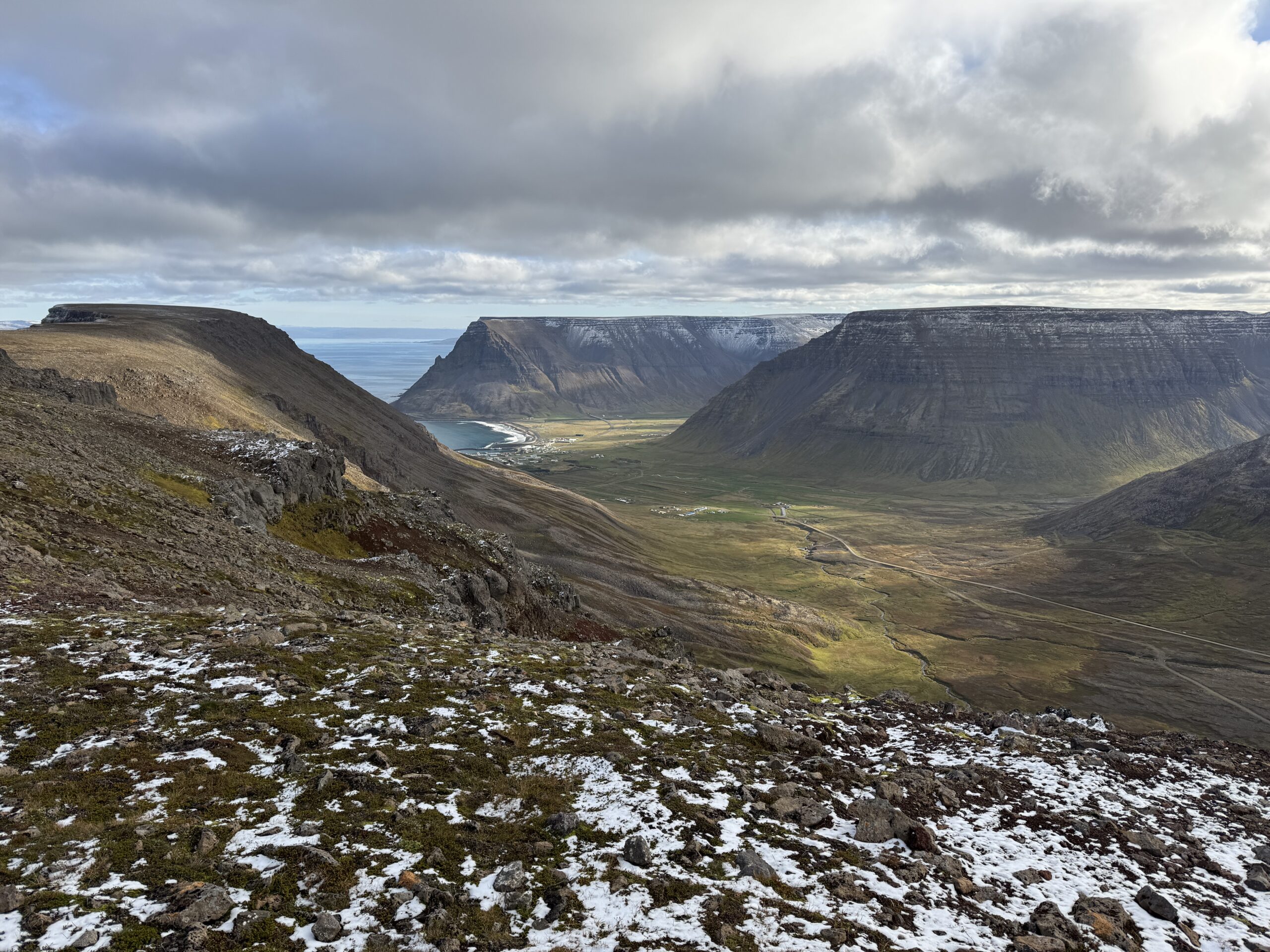
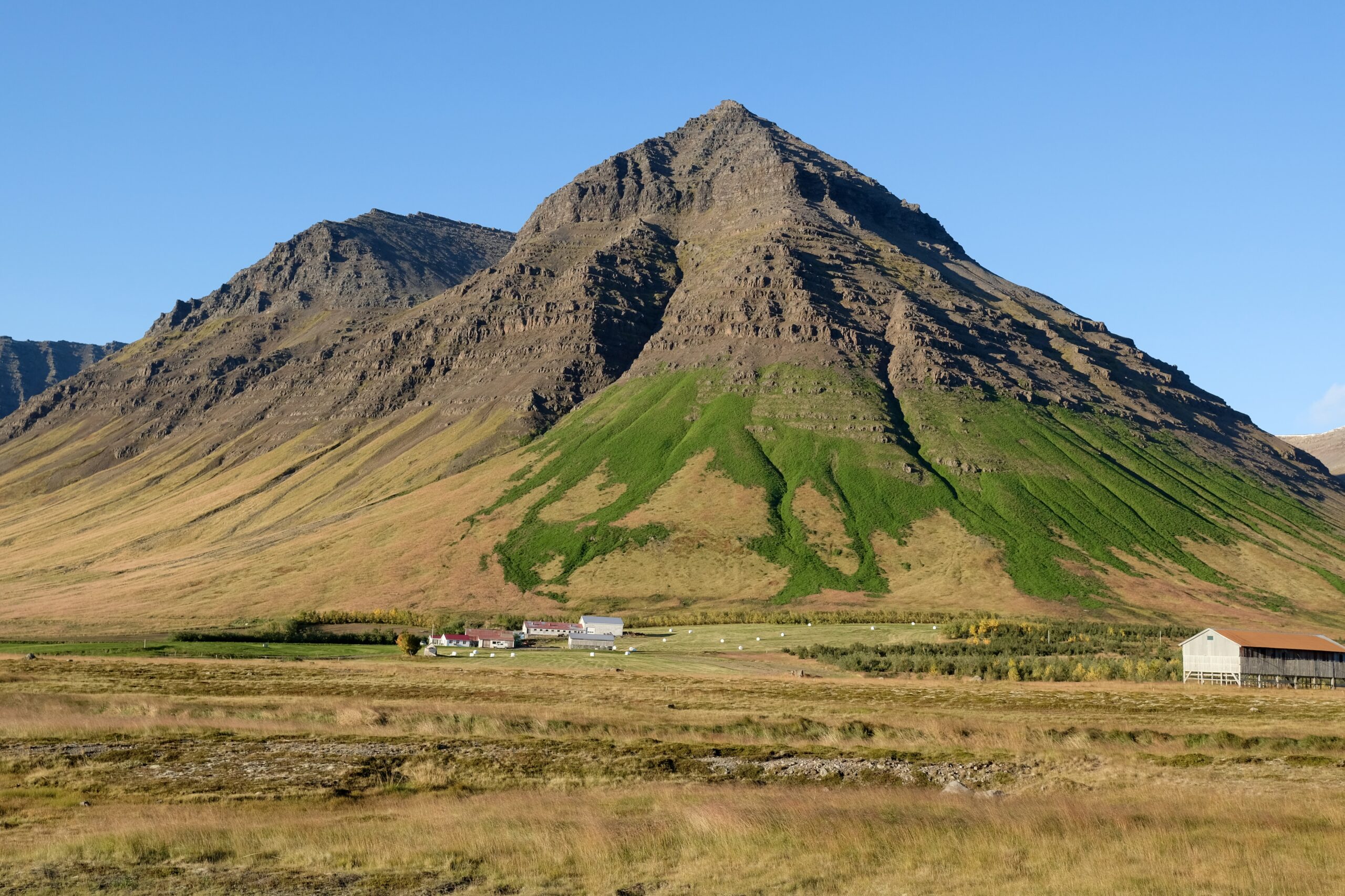
I just got back from my first trip to the Westfjords, a region that has fascinated me for a long time. It’s like Iceland turned up to 11: least populous, most remote, deepest fjords, oldest landscapes. As a multi-day excursion off the ring road it’s sometimes overlooked by tourists, even when they’ve circled the whole country. It felt to me like a bigger version of the Faroe Islands, reminding me of the area around Klaksvík, as well as the southern island of Suðuroy. There’s something calming for me about these landscapes. The sharply steep mountains hold their rocks at an impossible angle of repose, sparing only a tiny strip of flat land along the water to site a village. It’s as if the hills are gently squeezing the fjord, and like a geologic version of the Temple Grandin hug machine, it induces a sense of stillness and quietude.
I had the opportunity to take a long weekend trip because my Thursday classes were cancelled this week, due to my professor traveling. The timing was perfect, as this is about as late into the year as I’d want to go. Winter comes early in the Westfjords, but right now the autumn foliage in the mountains is all rusty reds and yellows, with only occasional pockets of snow and ice at higher elevations.
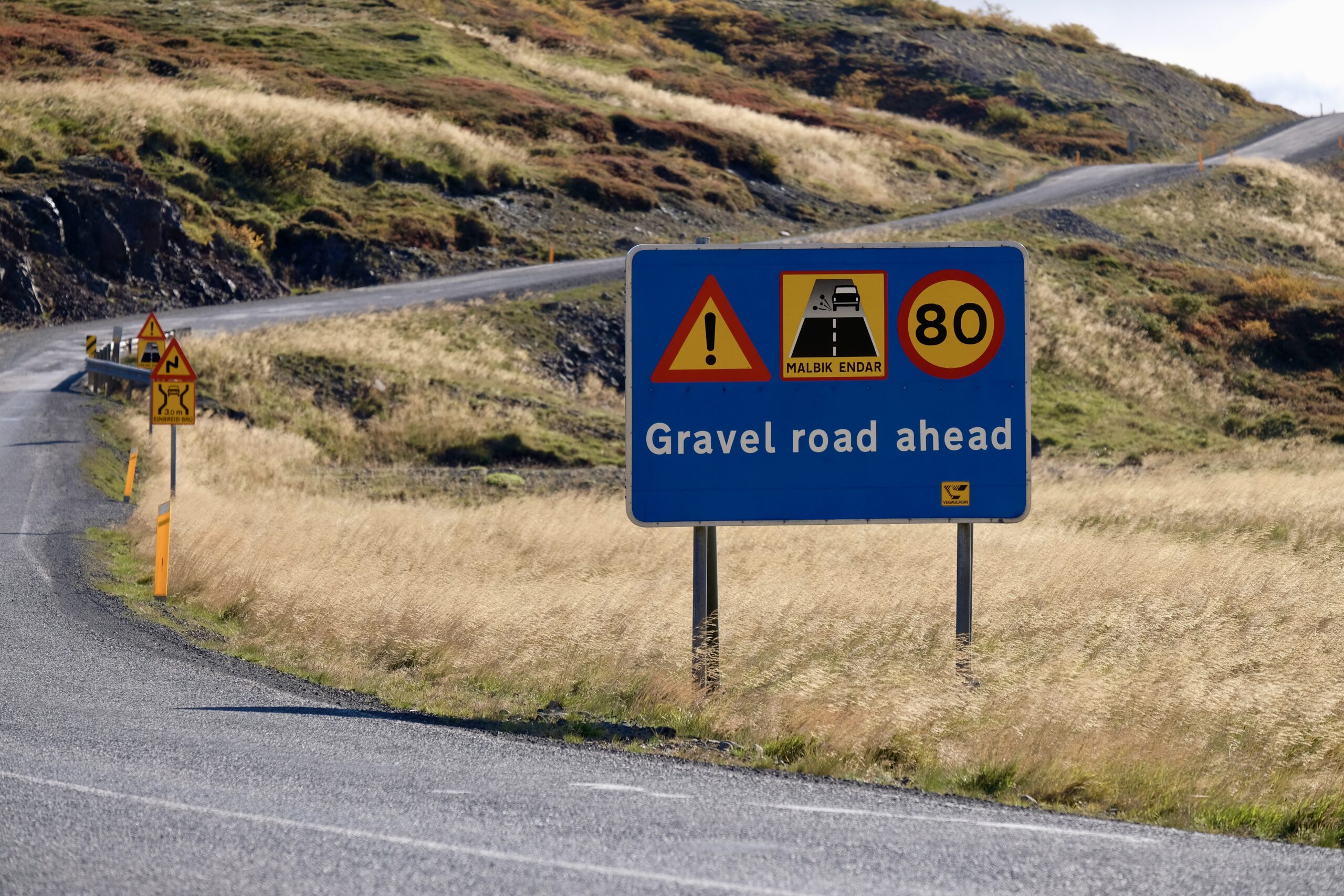
The primary “two digit” roads (e.g. 60, 61) through the region are mostly, but not completely paved. The “three digit” roads (e.g. 612, 624) are paved in proportion to the size of the village they lead to, and the spur roads that snake into valleys to reach a single farm are always gravel. The weather was nearly perfect — sunny and blue skies — although windy and cold of course. I rented a basic 2-wheel drive car, which worked fine, but it would have been tricky in mud or ice. Only once did judge that I should turn around, when I found myself climbing a steep grade over a mountain to an abandoned farm and the path turned to snow. It’s good to know that my tiny inner voice of self-preservation is still alive and well.
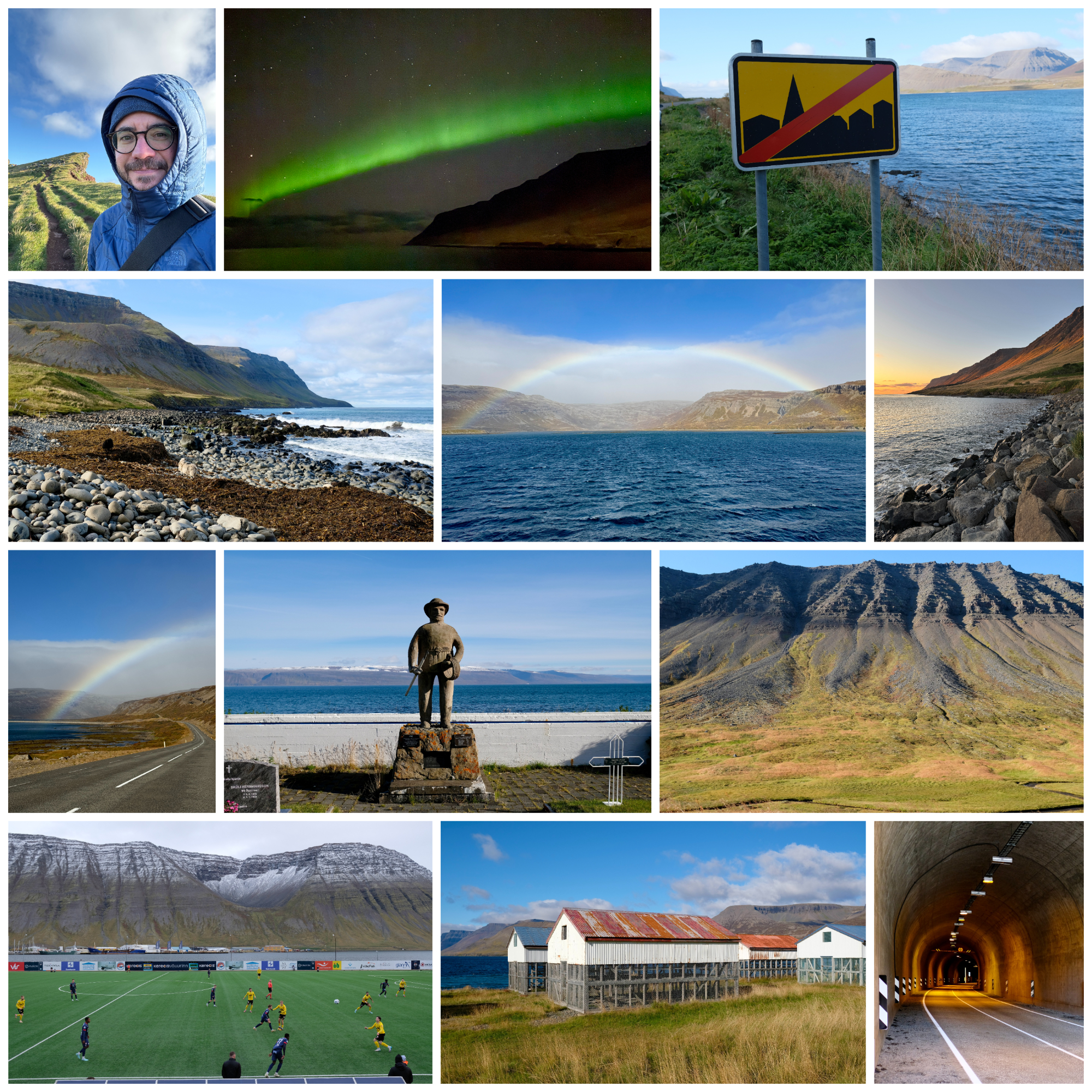
But in general, the good weather made it easy for me to just roam around — to the cliffs and water falls on the sightseeing maps, as well as the back streets of tiny villages, the harbor corridors of fish processing plants, and even a local football match. I have photo sets on Instagram for each day (day 1, day 2, day 3), but I’ll highlight some favorite moments below.
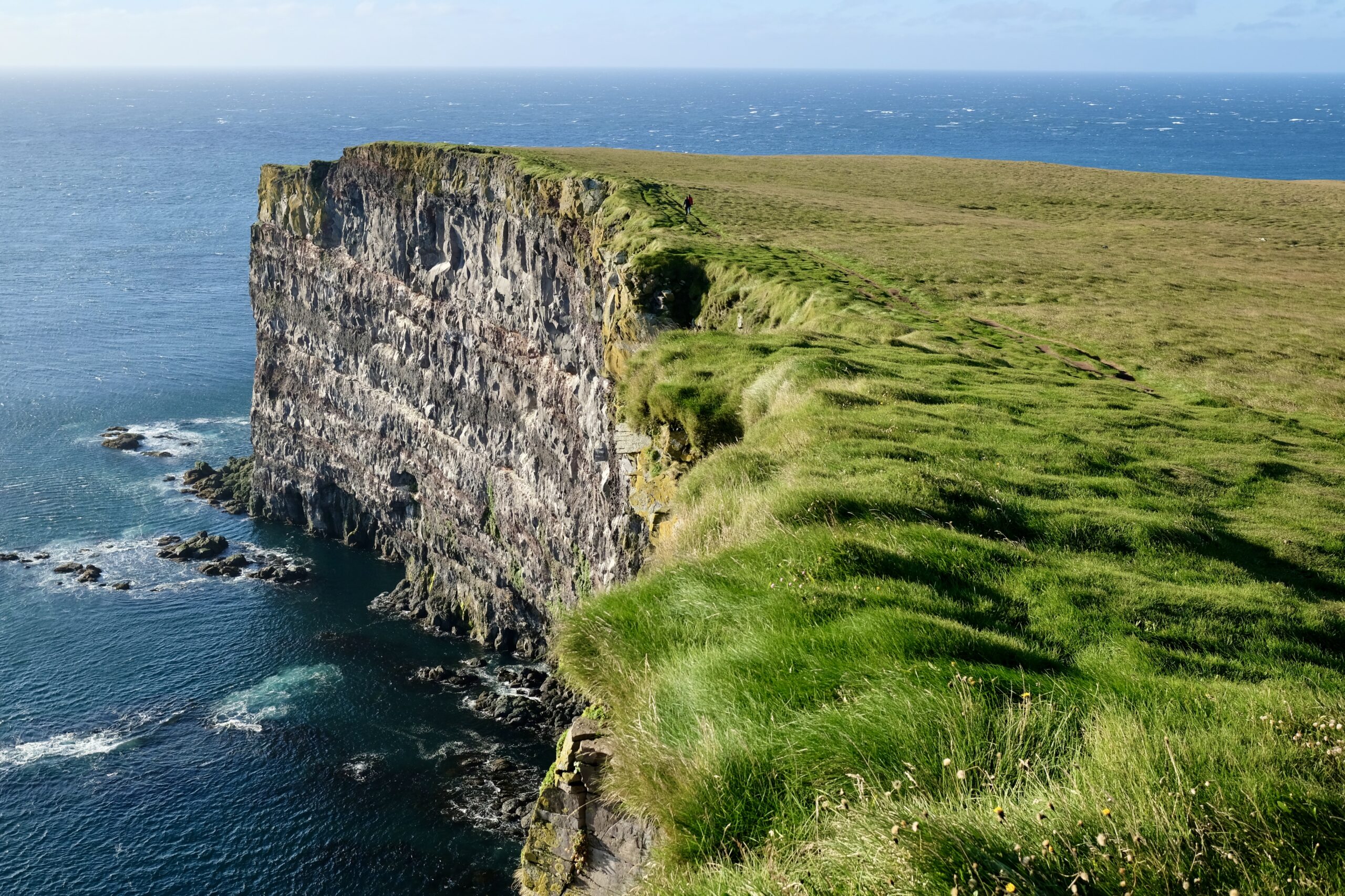
The Látrabjarg sea cliffs are on the southwest tip of the Westfjords. A reason for me to go back is that earlier in the year these cliffs are full of sea birds (including puffins). It’s the westernmost point in Iceland, as well as Europe (although apparently the Azores make that claim too).
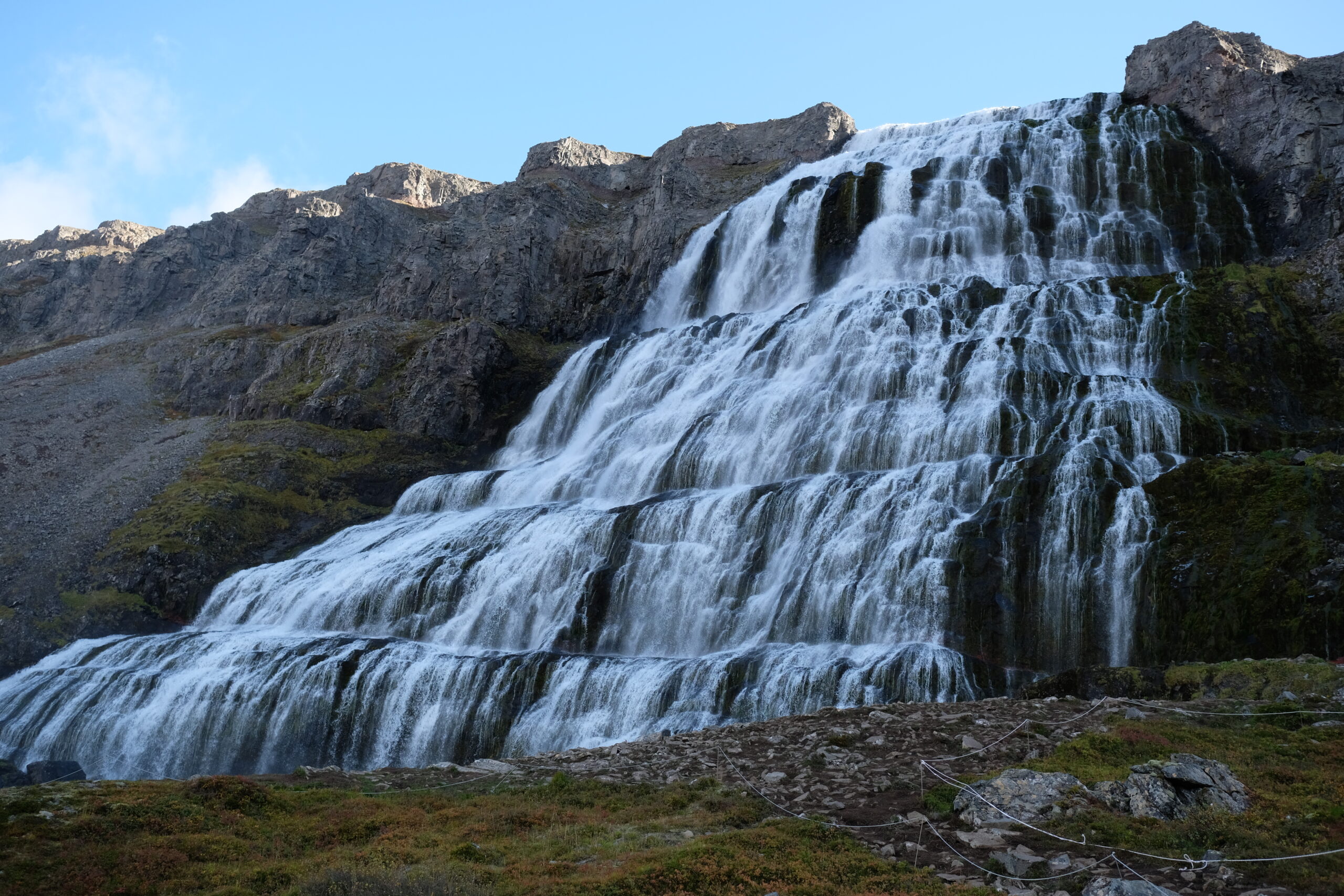
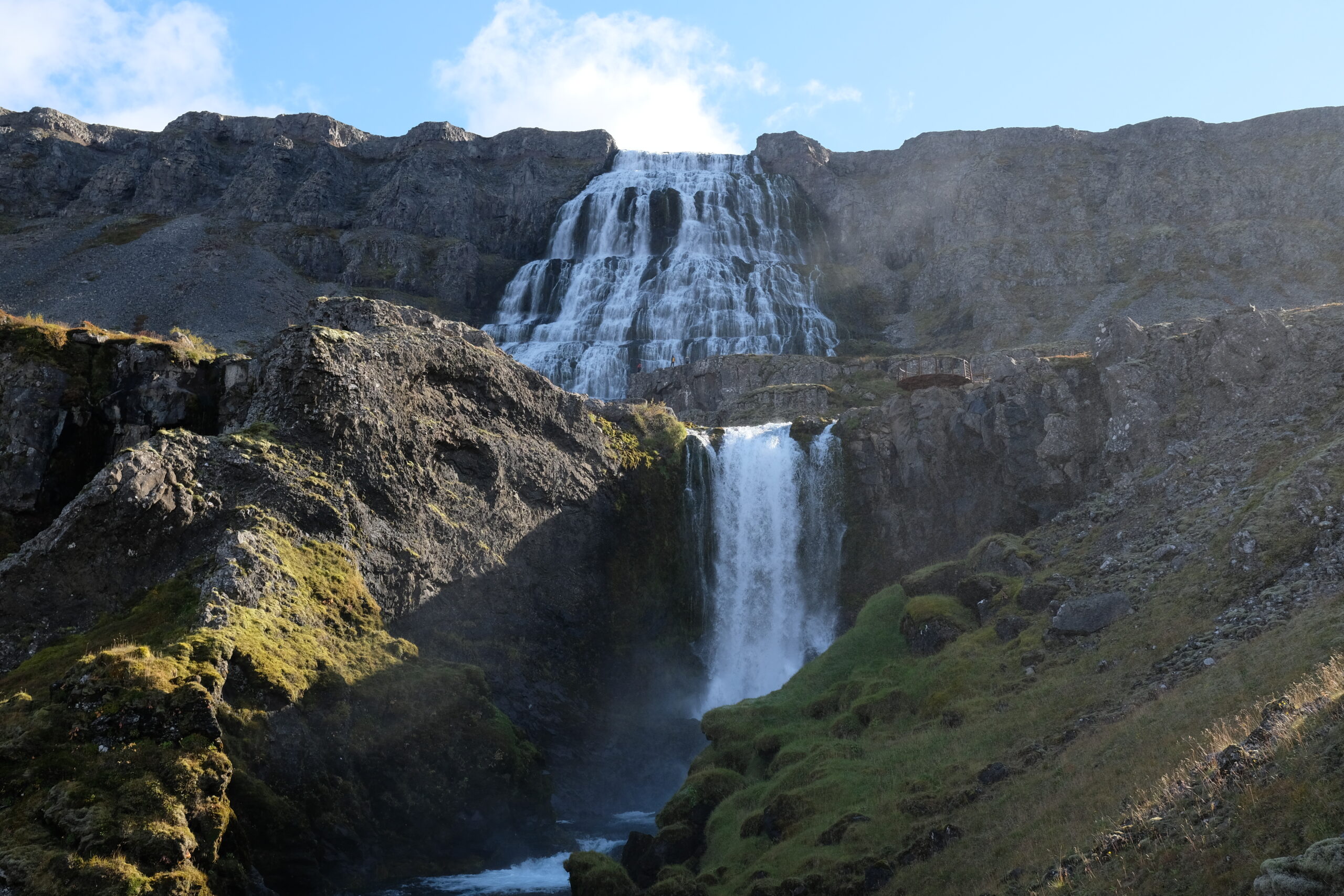
The Dynjandi waterfalls is a massive cascade that feeds numerous other waterfalls below it. I really wonder what this one is like in the winter, as it was already starting to ice up and the dispersed nature of the cascade makes me think it could freeze in interesting ways.
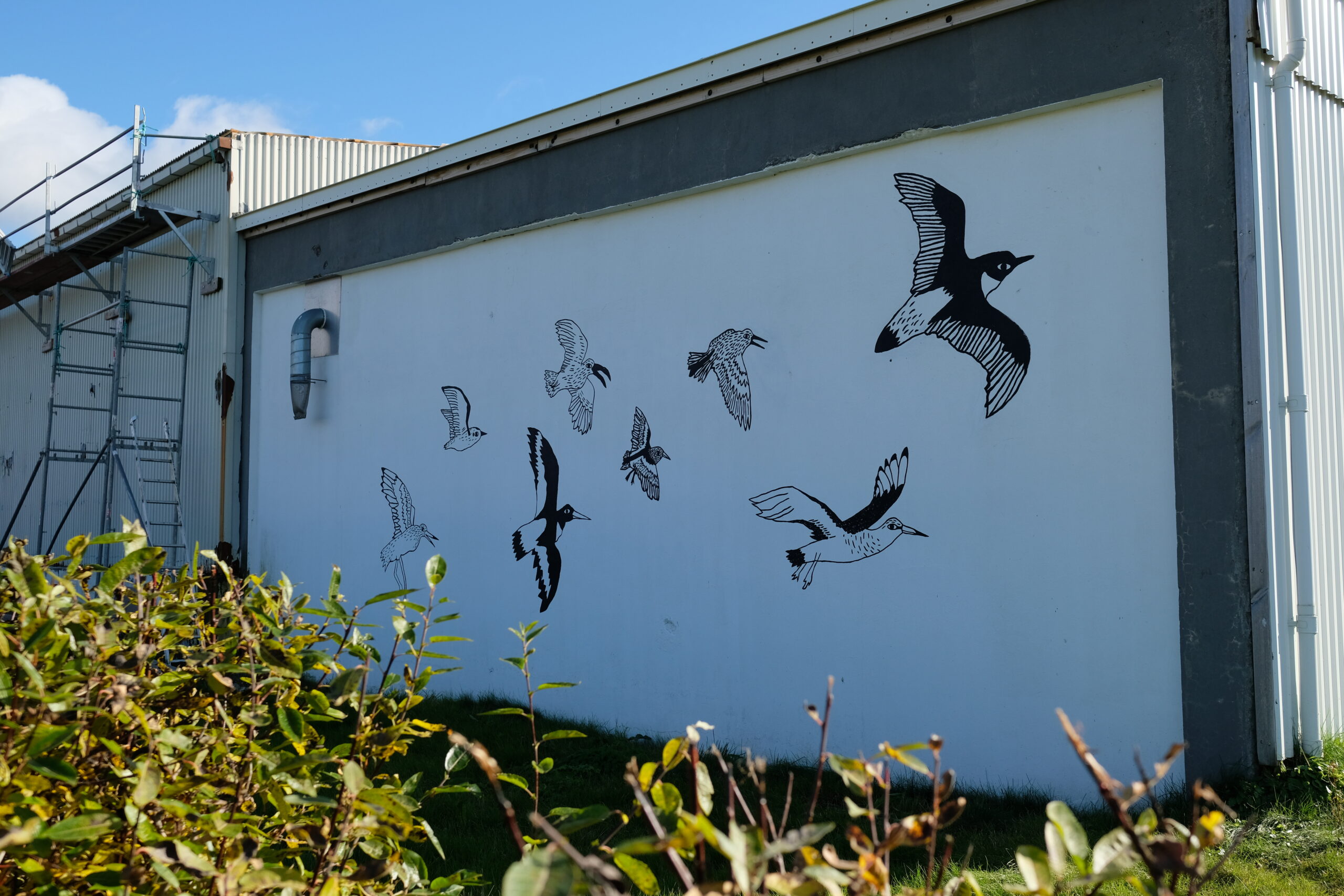
I spotted these birds while driving around the back roads of Þingeyri, and they looked strangely familiar. I realized that it was because they were painted as part of a scene in a movie I recently watched, Summer Light, and Then Comes the Night, which must have been filmed in that village.
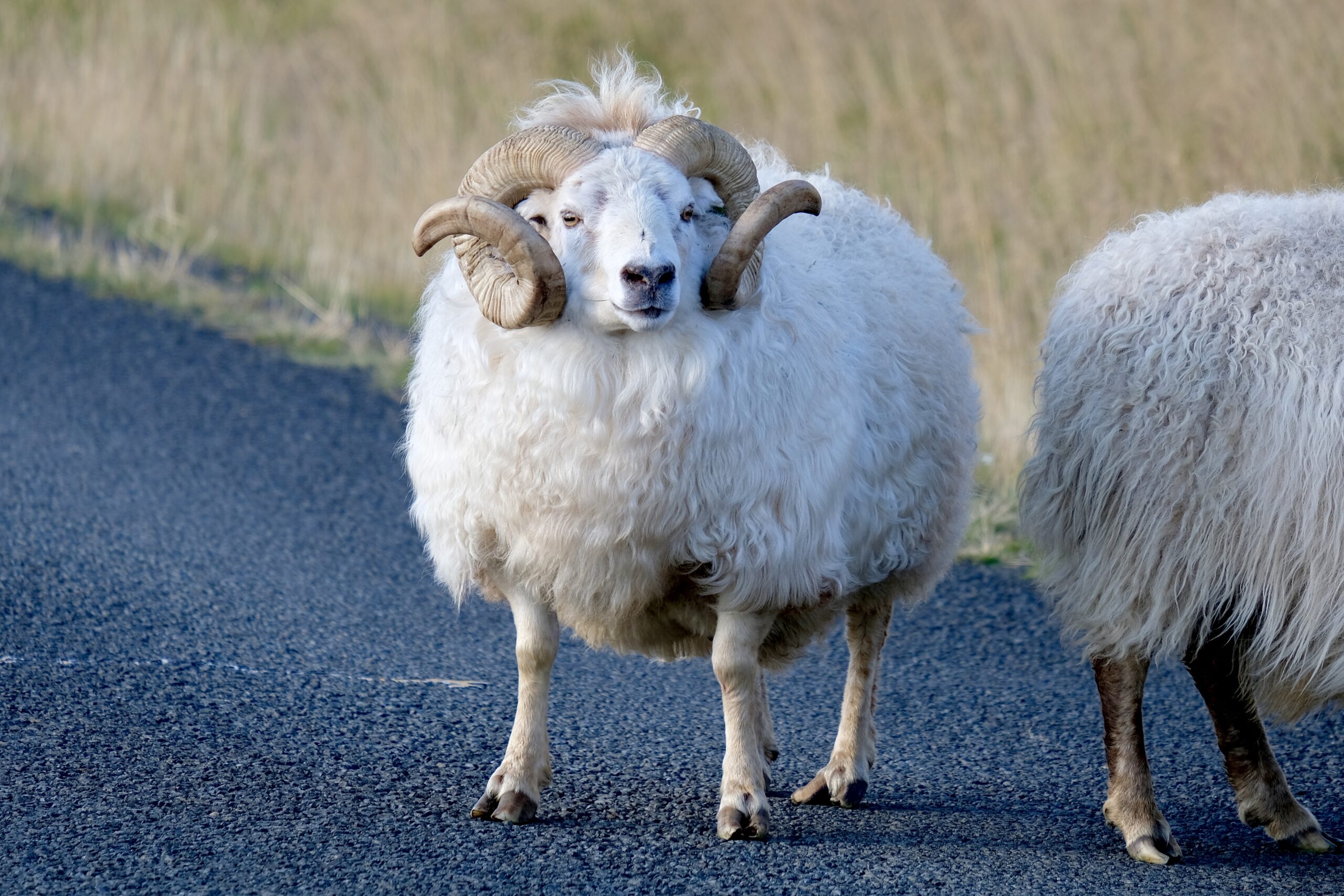
I met a lot of sheep, but these were the finest set of horns.
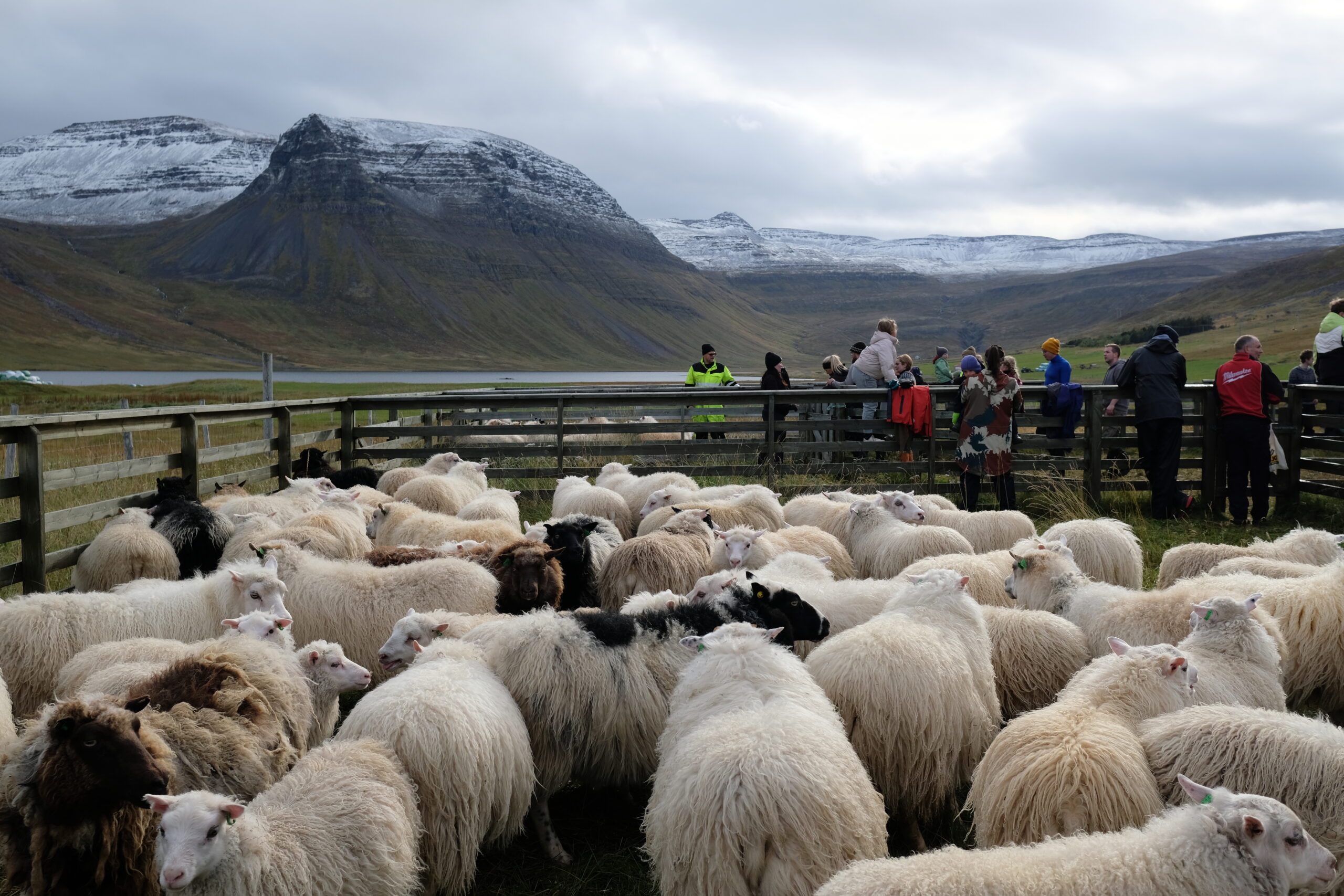
One payoff for rambling down a gravel road was encountering a sheep roundup in progress! I’ve been wondering how to attend one of these, so it was a real treat to stumble into it. I felt like the outsider that I was, so I snuck in quietly and tried not to get in the way. Everyone there knew each other and were having a lovely time. They sorted the sheep they had rounded up that morning from the nearby area and corralled them into different pens. Then they loaded all the ones that belonged to a particular farmer into a truck.
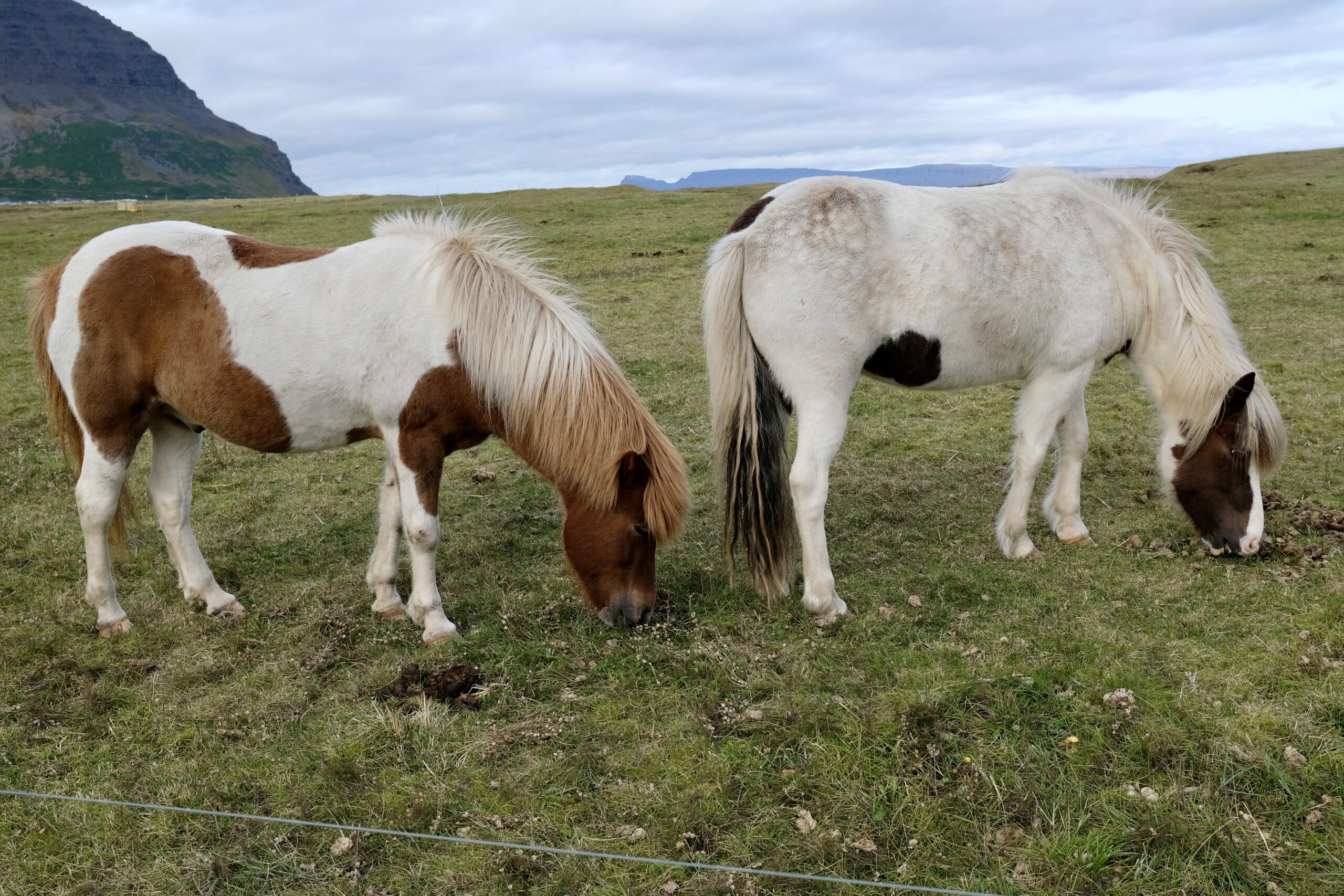
I also met some horses, but there were fewer in the Westfjords than on the southern coast.
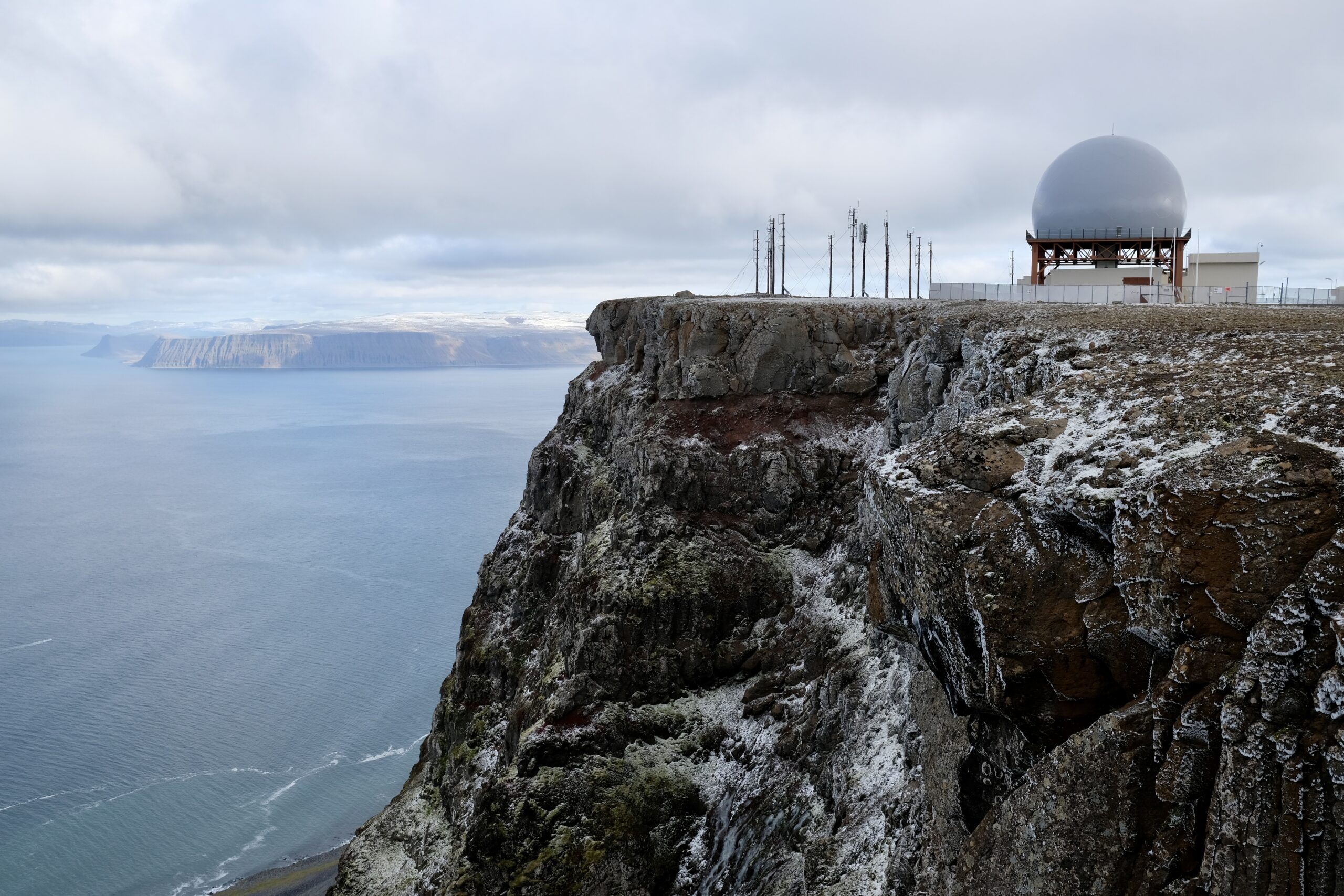
These views are from the top of the mountain Bolafjall. The radar station up there was built as a NATO project and is now operated by the Icelandic Coast Guard.
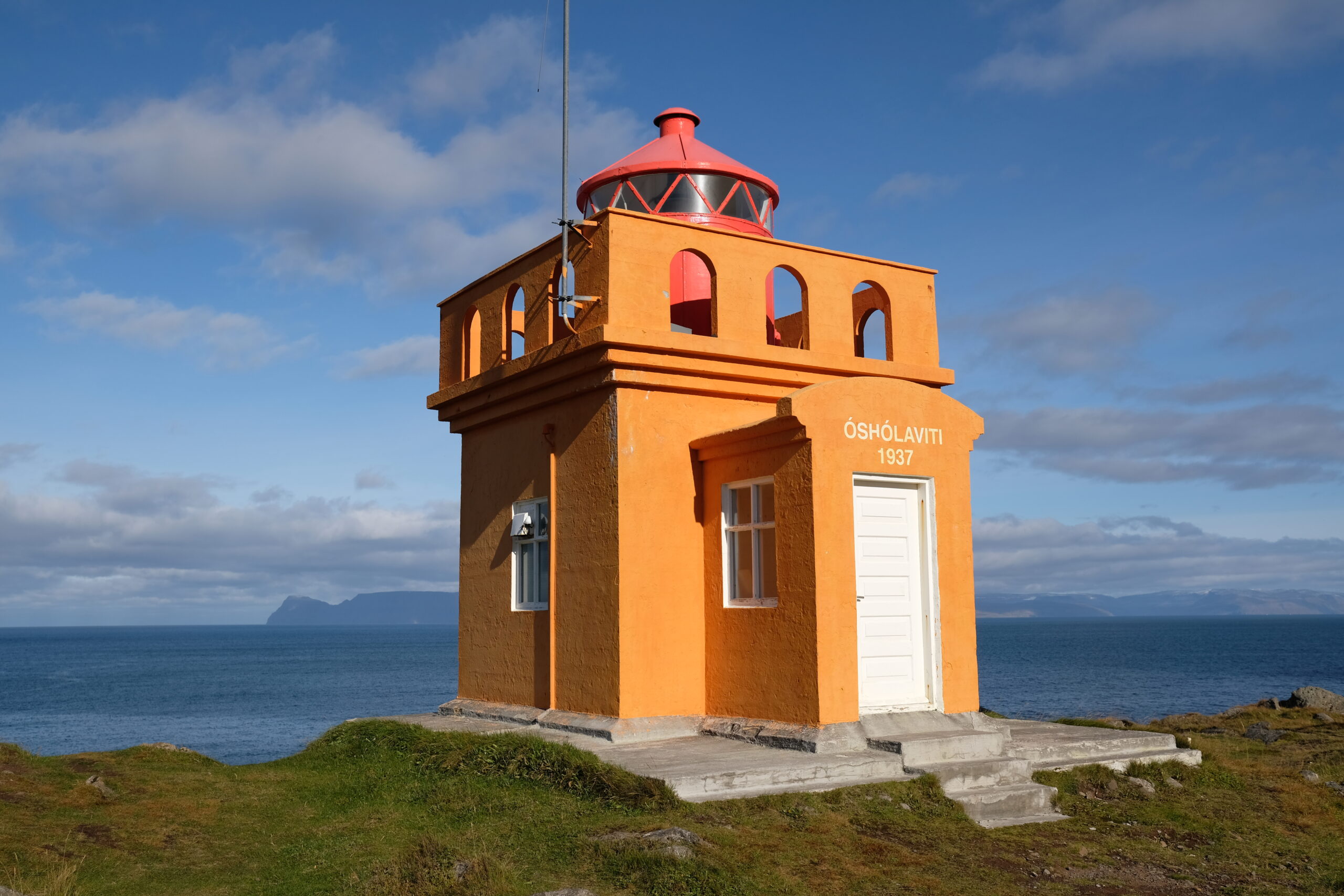
I am, of course, a fan of lighthouses and this is a fine specimen. Not all the lighthouses in Iceland are orange, but it’s a fairly common color.
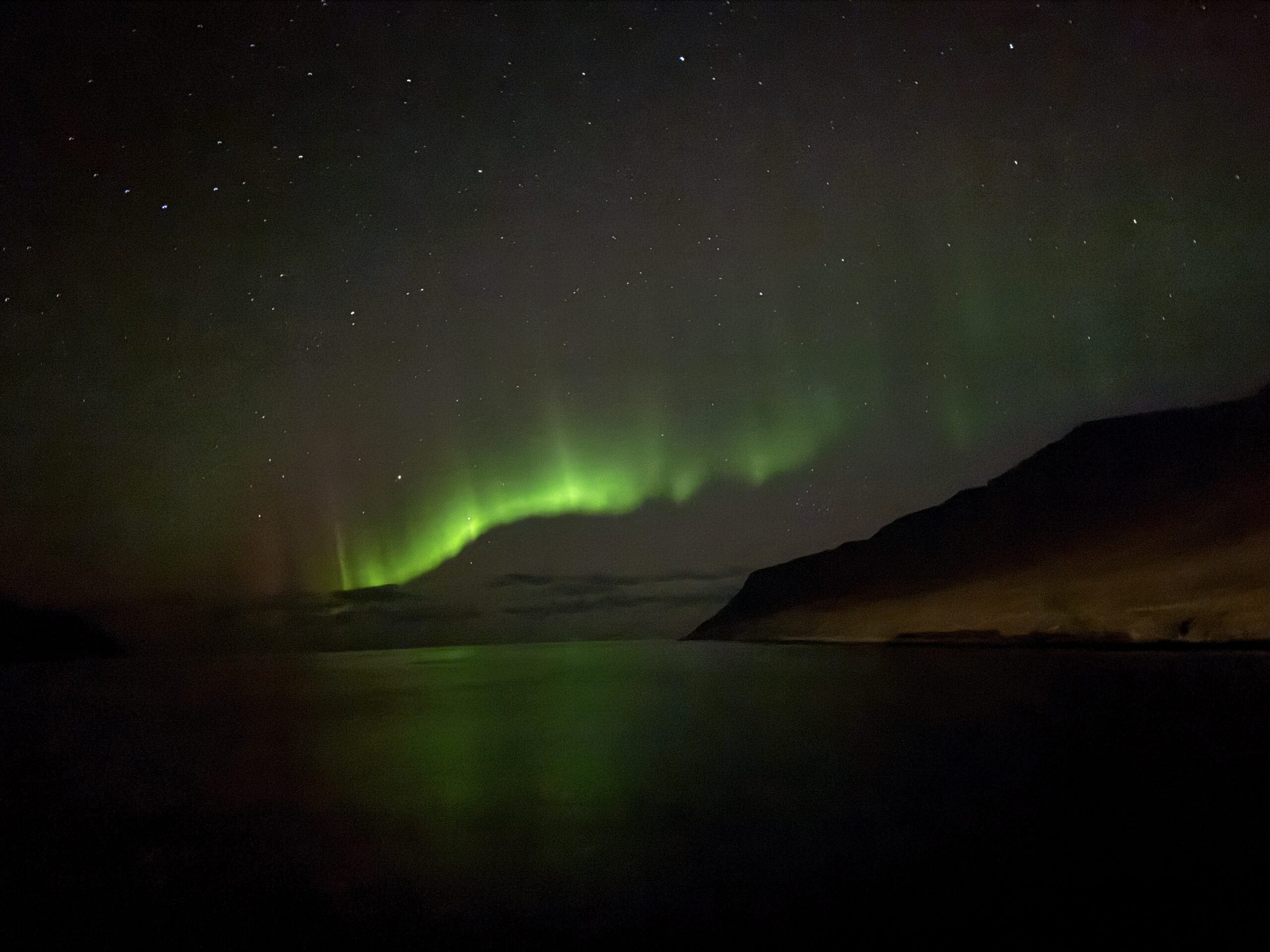
I saw the Northern Lights! I’ve seen them in Reykjavík, but this was on another level. They were much more visible to the naked eye, and I watched them dance around for about 45 minutes until it got too cold to stay out anymore. This was in Flateryi, and they were bright enough to reflect on the water near the village seawall. The aurora forecast wasn’t very strong, but on a very clear night there’s always a chance. An added bonus was the backdrop of so many stars, the kind of immersive astronomical view you can only get in such a remote place.
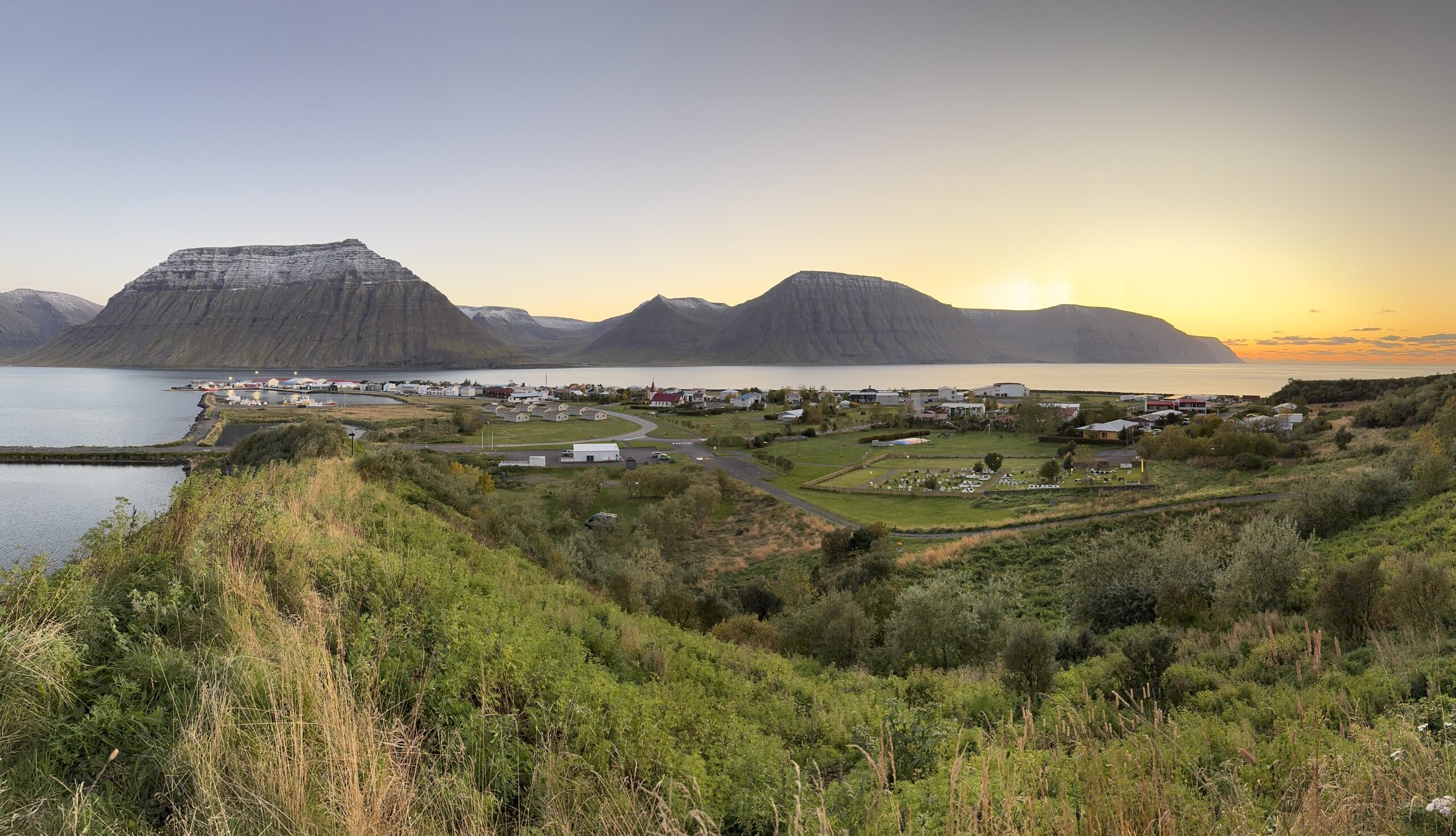
Flateryi is a interesting little village where I spent two nights. This photo is taken from atop the avalanche barriers above the town. These barriers were initially built after an avalanche in 1995 killed 20 people (approximately 10% of the town). There was another avalanche in 2020, and these barriers successfully diverted the debris away from the village, but it landed in the harbor and caused a tsunami that destroyed numerous boats. I’m not sure how the current work is meant to improve upon this infrastructure, but it’s a multi-year construction project managed by Lithuanian workers living in temporary housing set up on the edge of town. My understanding is that it’s slow going since they can only make progress during the summer months.
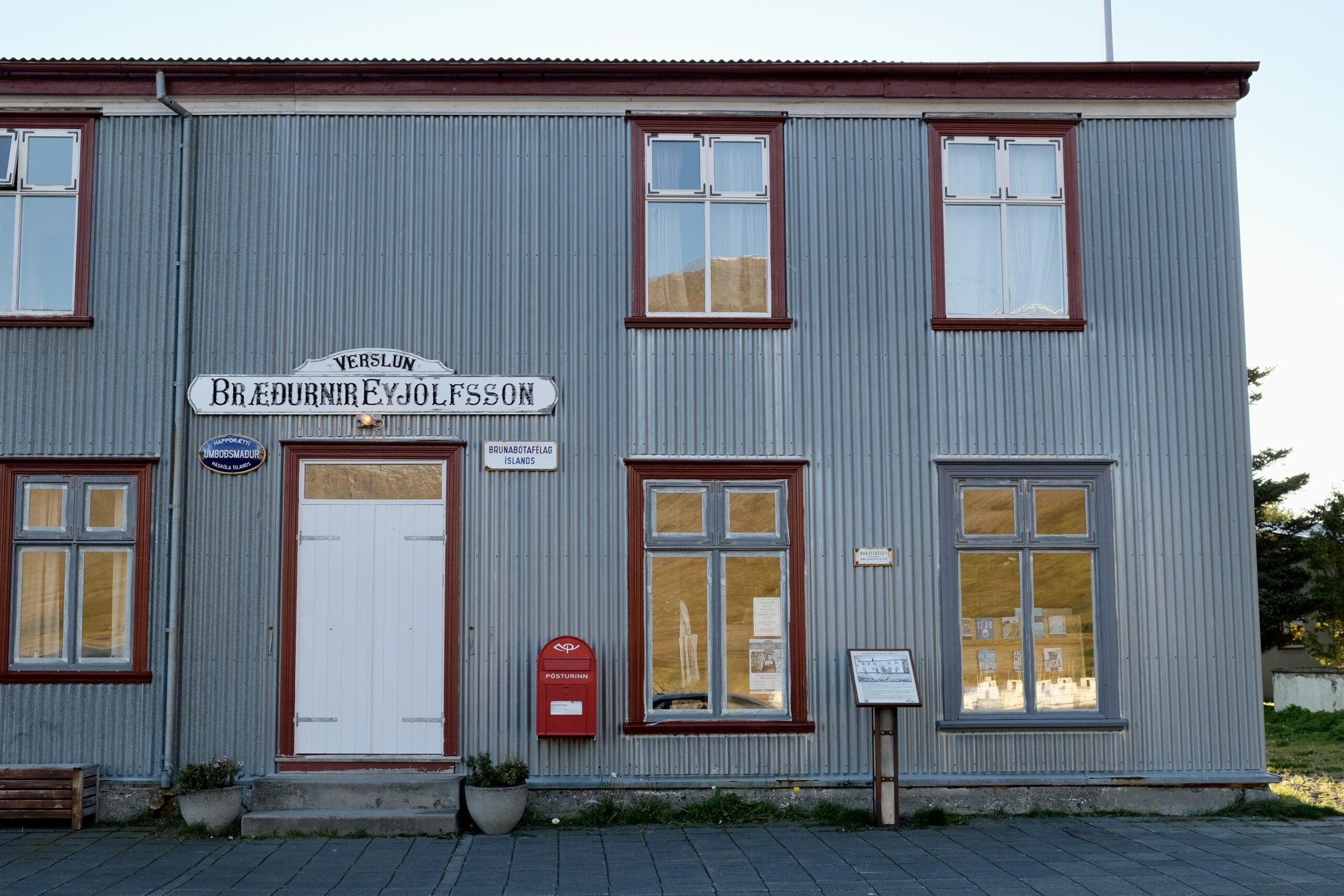
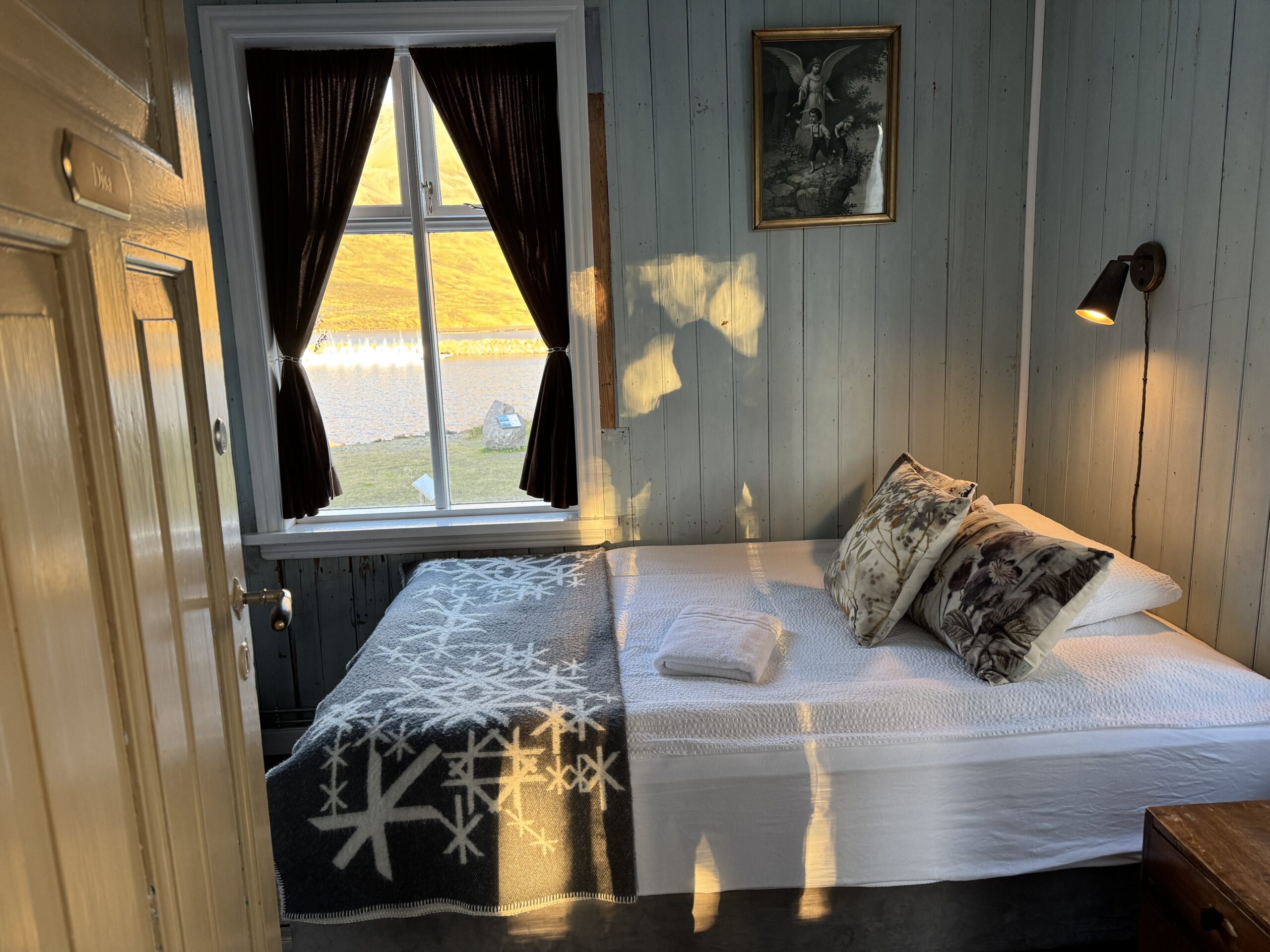
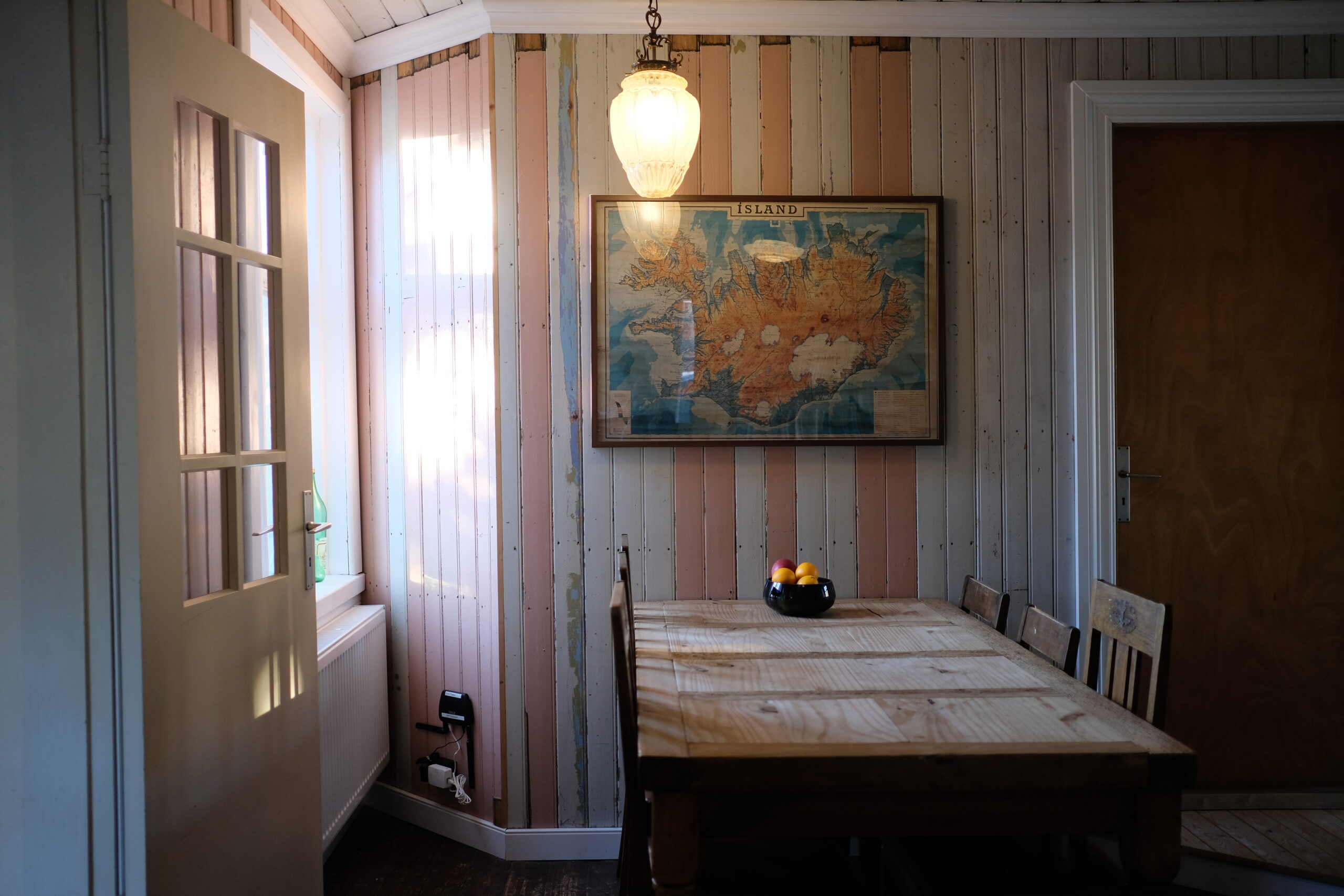
Flateryi is also home to the oldest bookstore in Iceland, and I stayed in one of the three guest rooms above the store. It’s has been run by members of the same family since 1914, and the first floor includes a museum that preserves the house exactly as it was when the current proprietor’s grandparents lived there. The upstairs is also a bit frozen in time (in a good way). Each guest room is named for the child who originally occupied it; I stayed in Dísa’s bedroom.
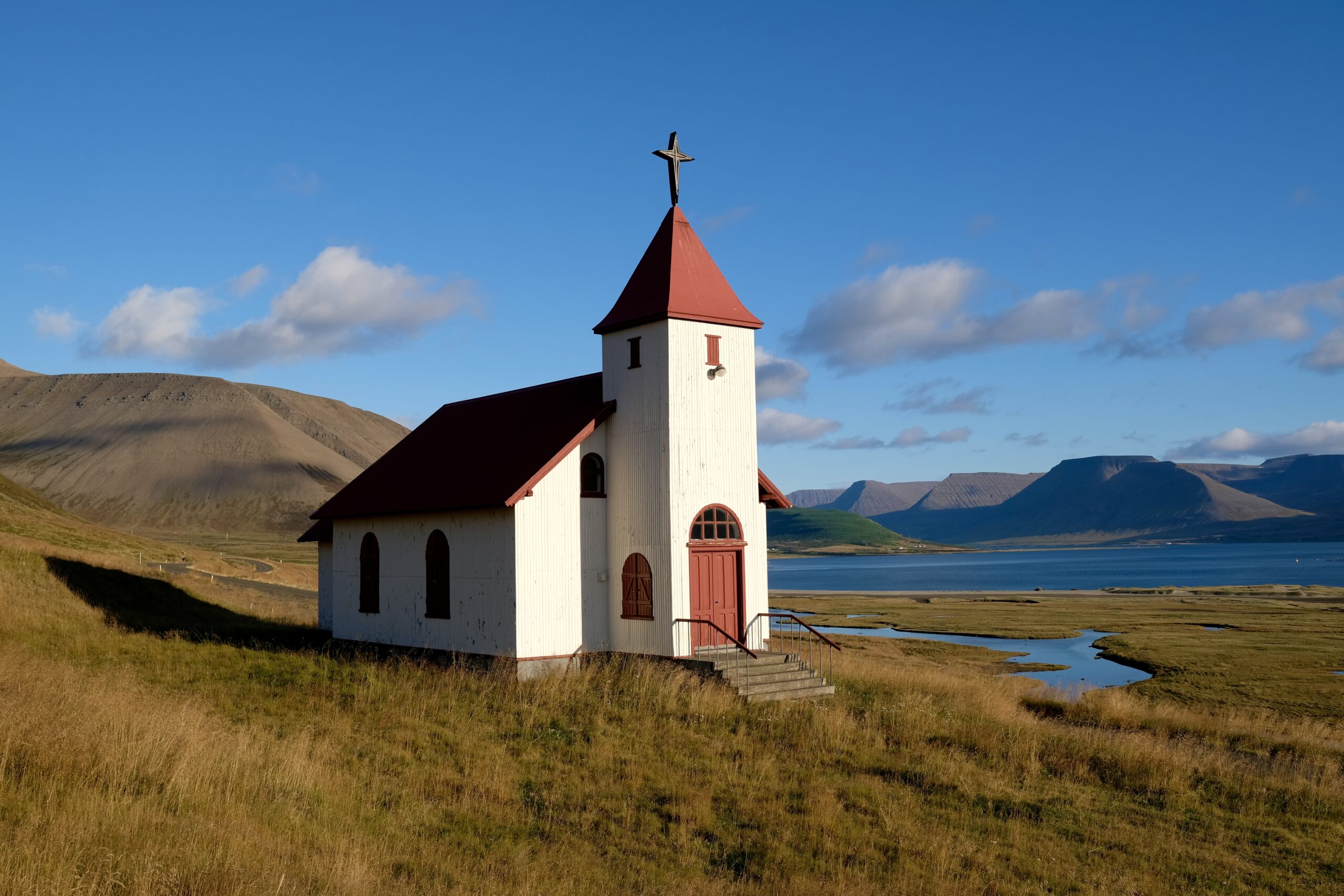
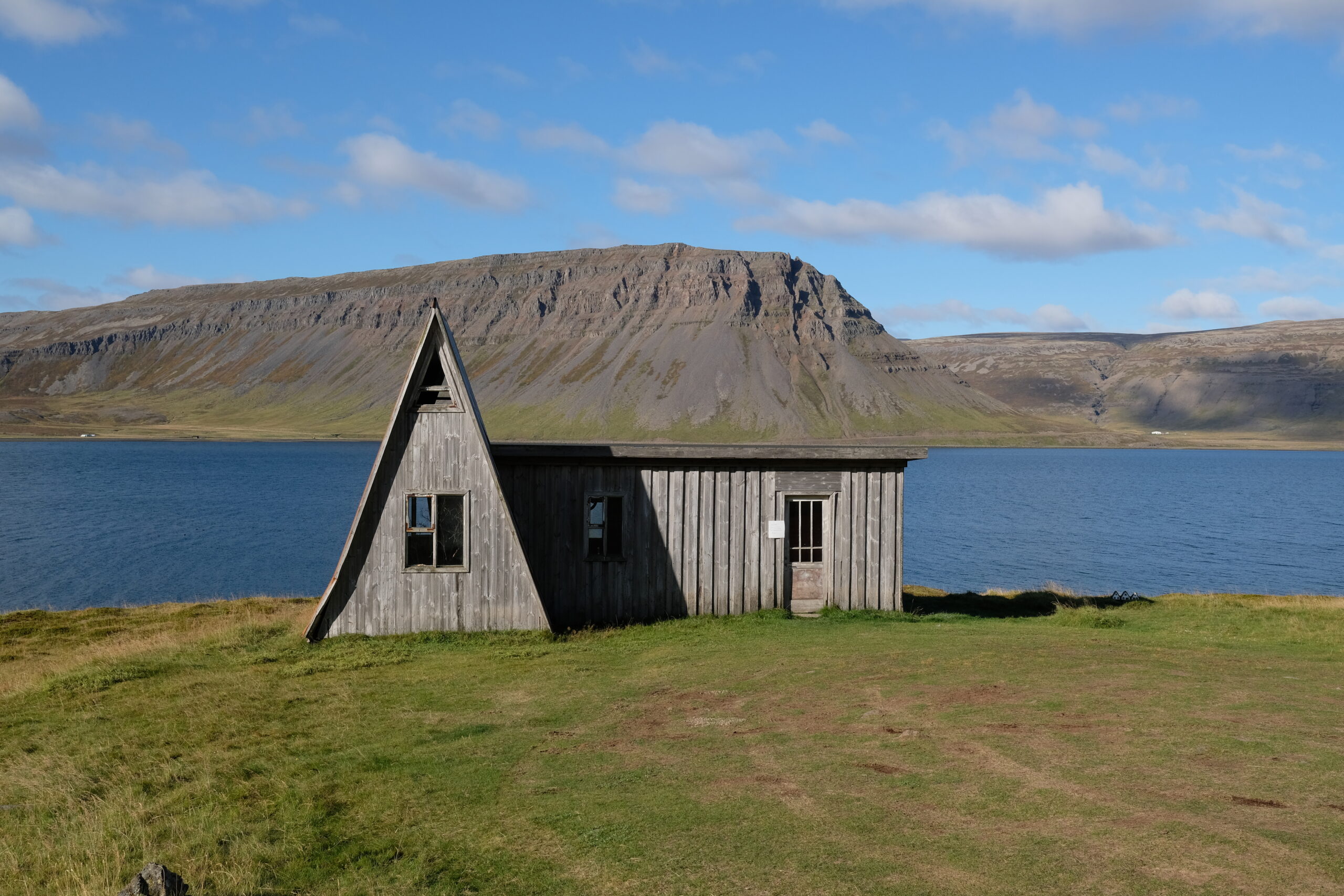
And then of course there were the endless landscapes, and the buildings in them, that in their starkness and simplicity let you appreciate the landscape even more.
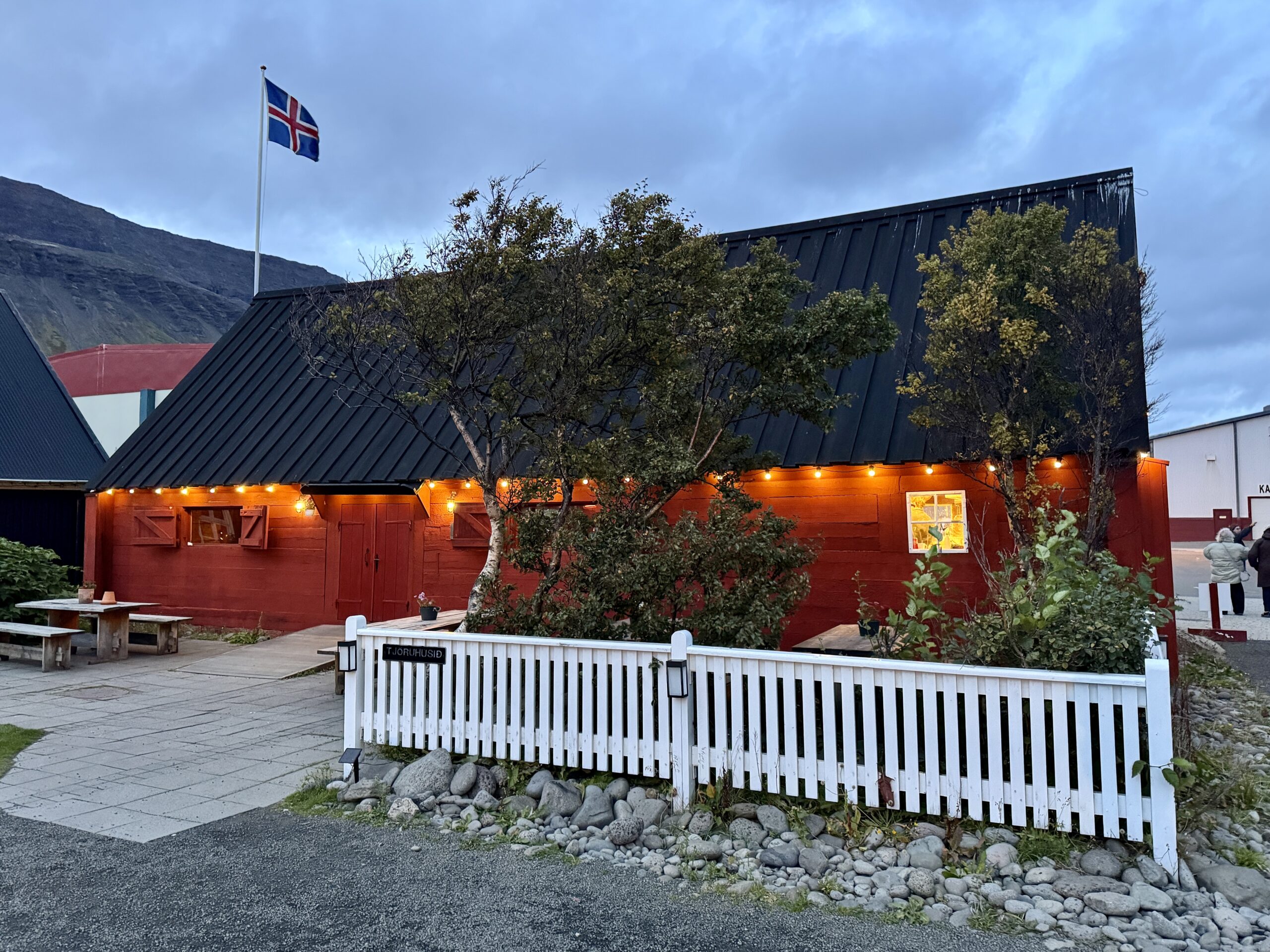
My last night in the Westfjords I had dinner at Tjöruhúsið in Ísafjörður. It’s been hailed as the best fish restaurant in Iceland, and while I haven’t tried enough of them to compare I will say that it was very good. Their website makes me laugh, as it basically just says lists their contact info and literally says “we are not very interested in marketing, or the internet in general.” I have to respect that.
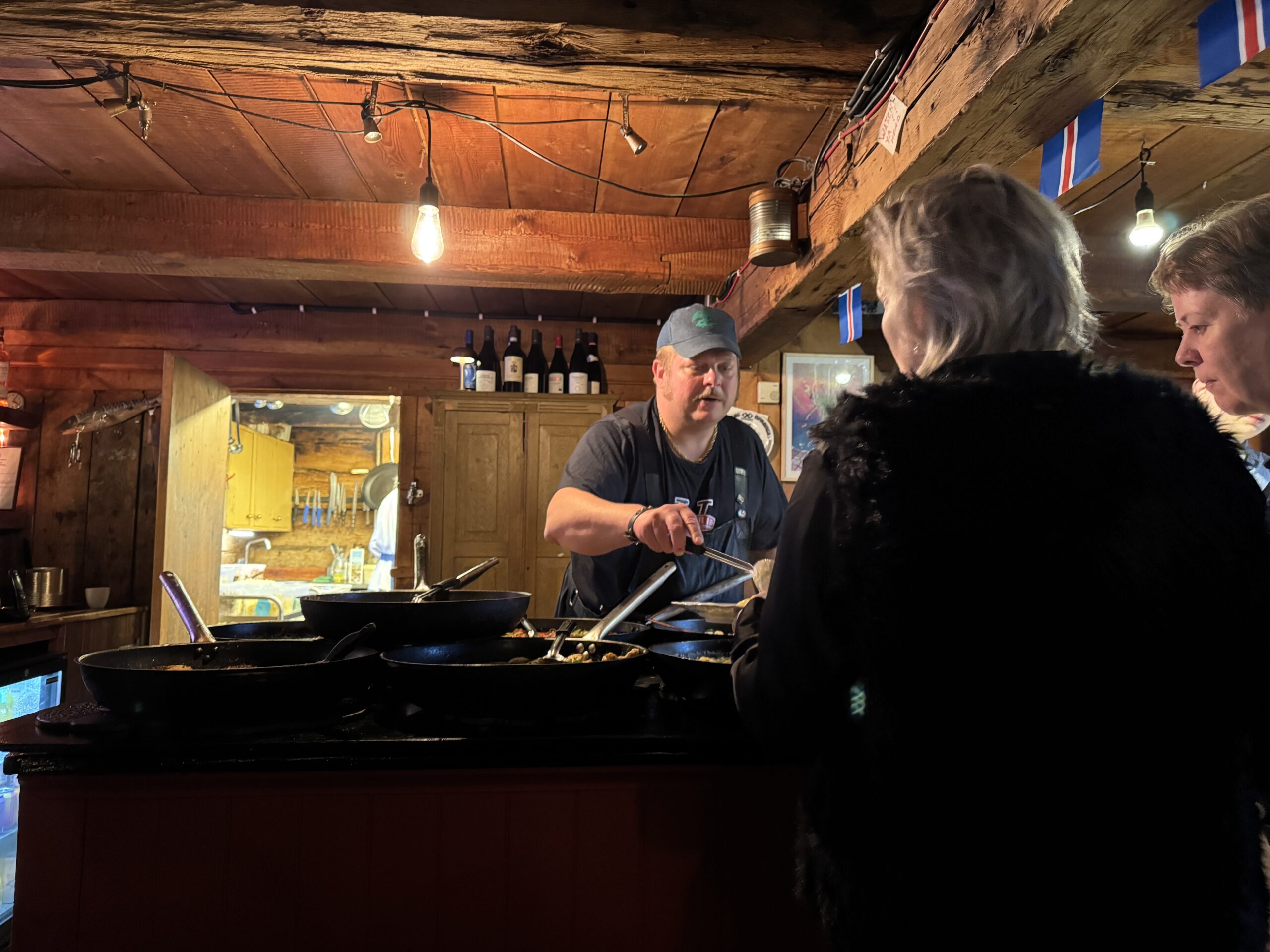
The restaurant is housed in a building built in 1781. The ceilings are low, they have communal at large tables, and food is served as a buffet. They prepare around 8 different fish preparations in giant skillets and you can eat as much as you’d like. One thing I really appreciated is that they were thoughtful in seating me next to other solo travelers, which made it easier for us to have an interesting dinner conversation.
I may share more in future posts as I have many more photos and things I could say about the Westfjords. It’s truly a special place.
It took two months, but it finally happened: I was in the same room as Björk. It was bound to happen eventually, given that Reykjavík is barely larger than Ann Arbor, MI. But in my imagination, the Iceland that Björk exists in can’t possibly be the same one where I live my daily life. If I was to see her shopping for groceries at Bónus it would shatter that illusion entirely, so thankfully the circumstances of this encounter still had an appropriate level of mystique. Apparently, on every full moon, Björk plays a DJ set at the record store Smekkleysa, which was founded by The Sugarcubes. She promotes it to her 2.2 million followers on Instagram, but since only a tiny fraction of them live in Iceland it draws a manageable crowd for an in-store performance. So. Much. Fun.
Overall, it was a big music week with the Extreme Chill experimental music festival spanning 5 of the last 7 days. Now in it’s 16th year, the program was held at venues all over town and my favorite sets were by Patricia Wolf, Seefeel, R-O-R, and Drew McDowall.
There was also a film screening of Hrafnamynd by Edward Pack Davee, who lived in Iceland as a child when his father was stationed at the now-closed NATO base. The through-line of the film is about his memories of that time, formed and influenced by slide photography of his childhood, combined with numerous return trips to Iceland as an adult. It’s a beautiful portrait of early-70s Iceland, ravens, and the limits of memory. Patricia Wolf did the soundtrack and performed live ahead of the screening.
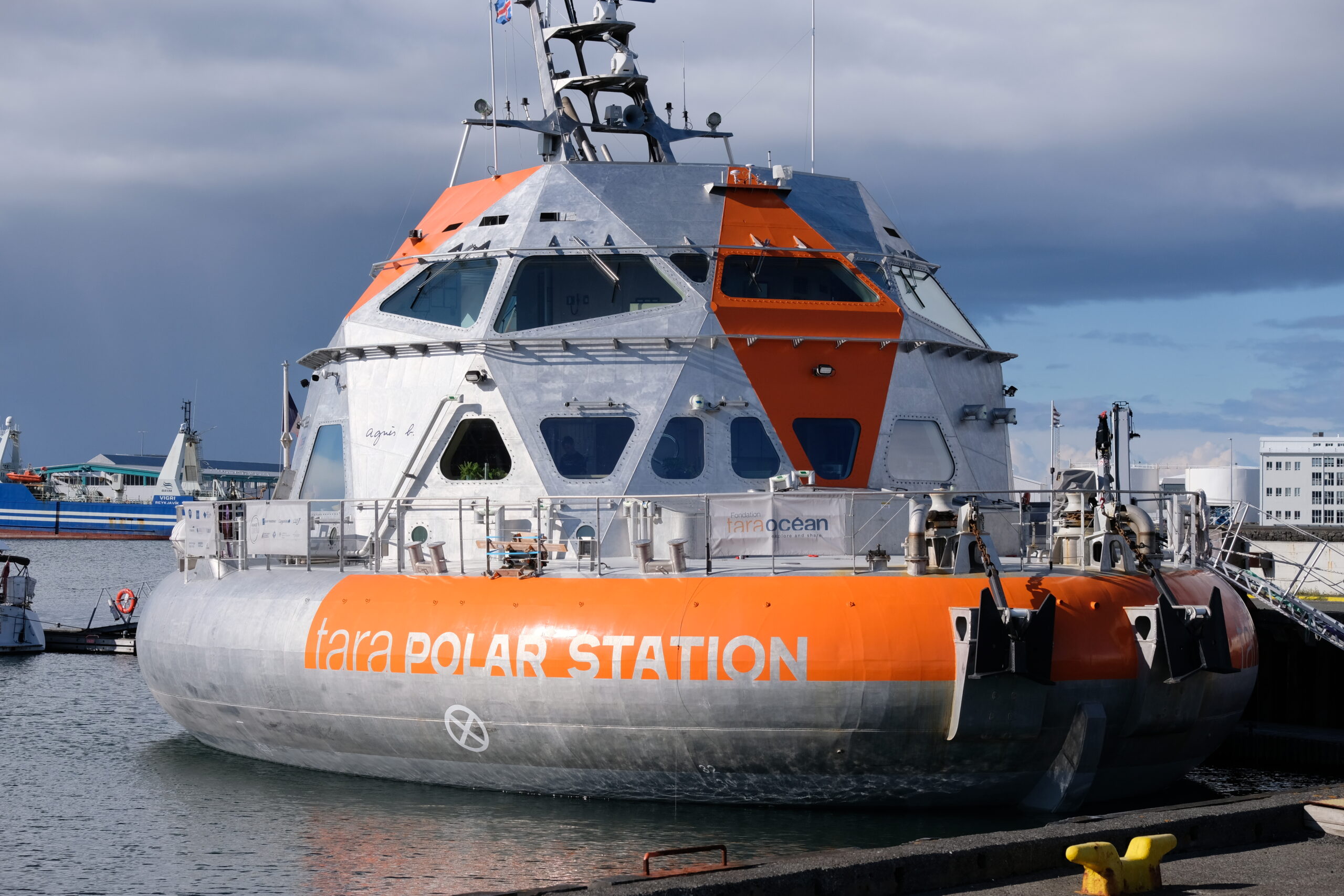
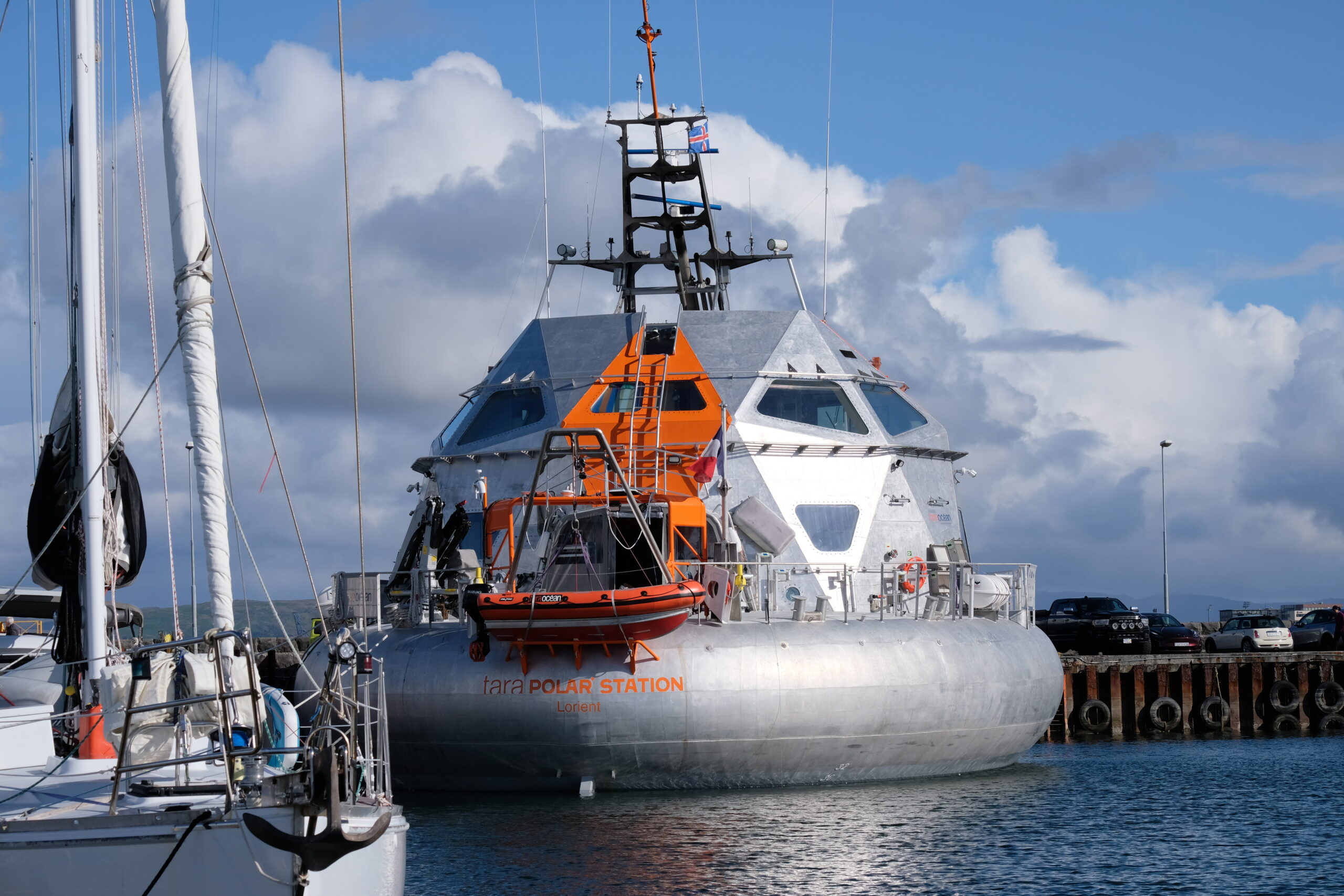
Walking near the harbor yesterday I noticed a unique vessel called the Tara Polar Station docked behind Harpa. I looked it up and found a good article that describes how it can withstand -52°C temperatures and provide living accommodations for 18 people. It’s first real expedition starts next year, which will last 18 months, including 14 months drifting in sea ice. That’s a pretty tight environment for 18 people to spend over a year stuck in the ice!
The research station will be docked in Reykjavík through October 20th, long enough to play a role in the upcoming Arctic Circle Assembly, which I’ll be attending. I hope to learn more about it during that event, and maybe find a way to get an onboard tour.
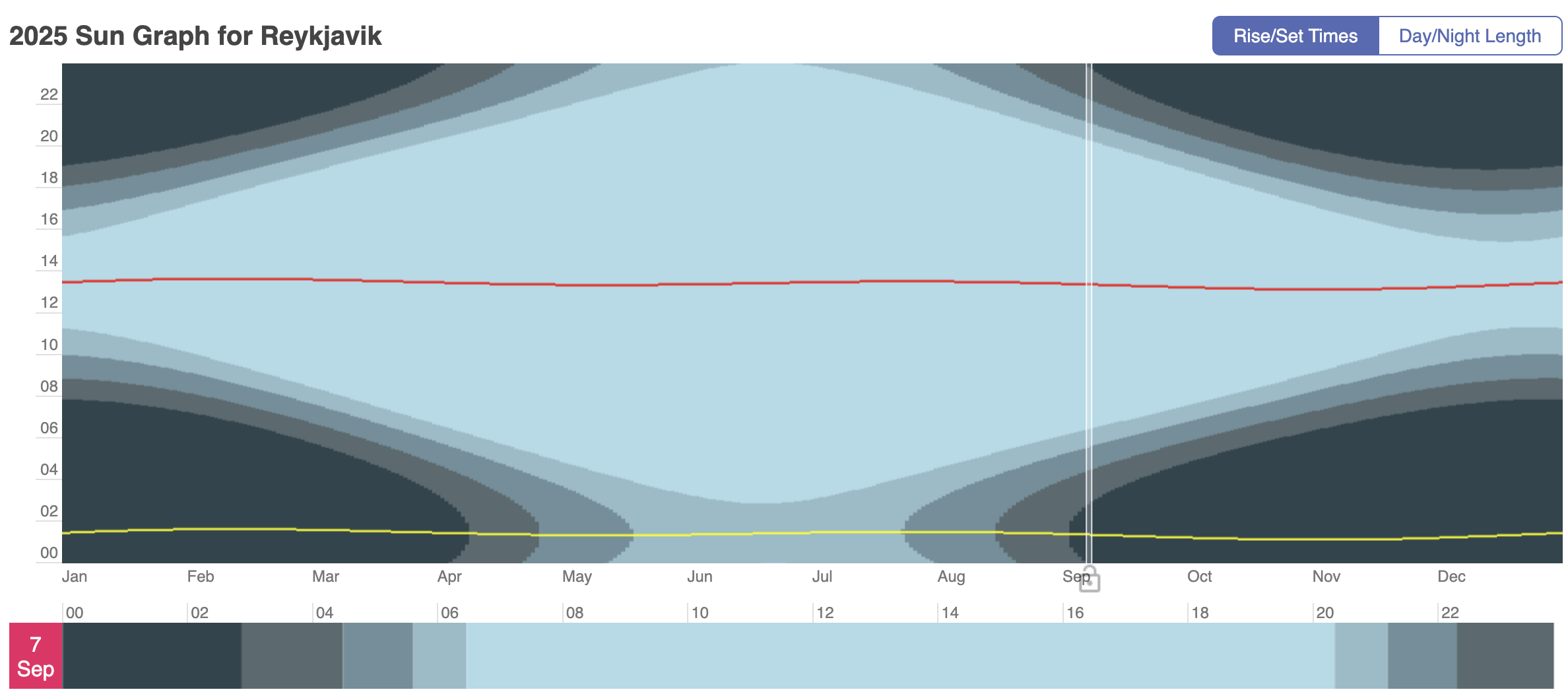
With the arrival of September the days are getting noticeably shorter here. The Sun Graph indicates that only now does Reykjavík have true “Night,” previously only reaching “Astronomical Twilight.”
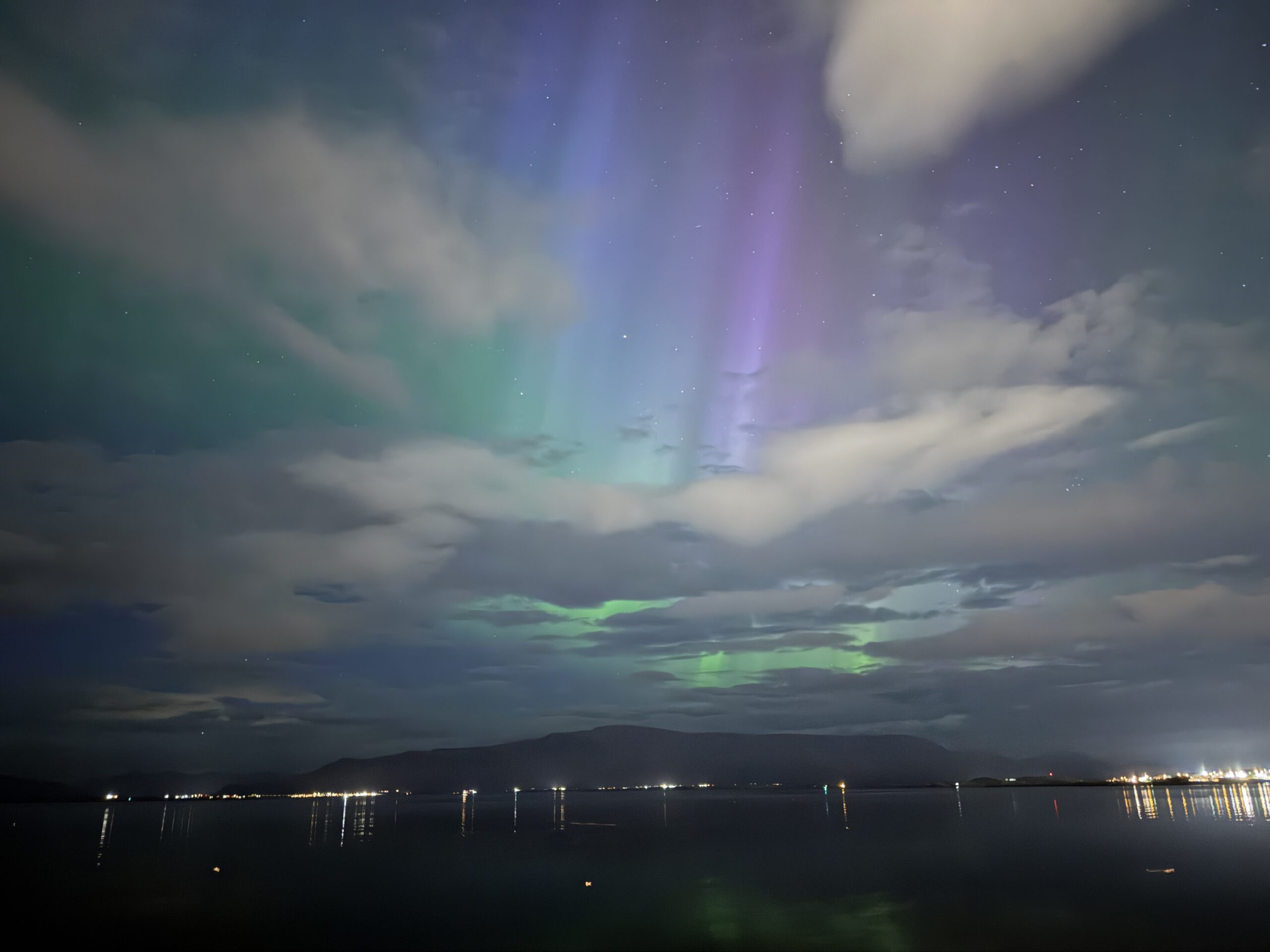
One side effect is that it’s dark enough now to see aurora, and the last week had enough solar weather for me to spot the Northern Lights. There’s obviously light pollution from the city, so they were pretty faint with the naked eye, but the long exposures on an iPhone let you to see what’s hiding in the darkness.
Northern Lights over Mt. Esja
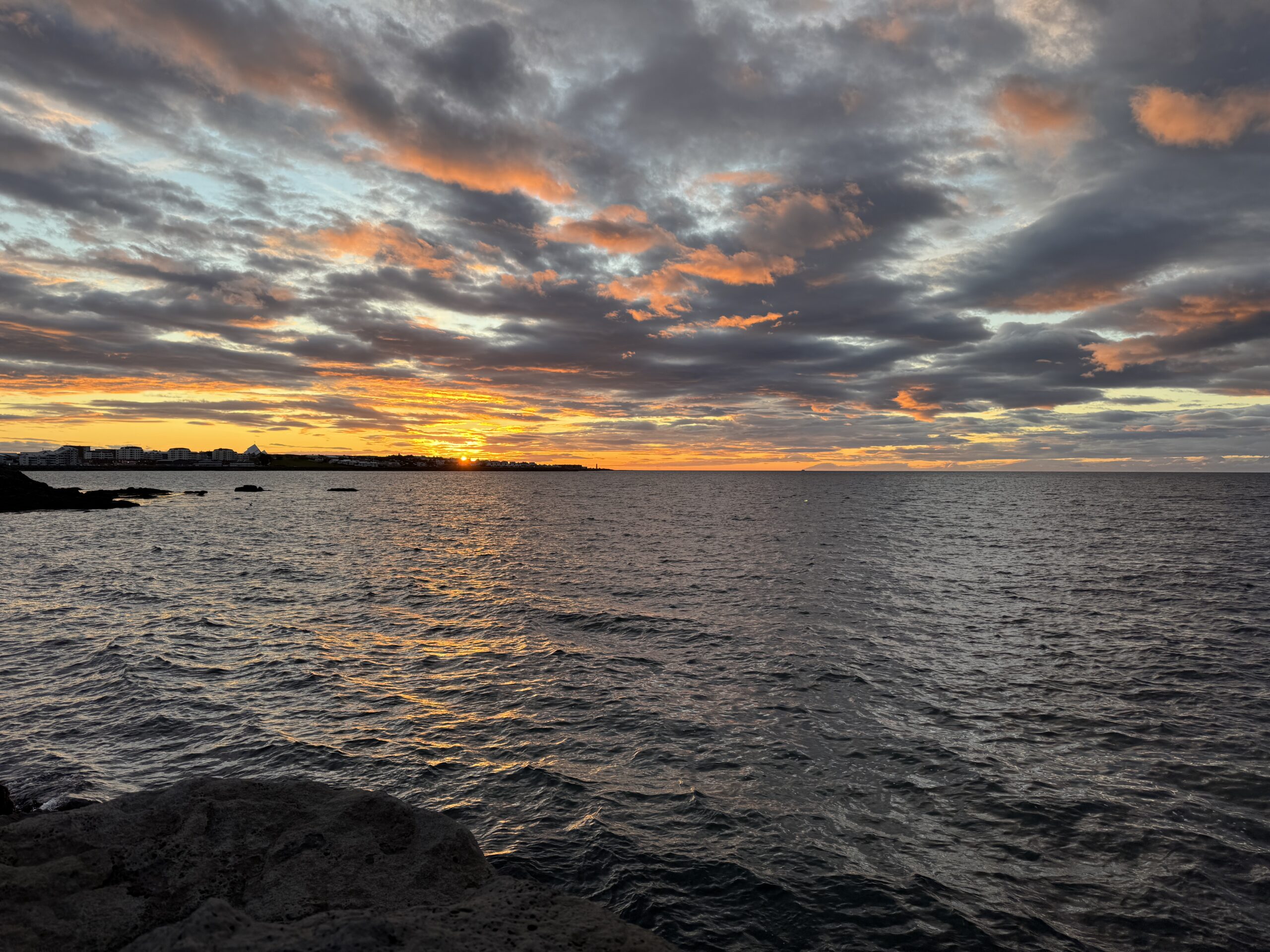
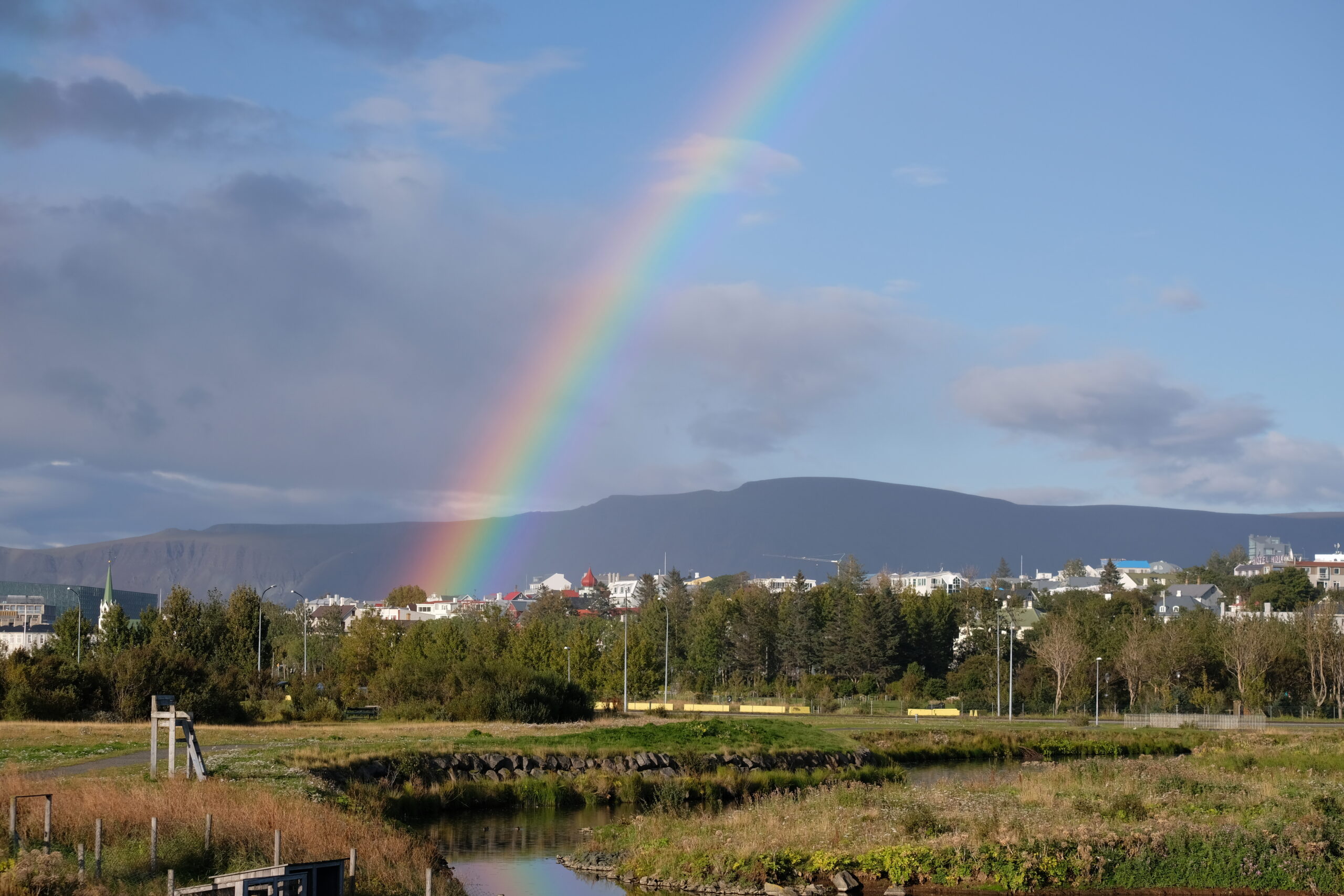
In general, the sky was very impressive this week. Here are a couple more examples:
Sunset over the Seltjarnarnes peninsula Rainbow in front of Mt. Esja, taken from the Nordic House
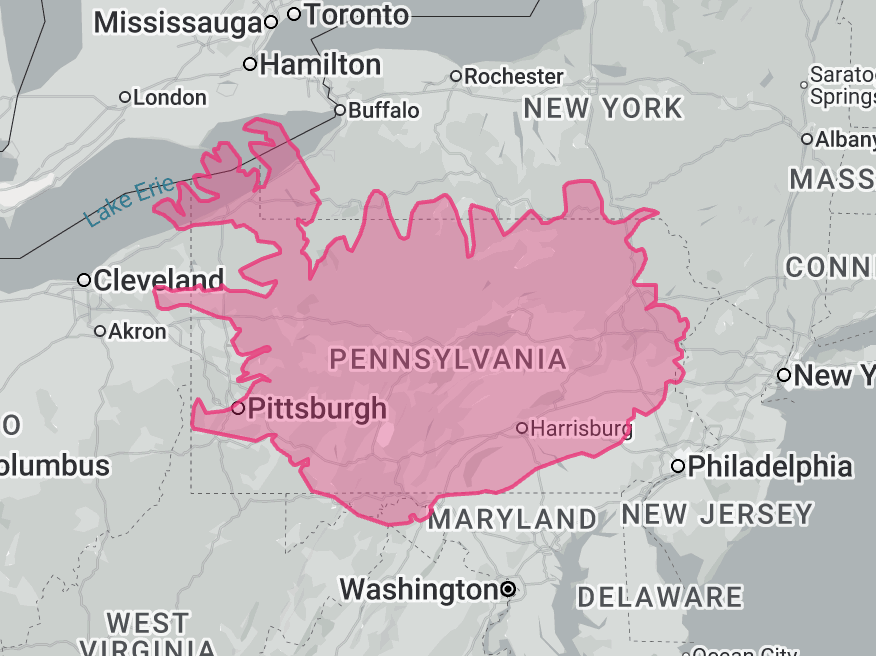
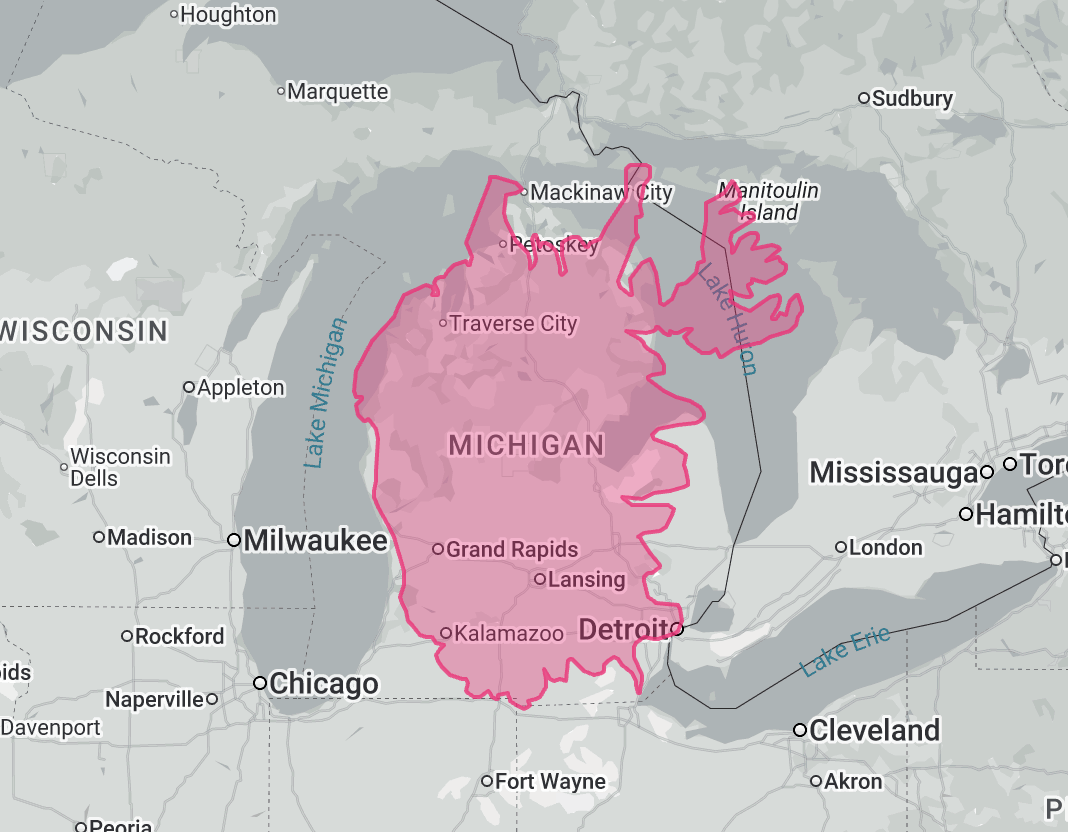
The final thing I’ll point out this week is a fun website called The True Size where you can move countries (or US states) around a typical Mercator map projection to see how they compare. We all know that map projections are distorted, but a tool like this really helps to show how dramatic those distortions are as you reach the poles.
Funny enough for me, since I know these places so well, Iceland is roughly the size of both Pennsylvania and the lower peninsula of Michigan.
Noted & Done
I watched Summer Light, and Then Comes the Night, an Icelandic film based on the novel by Jón Kalman Stefánsson. It’s my favorite of the three books I’ve read by him, and despite finishing it over 2.5 years ago the movie brought back imagery from the book so vividly that at times it felt like I’d watched it before. Unlike many Icelandic films, this one is easily accessible; it’s available to rent or purchase on Amazon Prime.
I’m planning a trip to the Westfjords in a couple of weeks for a long weekend. If you’ve been, and have recommendations, let me know! I plan to stay in Patreksfjörður and Flateyri.
Wikipedia tells me that 81% of Icelanders never smoke, but I guess I go to a lot of the same places as those 19%. I find smoking to be noticeably more common here, or maybe it’s just that there isn’t the courtesy of standing 10+ feet away from an entrance, so I end up walking through smoke more often.
I had to wrangle with all kinds of problems on the Moped Army website this week. I guess it’s par for the course, but running a website in 2025 is an especially unforgiving chore. The site gets hammered by unscrupulous AI bots scraping the forum to build their models, search engine traffic is down because Google just serves AI answers instead of sending people to the site, and the lack of traffic combined with plummeting ad rates means revenue is cut in half. I’ve been running the site for 28 years now, and the amount of time I have to spend fending off attacks, scammers, and other bad actors is much higher now than any point in the past. I’ll keep on keeping on, but all of these additional headaches don’t bode well for the health and longevity of the independent web.