
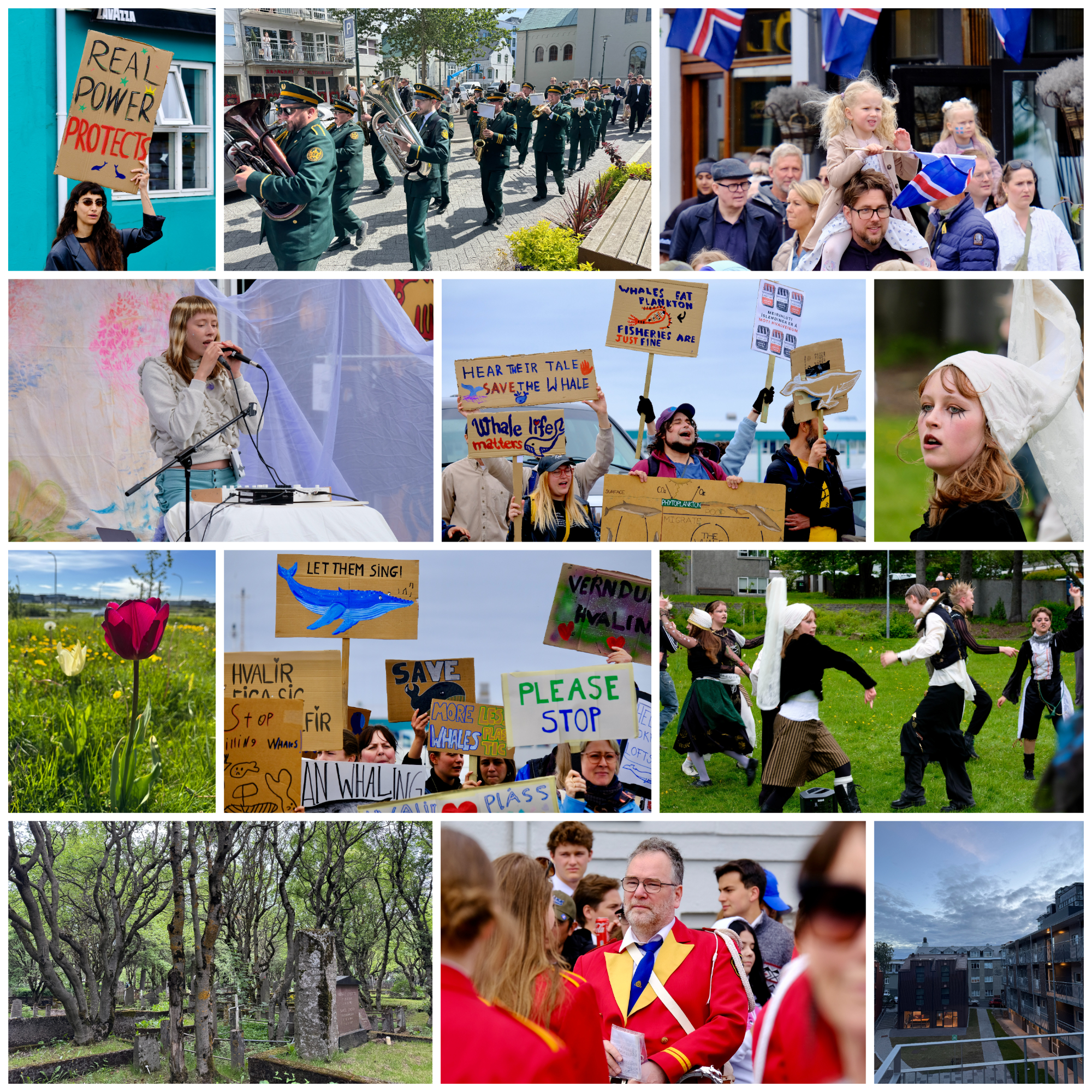
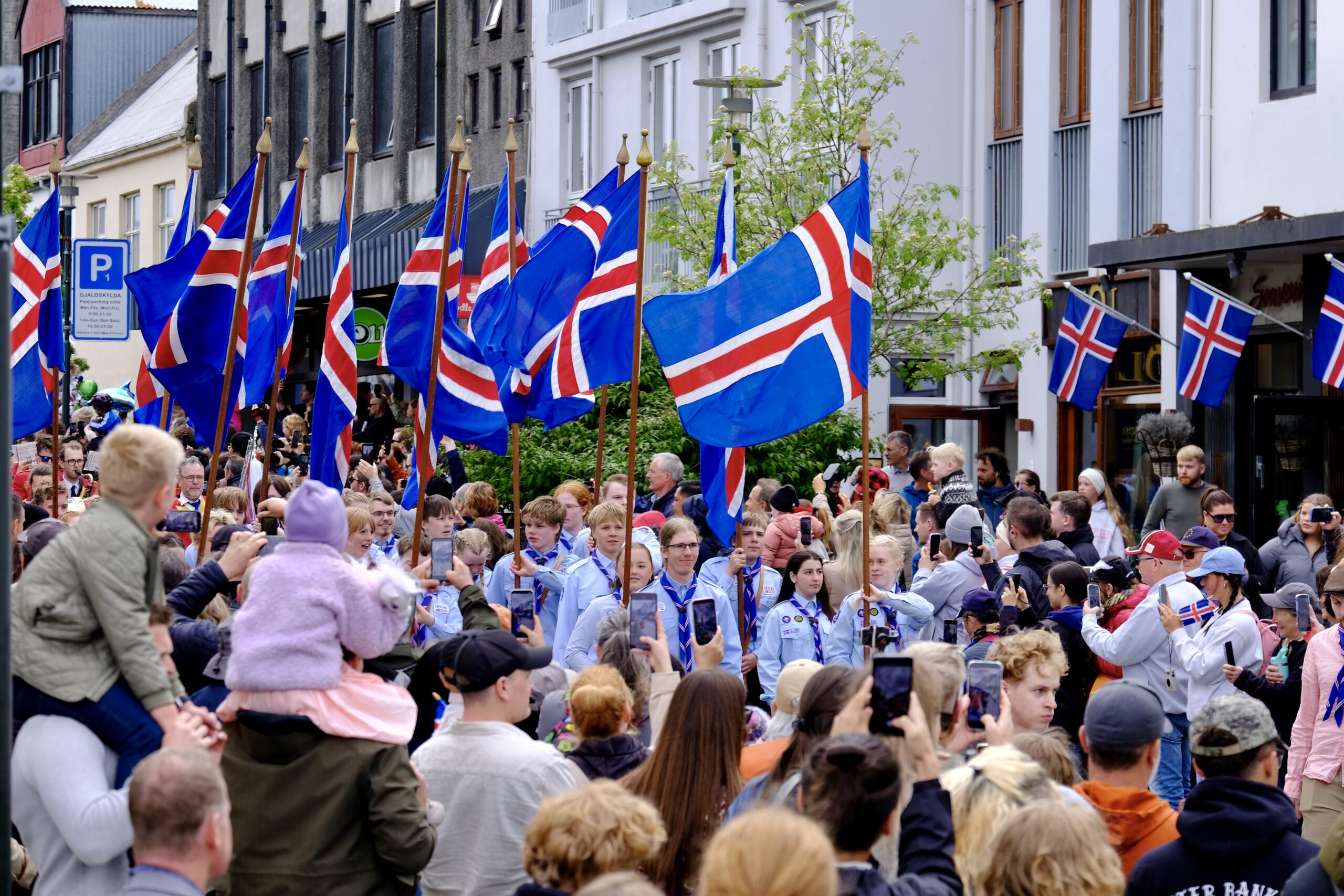
There are lots of parades in Iceland. This week’s parade was in honor of Icelandic National Day, when the country officially broke ties with Denmark to form an independent republic on June 17, 1944. Not to be confused with Sovereignty Day, when Denmark first recognized Iceland’s autonomy on December 1, 1918. Of course it’s a bit strange that at the time of independence Iceland was still under Allied occupation, but the celebrations this week didn’t dwell on that.
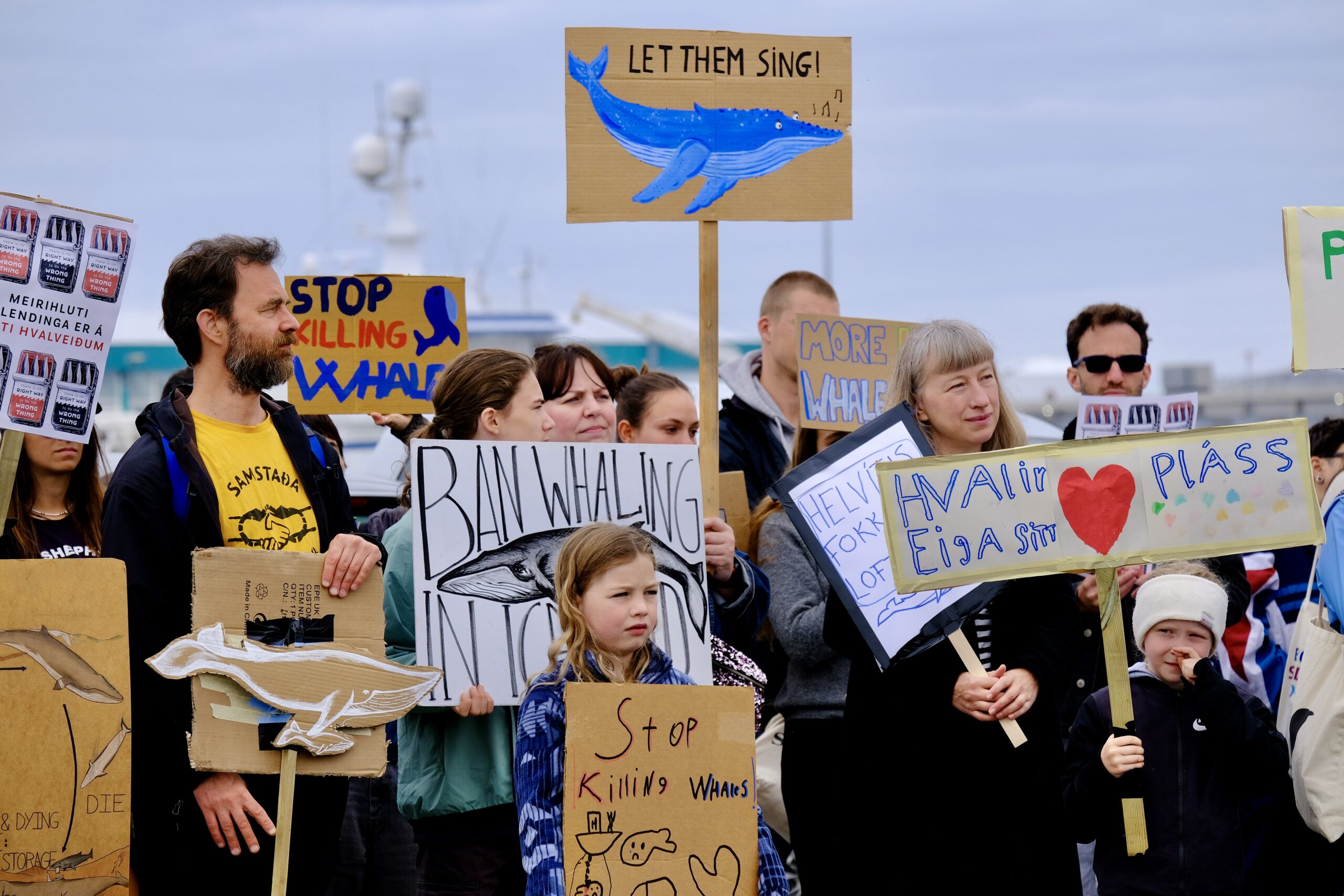
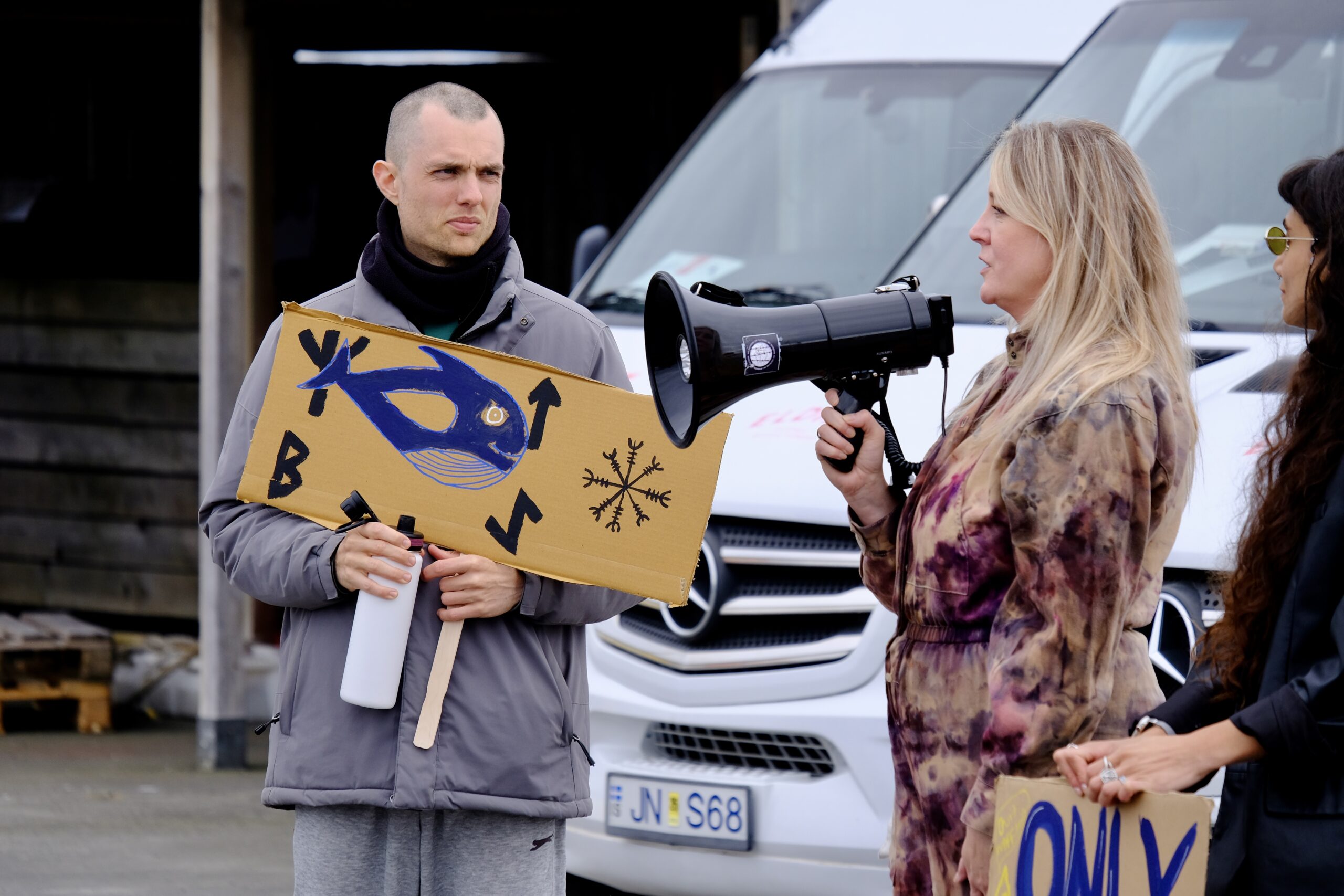
There are also lots of protests. Today’s protest was against whaling, a topic that flared up this week since Icelandic whaling ships returned to the sea for the first time after a two-year hiatus. This led environmental activist Hólmsteinn Harðarson to board one of the vessels, which then illegally registered him as a passenger and travelled with him against his will for three hours. Hólmsteinn was at the protest today, which concluded peacefully, but did involve an old man and his wife driving slowly past the crowd and flipping off the organizers. More photos on Instagram.
On Wednesday, I attended a conference on National Security Dialogue: Democracy in an Era of Information Disorder at the University of Iceland, which focused on how disinformation continues to impact democratic institutions. This is an increasing concern in Iceland. As a small and isolated country, it has natural protection from many physical threats. But disinformation campaigns aren’t contained by oceans, and Iceland is a very digitally connected country. Moreover, I’ve seen firsthand how Icelanders use Facebook for everything, so they are susceptible to the peculiarities of a platform that has abandoned content moderation in the wake of Zuckerberg’s authoritarian contact high under the Trump administration.
The conference did not leave me hopeful. I thought the Icelanders who spoke failed to meaningfully address the challenges and that too many speakers leaned on ideas of education, media literacy, and traditional media funding as solutions. There’s nothing “wrong” with those ideas, but they’re woefully inadequate to address the scale and sophistication of foreign influence operations from actors like Russia, using technology like agentic AI. It reminds me of when I was at the CFPB, and the anti-regulation crowd wanted to focus on financial education instead of supervision and enforcement. Helping people identify fraud is fine, but stopping people who are defrauding them before it happens is better.
The one speaker who I was impressed with was Janis Sarts, Director of the NATO Strategic Communications Centre of Excellence in Latvia. He was on top of the current technical capabilities and challenges, including data poisoning of foundation models and AI agents simulating human behavior on social media to avoid detection. He also touched upon relationship bots, and how most AI girlfriend/boyfriend apps are from Chinese companies, speculating about the potential for a long-game AI honey trap.
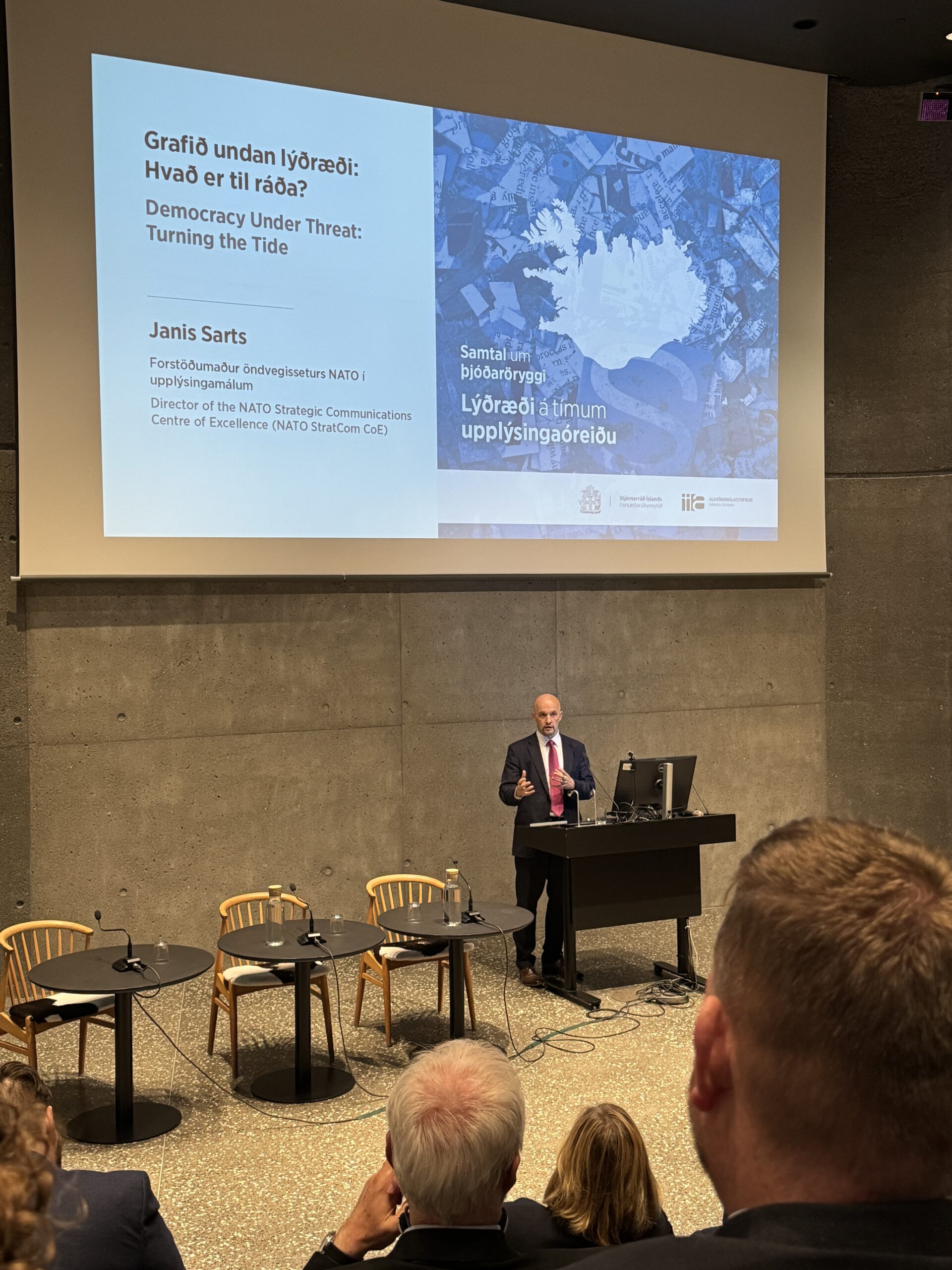
In his view, AI will soon be the main force shaping people’s information reality, and it will be much worse than social media because at least there we could see and track the spread of disinformation, whereas the conversations happening on LLMs are hidden from view. On the topic of education, he pointed out how we all want to believe that critical thinking can have an impact, but his studies show that it rarely does. His group has successfully targeted their own soldiers to disobey orders and reveal GPS coordinates, even though those people had been trained in InfoSec two weeks before. The NATO center he runs seems to publish interesting reports. The one I bookmarked, and what he was surely drawing from in his talk, was Beyond Spam Bots: The Rise of AI-Powered Disinformation Machines and the Imperative for Strategic Response.
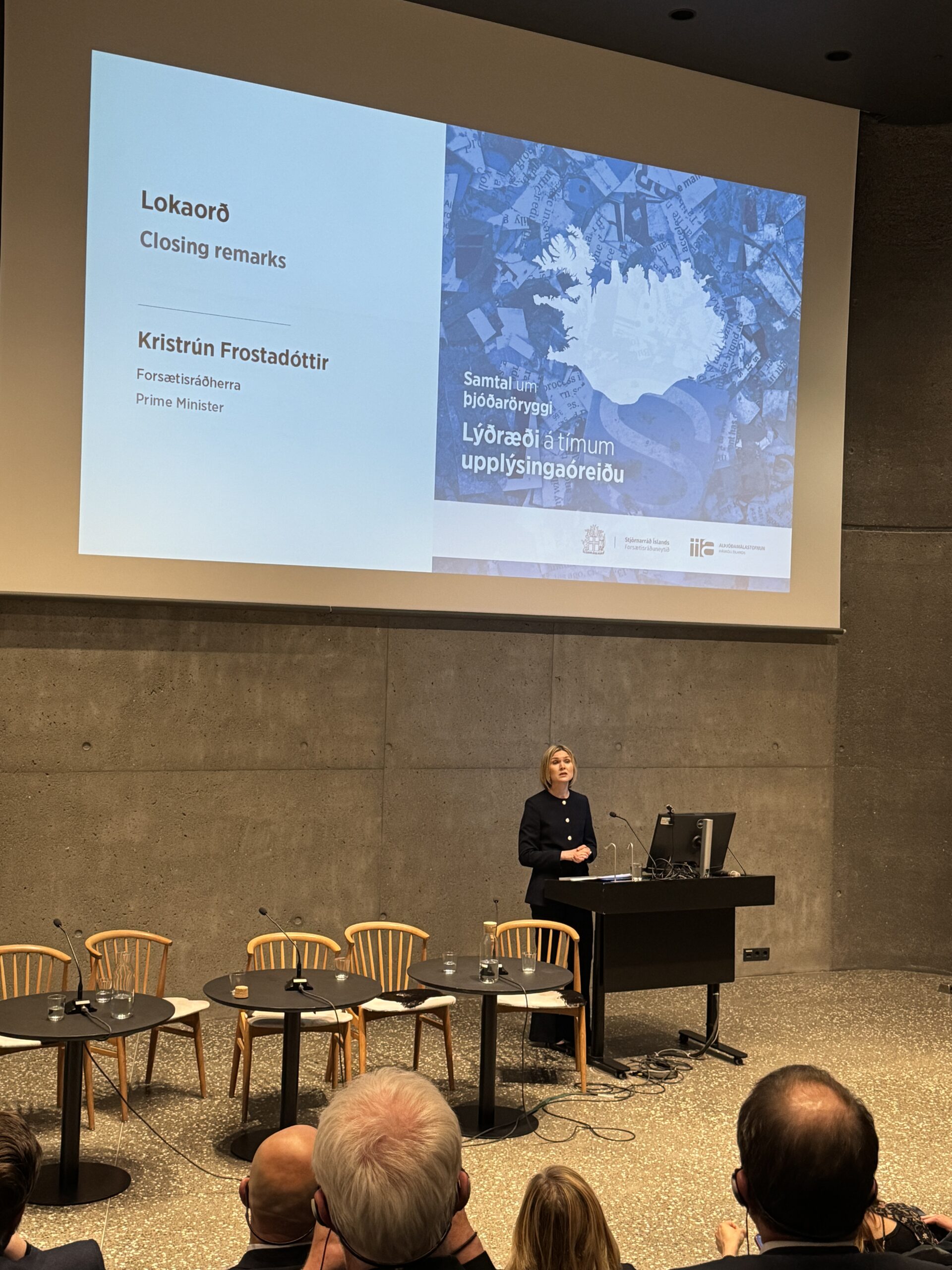
The conference was also the first time I’d seen Kristrún Frostadóttir, the Prime Minister of Iceland, speak. I honestly don’t know enough about Icelandic politics to say whether or not I agree with her stance on various topics, but as an American, the contrast to my own country is stark. Our country is run by an 80-year-old authoritarian grifter whose ignorance and corruption are a massive source of disinformation, a narcissist who shifts the blame for the fallout of all his idiotic actions. In contrast, Iceland has a 37-year-old woman leading the Social Democratic Alliance who used her 15 minutes at the conference to speak not only about the threat of disinformation due to technical advancements, but also about how politicians have to take responsibility for the fact that citizens who feel marginalized, or in need, are more susceptible to the influence of bad actors. It’s just nice to be around politicians who don’t make me feel like I’m losing my mind.
In other news, my brother’s family arrived in Iceland yesterday. They are vacationing on their own for a handful of days before spending a few nights in Reykjavík. It’ll be great to hang out with them here. When Isaiah visited last December, it was almost as dark as it gets, and yesterday was summer solstice, so he’s getting to experience the extremes of daylight.
Noted & Done
- I picked up my official Masters-level Certificate in International Affairs this week, which usefully came with an English-translated copy. I managed to achieve a level of First Class with Distinction!
- I caught a set from Lúpína’s release concert marathon, where she performed her new EP six times over the course of the day. I think she’s one of the best new Icelandic pop musicians. She opened Iceland Airwaves last year, but still plays tiny free shows at Kaffibarinn. Listen on all the streaming services or her YouTube.
- In Icelandic celebrity sighting news, I’ve now seen actor Björn Hlynur Haraldsson walking around town twice in the last two weeks.
- I launched a major overhaul of the Personal Messaging system on Moped Army. The main new feature is the ability to attach photos, but in order to feel comfortable doing that, I had to build a whole new flagging and moderation system that will make it harder to abuse.
- Bíó Paradís is showing World Cup matches next door to me, but I haven’t watched any yet. For those of you who are following closely, what’s a good matchup to catch?

