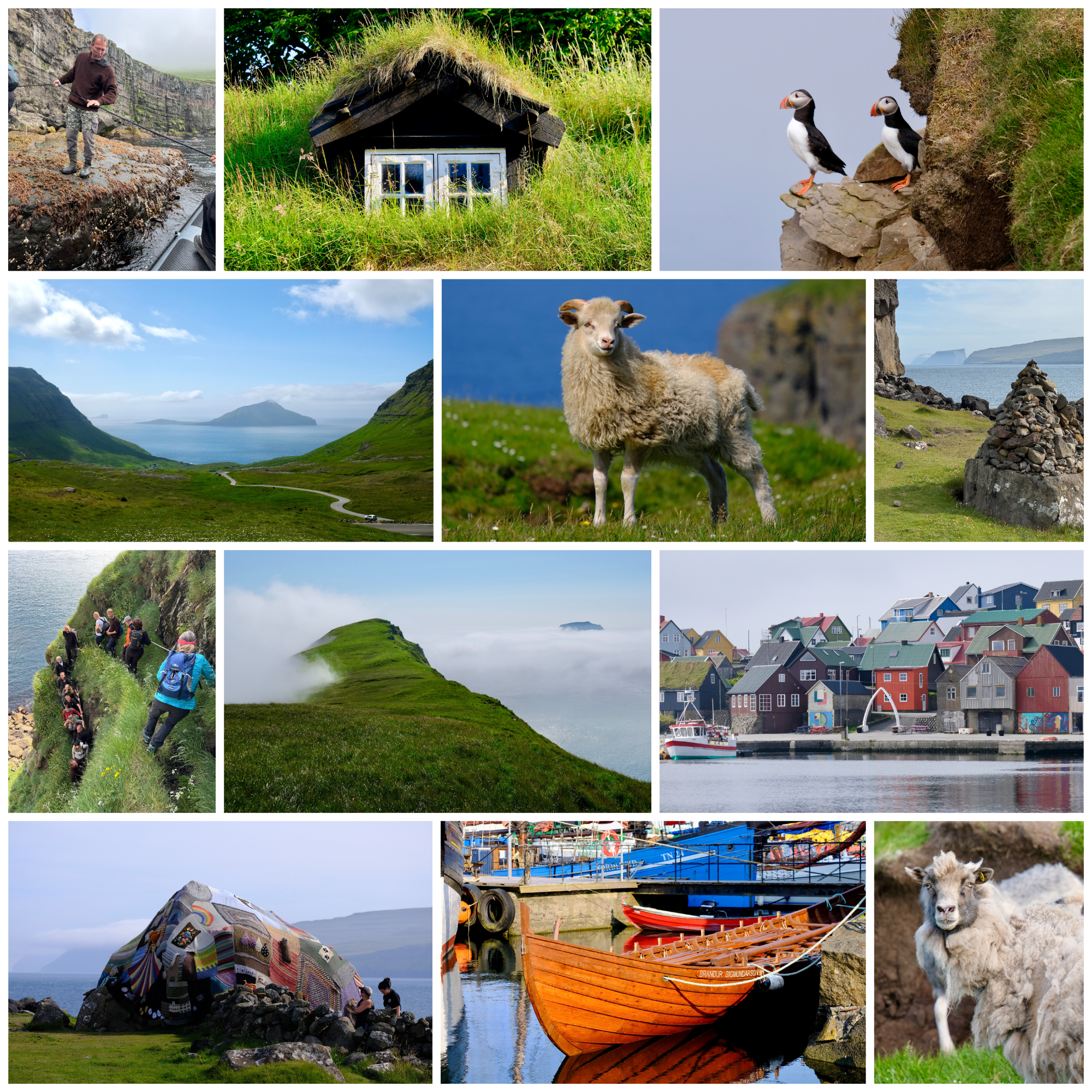
I’ve been in Tórshavn for a week, long enough to settle into a routine of sorts. I’ve been writing at Williamshús in the morning, then out exploring the city and nearby islands by bus and boat in the afternoon. I’ve made progress thinking through some upcoming projects, but have also been drawn to capture what I’m experiencing. Travel and nature writing are already intertwined interests, and the Faroe Islands continue to be a source of inspiration.
Being based in the capital has given me a chance to get to know it better, beyond the tiny turf-roofed houses of the old city and the charming government buildings of Tinganes. I’ve seen art from a cross-section of Faroese painters at Listasavn Føroya, visited The Nordic House, a sibling of the one in Reykjavík, and stopped by Oy Brewing, which is as cavernous as Mikkeller is cozy. My flexible schedule allowed me to meet up with Joel Cole, a Minnesota-born artist who has lived in the Faroe Islands for decades. We corresponded briefly back in 2020, after I wrote about his work being featured on Faroese stamps, and he was kind enough to give me a tour of his studio. It’s located in an old NATO base, high in the mountains, and is improbably shared with the prison.
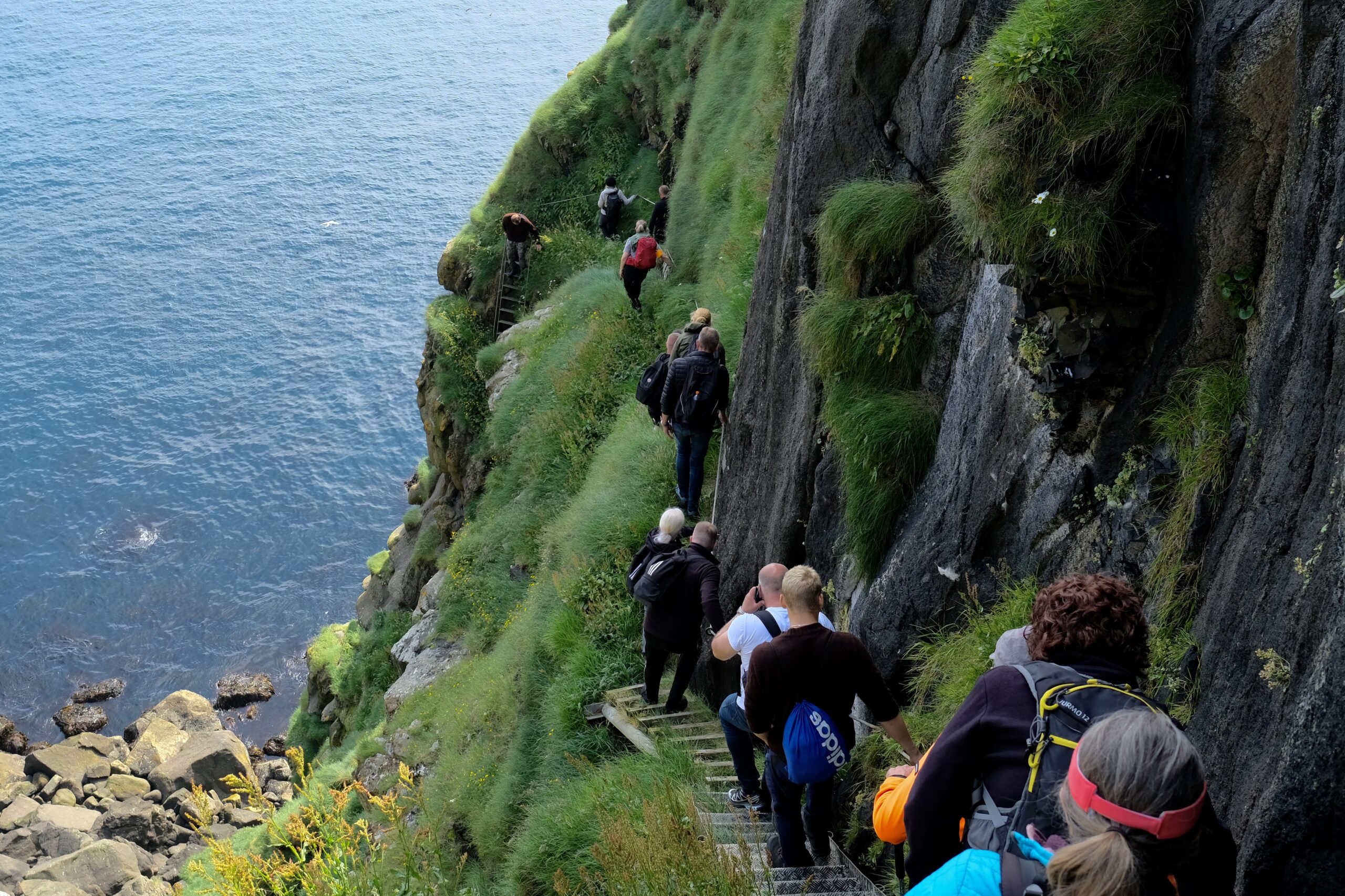
But I’ve also gotten off of Streymoy, most notably to spend the whole day on Stóra Dímun, the smallest of the inhabited islands and a place that has loomed large in my imagination. Only two people live there, and it’s difficult to visit, with no harbor to dock a boat and requiring a climb up the cliffs to reach the single farmhouse. It encapsulates many of my fascinations: remoteness, dramatic topography, extreme weather. I feel fortunate that I found a way to visit. I’m working on two different pieces about Stóra Dímun that I’ll share soon — one about my experience there, and a review for an upcoming book about the island.
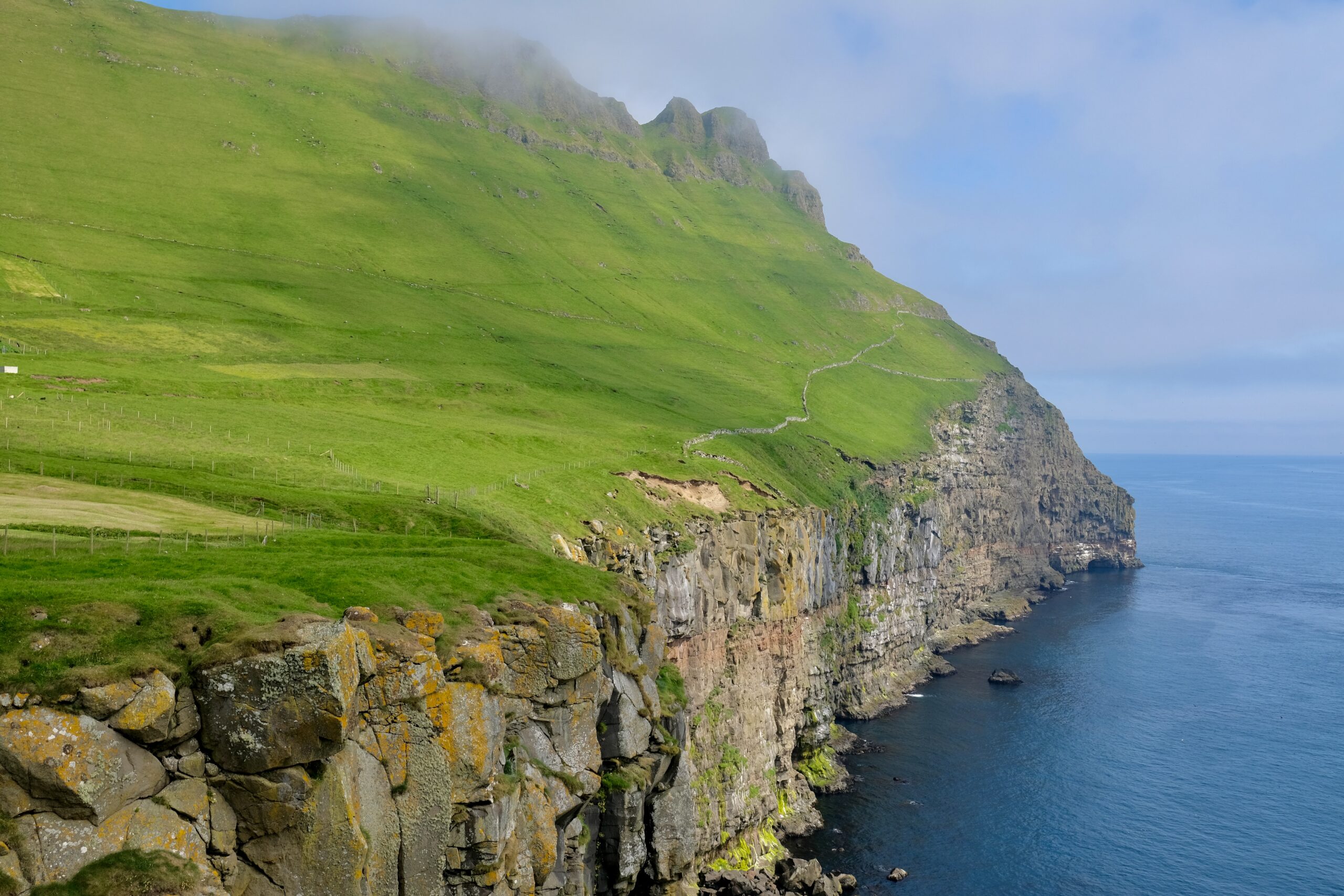
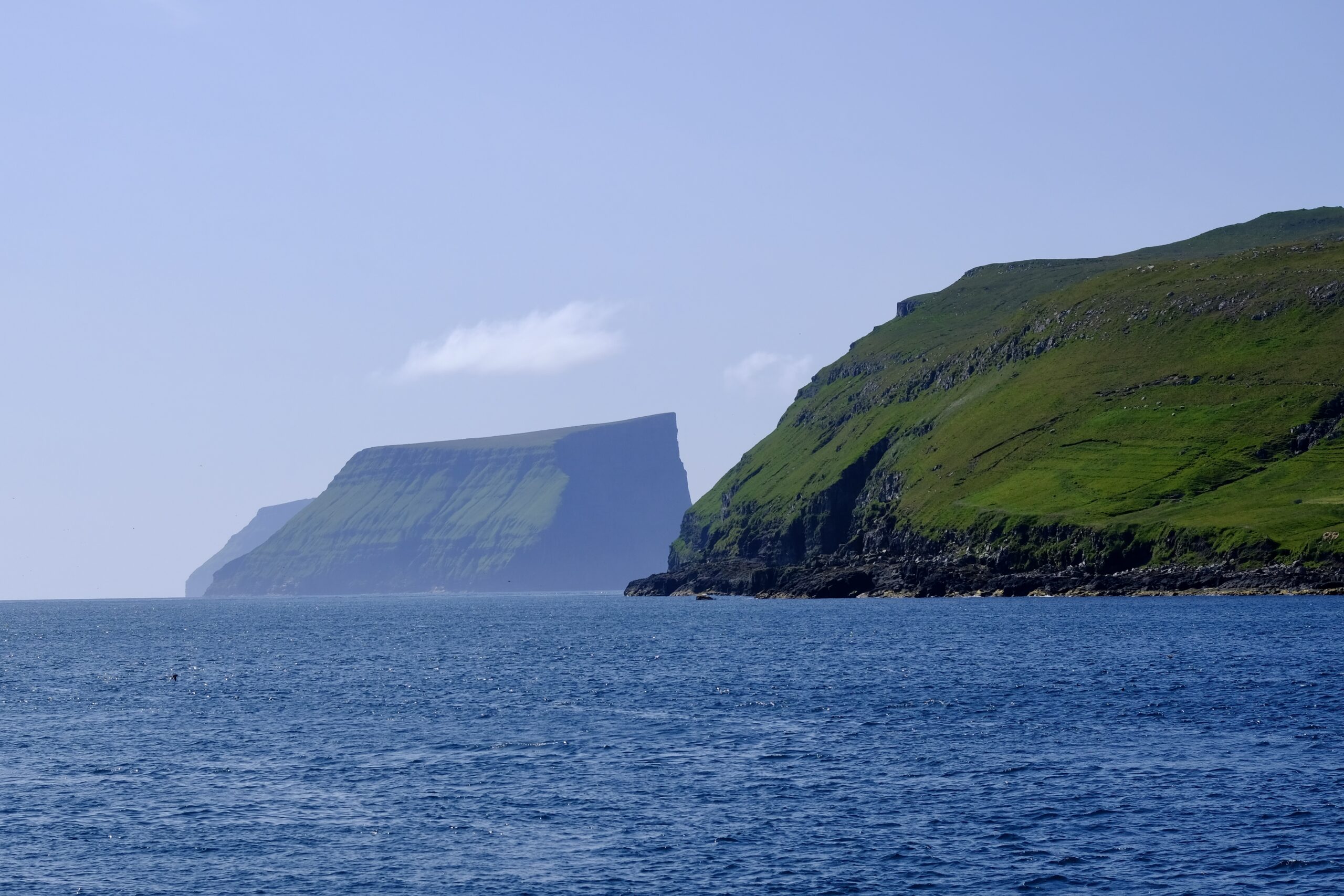
Yesterday, I spent a bright sunny day on Skúvoy. Located just northwest of Stóra Dímun, this larger island forms a trio with Lítla Dímun that together resemble decreasing ripples of a giant skipping stone thrown across the North Atlantic. Until recently, getting there was a complicated multi-step affair: first a ferry from Streymoy to Sandoy, and then a drive across to catch another ferry to Skúvoy. That changed in 2023 when the Sandoy subsea tunnel opened, a 6.7-mile fixed link that brings the island into commuting distance from Tórshavn. Coordinating the ferry and bus schedules gave me nearly five hours on Skúvoy, enough to walk to the bird cliffs on the northwest tip, an idyllic area with views as far as Mykines, given the cloudless sky.
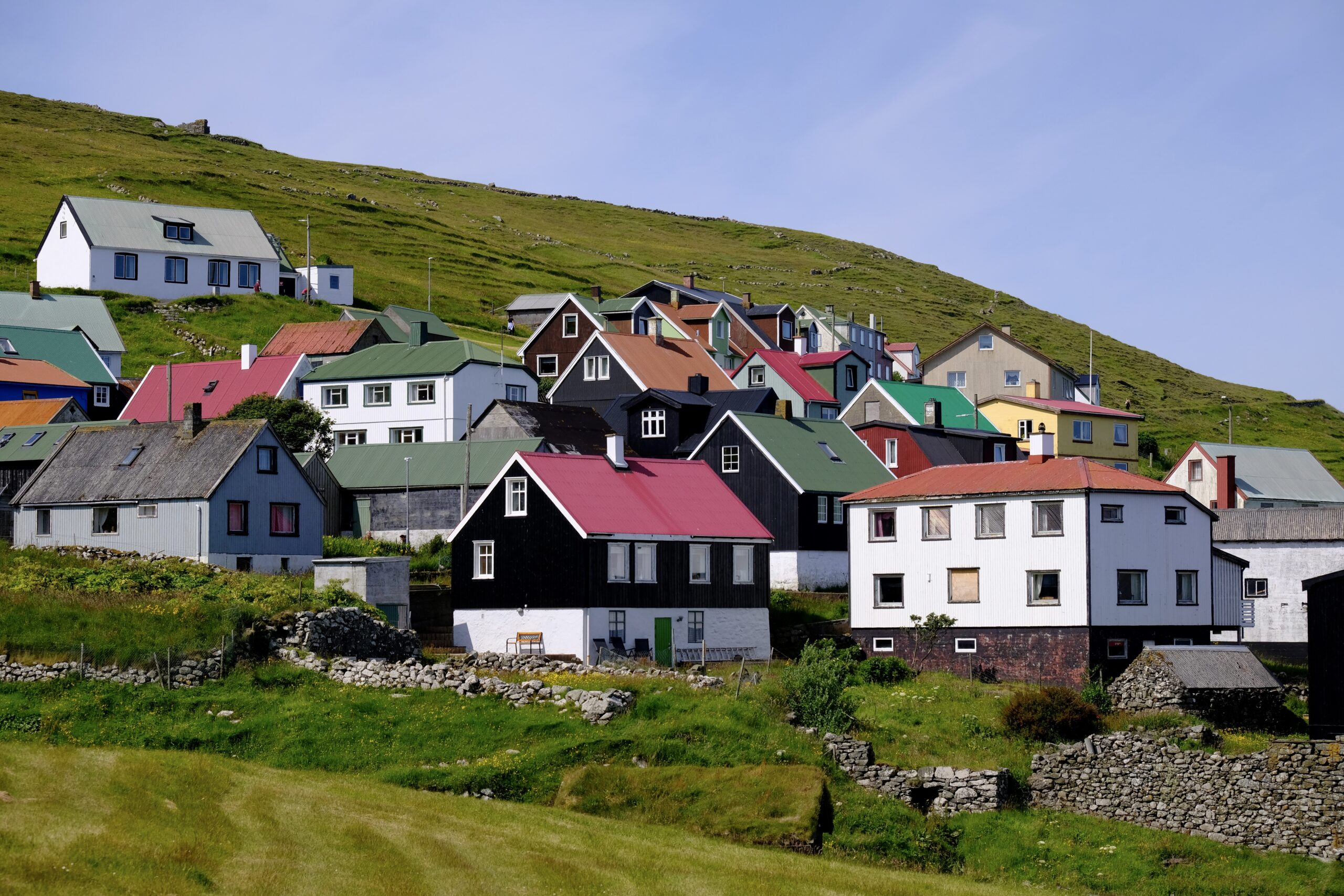
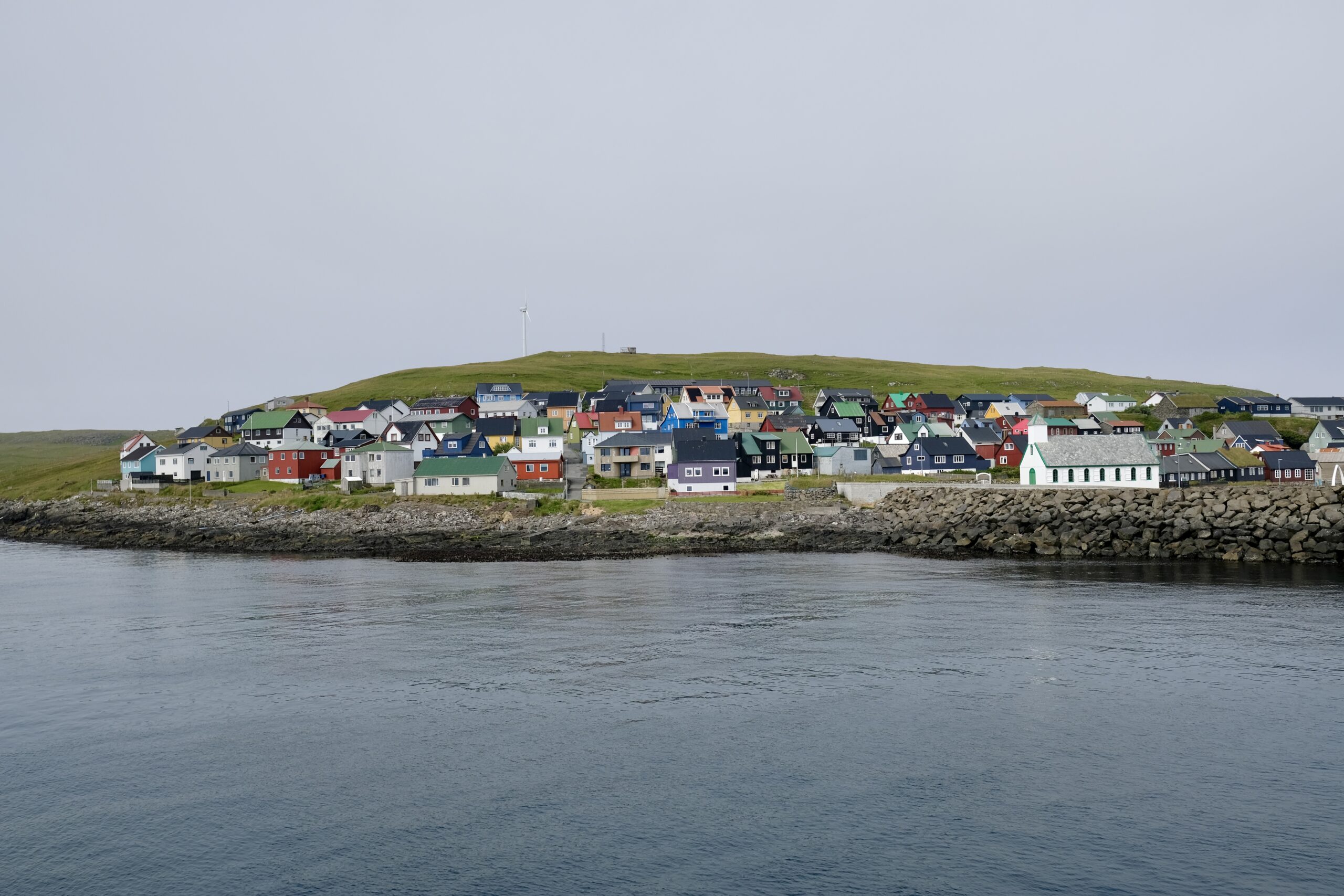
I also travelled to Nólsoy, the easiest of the islands to visit, just across the water from the harbor in Tórshavn and a visible presence through my window as I write this. It’s only a twenty-minute ferry ride, although timing of the return trip for the length of stay you want can be tricky. Being there, in the quiet that even a short ferry ride can provide, you can understand how people think of Tórshavn as the “big city,” despite its status as the smallest of European capitals.
It is that smallness that has always impressed me about the Faroe Islands. In many places, a small town can stay on the periphery, leaving governance and culture to the bigger populations in the center. But here, the whole country’s population is only ¾ the size of Kalamazoo, Michigan — and yet, within that group of people, every role needs to be filled: from prime minister to football star, ambassador to Michelin chef. I’ve heard before, and my conversation with Joel Cole confirmed, that to pull that off, people wear many hats here. Another thing he shared, which I’ve noticed myself in even the limited interactions I’ve had, is that the Faroese people are very straightforward and practical. It makes sense when you consider human adaptation, both nature and nurture, in an environment where survival has been historically very difficult and far from guaranteed.
From tomorrow morning, I’ll have a rental car for the rest of my time here, which will let me explore more broadly. I have some hikes I’m looking forward to, and at least one more island I haven’t been to before. The remarkable weather we’ve been having here may not last, but I can’t complain. The wind and fog more typical of the Faroe Islands have led them to be known as the Land of Maybe, and back in Reykjavík it’s the wettest July on record.