This morning, I woke up at 5am to the sound of crows and kittiwakes, the July sun already fully risen but still bathing Tórshavn in a pink haze that flattened the outline of Nólsoy, visible from my kitchen window. The shape of the island in shadow is like a cartoon snake that has swallowed something many times its size. A tiny village acts as the head, sitting in a flat, low spot on the northern end. The mountainous belly of the snake rises rapidly to the south, betraying its too-large prey inside, before tapering off to the southern tip, where a lighthouse marks the tail like a rattle.
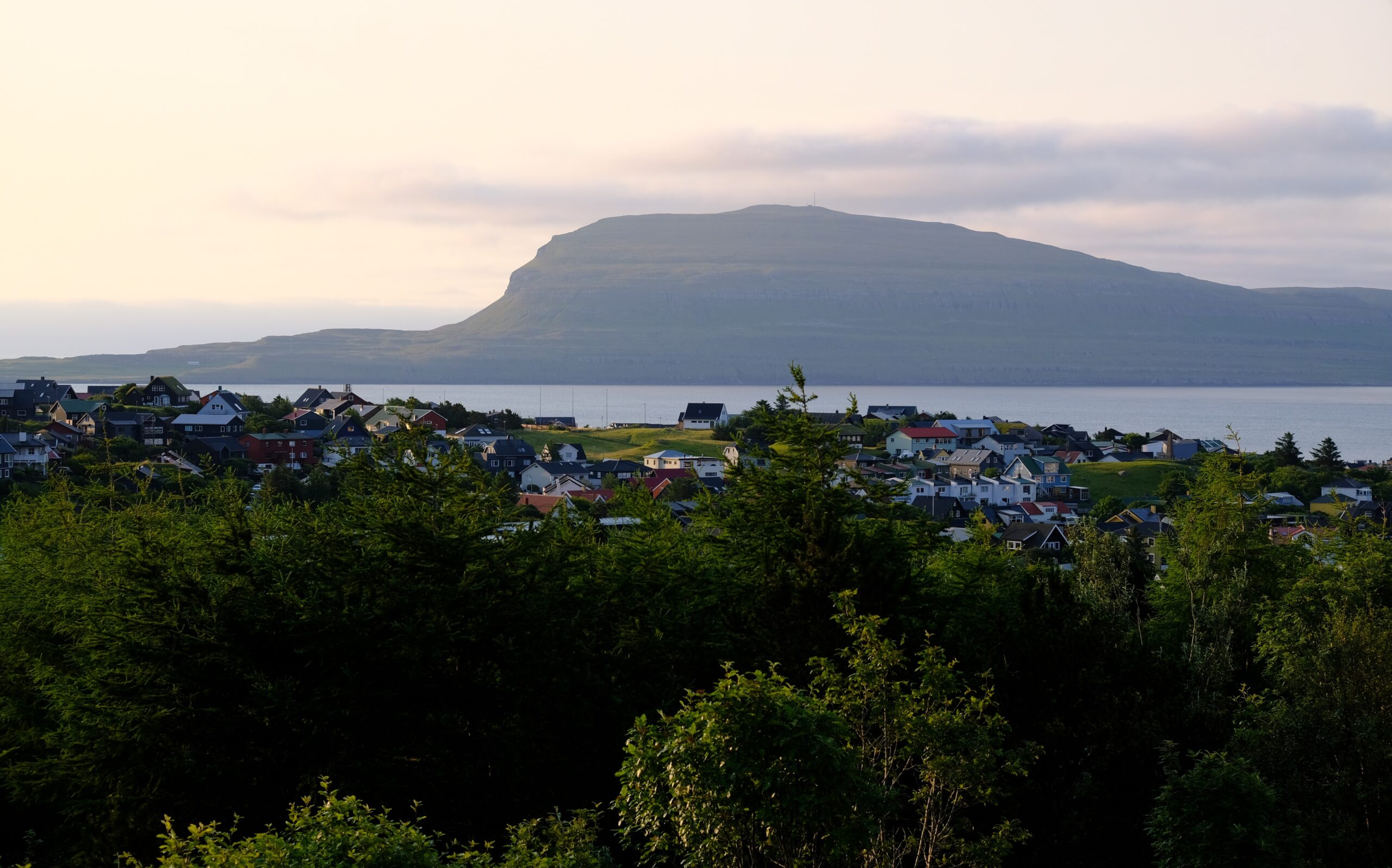
I’m in the Faroe Islands, staying at Williamshús, the former home and studio of William Heinesen, one of the country’s most celebrated writers. My quarters are on the second floor, with the first floor and basement preserved as a museum. From up on a hill, the view contains not just Nólsoy but most of the old town center, including the turf-covered roofs of Tinganes, one of the oldest parliaments in the world.
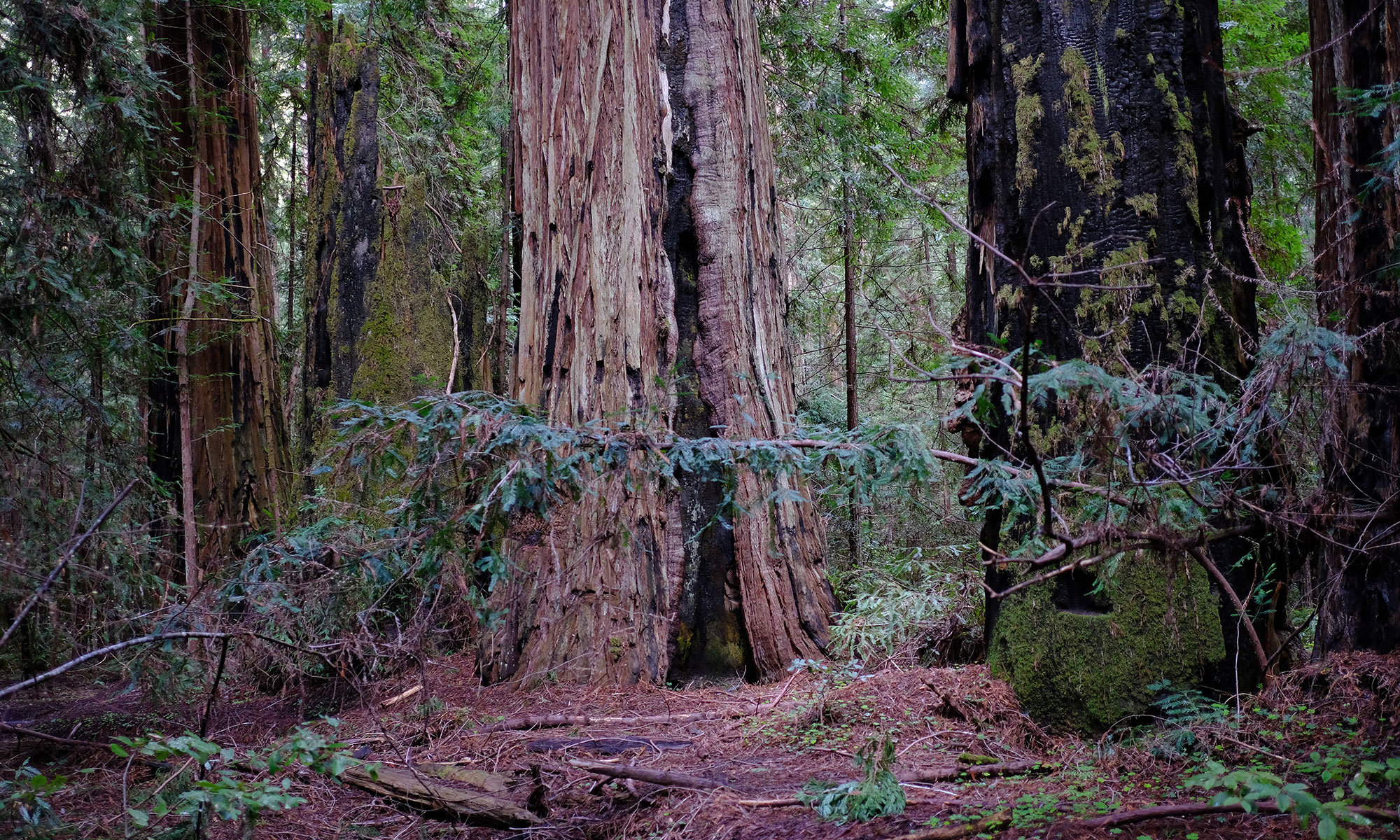
When I arrived yesterday, I was delighted to discover that I was surrounded by trees, in a country that is famous for lacking them. The city park next door is a lush oasis, filled with ducks and shaded walking paths, covered in pine needles and moss. A river wends its way through the greenery, and the National Gallery sits on its northern edge. Way-finding signs throughout the park point towards Williamshús, and given that the museum is only open for two hours each Sunday, these felt like a personalized set of directions, just for me.
I’m here for a writing residency, but not to complete a work in progress or to chip away at an existing project. Instead, I find myself at the start of something, or, more accurately, the pregnant pause before the start of something, when the intention and goals are still a snarl of feelings, before the painstaking process of untying all the knots and straightening out the strings.
I am not a morning person, but when I wrestle myself awake before I’m naturally inclined, I find that it offers something I can’t get elsewhere. Years ago, when I was writing my book about core principles of design, I would program my coffee pot to brew at an hour when I was incapable of working it myself. I would sit in my office, fully shrouded under a wool blanket, half asleep and non-verbal, writing for an hour or two before my morning commute. This wasn’t only a technique to steal time from an otherwise overbooked calendar; the silence of those hours is where the words lived.
I can’t commit to becoming a perpetually early riser, but on a day like today I can be convinced that I should.
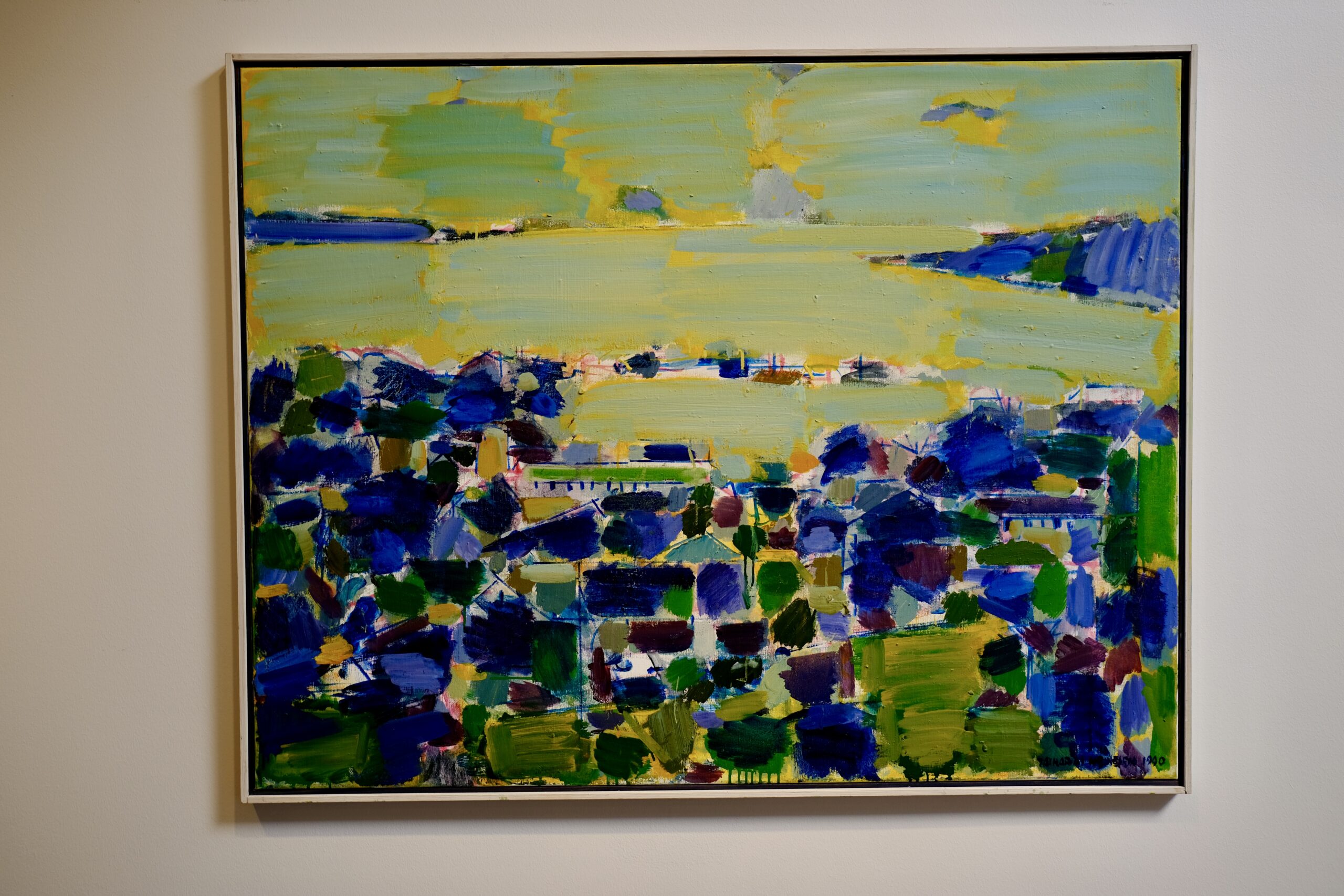
This afternoon, I visited the National Gallery, which included paintings from dozens of Faroese artists including Sámal Joensen-Mikines, Ruth Smith, Tróndur Patursson, and Sigrun Gunnarsdóttir. It also had a special exhibition dedicated to Zacharias Heinesen, whose abstracted landscapes include not just paintings but also collages of wooden blocks. These works, hung in the cafe space, were part of a recent event celebrating his 90th birthday. An unanswered thought went through my mind when I heard that: I wonder if he’s still painting?
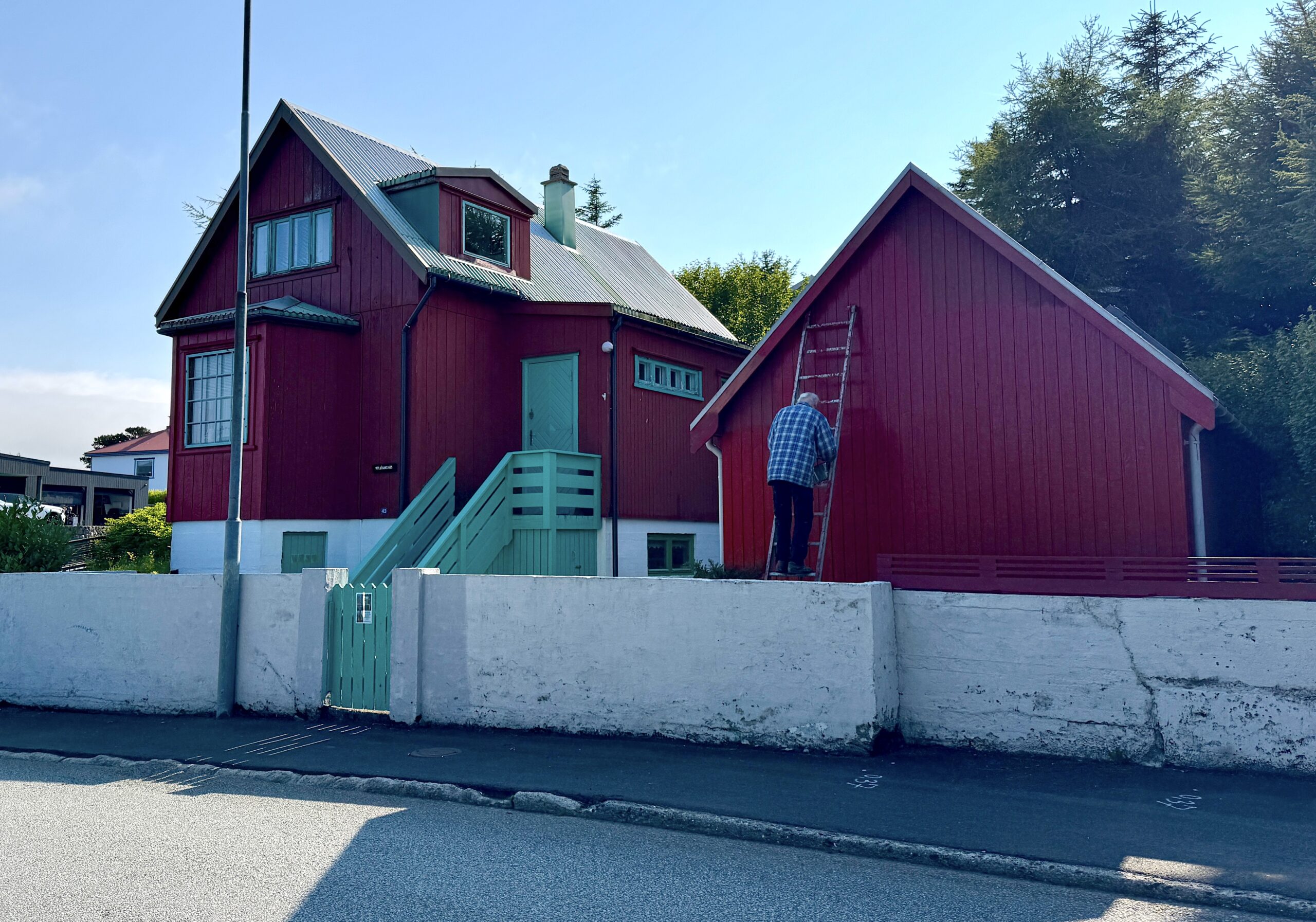
Later today, I got an unexpected sort of answer. After walking around Tórshavn, I returned to Williamshús for the evening and found a man on a ladder, putting a fresh coat of red paint on the shed next to the main property. He introduced himself — Zacharias Heinesen. I knew that he was the son of William Heinesen, and had donated the house to the foundation that owns it, but I didn’t expect to meet him, and certainly not like this.
We didn’t talk long. When I started to tell him that I’d seen his paintings earlier today, he claimed he didn’t speak English very well, and it was unclear to me if this was a kind of modesty. Still, I can now say that I’ve seen Zacharias Heinesen completing a painting, even if it was only the siding.